It seems we’ve suddenly become a little obsessed with protein and many of us are turning to protein powders to help increase our intake. Whether you’re walking through the supermarket aisle or scrolling through online stores, there’s a dizzying array of options available – including whey, plant or collagen based powders – all promising high protein contents. With so much on offer, choosing the right product for your needs can be daunting.
But as always, CHOICE experts are here to help. Here’s how we put protein powders to the test to help you separate the best from the rest.
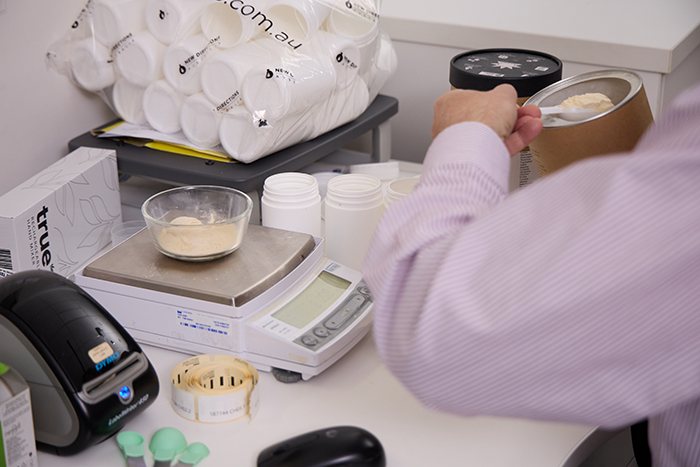
Heavy metal testing and protein content analysis are carried out for CHOICE at an independent accredited lab. Each product is sampled into white containers so that they can be tested “blind” (without the lab knowing the brand). The only information provided to the lab is the protein source (i.e whey, pea protein, collagen, etc).
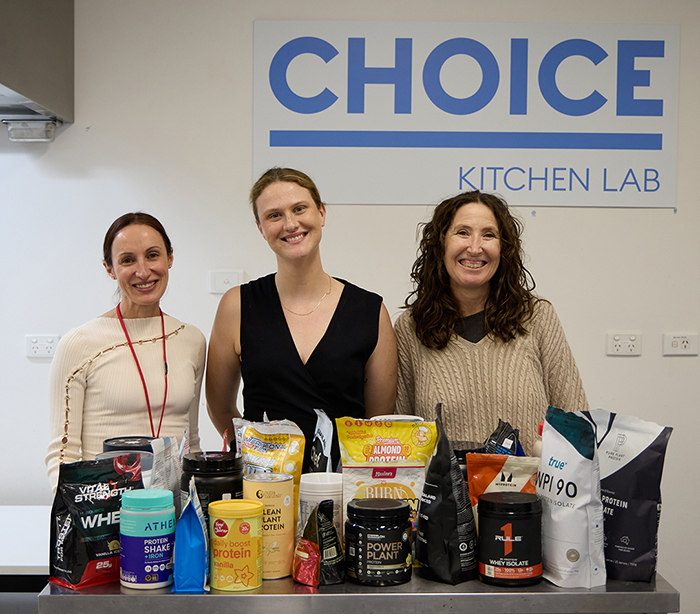
The taste test is carried out by three judges and held in the CHOICE labs.
Each protein powder is sampled into a container so they can be tested ‘blind’ without the lab knowing brand and product names.
How we choose the protein powders we test
We test popular brands of protein powder available in supermarkets and from sports nutrition websites. We check search volumes for popular brands and also conduct an in-house survey to determine the most popular flavour.
Among our survey respondents, vanilla was by far the most popular flavour, so we only included each product’s vanilla option.
How we test and score protein powder
Heavy metal testing
The lab tests each protein powder for levels of heavy metals, specifically lead and cadmium.
Heavy metal limits are regulated by Food Standards Australia New Zealand (FSANZ), however, there is no specified requirement for protein powders which means that products must adhere to the ALARA principle (As Low As Reasonably Achievable).
Typically, the maximum allowable limit for many food types is 0.1mg/kg.
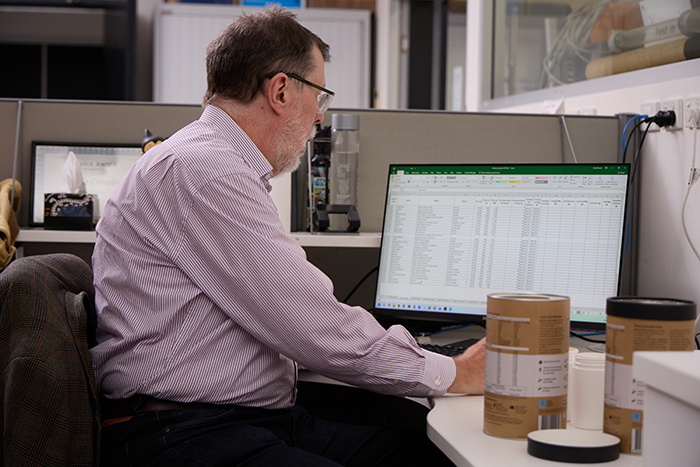
Our expert testing staff analyse the results from the labs.
Protein content analysis
For this test, the lab is provided with the protein source (whey, pea protein, collagen) for each product. This is because a different nitrogen-to-protein conversion factor is required for each source.
The lab uses the Kjeldahl nitrogen test method. This method determines the total nitrogen content in organic and inorganic substances, which is then used to calculate protein content. This method is used to validate the nutrition label to determine if products actually meet their protein level claims.
It’s reasonable to expect the measured protein content of a powder to be within 10% of the claimed amount with about 4% added to allow for measurement uncertainty. Based on this, we scored the products accordingly.
Measured protein content vs claimed content scoring
Actual protein content
Product score
Within 14% of claimed content
100%
More than 14% higher than claimed content
90%
Over 14% lower, but under 20% lower than claimed content
50%
At least 20% lower than claimed content
20%
Examples on how the scoring works
Example 1 – 100% score
If a product claims 70g protein per 100g, but measures at 63g per 100g (10% lower) we consider this close enough to be deemed accurate and award the product 100%.
Example 2 – 90% score
If a product claims 70g protein per 100g, but measures at 80.5g per 100g (15% higher), it will score 90%, because while the label is inaccurate, it is not underdelivering – it’s overdelivering.
Example 3 – 50% score
If the product claims 70g protein per 100g, but measures at 59.5g per 100g (15% lower), it will score 50%, because the consumer believes they are paying for and consuming more protein than they actually are.
Example 4 – 20% score
If the product claims 70g protein per 100g, but measures at 56g per 100g (20% lower), it will score 20% because it is underdelivering by quite a substantial amount on the promised protein.
Taste test
Our taste test judges: Shannon Lavery, Jane Kooiman, Clarissa Meffan.
Following the lab testing we set up a ‘“blind” taste test where each product is tasted and given a rating based on flavour, texture, appearance and smell.
Each product is prepared for our panel of judges according to the manufacturer’s instructions and based on the recommended serving size.
Our panel of judges included Shannon Lavery, Accredited Practising Dietician from Better Choices Nutrition, as well as CHOICE staff members Jane Kooiman and Clarissa Meffan.
Not all characteristics in the taste test were treated equally. The taste test score is made up of:
Flavour: 50%
Texture: 30%
Appearance: 10%
Aroma: 10%
CHOICE Expert Rating
The CHOICE Expert Rating is made up of:
Protein content: 70%
Taste test: 30%
We recommend protein powders with a CHOICE Expert Rating of 70% and a taste test score of 75% or more.
Rebecca Ciaramidaro is a Content producer in the Household team at CHOICE. Rebecca writes about a wide range of children's and household products, ranging from cots and strollers to ovens, BBQs, espresso machines and electric blankets. And also grocery items such as nappies, sanitary pads and laundry detergents.
Previously at CHOICE, Rebecca worked as a Test officer in the kitchen lab.
Rebecca has a Bachelor of Science (Nutrition and Food) from the University of Western Sydney. LinkedIn
For more than 60 years, CHOICE has been fighting the good fight for Australian consumers.
In the past year alone we've uncovered systemic issues with sunscreens, investigated shonky supermarket pricing, fought for stronger scam protections and helped make complex energy pricing fairer and clearer.
CHOICE is here to provide unbiased advice and independent testing in our world-class labs. We buy the products we test, just like you do, and our expert reviews are influence free. We’re here to help you choose smarter. Hopefully you’ll also save some money along the way.
Thanks to CHOICE, you’ll never be alone when a business treats you unfairly. You can support our work by joining or donating to our cause.