
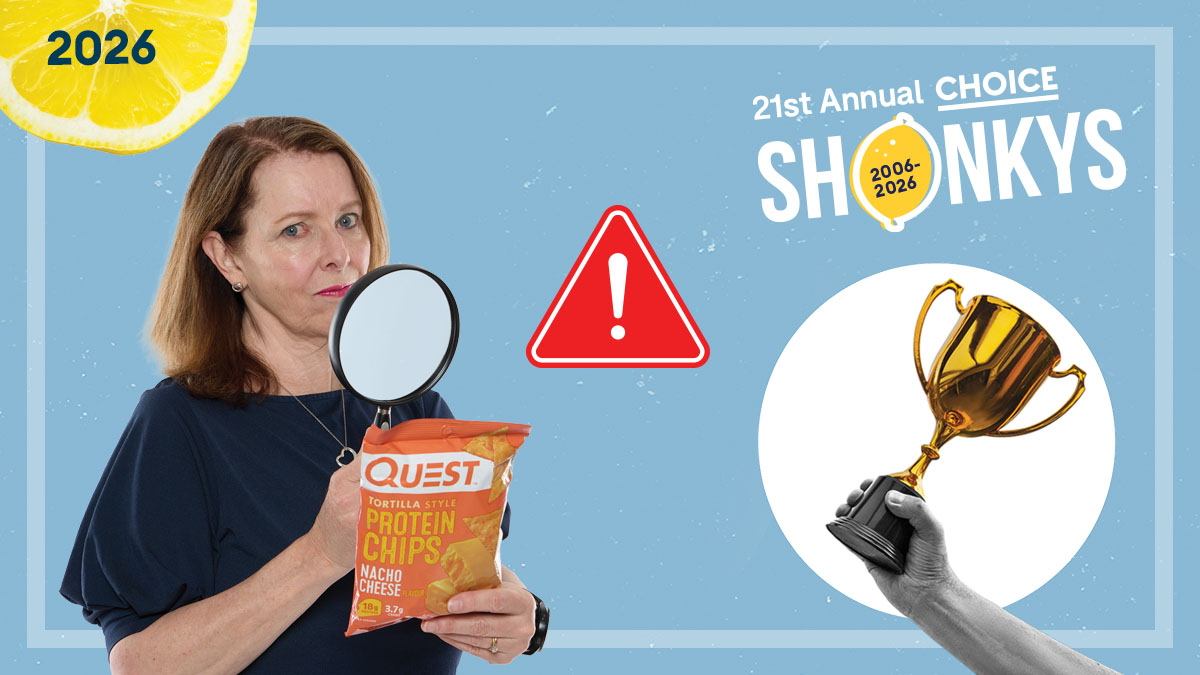
The Shonky Award for confusing getting ripped with ripped-off.
In the food manufacturing world, it seems that protein is big business. Its presence in everything – from breakfast cereals and ice cream to instant coffee and bread – is being loudly promoted on packaging, muscling out the regular foods on our supermarket shelves that don’t boast such credentials.
We recently investigated the price difference between the standard versions and the protein versions of a range of different food products. We found you’ll be paying, on average, around 50% more per 100g for those items promoting protein on the label.
Even if you could benefit from more protein in your diet, there are much more cost-effective ways to get it than via these types of foods
The fact is, very few of us actually need extra protein in our diets. The data shows that the vast majority of Australians meet or exceed their recommended daily protein requirements.
Even if you are one of the groups that could benefit from more protein in your diet, there are much more cost-effective ways to get it than via these types of foods.
Nacho chips on a Wagyu budget
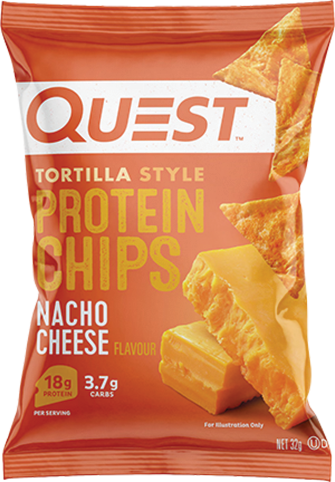
While there’s no shortage of examples of expensive processed foods that promote their protein content, one in particular stood out.
Not only might it cost you almost 900% more per 100g than the standard, non-protein version from a different brand, it also carries the sorts of warnings you’d normally expect to see on medication rather than snack food.
That product is Quest Protein Chips. A single 32g packet of this “protein-forward” snack will set you back $6.50.
“Far from being as cheap as chips, this snack food costs more than $20 per 100g,” says CHOICE journalist Marg Rafferty. “That’s comparable to prices you might pay for Wagyu beef or specialty seafood.”
You’ll be paying 886% more for the Quest Nacho Cheese Tortilla Style protein chips than for Doritos
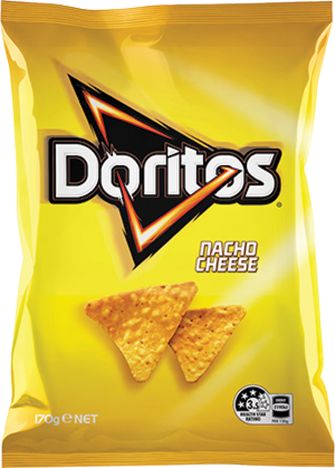
Compare the Quest Nacho Cheese Tortilla Style Protein Chips to a bag of Nacho Cheese Flavour Doritos.
When we first began looking at these products back in July for our investigation into the “protein premium”, the Doritos cost $5 for a 170g bag, making the Quest chips 591% more expensive.
Since then, the Doritos have dropped in price to just $3.50 for 170g, a unit price of just $2.06 per 100g.
In other words, you’ll be paying 886% more for the protein chips.
High in protein, but stacked with sodium
You may be thinking that paying extra for a healthier food is worth it. But like a lot of processed foods that promote protein on the label, you need to check the ingredients carefully to be sure you’re actually eating something that’s good for you.
While you’ll certainly get a good amount of protein in the Nacho Cheese Tortilla Style (18g per serve), these chips don’t perform as well against other measures.
Compare the fibre and sodium in the Quest product to the more familiar Doritos product.
The Quest chips contain 1.4g of dietary fibre per serve, while the Doritos offer 1.6g in the same 32g serve. And sure, it’s unlikely you’ll be turning to corn chips to increase your fibre intake. But unlike protein, fibre is something most Australians aren’t consuming enough of. In fact, more than 70% of us fail to reach optimal intake.
While you’ll certainly get a good amount of protein in the Nacho Cheese Tortilla Style, these chips don’t perform as well against other measures
If you’re worried about your sodium intake (and studies show that the average Australian consumes almost double the amount of sodium needed for good health) then that’s another reason to steer clear of the Quest product: it contains 327mg of sodium per serve. The Doritos chips contain roughly a third as much (115mg) in 32g.
Snack food that comes with a warning label
Perhaps the final word should go to the blurb on the packs of Quest Protein Chips.
While the marketing text boasts that the product “isn’t just for athletes to enjoy – they’re for everyone!”, it also carries a prominent warning that these chips are “not suitable for children under 15 years of age or pregnant women”, and that this food “should only be used under medical or dietetic supervision”.
There are lots of good sources of protein that don’t carry warning labels or cost nearly nine times the price of the standard version
CHOICE journalist Marg Rafferty.
We asked Quest about the warnings on the label, but we did not receive a response.
“Before you spend your money on these chips, ask yourself: ‘am I getting ripped, or just ripped off?’,” says Rafferty.
“There are lots of good sources of protein that don’t carry warning labels or cost nearly nine times the price of the standard version.”
More 2026 Shonky Award winners


Sony Interactive Entertainment

Together, we’re more powerful
It’s not fair when companies let us down with dodgy products and bad business practices. But when we work together, companies listen and governments change laws.
We’re up for that fight, and we need your help.
Donate today and support our quest for a better, fairer, safer Australia.
