Large companies in Australia have, for the first time, been legally required to publish a publicly available climate statement, but reading these statements is leaving consumers cynical, concerned and confused.
That is when people are even able to find the climate statements, often hidden in the deep recesses of corporate webpages on the internet.
Over 800 CHOICE supporters took part in the latest round of the Corporate Climate Accountability Project in August and gave their thoughts in a survey about one major company sustainability statement they were asked to read.
For the research, we chose climate statements from eight of Australia’s most recognised companies across a range of industries: Woolworths, Coles, Commonwealth Bank, NAB, Telstra, Optus, Fortescue and BHP.
Cynicism abounds
When asked how they felt after reading the climate statement, “cynical” was the most common response, particularly among those who read the NAB statement (72% chose “cynical”).
Other words most commonly associated with the climate statements of major companies were “concerned”, “confused” and “exasperated”.
NAB had the most negative responses overall, with 23% of those who read the bank’s statement saying they were “angry”, 20% saying they felt “cheated” and 17% saying they felt “hopeless”.
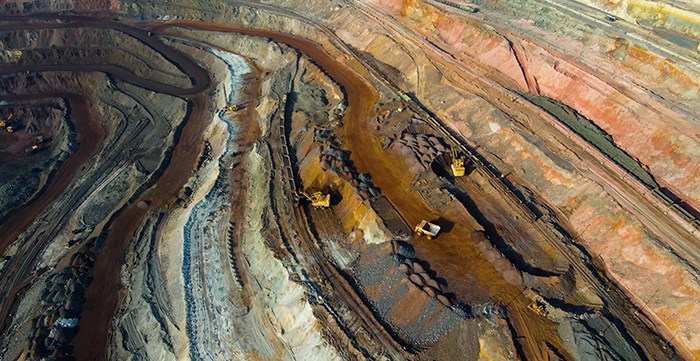
Fortescue was the only company that elicited a positive word as the most common response after consumers read the mining company’s climate statement, with 43% of respondents saying they were “hopeful” (compared to 41% who were “cynical”).
Text-only accessible version
How did you feel reading this climate statement?
The chart shows the percentage of respondents who selected Cynical, Hopeful or Concerned after reading the climate statement.
Cynical
Fortescue: 28%
Coles: 34%
Woolworths: 30%
Telstra: 41%
Optus: 28%
BHP: 38%
Commonwealth Bank: 41%
NAB: 42%
Hopeful
Fortescue: 43%
Coles: 23%
Woolworths: 20%
Telstra: 20%
Optus: 13%
BHP: 4%
Commonwealth Bank: 16%
NAB: 8%
Concerned
Fortescue: 28%
Coles: 34%
Woolworths: 30%
Telstra: 41%
Optus: 28%
BHP: 38%
Commonwealth Bank: 41%
NAB: 42%
Source: CHOICE Corporate Climate Accountability Project survey of supporters.
For each company, we asked people their opinions on the “action they were taking to protect the climate” both before and after reading the climate statement.
Fortescue recorded a strong improvement in sentiment once people had read the statement. Around one in five (22%) people rated the company “exceptional”, “very good” or “good” before reading its statement, and that figure increased to 41% after. Those who viewed the company’s actions poorly also fell significantly (53% to 24%) following reading.
Text-only accessible version
Fortescue
Where do you think each sit on the scale for taking action to protect the climate?
Before reading statement
Poor/Very poor/Exceptionally poor – 54%
Average – 24%
Good/Very good/Exceptional – 22%
After reading statement
Poor/Very poor/Exceptionally poor – 24%
Average – 35%
Good/Very good/Exceptional – 41%
BHP had a similar improvement after the exercise, with those viewing the company’s climate protection action as “poor”, “very poor” or “exceptionally poor” dropping from 76% to 51%.
NAB went in the other direction, with slightly more people viewing the bank’s actions unfavourably after reading its statement (68% after vs 63% before).
Text-only accessible version
NAB
Where do you think each sit on the scale for taking action to protect the climate?
Before reading statement
Poor/Very poor/Exceptionally poor – 63%
Average – 32%
Good/Very good/Exceptional – 5%
After reading statement
Poor/Very poor/Exceptionally poor – 68%
Average – 23%
Good/Very good/Exceptional – 9%
Little confidence in climate credentials
In a remarkable 71% of cases, the reader of the climate statement could not find information about the company’s current carbon emissions, a requirement of the new legislation. These poor results were consistently bad in all of the eight companies surveyed.
Companies were more upfront about their climate goals for the near future with roughly half of all companies providing some detail about their goals. But understanding what those goals were was not easy for the reader in 82% of cases (Optus and NAB scored the worst in this metric, with 91% and 92% of respondents respectively indicating they found the goals difficult to understand).
Only five percent of people who read the Optus statement and the BHP statement said it had increased their confidence in the respective companies
Fortescue came out on top in a number of other areas, such as being perceived by respondents as “genuinely committed to reducing their impact on the climate” (43% responded “yes”) and having climate statements that “increase … confidence in this organisation’s climate credentials” (32% “yes” – all companies performed badly in this measure).
Only five percent of people who read the Optus statement and the BHP statement said it had increased their confidence in the respective companies. Commonwealth Bank and NAB were not far behind on eight percent.
Woolworths was the top performer when asked whether readers could see “examples of changes made in the last 12 months to reduce carbon emissions”, with 62% of readers saying they could see examples.
Rob Cawthorne, managing director of the Carbon Reduction Institute, a private carbon accounting and decarbonisation strategy consultancy company, has created an Artificial Intelligence tool to analyse the quality of climate sustainability statements from companies against key criteria.
“[It asks questions like] does the statement have realistic government policy setting goals? Are your assumptions on reaching net zero basically reliant on your suppliers setting net zero targets and meeting them?” he says.
For an everyday consumer these [climate statements] are basically useless
Rob Cawthorne, managing director, Carbon Reduction Institute
Cawthorne ran the company statements of 19 major ASX-listed companies through the AI module and most performed poorly against the criteria of realistic and achievable goals in line with the emission reduction targets set by the Paris Agreement.
The one climate statement he called out in the positive was Fortescue, both for showing climate ambition and for also being transparent about the issues the company was facing in meeting those ambitions.
He says he isn’t surprised everyday consumers and readers of these climate statements in our research are left with little understanding and plenty of cynicism and confusion.
“My team and I are experts of 20 years and we even had to design this tool to help us. For an everyday consumer these [climate statements] are basically useless,” Cawthorne says.
Climate statements may leave consumers with little understanding of a company’s climate credentials.
Even finding the statements a struggle for some
In the CHOICE survey of over 800 supporters, we also asked respondents to find a particular climate statement through an internet search, to see how easy or difficult companies had made it to locate their reports.
Three out of four (75%) found it straightforward or easy to find Coles’ statement, and Woolworths scored almost identically (74%). Those numbers dropped to 59% with Commonwealth Bank and 61% for NAB and Telstra (the most difficult to find).
While everyday consumers may find these statements have limited utility, that isn’t to say they are without use.
In August, environmental not-for-profit Greenpeace Australia called out Coles and Woolworths for failing to take action on their earlier commitments to end deforestation in their supply chains, using their sustainability statements as a measure of accountability.
“Sustainability reports are really important,” Adele Chasson, nature and policy lead at Greenpeace Australia says.
“It’s one of the only times in the year where big companies with big impacts report on what they’re doing about that, so they’re really key for transparency about what commitments they are taking and what they’re doing in practice about it and whether it stacks up.”
It’s always useful to give people the most amount of relevant information when they’re making decisions about whether to invest in a particular company
Katrina Thompson, special counsel at the Environmental Defenders Office
She acknowledges the information isn’t easy to consume, but says it is one of the roles of advocates and campaigners to take these technical reports and interpret and communicate them.
Katrina Thompson, special counsel at the Environmental Defenders Office, says for their clients, everyday investors who regularly take on big companies over greenwashing, the fact that more information is now being provided than before is positive.
“It’s always useful to give people the most amount of relevant information when they’re making decisions about whether to invest in a particular company….[they need to know] what a company is doing in terms of its climate impact and climate mitigation strategies,” she says.
“It’s really positive for our clients, but it is important that that information is presented in an easy-to-understand way.”
The Australian Treasury, which oversees the mandatory reporting scheme for big companies, and the Australian Securities and Investments Commission (ASIC) are currently seeking feedback on the new reporting regime.
“The government is closely monitoring the first year of disclosures and is seeking opportunities to improve the efficiency of the framework without undermining its core objectives,” they say in a consultation paper statement calling for submissions.
The financial cap over which companies are required to report into the new mandatory regime will also continue to drop in future reporting periods, bringing medium-sized companies and more and more segments of the economy into the scheme.
It’s essential that companies are honest, open and transparent in their reporting
That’s why CHOICE believes it’s more important than ever that the regulator gets this right. It’s essential that companies are honest, open and transparent in their reporting and that you, the consumer, are empowered to make sense and make decisions off the back of the information you are given.
CHOICE will be writing a report on the Corporate Climate Accountability Project and letting the regulator and government know the experiences of consumers in trying to comprehend and demystify these complex climate statements.
There is certainly room for improvement.
This project has been undertaken as a part of the Constructive Institute Asia Pacific journalism fellowship program. You can read Part 1 here and Part 2 here.
Get the inside story on our investigations, campaigns and the difference they make.
Jarni Blakkarly is an award-winning Senior Investigative Journalist at CHOICE. Jarni has worked for news organisations such as SBS, Reuters, Al Jazeera English, ABC 730, Radio National, BBC World Service and Deutsche Welle.
Jarni won the Walkley Foundation's young journalist of the year student category award in 2016 and was the recipient of a Melbourne Press Club Michael Gordon fellowship in 2022. In 2023 he was a highly commended finalist in the Quill Awards and a winner at the 2024 Excellence in Civil Liberties journalism awards. In 2024 he was elected to serve on the Federal Council (National Media Section) of the MEAA. Jarni has a Bachelor of Communications (Journalism) from the Royal Melbourne Institute of Technology (RMIT).
Jarni Blakkarly is an award-winning Senior Investigative Journalist at CHOICE. Jarni has worked for news organisations such as SBS, Reuters, Al Jazeera English, ABC 730, Radio National, BBC World Service and Deutsche Welle.
Jarni won the Walkley Foundation's young journalist of the year student category award in 2016 and was the recipient of a Melbourne Press Club Michael Gordon fellowship in 2022. In 2023 he was a highly commended finalist in the Quill Awards and a winner at the 2024 Excellence in Civil Liberties journalism awards. In 2024 he was elected to serve on the Federal Council (National Media Section) of the MEAA. Jarni has a Bachelor of Communications (Journalism) from the Royal Melbourne Institute of Technology (RMIT).
For more than 60 years, CHOICE has been fighting the good fight for Australian consumers.
In the past year alone we've uncovered systemic issues with sunscreens, investigated shonky supermarket pricing, fought for stronger scam protections and helped make complex energy pricing fairer and clearer.
CHOICE is here to provide unbiased advice and independent testing in our world-class labs. We buy the products we test, just like you do, and our expert reviews are influence free. We’re here to help you choose smarter. Hopefully you’ll also save some money along the way.
Thanks to CHOICE, you’ll never be alone when a business treats you unfairly. You can support our work by joining or donating to our cause.