CHOICE conducted its own independent analysis of the PFAS-free claims on cookware products to determine their validity
‘PFAS-free’ doesn’t necessarily mean zero PFAS; trace or background levels may still be present depending on the definition
The manufacturers of the products we looked at (pans and air fryer trays) provided suitable evidence to back up their claims, but the type of evidence varied as there’s no universally agreed way to prove a PFAS-free claim.
Known scientifically as per- and polyfluoroalkyl substances, PFAS are a group of synthetic chemicals containing strong fluorine-carbon bonds. Known for their heat and grease-resistance properties, they’ve been widely used in consumer and industrial products since the mid-20th century. Some types have received attention due to their potential to accumulate in the body and persist in the environment.
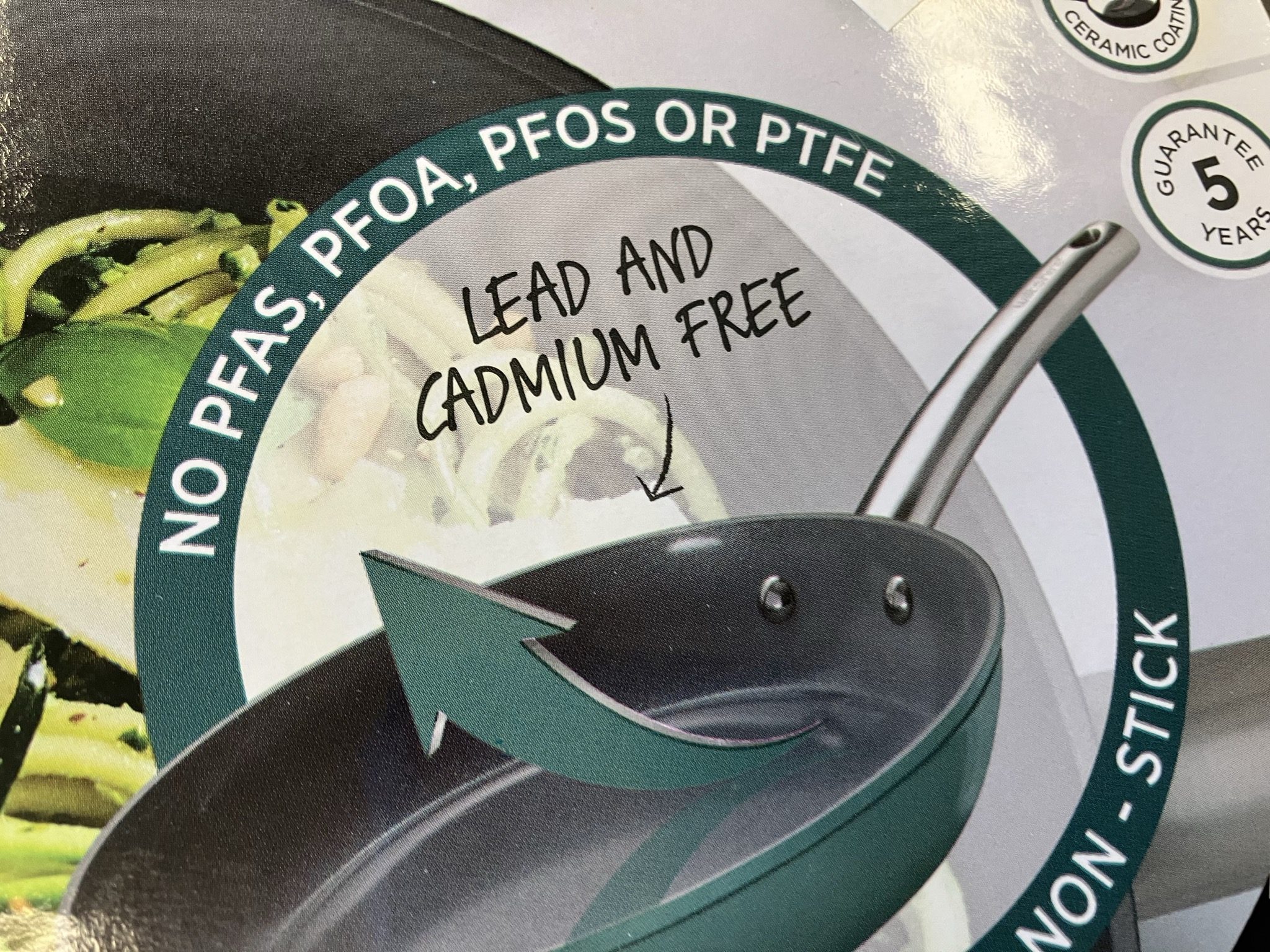
A new generation of non-stick, ceramic cookware claiming to be free of these “forever chemicals” is becoming common on store shelves. The packaging might say things like “PFAS-free”, “no PFAS”, “made without PFAS”, “non-toxic” or “safe for you and your family”.
But what does a PFAS-free claim on cookware actually promise, and can you trust the label?
Growing awareness of PFAS means some consumers are looking to limit their exposure. Cookware makers including Greenpan, Wiltshire, Ikea, Essteele and many more have jumped on this trend, producing proprietary, alternative non-stick coatings marketed as PFAS-free.
Australian Consumer Law requires PFAS-free claims to be truthful, accurate and evidence-based. But how a PFAS-free claim is substantiated can vary between manufacturers, as there’s no consistent, universally agreed framework for proving a claim.
CHOICE research reveals how manufacturers present a range of evidence to back up their assertions, including supplier declarations, statements that PFAS are “not intentionally added”, and test results from third-party labs.
Manufacturers present a range of evidence to back up their assertions
The question is whether the evidence is enough to support a PFAS-free claim. CHOICE put the claims – and how manufacturers backed them up – under the microscope.
We explain the nuances of what PFAS-free actually means, some of the common claims you’ll encounter on labels, and what evidence manufacturers present to back up their PFAS-free claims. We also lab-tested a range of cookware to independently verify the claims.
Different things! A PFAS-free claim is tricky without a firm definition, according to Oliver Jones, professor of analytical chemistry at RMIT University.
“The ordinary person on the street might assume it means absolutely no PFAS at all – zero – but it could mean no PFAS above the limits of the measurement technique used, no PFAS at an amount known to cause harm, or just no PFAS used in the manufacturing process – which of course, doesn’t guarantee there’s no PFAS in the final product.”
Complicating matters, Jones adds that there isn’t even a firm definition of what a PFAS actually is.
There is no single analytical method to test for every PFAS out there
“There are at least nine different definitions of PFAS in the scientific literature,” he says. Media reports vary wildly when they say how many PFAS are in existence, ranging from 7000 to several million.
Regardless of how many there are, there is no single analytical method to test for every PFAS out there, so when you see a PFAS-free claim, it’s never been tested on every possible PFAS.
The evidence will still be within defined scientific limits, and the item is not guaranteed to be 100% PFAS-free.
PFAS-free claims come under the regulation of the Australian Consumer Law (ACL). A spokesperson for the Australian Competition and Consumer Commission (ACCC), says: “It is important to note that the most harmful PFAS chemicals are banned under the Industrial Chemicals Environmental Management Standard (IChEMS), and Commonwealth, State and Territory governments have committed to adopting the ban.”
Manufacturers supplied a range of evidence types to back up their PFAS-free claims.
These PFAS types include PFOA, PFOS and PFxHS, which are heavily regulated due to their persistence and potential impacts.
The ACCC’s principles for trustworthy environmental and sustainability claims state that businesses must have “clear evidence to back up all claims”, with independent scientific evidence generally deemed most credible. Information should also be easily accessible to consumers.
In our investigation, manufacturers who responded were open about sharing their PFAS-free lab reports. The type of evidence supplied included some or all of the following:
Food migration: Whether chemicals from the cookware migrate into food under controlled conditions.
Targeted analysis: This looks for specific PFAS (like PFOA or PFOS), with mass spectrometry, which is the “gold standard” method of detection, according to Jones. However, no one test can detect every PFAS, and different methods may be required depending on the PFAS you’re looking for.
Total fluorine testing: An accepted screening method that is a good indicator for PFAS is whether or not fluorine levels are elevated. But the testing cannot distinguish between whether the fluorine comes from PFAS or other non-PFAS sources.
Supplier declarations: Reports from suppliers who asserted that no PFAS was added to the product or used in the manufacturing process.
The lack of consistency in PFAS-free claims can make them difficult to interpret.
As Jones explains: “Different definitions are not bad in themselves, if the manufacturers are clear about what they are defining as PFAS-free. Suppose you are making gluten-free bread for a friend with coeliac disease. If you didn’t purposefully add any gluten-containing ingredients to the mix, I think most people would say it is reasonable to tell your friend it is gluten free, even though you didn’t actually test it.”
Claims and what they may mean
These are some of the claims we found on cookware packaging.
There are many types of PFAS-free claims found on cookware packaging.
“Made without PFAS”, “No intentionally added PFAS” Rather than go all-out and claim the product has zero PFAS, a manufacturer can assert that no PFAS were used in the making of the product and that any trace background elements found are below limits known to cause harm. Many manufacturers use this claim.
“PFAS-free”, “No PFAS”, “free of PFAS” The Cookware Company, which manufactures the popular Greenpan brand, markets its products as “free of PFAS”. It follows US Federal Trade Commission guidance on “free of” claims, which actually allows for trace amounts at background or trace contaminant levels, as long as they have not been intentionally added and do not cause material harm.
“Free of PFAS and PFOA”, “Free of PFAS and PFOS” PFOA and PFOS are types of PFAS that have been banned in Australia since July 2025, so claiming to be free of them doesn’t mean much here – all products should be free of them. (It’s also worth noting that a frypan that only claims to be “PFOA free” or “PFOS free” and not “PFAS-free” may still use other types of non-stick PFAS on its coatings.)
“Toxin-free”, “Healthy non-stick”, “Safe”, “Eco-friendly” We saw these types of claims a lot alongside the PFAS-free ones. The ACCC recommends that manufacturers avoid making “broad claims” that may not be clear to consumers. Of the phrase “eco-friendly”, the ACCC guidance says, “Few, if any, products can truthfully make this claim. Almost all products, services or businesses have some adverse impact on the environment in their manufacture, packaging, delivery, use or disposal.”
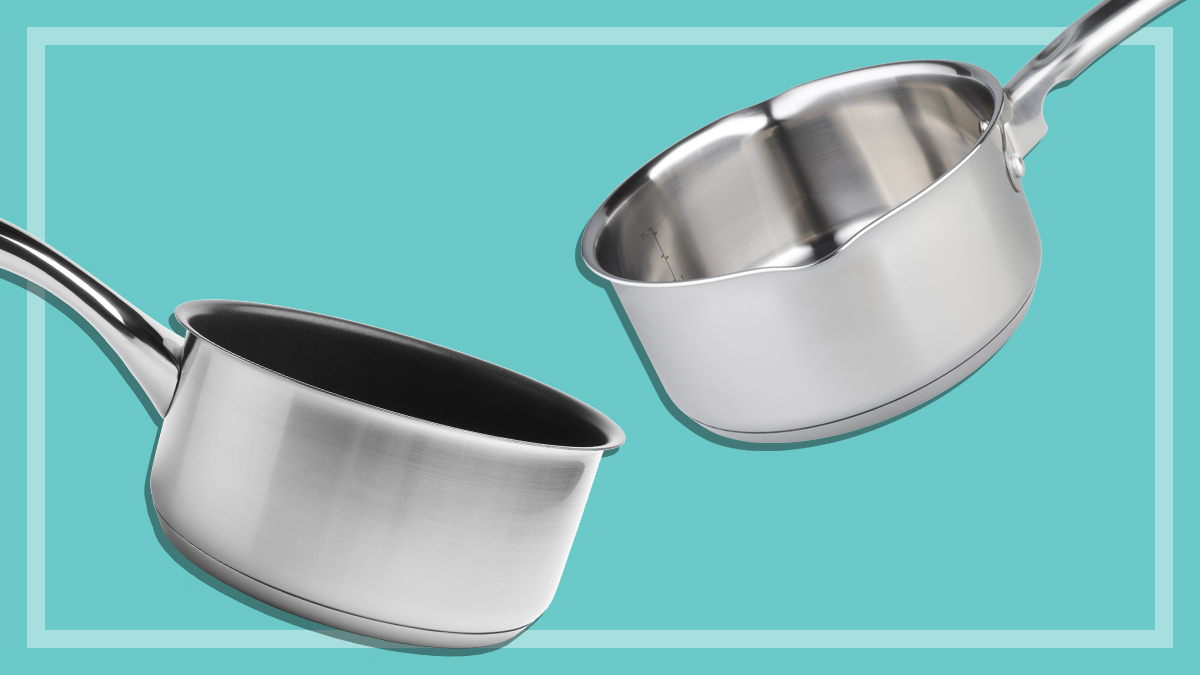
CHOICE purchased 17 pieces of cookware including frypans, saucepans and air fryer crisping trays, all of which made claims their product was not made with, or was free from, PFAS. Brands included Greenpan, Ikea, Wiltshire, Essteele, Big W (Masterclass) and more.
Total fluorine test
To analyse the samples, an accredited lab carefully scraped material off the surface of the pans and used a Total Fluorine (TF) screening test to look for elevated levels of fluorine, which could indicate the presence of PFAS. We knew from earlier pilot testing that four conventional non-stick pans returned extremely high TF results of 310,000 to 730,000 mg/kg (31–73%) – a strong PFAS indicator.
By comparison, when we tested the products with PFAS-free claims, results were far lower, ranging from 16mg/kg to 620mg/kg.
However, a TF reading alone won’t tell us if the fluorine comes from PFAS or other sources, such as non-organic fluorine.
“Many minerals used in ceramic cookware contain fluorine, and drinking water is fluoridated; both of these would also show up in a TF test,” explains Jones.
A TF reading alone won’t tell us if the fluorine comes from PFAS or other sources, such as non-organic fluorine
So we subjected the seven products with higher TF levels (above 100mg/kg) to more targeted analysis, testing for a broad range of individual PFAS and other fluorinated compounds associated with them (for the technical detail, see More about our testing, below).
We also asked the manufacturers of the seven products to let us know what they made of our findings and provide us with more context.
Targeted analysis results
Of the compounds we tested for, which included the more well-known PFAS found in the environment including PFOA, PFOS and PFHxS, all were below the lab’s reporting limits apart from one, PFBA, which was found in minute amounts in all seven samples ranging from 5.1 to 170 micrograms per kilogram (one microgram is 0.001 milligrams per kilo, or one part per billion).
Jones says the PFBA results are not concerning, and it’s unclear where in the production and testing process these tiny amounts came from (the lab we used is confident the results were not from its own facilities, and they would not have been deliberately added by the manufacturers).
Without a universal definition of PFAS-free, is it truly PFAS-free when some can still be detected?
To put these minute amounts into context, Jones says, “It’s a bit like if I add a single, tiny granule of sugar to your coffee. Technically, [the] coffee is no longer sugar-free but in practice it is, as you can’t tell the difference and it has no effect.”
It does, however, lead one to ask what a PFAS-free claim actually means, as these persistent chemicals are virtually everywhere. Without a universal definition of PFAS-free, is it truly PFAS-free when some can still be detected?
Even we, as humans, cannot claim to be PFAS-free. The Australian Bureau of Statistics has detected three PFAS – PFOS, PFHxS and PFOA – in more than 85% of the population.
We approached the manufacturers of the products that came back with the slightly higher Total Fluorine results and invited them to provide us with information about their PFAS-free claims. While we are confident their claims are valid (and it’s commendable that some manufacturers even went on to commission further targeted analysis on their samples), the variation in responses illustrates how different manufacturers define PFAS-free.
Jones says the responses are fairly reasonable. “Since there is no set definition of PFAS-free, then people have to do the best they can to create a definition for themselves.”
Greenpan Bistro Air Fryer with See Through Lid
Claim: PFAS-free non-stick Total fluorine: 120mg/kg
The Cookware Company said the fluorine detected could have come from the mica present in the topcoat of the ceramic non-stick. It maintained the coating “has been manufactured and applied without the use of any intentionally added PFAS”, while its own TF result from an accredited third-party lab reported no detection at a 50mg/kg reporting limit. It also added that it follows US Federal Trade Commission guidance on “free of” claims, which allows for trace amounts at background or trace contaminant levels that have not been intentionally added. “We follow these guidelines because they provide a clear and detailed framework for the substantiation of this claim whereas the Australian Consumer Law (ACL) prohibits misleading or deceptive conduct and false representations without providing an objective measure to assess these specific claims.”
Ikea Middagsmat 24cm frypan
Claim: This product has a non-stick coating where no PTFE or other PFAS have been allowed. Total fluorine: 120mg/kg
Ikea acknowledged our finding, saying, “The reported TF value at 120mg/kg should not be interpreted as direct evidence of PFAS presence. We confirm that no intentionally added PFAS substances are used in the formulation.” It put the result down to the presence of inorganic fluorine-containing materials, such as manufactured, synthetic mica used in the coating. It follows the protocols established by the Research Institute of Sweden to test for PFAS.
Wiltshire Easycook Ceramic 26cm
Claim: No PFAS, PFOA, PFOS or PTFE Total fluorine: 420mg/kg
Manufacturer Fackelmann sent us results from an independent lab which included a food migration test report showing no chemical contact with the food, as well as results from targeted PFAS analysis which came back as “not detected” for the chemicals tested. It also provided us with a statement from its supplier which said that it “did not intentionally add” any PFAS substances. Fackelmann also said that fluorine was a useful screening tool but “doesn’t identify the compounds present or determine whether PFAS are present”. Some weeks later, it got back to CHOICE with additional targeted analysis conducted on a different batch of pans, which also came back as “not detected”.
Essteele Per Benessere Open Skillet 24cm
Claim: Healthy ceramic non-stick made with no PFAS. Total fluorine: 120mg/kg
Manufacturer Meyer said its Per Benessere line “features an internal ceramic non-stick coating and an external lacquer coating. Neither coating is manufactured with the intentional use of PFAS, including PFOA, PFOS or PFHxS. This has been confirmed by the coating manufacturer”. It said the coating manufacturer confirmed that inorganic fluorine-bearing materials were used, which may include “mica and similar inorganic mineral components” which are not PFAS compounds. It said accredited, external lab testing “confirmed that the total fluorine content of the interior non-stick coating, the surface in contact with food, is below 50mg/kg”. The testing also confirmed the coating manufacturer’s explanation that inorganic materials account for the total fluorine content of the exterior coating. After our communication it conducted further compound-specific testing, which did not detect regulated PFAS above reporting limits.
Masterclass (Big W)
Claims: Made without PFAS Total fluorine: 310mg/kg
Big W’s Masterclass was the only frypan we tested that stated a test method on its packaging (“This product has been tested in accordance with EN 14582:2016 and found to contain no detectable organic fluorine (<20ppm), confirming no PFAS chemicals have been used in its production”.) In response to our results, it said it uses Total Organic Fluorine testing (as opposed to Total Fluorine) as this “measures only organofluorine compounds (fluorine bonded to carbon), serving as an aggregate proxy for PFAS, noting that the man-made fluorine carbon bond is the defining characteristic of this chemical family”. It sent us test results showing no detectable organic fluorine above the lab’s reporting limit of 10mg/kg. Several weeks later it provided us with an additional fluorine test report on a current batch, showing “that no fluorine content was detected when assessed to ASTM D7359-18 using the combustion ion chromatography method”.
Other manufacturers
We also tested the Joseph Joseph Space Non-stick 24cm frypan (340mg/kg TF) and Berghoff Leo Non-stick frying pan 24cm (620mg/kg) but did not receive responses to our queries.
More about our testing
CHOICE purchased 15 frypans and saucepans and two air fryer crisping trays, all of which made claims that their product was free of all PFAS. Common terms used included “PFAS-free”, “made with no PFAS”, or “no PFAS”. We deliberately avoided products that only made claims to be free of specific PFAS compounds, such as PFOA or PTFE.
Laboratory analysis
A small amount of coating was carefully scraped from the pan surface, ensuring that only the coating material was collected and that sample preparation was conducted under controlled conditions to avoid contamination. The samples were then combusted at approximately 1050°C and analysed by ion chromatography to determine total fluorine content.
The method measures all fluorine present in the coating, regardless of its source or chemical form.
Products with >100mg/kg were subjected to targeted analysis, looking for a wide range of PFAS including PFBA, PFOA, PFOS and PFHxS. A result below the limit of reporting means PFAS was not present at a concentration the lab could reliably measure.We sent the pans to an accredited laboratory for an initial analysis.
Each coating was tested for Total Fluorine (TF) using Combustion Ion Chromatography (CIC), an accredited laboratory method. Total Fluorine is a good indicator of whether PFAS is present in a sample, although it cannot distinguish whether the fluorine comes from PFAS or other sources of inorganic fluorine such as minerals used in ceramic coatings.
CHOICE verdict
So, what does all this mean for consumers looking to reduce their exposure to PFAS? Of the products analysed, our test results did not reveal any concerns, but the ongoing research into different PFAS chemicals means a consumer could find it hard to compare results between brands.
Manufacturer Fackelmann, who makes the Wiltshire brand, told CHOICE it would welcome a regulatory framework or recognised industry standard. “As you have identified, there are currently different approaches to testing and supporting these claims, which can make direct comparison difficult. We would therefore support an evidence-based and practical approach that gives consumers confidence in the claims being made, while providing industry with clear and consistent requirements to work to.”
Of the products analysed, our test results did not reveal any concerns
It was good to see the suppliers of the products we tested taking their testing and transparency seriously. Consumers would benefit from more consistency in claims and what’s required to back them up, so stronger rules or guidance about these claims from the ACCC would help.
If you’re worried about PFAS but still want a non-stick surface, our advice is that looking for cookware that includes a claim that no PFAS has been added can be a good place to start. And if you’re using a non-stick pan, regardless of whether it’s PFAS-coated or not, always follow the manufacturer’s instructions to avoid flaking off or damaging the material. General advice includes:
Don’t use metal utensils or scourers.
Don’t leave the pan unattended or empty on a hot stove where it could burn.
Avoid using spray oils which could damage the surface.
Take care if using extra virgin olive oil, due to its lower smoke point which could damage the surface if the temperature gets too high. Canola and peanut oil are good alternatives.
Known scientifically as per- and polyfluoroalkyl substances, PFAS are a group of synthetic chemicals containing strong fluorine-carbon bonds. Valued for their heat and grease-resistance, they have been in widespread consumer and industrial use since the mid 20th century.
Studies on long-term health impacts of PFAS exposure remain ongoing, and the potential associated risks may vary between the thousands of PFAS types.
There are many thousands of PFAS chemicals, with PFOS, PFOA, and PFHxS receiving the most attention for their potential to accumulate in the body and persist in the environment. Exposure to these well-studied PFAS is also associated with some risks such as reduced kidney function and slightly elevated cholesterol levels, but this doesn’t necessarily mean PFAS exposure caused them. Nearly all of us have detectable levels of PFOS, PFOA or PFHxS in our blood.
Another common PFAS is PTFE, best known by the brand name Teflon. This fluoropolymer is a preferred substance in traditional non-stick cookware and appliances, thanks to its heat resistance and low friction. It’s generally considered stable and inert at normal cooking temperatures.
Know the products to avoid before you shop. Get our free guide and buy smarter.
Kim Gilmour is a Senior project officer. She manages a range of product tests such as coffee machines, stick vacuums, bassinets, high chairs and ovens, which are all tested in our in-house labs.
Kim’s work gives people access to robust, independent advice and helps consumers make informed decisions about their purchases. Her work also helps to keep manufacturers in check, by regularly exposing product flaws which can result in better and safer products.
Prior to CHOICE, Kim spent 16 years working as a technology journalist in Sydney and London. With several years as a senior researcher/writer at our UK sister organisation, Which?
Kim has authored how-to technology books such as Spotify for Dummies and Digital Photography for the Older and Wiser.
Kim has a Bachelor of Arts in Communication (Journalism) from Charles Sturt University. LinkedIn
Kim Gilmour is a Senior project officer. She manages a range of product tests such as coffee machines, stick vacuums, bassinets, high chairs and ovens, which are all tested in our in-house labs.
Kim’s work gives people access to robust, independent advice and helps consumers make informed decisions about their purchases. Her work also helps to keep manufacturers in check, by regularly exposing product flaws which can result in better and safer products.
Prior to CHOICE, Kim spent 16 years working as a technology journalist in Sydney and London. With several years as a senior researcher/writer at our UK sister organisation, Which?
Kim has authored how-to technology books such as Spotify for Dummies and Digital Photography for the Older and Wiser.
Kim has a Bachelor of Arts in Communication (Journalism) from Charles Sturt University. LinkedIn
For more than 60 years, CHOICE has been fighting the good fight for Australian consumers.
In the past year alone we've uncovered systemic issues with sunscreens, investigated shonky supermarket pricing, fought for stronger scam protections and helped make complex energy pricing fairer and clearer.
CHOICE is here to provide unbiased advice and independent testing in our world-class labs. We buy the products we test, just like you do, and our expert reviews are influence free. We’re here to help you choose smarter. Hopefully you’ll also save some money along the way.
Thanks to CHOICE, you’ll never be alone when a business treats you unfairly. You can support our work by joining or donating to our cause.