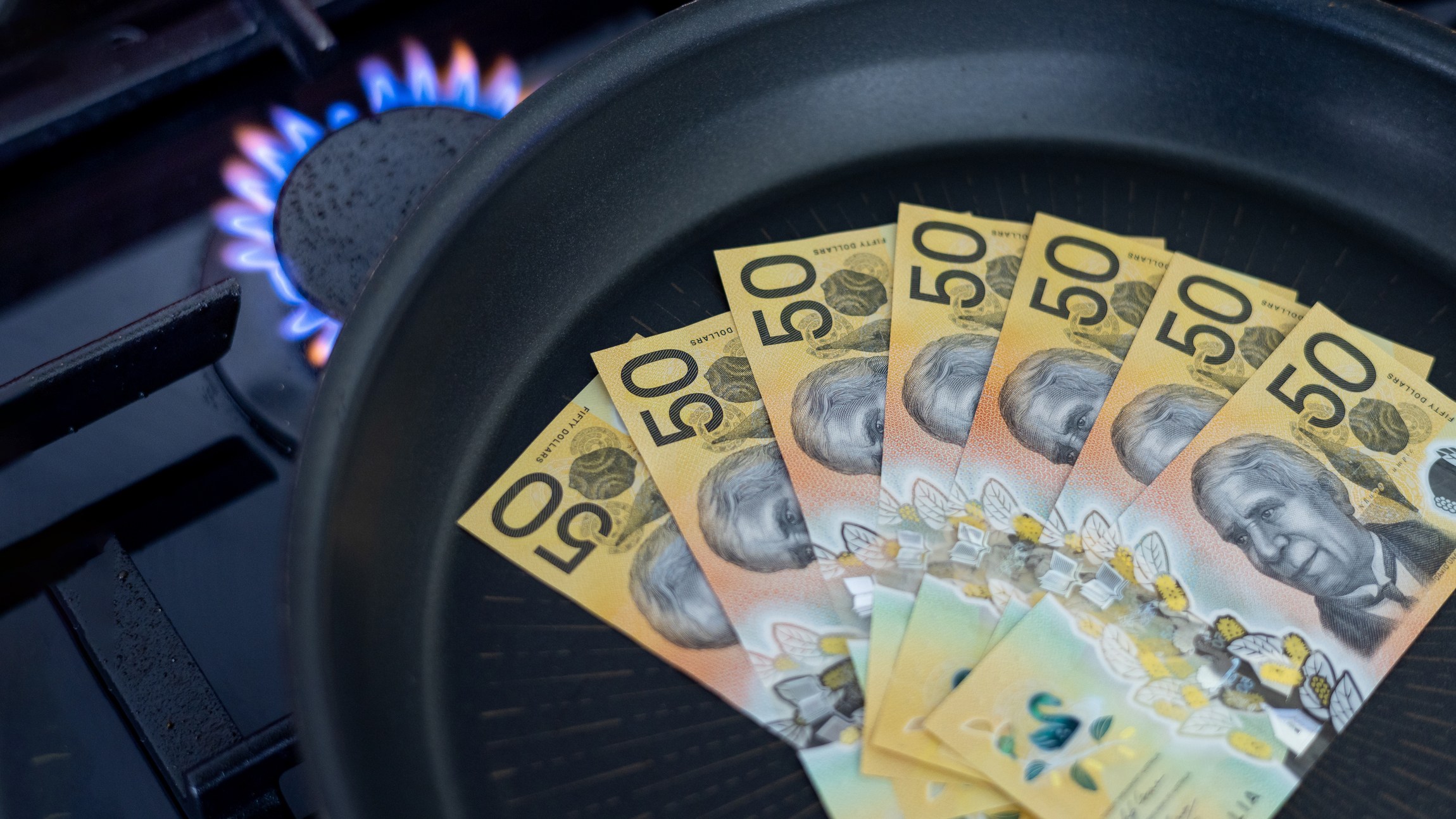
As the use of household gas is phased out in Australia, those who have no choice but to keep using it will face higher costs
A coalition of consumer advocacy groups requested changes to the National Gas Rules that would prevent industry from unfairly adding to these costs
The proposed measures were aimed at protecting consumers, but the market rulemaker has reworked them in favour of industry, advocates charge
As the nation continues its transition to all-electric power sources, those who have no choice but to continue using gas are going to see their bills go up.
These would include renters and other households that don’t have the option or can’t afford to replace their gas appliances with electric ones.
It’s an expected consequence of the gradual phasing out of gas around Australia. A significant portion of the costs of maintaining the gas network infrastructure has always been passed on to consumers, and there will be increasingly fewer of them to divide these costs among.
But why should the remaining gas customers be paying more than their fair share to prop up an industry whose days are numbered? Shouldn’t the industry and the investors behind it be footing most of the bill for keeping the network infrastructure up and running as the customer base shrinks?
The Australian Energy Market Commission (AEMC), which sets the rules for companies that supply retail gas, is meant to strike a balance between allowing them to function profitably and protecting consumers from being overcharged.
Last year Energy Consumers Australia (ECA) and the Justice and Equity Centre (JEC) requested changes to the National Gas Rules by the AEMC to protect customers from having to pay too much for the increasingly obsolescent gas infrastructure as full-scale electrification goes forward.
In effect, the proposed changes would prevent gas companies from proactively charging the remaining gas customers more to offset the future financial burden of maintaining the networks, which will only increase as customers drop away.
The requested rule changes were an effort to protect consumers, but the AEMC’s draft response to it in August this year amounts to a gift to the industry and its investors, the organisations say.
The advocacy groups charge that the gas industry has had plenty of time to figure out how to recover their network development and maintenance costs in an environment where gas use is decreasing, but its ultimate strategy appears to be making remaining gas customers foot the bill.
“Gas networks have known for years they needed to plan for their eventual decline and yet they have failed to do so,” says ECA CEO Dr Brendan French.
“We are deeply concerned that the AEMC’s draft rules would allow gas networks to bring forward hundreds of millions in cost recovery, shifting the risk of stranded assets onto today’s households.”
We are deeply concerned that the AEMC’s draft rules would allow gas networks to bring forward hundreds of millions in cost recovery, shifting the risk of stranded assets onto today’s households
ECA CEO Dr Brendan French
(The stranded assets in this case would be gas reserves in the ground that companies won’t be extracting due to decreasing demand as well as the infrastructure to extract it.)
The accelerated cost recovery would be a gift to people or institutions that hold shares in companies that own gas networks, the value of which will inevitably decline as gas is phased out, the advocates say. In effect, the draft AEMC ruling – which is due to be finalised on 17 December – would cushion the blow for these investors at the expense of households.
“It shifts risk away from investors, who understood the changing outlook for gas, to consumers who did not make these investment decisions,” French says. “It is a blank cheque for gas monopolies.”
Douglas McCloskey, program director for energy and water justice at the Justice and Equity Centre, says the JEC and ECA initiated the process of amending the gas rules with the AEMC to make sure they continued to protect consumers and promote their interests as the country transitions to all-electric energy sources. But the AEMC’s draft response would have the opposite effect.
“Continuing down the path of the AEMC draft would prioritise returns for gas network businesses at the expense of households. That’s not in consumers’ interests, and it risks leaving those who can least afford it paying an unfair price,” McCloskey says, adding that the final determination “needs to do more to protect consumers”.
The costs to industry of maintaining the gas networks will only increase as gas use declines.
CEO of Financial Counselling Victoria Zyl Hovenga-Wauchope says financial counsellors “are already seeing households forced to make impossible choices between paying for energy and meeting other essential costs”.
“Consumers should not be asked to shoulder the financial risks of gas network businesses that have had years to prepare for a changing energy market.”
AEMC chair, Anna Collyer, tells CHOICE that the commission’s reworking of ECA’s and the JEC’s proposed changes are in line with its overarching goal “of ensuring the regulatory framework for gas networks is fit for purpose in the future as consumer demand for gas becomes increasingly uncertain”.
The AEMC’s approach to cost recovery takes industry sustainability into account so the industry can continue to provide gas for the declining number of customers who need or want it, Collyer says.
This gives gas providers a reasonable opportunity to recover their past investments, while reducing the risk of high and volatile prices for future consumers
AEMC chair Anna Collyer
She acknowledges the detrimental impact on consumers as gas use declines, saying network costs “would be borne by those who are left behind, including low-income households, renters, small businesses and industry”.
Cost recovery won’t be a one-size-fits-all proposition, Collyer says.
“For some gas networks, this could mean modest cost increases for those who continue to use gas in the near-term. This gives gas providers a reasonable opportunity to recover their past investments, while reducing the risk of high and volatile prices for future consumers. It would also support a safe and reliable future gas supply for those customers that continue to rely on gas.”
Collyer says the AEMC’s proposed cost recovery measures will allow gas providers to recover some of their investments earlier, but the industry will still face the long-term risk of irrecoverable investments.
But from the standpoint of consumer advocates, gas companies are being let off the hook.
The networks get to keep their supernormal profits, and households and businesses cop the pain
Dr Kat Lucas-Healey, Environment Victoria
Dr Kat Lucas-Healey, senior climate and energy advisor at Environment Victoria, says the fundamental principle behind the privatisation of the gas networks – as opposed to keeping them publicly owned – was that investors would face any risks of a declining gas industry.
“Now that gas is in clear decline, we’re seeing the complete opposite,” Lucas-Healey says. “The networks get to keep their supernormal profits, and households and businesses cop the pain.”
Get the inside story on our investigations, campaigns and the difference they make.
Andy Kollmorgen is the Investigations Editor at CHOICE. He reports on a wide range of issues in the consumer marketplace, with a focus on financial harm to vulnerable people at the hands of corporations and businesses. Prior to CHOICE, Andy worked at the Australian Securities and Investments Commission (ASIC) and at the Australian Financial Review along with a number of other news organisations. Andy is a former member of the NSW Fair Trading Advisory Council. He has a Bachelor of Arts in English from New York University. LinkedIn
Andy Kollmorgen is the Investigations Editor at CHOICE. He reports on a wide range of issues in the consumer marketplace, with a focus on financial harm to vulnerable people at the hands of corporations and businesses. Prior to CHOICE, Andy worked at the Australian Securities and Investments Commission (ASIC) and at the Australian Financial Review along with a number of other news organisations. Andy is a former member of the NSW Fair Trading Advisory Council. He has a Bachelor of Arts in English from New York University. LinkedIn
For more than 60 years, CHOICE has been fighting the good fight for Australian consumers.
In the past year alone we've uncovered systemic issues with sunscreens, investigated shonky supermarket pricing, fought for stronger scam protections and helped make complex energy pricing fairer and clearer.
CHOICE is here to provide unbiased advice and independent testing in our world-class labs. We buy the products we test, just like you do, and our expert reviews are influence free. We’re here to help you choose smarter. Hopefully you’ll also save some money along the way.
Thanks to CHOICE, you’ll never be alone when a business treats you unfairly. You can support our work by joining or donating to our cause.