Adrian bought a new MG4 electric vehicle in 2025 for around $32,000
The car’s safety system repeatedly went on the fritz, sometimes causing the MG to come to a halt in traffic
When Adrian requested a refund, he was strung along for months by the dealership and then asked to sign a non-disclosure agreement
Adrian DeWitts was not the first person to be asked to sign a non-disclosure agreement as a condition for getting a refund, but he may be one of the few who has refused.
He bought a new MG4 electric vehicle in 2025 for around $32,000 from a dealership in the Melbourne suburb of Essendon, and the troubles started soon thereafter. The car’s safety system repeatedly went on the fritz, sometimes causing the MG to come to a halt in traffic.
This happened more than once when he was ferrying his kids to sports training, and it unnerved him. He liked the way the MG handled, but the recurring faults led him to the conclusion that he wanted to return it to the dealer and get his money back.
It seemed like they could have just kept doing this forever. It was exhausting
Adrian DeWitts
Such was his right under the Australian Consumer Law, which holds that consumers can demand a repair, refund or replacement in the case of a major fault.
But each time Adrian made it clear he would like to go ahead and secure a refund, Essendon MG told him to bring it back in again. This happened three times over a period of around 18 months, but the faults kept occurring.
The dealership provided a loaner vehicle for the many days his car was back in the shop, but that only went so far toward alleviating the situation.
“It seemed like they could have just kept doing this forever. It was exhausting,” Adrian says.
Essendon MG let it be known that they were taking direction from MG Australia. Adrian countered that he bought the car from the dealership, not corporate headquarters.
“MG Australia seemed to have been pushing that,” Adrian says. “They had a process there. It felt like they were trying to delay. At one point while we were waiting on the refund, the dealer told me MG didn’t want to deal with this.”
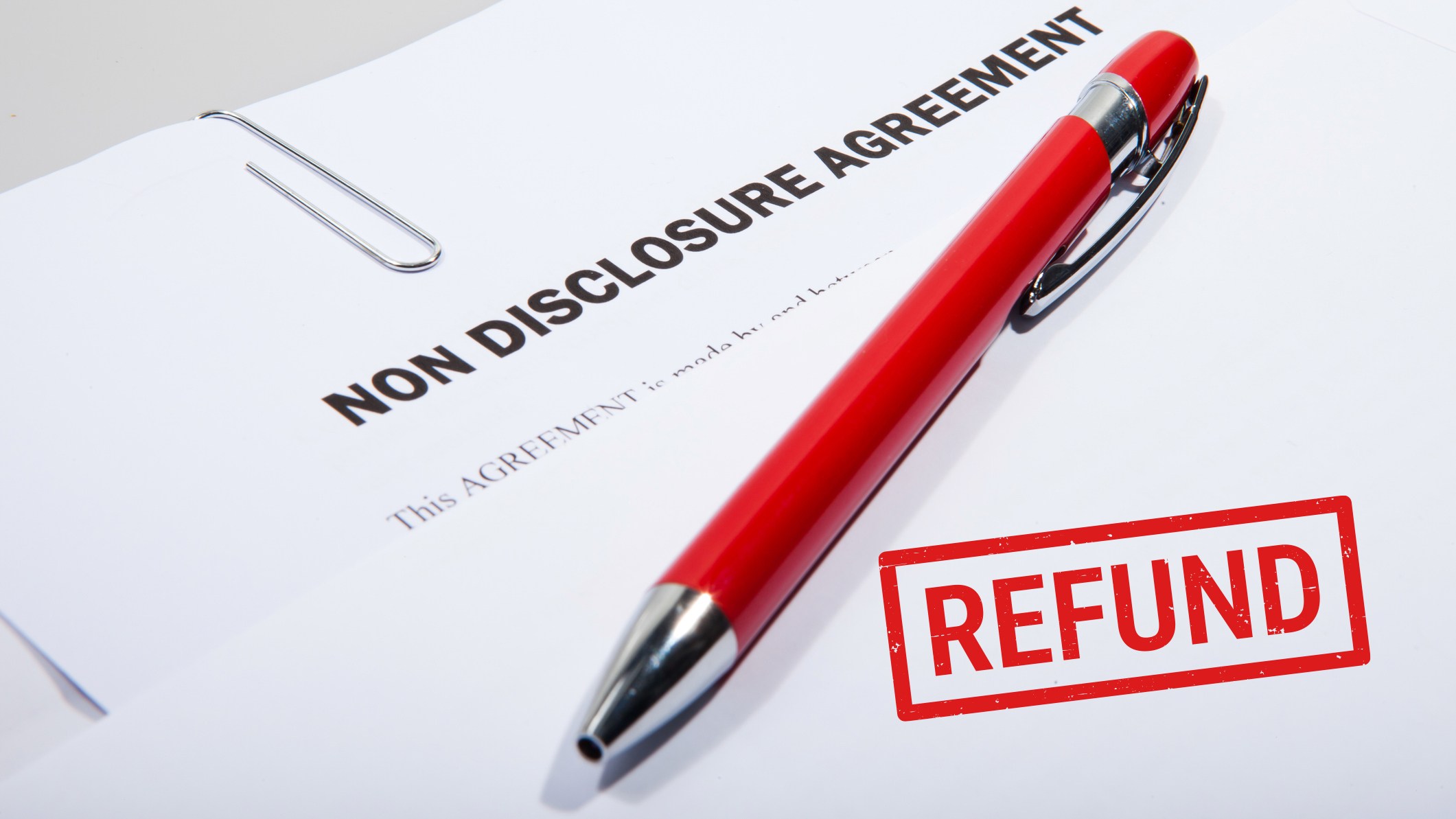
After a wearying round of back and forth exchanges with the dealership over many months, it was finally agreed that Adrian would get his money back for the faulty vehicle. But there was a catch. He had to sign a non-disclosure agreement (NDA) saying he wouldn’t reveal that he’d returned the car for a refund or publicly criticise either the dealership or MG Australia.
In other words, he wasn’t allowed to publicly comment on the problems that his MG4 had or the delays in getting a refund.
It was such a long and exhausting process, then they slap this non-disclosure agreement on me when they finally agree to buy back the car
Adrian DeWitts, MG customer
Adrian refused to sign. But the refund was off the table until he did.
“It was such a long and exhausting process, then they slap this non-disclosure agreement on me when they finally agree to buy back the car. It made me wonder, ‘how many other people have signed this?’ If a lot of people have signed it, we can’t know whether others have had the same problem. When I’m researching a car purchase, I want to know these things. These NDAs cover that up.”
The legality and enforceability of NDAs depends on the circumstances, but one thing is clear: they can’t be imposed as a condition for exercising your consumer rights.
In 2023, we heard from 41 Australian consumers through a CHOICE national survey who’d been asked to sign an NDA in the last five years, adding to a number of cases brought to our attention previously. Fifteen of the 41 survey-takers had been asked to sign a gag order more than once.
Last year, we reported on the practice of banks requiring scam victims to sign NDAs as a condition for being reimbursed, in the rare cases that banks actually reimburse victims.
[Businesses] should ensure they do not mislead consumers that they need to sign a non-disclosure agreement to access their statutory rights
ACCC spokesperson
We’ve seen NDAs issued by removalists, car dealerships, the all-in-one kitchen unit brand Thermomix, travel agencies, solar panel installers, pet sitting services – the list goes on.
In a 2016 submission to a review of the Australian Consumer Law, CHOICE called for a ban on these kinds of NDAs, but that didn’t happen.
In a 2017 national CHOICE survey of new car owners, 16% said they were made to sign an NDA to have a problem with the new vehicle fixed.
16% of new car owners said they were required to sign an NDA to have a problem with the new vehicle fixed.
An Australian Competition and Consumer Commission (ACCC) spokesperson tells CHOICE that non-disclosure agreements are not prohibited under the ACL, but businesses that use them “should ensure they do not mislead consumers that they need to sign a non-disclosure agreement to access their statutory rights”.
“At present, there are limited incentives in the Australian Consumer Law for businesses to comply with their consumer guarantee obligations, which significantly undermines the effectiveness of the regime,” the ACCC spokesperson says.
They added that the ACCC “strongly supports the government’s proposed reforms that would introduce a prohibition against suppliers and manufacturers failing to provide a remedy to consumers when legally obliged to do so, as well as prohibition against manufacturers failing to reimburse suppliers for providing consumer guarantees remedies when the manufacturer is responsible for the problem with the product”.
Whether the proposed reforms – which CHOICE also strongly supports – will give the ACL the teeth it needs remains to be seen.
The MG dealership was friendly enough in its back and forth correspondence with Adrian, but when he refused to sign the NDA, the rep started to play hard ball, giving Adrian a deadline to take or leave the refund offer and reminding him that the value of his car was depreciating by the day.
Citing chapter and verse of Australian Consumer Law, Adrian said he would be taking the matter to the Victorian Consumer Administrative Tribunal (VCAT), where he represented himself. MG sent lawyers along to present the company’s case, but Adrian says it was a perfunctory effort.
In the midst of the tribunal process, the dealership agreed to Adrian’s terms. A full refund would be provided, and no NDA would have to be signed.
Going through the process gave me the confidence to just give it a go
Adrian DeWitts
The VCAT process was a time-consuming but empowering experience, Adrian says. “Going through the process gave me the confidence to just give it a go. And I think it’s been worthwhile to do it.”
The extra effort led to a positive outcome for Adrian, but ideally consumers shouldn’t have to mount their own legal challenges to exercise their consumer rights.
We contacted both Essendon MG and MG Australia for comment but didn’t receive a response.
Get the inside story on our investigations, campaigns and the difference they make.
Andy Kollmorgen is the Investigations Editor at CHOICE. He reports on a wide range of issues in the consumer marketplace, with a focus on financial harm to vulnerable people at the hands of corporations and businesses. Prior to CHOICE, Andy worked at the Australian Securities and Investments Commission (ASIC) and at the Australian Financial Review along with a number of other news organisations. Andy is a former member of the NSW Fair Trading Advisory Council. He has a Bachelor of Arts in English from New York University. LinkedIn
Andy Kollmorgen is the Investigations Editor at CHOICE. He reports on a wide range of issues in the consumer marketplace, with a focus on financial harm to vulnerable people at the hands of corporations and businesses. Prior to CHOICE, Andy worked at the Australian Securities and Investments Commission (ASIC) and at the Australian Financial Review along with a number of other news organisations. Andy is a former member of the NSW Fair Trading Advisory Council. He has a Bachelor of Arts in English from New York University. LinkedIn
For more than 60 years, CHOICE has been fighting the good fight for Australian consumers.
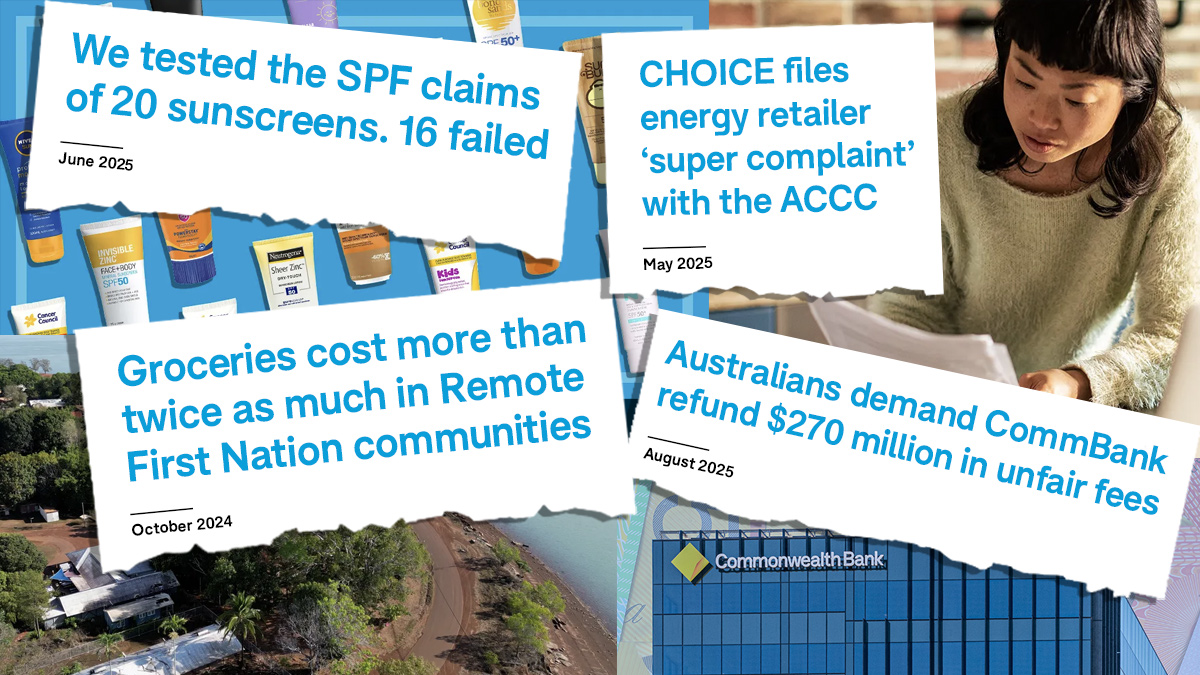
In the past year alone we've uncovered systemic issues with sunscreens, investigated shonky supermarket pricing, fought for stronger scam protections and helped make complex energy pricing fairer and clearer.
CHOICE is here to provide unbiased advice and independent testing in our world-class labs. We buy the products we test, just like you do, and our expert reviews are influence free. We’re here to help you choose smarter. Hopefully you’ll also save some money along the way.
Thanks to CHOICE, you’ll never be alone when a business treats you unfairly. You can support our work by joining or donating to our cause.