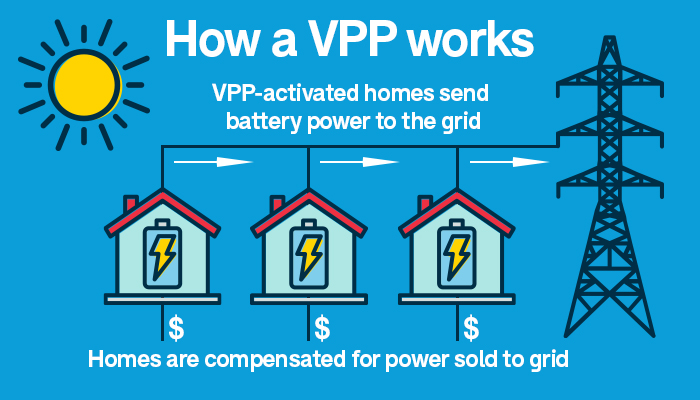
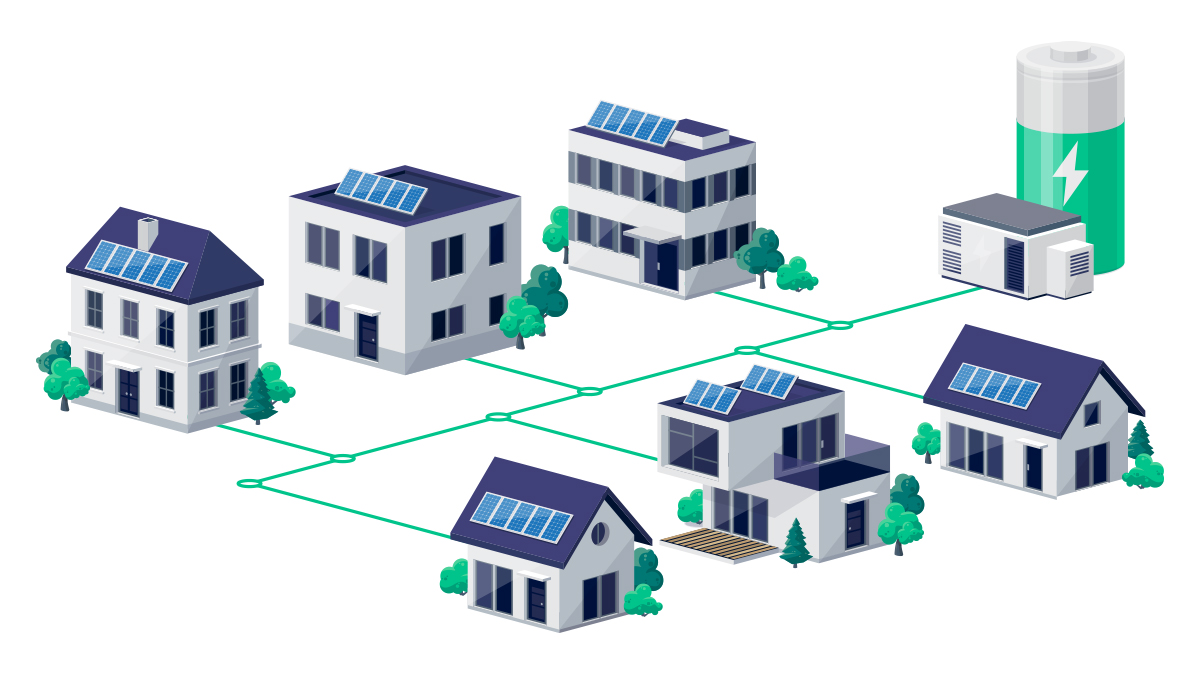
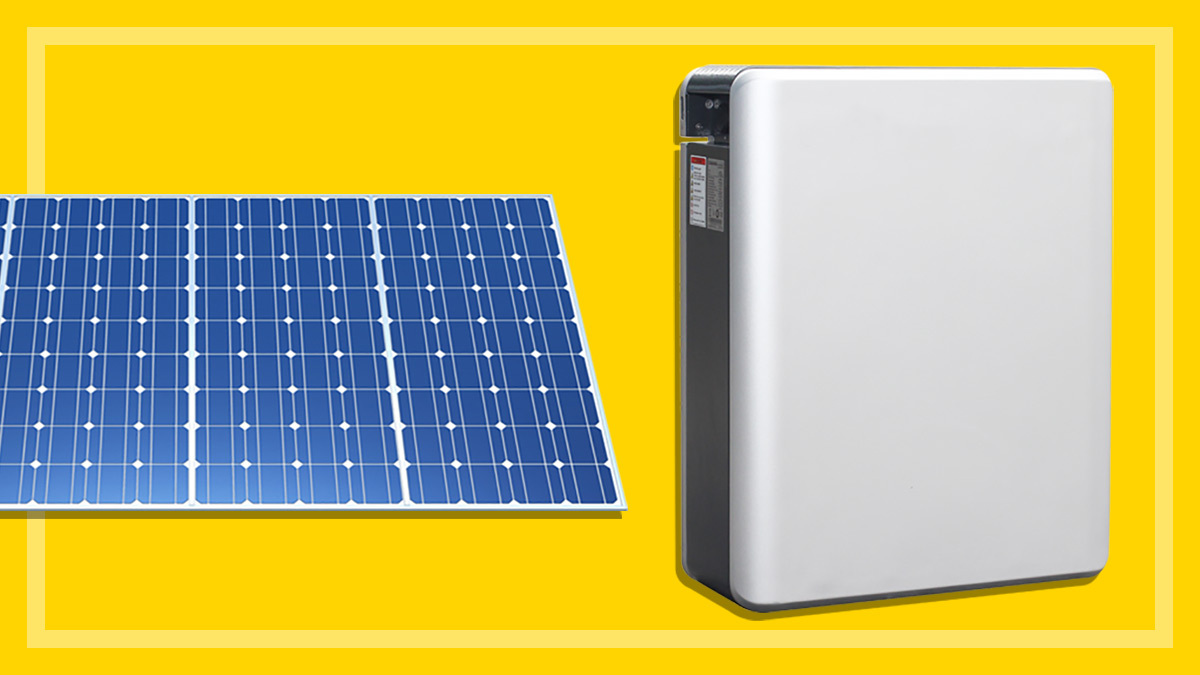
A virtual power plant (VPP) operates a giant network of residents’ home batteries, linked ‘virtually’ through smart software and the internet
If you join a VPP, you agree to share control of your battery in exchange for different financial incentives
A recent ACCC inquiry reported battery owners on VPPs pay notably lower power bills
Lower electricity bills versus less control. Extra rebates versus more wear and tear. There’s a lot to weigh up if you’re thinking about joining a virtual power plant (VPP).
Not to mention a rapidly growing market full of big retailers and young startups offering a dizzying range of incentives and conditions to get you to join.
“Joining a VPP can be a smart way to optimise your surplus power, reduce your power bills even more and shorten your battery payback period,” says CHOICE expert Chris Barnes.
“At the same time, it’s vital to shop around, know what you’re signing up for and understand the implications on your own power needs at home.”
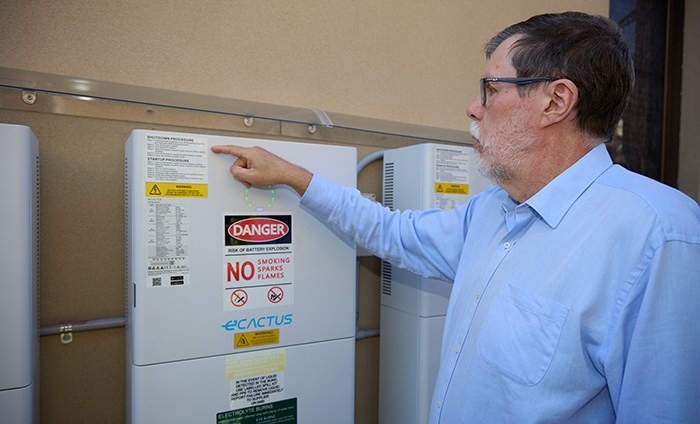
CHOICE expert Chris Barnes has been reviewing solar products for over 10 years.
To help you wrap your head around VPPs, here’s our handy guide to the pros and cons so you can make the best decision.
In exchange for joining their network, VPP companies offer a range of financial incentives that can include:
upfront one-off bonuses or discounts on batteries
bill credits (monthly, quarterly or annually)
premium feed-in tariff (FiT) rates during peak export times
higher export rates during special grid price spikes (i.e. during heatwaves or cold snaps)
wholesale market revenue sharing.
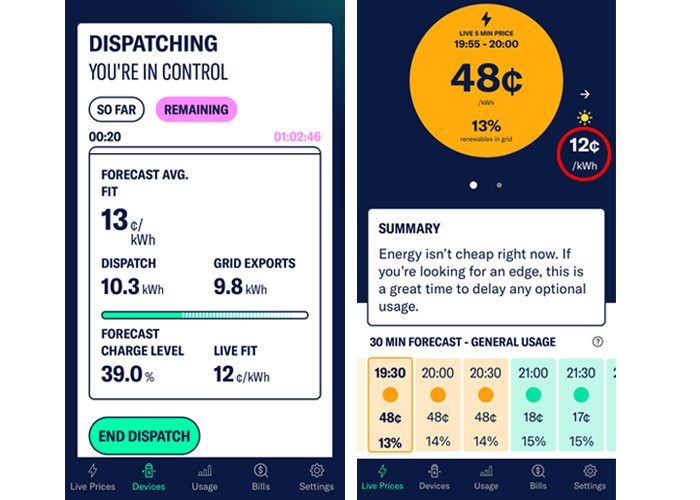
The last incentive is a more dynamic approach currently used by VPPs like Amber and Discover. Instead of offering fixed benefits, these operators allow customers to earn the actual wholesale value of the electricity sold, or a share of it, at the time. That means you’re getting a better share of the profit the VPP usually makes, compared to a flat rate, for example.
The Amber app in action – the dynamic wholesale rate you earn for selling to the grid is circled in red.
This approach promises customers higher rewards and the chance to make more money during extreme grid spikes when the wholesale price soars.
But it can require more of your time to monitor the app and market (to ensure the app algorithm is working properly and trading at the right times). Additionally, earnings can be unpredictable and vary a lot annually.
.
Why we've partnered with SolarQuotes

We've partnered with SolarQuotes to help you find and buy the right solar, battery, heat pump and EV charger. While we make money if you use SolarQuotes to find an installer, this doesn't influence our ratings. 100% of the money we make goes directly back into our nonprofit mission.
Pro #2: You can reduce your bills and battery pay-off period
With extra credits rolling in from a VPP, you can further lower your power bills and accelerate paying off your battery, which, let’s face it, still costs a fortune, even with the government’s handy rebate.
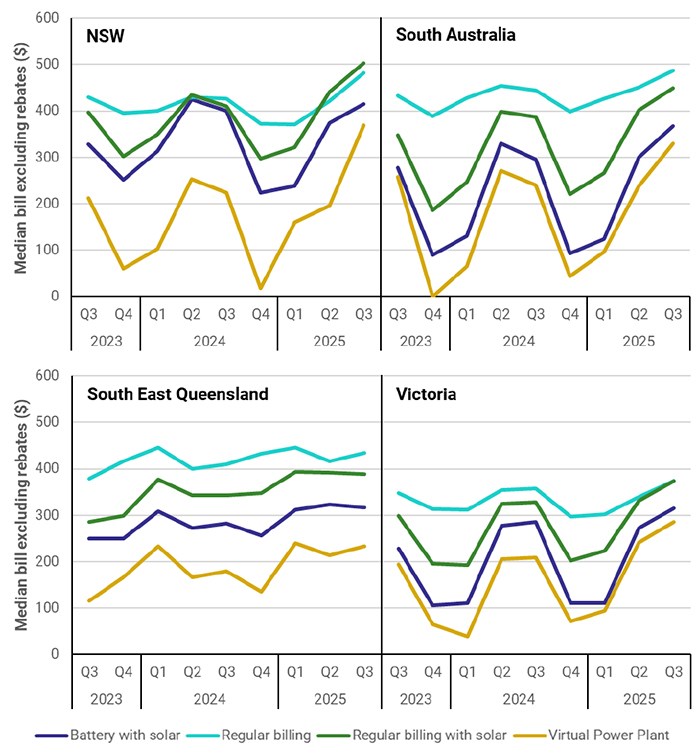
A recent report from the Australian Competition & Consumer Commission revealed that battery owners on a VPP had notably lower annual power bills than battery owners not on one, as you can see below. The extremely large range reflects variables like location, VPP operator and retail plan, battery size and more.
It’s important to note that these ACCC figures span 2023–2025, which was before the government’s battery rebate was introduced in July, 2025. Since then, 500,000 batteries have been installed, with plenty now exporting power to the grid. This is sure to impact wholesale electricity prices and possible returns through VPPs over time.
Additionally, the ACCC report features this snapshot of median power bills across a number of regions, clearly showing customers on VPPs (shown in yellow) have paid considerably less in recent years.
ACCC report June 2026. Median bills paid by each residential customer type, by region, excluding Energy Bill Relief Fund rebates, quarter 3 2023 to quarter 3 2025. Source: ACCC analysis of AEMO’s Distributed Energy Resource register and retailer billing data. Nominal dollars excluding GST.
If you’ve got solar panels, obviously you can already charge your battery for free during the day.
But as an extra incentive, some VPP operators also let you access free power from the grid during the day, meaning you’ve got the best of both worlds. That’s great for juicing up your battery or charging an EV, and also provides good backup if the weather is poor and not solar-friendly.
At the time of writing, VPPs like Globird and Covau Energy offer free charging windows either side of midday and Amber automatically charges your battery whenever wholesale prices fall to zero, while Plico will pay your daily charging costs.
As with any energy plan, it’s important to check all the rates they’re charging you, just in case they’re slugging you harder at other times or charging you a higher daily supply fee.
To boost VPP uptake, some state governments currently offer extra incentives to join one, which can further lower your bills and battery payoff time. Currently these are available in:
It’s not just your power bills that benefit from joining a VPP. Looking at the bigger picture, VPPs help to stabilise the grid and maximise renewable energy generation.
They do this by aggregating excess solar through their battery network and discharging it to the grid to assist high demand periods. This reduces reliance on fossil-fuelled electricity, which means less carbon emissions.
Not surprisingly, this can be a big sticking point for some people. After all, if you’ve just invested thousands of dollars in a battery, the last thing you might want to do is share it with a big energy company. Even more so if one of your motivations was energy independence.
Why do they need control of your battery? Because VPPs operate by dynamically charging their network in real-time when electricity is at its cheapest and exporting it at peak times to get the best prices.
VPPs require control of batteries to charge and discharge to the grid in real-time.
But you still own the battery, and you can set your own limits and preferences so you’re not left high and dry. Instead, you can set your own reserve limits (usually around 10–30%) and ensure your own home’s needs come first.
You can also limit VPP power exports to certain times of day – just be aware that certain VPP operator’s plans do require a certain level of availability.
Check out our VPP product pages under Limitations to see what they are.
Sharing your battery with a VPP means it will be charged and discharged more often, which can rapidly increase its number of cycles (a cycle equals one full charge and discharge sequence). This can add more wear and tear to your battery and possibly shorten its lifespan.
Many home batteries come with a product warranty that covers ten years or around 6000 cycles (whichever happens first). The latter equates to around 16 years of use at one cycle a day, but obviously a VPP can speed that up by a lot.
Joining a VPP will increase battery cycles which is definitely something to weigh up.
With that in mind, many VPPs set limits on how often they can cycle your battery during high grid demand as well as setting a total discharge amount for the year.
And of course, you may be willing to accept the extra wear and tear in exchange for the VPP’s financial rewards.
Con #3 Some VPPs only work with certain battery brands
While most batteries are VPP-compatible in the general sense (it’s a condition of the federal government battery rebate), it doesn’t mean all VPPs are compatible with all battery brands.
Some companies only support specific battery and inverter brands as these are the ones they’ve already tested with their network. Here’s some examples showing the wide range of compatibility:
Note: Compatibility can depend on the specific battery, inverter, model and configuration, so do check VPPs’ websites for the latest info.
If you already have a battery, this might mean your VPP choices are limited. If you haven’t yet installed one, it’s definitely something to consider when choosing a battery if you’re eyeing a VPP.
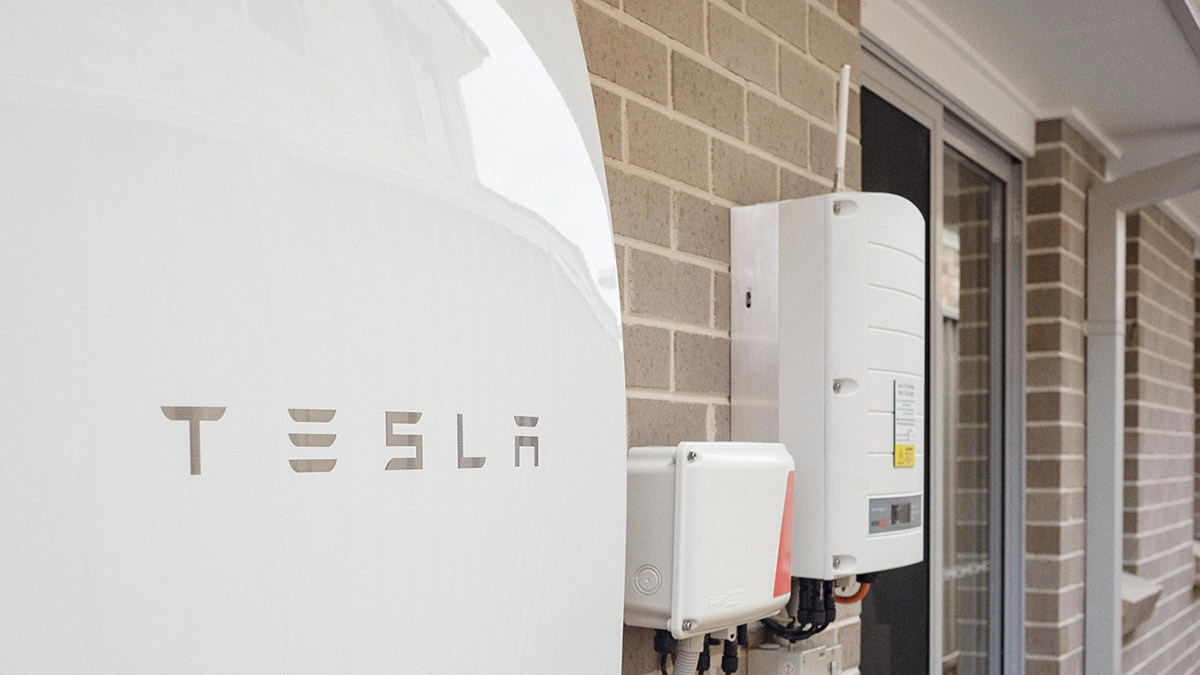
Not all VPPs support all battery brands – even popular ones like Tesla – so it’s vital to check.
Con #4 Some VPPs charge extra fees
Many companies don’t have a participation or member fee, as their model is built around selling your surplus power at peak times for a profit.
But some definitely do, charging you an establishment fee, monthly management fees or a one-off equipment fee, such as for a custom controller installed on your battery. For example, Amber currently charges $25 a month for their SmartShift VPP, while Diamond Energy WATTBANK has a $68 joining fee.
Additionally, some do charge exit fees but that’s usually only when they’ve given you an upfront bonus or battery discount when you signed up. Thankfully, most don’t, which means you can usually leave easily and try another VPP if you’re not satisfied.
The content has been produced with funding support from the Clean Energy Finance Corporation (CEFC). CHOICE maintains full editorial independence, and the views expressed are those of CHOICE. CEFC funding does not constitute an endorsement of any provider, product or service. Any links, tools or services enabling users to request quotes or connect with providers are operated independently by CHOICE and are not endorsed or recommended by the CEFC.
Jason is a Content Editor and journalist at CHOICE. He writes about a diverse range of subjects, from solar to robot vacuums to why Easter eggs are a rip-off. He's previously written for Sydney Morning Herald, Rolling Stone and many other publications.
Jason is a Content Editor and journalist at CHOICE. He writes about a diverse range of subjects, from solar to robot vacuums to why Easter eggs are a rip-off. He's previously written for Sydney Morning Herald, Rolling Stone and many other publications.
For more than 60 years, CHOICE has been fighting the good fight for Australian consumers.
In the past year alone we've uncovered systemic issues with sunscreens, investigated shonky supermarket pricing, fought for stronger scam protections and helped make complex energy pricing fairer and clearer.
CHOICE is here to provide unbiased advice and independent testing in our world-class labs. We buy the products we test, just like you do, and our expert reviews are influence free. We’re here to help you choose smarter. Hopefully you’ll also save some money along the way.
Thanks to CHOICE, you’ll never be alone when a business treats you unfairly. You can support our work by joining or donating to our cause.