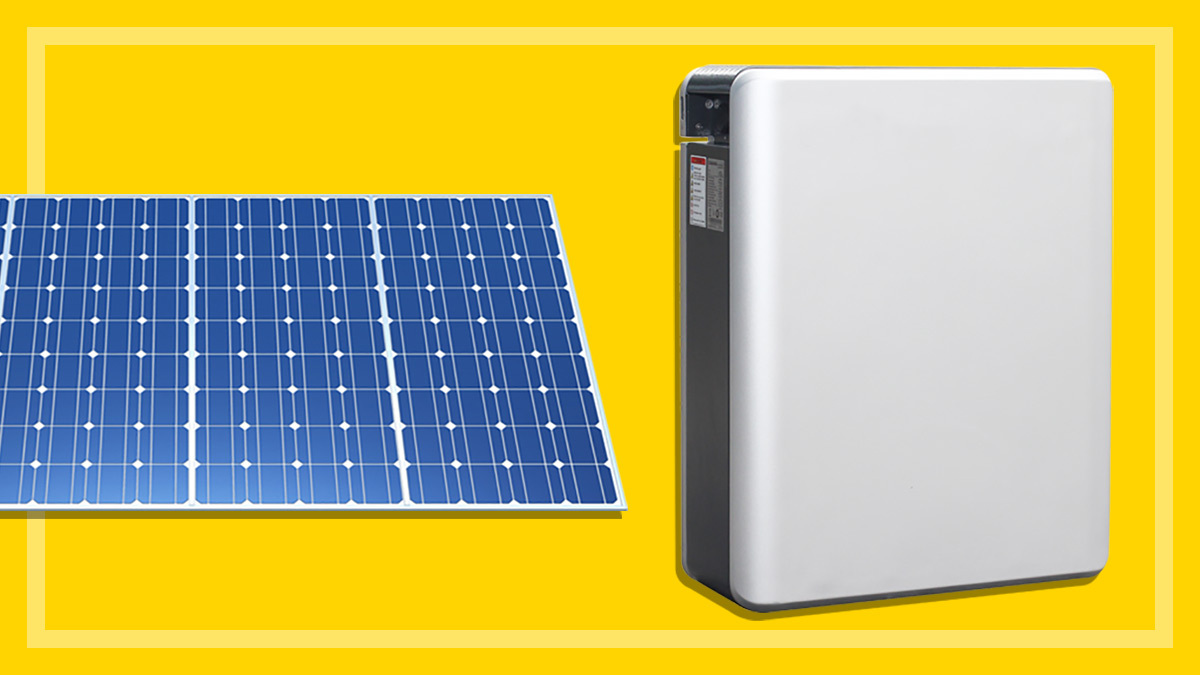
A home battery can be a godsend for storing your own solar-generated electricity and slashing your bills, but it doesn’t come cheap. Installation can cost many thousands of dollars and take years to pay off.
Thankfully, the federal government’s current rebate – introduced in July 2025 – has made batteries more affordable than ever, but the question of whether a battery is right for your home, power usage and budget can still be complex and confusing.
To weigh up the big investment versus the benefits, the pros versus cons, we spoke to industry experts about the key factors at play and whether now is the best time to jump on the battery bandwagon.
7 reasons to consider buying a battery now
1. The government rebate has greatly reduced battery prices
Aimed at boosting battery uptake across the country, the federal government’s rebate – officially known as the Cheaper Home Batteries Program – offers a discount of around 25–30% off the cost of installing a battery in your home or small business.
“I’d be surprised if there’s ever going to be a rebate that’s this generous ever again,” says Finn Peacock, founder of SolarQuotes, Australia’s most-visited solar website. Since 2020, CHOICE has partnered with SolarQuotes, a service that provides high-quality quotes for you from vetted installers.
I’d be surprised if there’s ever going to be a rebate that’s this generous ever again
Finn Peacock, SolarQuotes founder
“Obviously battery retail prices will come down every year, just like solar panels have, but the value for money on a good battery system right now [with the rebate] is phenomenal.”
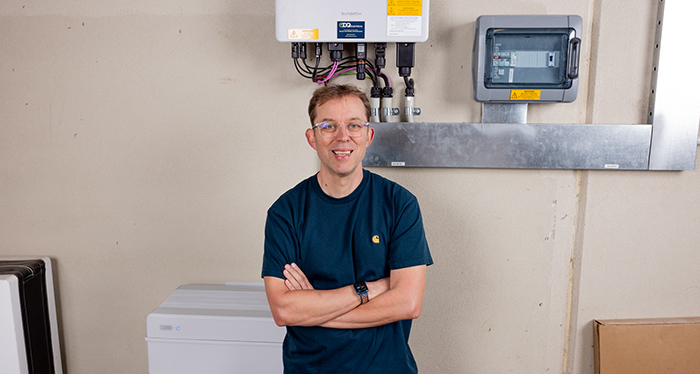
SolarQuotes founder Finn Peacock has been in the solar business since 2009. Image: SolarQuotes.
2. The rebate now decreases every six months
The rebate’s been extremely popular since launch, with the government reporting that over 500,000 home batteries have now been installed.
To cope with demand, the government has upped the program’s initial estimated budget of $2.3 billion to $7.2 billion across the next four years. But to make it last, they also introduced new rebate rates and conditions on 1 May 2026.
The federal battery rebate is currently set to end by 2030.
Now the rebate’s value, which is measured in small-scale technology certificates (the same “credits” applied to solar panels, usually just called STCs), decreases every six months rather than annually, and at a higher rate than initially planned.
The rebate’s value decreases every six months rather than annually, and at a higher rate than initially planned
According to our friends at SolarQuotes who’ve done the maths, the estimated “per kWh” rebate rate will now be as below (and you should factor in a further loss of about 10% in admin fees):
May–Dec 2026: $272 per kWh
Jan–Jun 2027: $228 per kWh
Jul–Dec 2027: $208 per kWh
Jan–Jun 2028: $184 per kWh
Jul–Dec 2028: $164 per kWh
Jan–Jun 2029: $144 per kWh
Jul–Dec 2029: $124 per kWh
Jan–Jun 2030: $104 per kWh
Jul–Dec 2030: $84 per kWh
As you can see, there are plenty of reasons (aka dollars) to get a battery now or at least start talking to installers about quotes.
.
Why we've partnered with SolarQuotes

We've partnered with SolarQuotes to help you find and buy the right solar, battery, heat pump and EV charger. While we make money if you use SolarQuotes to find an installer, this doesn't influence our ratings. 100% of the money we make goes directly back into our nonprofit mission.
3. Daytime feed-in tariffs (FiTs) are dropping fast
In the past, many people didn’t consider batteries because firstly, they were expensive, and secondly, electricity retailers still paid decent daytime FiTs per kWh for any surplus solar power you could export back to the grid, which could lower your bills considerably.
Five years ago, these FiTs averaged around 10–15 cents per kWh, depending on your location and plan. Sadly, not anymore. With so many more people installing solar and pumping electricity into the grid now, day rates have dropped dramatically.
“[On average], FiT rates have collapsed to 3–5 cents/kWh, with some plans now offering zero cents for daytime exports,” says Richard Foxworthy, CEO of Bill Hero, a savings service that compares utility bills across Australia.
Bill Hero CEO Richard Foxworthy. Image: Bill Hero.
With FiTs flatlining during the day, keeping that surplus power in a home battery to use at night suddenly looks a lot more attractive.
“A battery allows you to capture and store the excess kWh that otherwise would be exported at very low FiT rates,” says Richard.
“You can then use that electricity later to avoid buying expensive peak-time grid power which will cost 35 cents or more. The financial opportunity for the battery is in the spread between the high price you avoid paying and the low FiT price that you forgo earning.”
4. With a battery, you can earn much higher peak FiTs
While the sun might be setting on daytime FiTs, the opposite can be said for night-time ones. Some retailers are paying high tariffs for surplus power exported from a battery during evenings when consumer demand is peaking and electricity is the most valuable.
Some retailers offer sizable FiTs if you export your excess power during peak times.
For example, at the time of writing, AGL’s Battery Rewards Plan pays 28c per kWh exported between 5pm-9pm (available in NSW, Queensland, South Australia and Victoria), a hefty improvement on its lowly day FiT of 3c per kWh.
Of course, to get these higher FiTs, you have to have excess electricity to spare in your battery, which will depend on your own home’s nightly needs.
Also, before jumping on any new plan, check its full range of charges (like the daily usage fee) to ensure you’re not paying overs for those.
5. You can join a virtual power plant (VPP) and earn more money
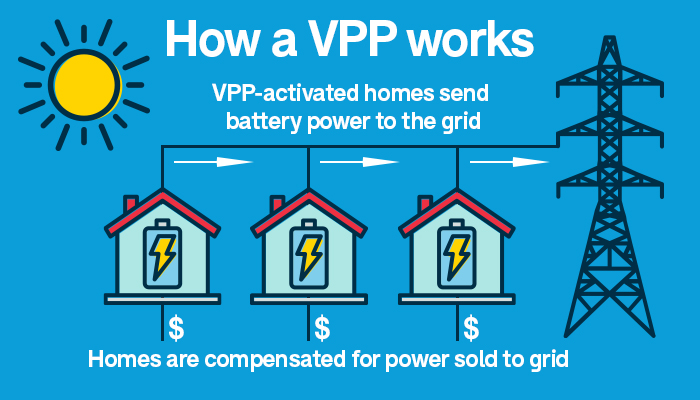
A virtual power plant is a relatively new type of energy service that operates a large network of connected home batteries and aggregates electricity from each to sell to the grid at peak times.
In exchange for joining their network, a VPP will pay you a range of incentives like bill credits, higher FiTs, upfront bonuses or even a share of the profits they make when power is sold.
According to recent figures from the ACCC, customers participating in VPPs saved an average of $762 to $1093 on their energy bills in the last 12 months.
There’s just one big condition: you need to share control of your battery with the VPP. That’s because they usually charge it when power is cheap during the day and then discharge it when wholesale electricity prices are peaking (like at night) to maximise revenue.
While you can reserve power for your own needs, sharing your battery might not be for everyone (you might just prefer to get a peak FiT from your retailer), so it’s vital to carefully read a VPP’s offer and see if it works for you and your home.
6. Electricity retailers must now offer free daytime power
On 1 July the federal government introduced its new Solar Sharer Offer (SSO) initiative, which stipulates that electricity retailers must now offer at least one residential plan that includes three hours of free power during the day, capped at 24 kilowatt hours (kWh).
At the moment, the SSO is only available to residents that live in New South Wales, South Australia and South East Queensland as these areas are covered by the government’s Default Market Offer (DMO) framework. Victorians will get their own version with their Midday Power Saver from 1 October 2026.
Plans offering free electricity windows mean you can juice up a home battery for free during this time (in addition to storing your own solar power through the day). Then you can use it later that night, or export it for a night-time FiT or via your virtual power plant.
Some retailers now offer free electricity time periods during the day.
That might sound amazing, but Finn warns it does come with some serious provisos.
“The trade-off for the free electricity is that they usually charge you with a higher daily usage fee and certainly a higher evening peak rate,” says Finn.
“If you have a big battery, that’s okay as you can easily cruise through [night time without needing power from the grid]. But if you’ve got, say, a 10–15kWh battery, you may find that you’re emptying your battery fairly regularly and then paying those higher grid prices.”
With the rebate inspiring unprecedented demand, wait times for reputable solar installers can be quite lengthy, so if you’re keen, it’s best to join the queue sooner rather than later.
“A six-week to three-month backlog is not unusual at the moment,” says Finn from SolarQuotes.
“I would get a quote sooner rather than later and then expect it to get installed within like… three months would be reasonable. Get in the queue. You can do your research while you wait and then choose the system you want.”
Form an orderly queue… many solar installers currently have a backlog.
At the same time, he says it’s vital not to rush into things without doing your homework.
“If you’re treating it as super urgent and you do it in a hurry, you’re much more likely to make a bad decision and be tempted by the slick marketing and low prices. Don’t make price your only criteria.”
Jason is a Content Editor and journalist at CHOICE. He writes about a diverse range of subjects, from solar to robot vacuums to why Easter eggs are a rip-off. He's previously written for Sydney Morning Herald, Rolling Stone and many other publications.
Jason is a Content Editor and journalist at CHOICE. He writes about a diverse range of subjects, from solar to robot vacuums to why Easter eggs are a rip-off. He's previously written for Sydney Morning Herald, Rolling Stone and many other publications.
For more than 60 years, CHOICE has been fighting the good fight for Australian consumers.
In the past year alone we've uncovered systemic issues with sunscreens, investigated shonky supermarket pricing, fought for stronger scam protections and helped make complex energy pricing fairer and clearer.
CHOICE is here to provide unbiased advice and independent testing in our world-class labs. We buy the products we test, just like you do, and our expert reviews are influence free. We’re here to help you choose smarter. Hopefully you’ll also save some money along the way.
Thanks to CHOICE, you’ll never be alone when a business treats you unfairly. You can support our work by joining or donating to our cause.