Making a coffee in the morning, doing laundry and defrosting food in the microwave are simple tasks the majority of Australians don’t think twice about.
But blind and low-vision Australians say many new appliance innovations like touchscreens and connected apps don’t take them into account, and are making their lives much harder.
Around half a million Australians are currently living with blindness or low vision and the federal government estimates that over 13 million Australians have one or more chronic eye conditions.
Technology has the power to alleviate some of these struggles. But according to those with lived experience, the standards for accessibility aren’t always being met by appliance manufacturers.
More than half of respondents said newer appliances are less accessible than older ones
In a survey completed by 627 people across Australia and New Zealand, Vision Australia found that modern appliances are often harder for people to use than older models.
More than half of respondents (52%) said newer appliances are less accessible than older ones and only 19% said accessibility has improved.
Product touchscreens extremely difficult to use
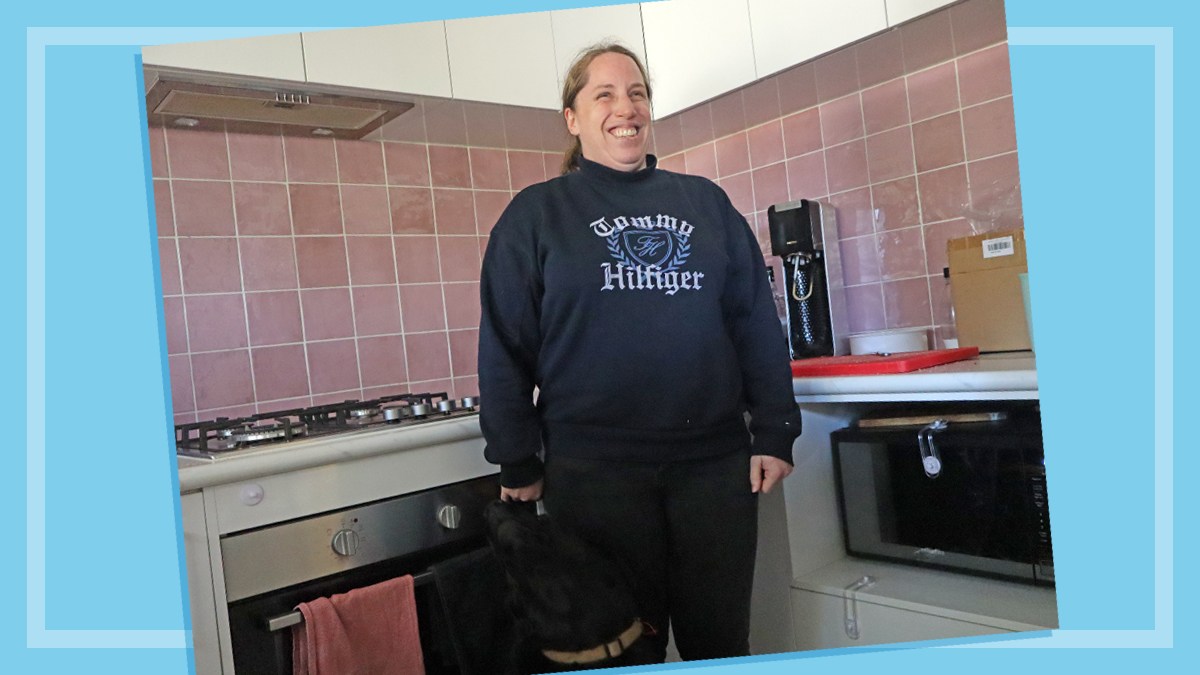
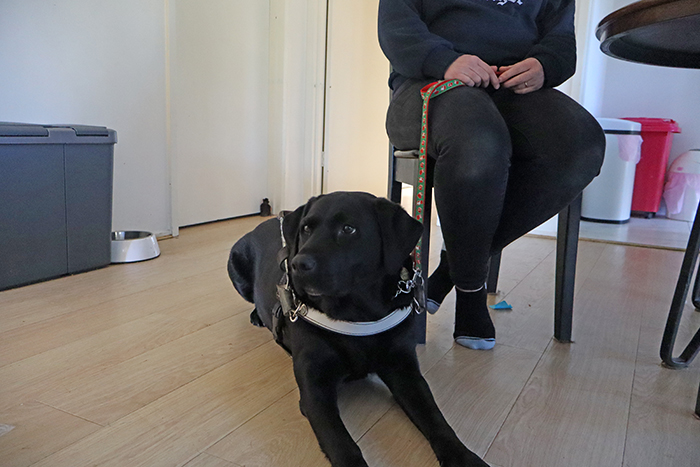
Shae Robbins is a financial counsellor and mother based in the northern suburbs of Melbourne. She is also vision impaired, relying on the guidance from her assistance dog and technology to complete her daily routines.
Screen readers and voice commands help her to do her job, provide instructions and set alarms. These systems are something she cannot live without.
But while some of these technological advancements provide remarkable support, Shae is still unable to make a coffee at her workplace in the morning or defrost food in the microwave without needing someone else to help her.
Shae with her assistance dog.
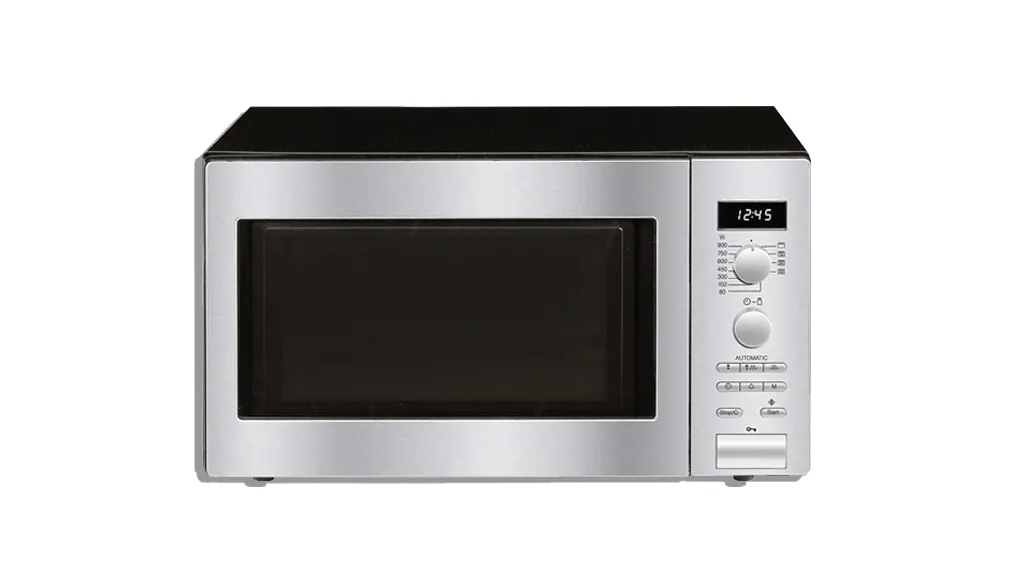
Her new microwave is operated solely via touchscreens, making it completely unusable without assistance. The coffee machine at work is the same.
“It’s frustrating because I’ve got to try and ask someone for help and I feel bad because I don’t like relying on people, I like to be able to do it myself,” she says.
The touch screen interface her microwave uses to select the different settings such as “popcorn” or “defrost” can be extremely unreliable and difficult to place her own label on.
I feel bad because I don’t like relying on people, I like to be able to do it myself
Vision-impaired mother Shae Robbins on new appliances
“You can’t label it because even if you know which button to push for a certain setting, you might push it and then it’ll decide to change the settings to something else. If anything happened or you pushed the wrong button, you just wouldn’t know.”
Shae and her family have gone to great lengths to make sure everything in their house is accessible, with added buttons or dots on appliances to allow her to navigate the controls by touch.
Many of her home appliances, such as her dishwasher and washing machine, are older models built with tactile buttons and dials. Shae is worried that, when the time comes to replace some of these appliances, there are very few new devices that are not, in some way, configured with a touch screen.
Diagnosed with retinitis pigmentosa, chief mission officer at Vision Australia, Chris Edwards is left with no usable vision. Like Shae, he also uses a range of assistive technologies to navigate his daily life.
With the current emphasis on the benefits of electric cooktops, Chris followed this advice and began shopping in appliance stores to replace his gas cooktop. Chris says he could not find one induction cooktop with features that would work for someone like him.
Through his work at Vision Australia, he is constantly met with others facing similar issues. Those who are blind or have low vision are approaching him asking for the best advice on what they should replace their older appliances with, but he’s unable to make many helpful recommendations.
For something to be an accessible design, Chris says it should “make it easier for everybody”. Manufacturers could look to rely less on touch screens to do everything, ensuring someone could operate this appliance with their eyes closed.
However, touch screens can be useful for some types of low vision.
Born with cataracts, Wendy has been living with low vision her whole life and the screens on some of her more modern appliances with bright lights prove more useful to her than older button controls would.
However, it is a “spectrum”, she says, and the experience of low vision and blindness differs greatly from person to person.
App-connected “accessible” products still hard to use
Some modern home appliances with touch screens claim to be “accessible” by connecting to an app on the user’s phone. The app then usually allows voice commands and other services to be used to control the functions someone would normally do with their hands.
While this can be helpful in some cases, Chris says sometimes he doesn’t want to have to pull out his phone and navigate the task when it could be a simple fix of manufacturing.
“For me personally, I certainly wouldn’t want everything to rely just on an app to be able to do something as simple as turning on the stove.”
Lack of standards for appliance accessibility
Scott Hellier, CEO of Center for Accessibility Australia, says that there is currently no widely adopted standard in Australia, or mandatory accessibility requirement for these apps.
This causes an inconsistency between these “accessible products” which can be frustrating, especially when you’re using different appliances in locations other than your home, like an office.
While many new appliances have apps, advocates say these apps are not always designed for accessibility. Having an app that is unusable for blind or low-vision people doesn’t solve the problem.
Scott says when an app is truly accessible, it will read out the commands such as “power button, temperature increase/decrease”, but when an app is not programmed well, it will simply read out the words “button, button”, which is completely useless to someone who is blind or has low-vision just trying to turn the air conditioning on.
When an app is not programmed well, it will simply read out the words “button, button”, which is completely useless
In cases where the apps aren’t designed properly, Scott says unfortunately that ends the experience of using appliances independently.
Interim CEO for Women with Disabilities Victoria, Julie Kun, says products in many cases are “too often designed around a mythical ‘normal person’ with perfect vision, hearing and cognitive ability”.
In Australia, these “normal” people are not the only consumers, though they may be the only ones companies are thinking about.
“Maybe 30 years ago, there was no easy way to make things completely accessible beyond physical buttons, but today we have all the technology to make it accessible and we just need it to happen,” Scott says.
Call for companies not to forget vision-impaired users
Scott Hellier says the little things are important. This could be as simple as cooking yourself dinner or washing your own clothes.
Blind Citizens Australia (BCA) is advocating for more accessible designs to allow people with blindness or low vision to rely less on external support systems. The organisation found that “over-reliance” on particular support systems “risks reinforcing power imbalances, diminishing a participant’s wellbeing”.
“Greater investment in accessibility and universal design could reduce unnecessary reliance on the National Disability Insurance Scheme (NDIS) by addressing these systematic barriers at their source,” BCA says.
Our interactions for daily living are a gateway to independence
Scott Hellier, CEO of Center for Accessibility Australia
Julie Kun says a complex change isn’t necessary, but where real improvements will be seen is actively including people who are blind or have low vision in product design.
Those with lived experience say they don’t feel like big manufacturers are designing either their products or their apps with them in mind and are calling on companies to not forget them.
Scott says, for people like him, independence is key.
“Our interactions for daily living are a gateway to independence and so it really is about what we can do to support that independence.”
Get the inside story on our investigations, campaigns and the difference they make.
Riley is in her final year at RMIT University majoring in Journalism with a minor in Literary Studies. She has a passion for impactful journalism and through her studies she has gained experience crafting meaningful stories through radio, broadcast production and news writing. She has previously contributed to student news organisations such as Newsline, as well as projects with local radio at Southern FM.
Riley is in her final year at RMIT University majoring in Journalism with a minor in Literary Studies. She has a passion for impactful journalism and through her studies she has gained experience crafting meaningful stories through radio, broadcast production and news writing. She has previously contributed to student news organisations such as Newsline, as well as projects with local radio at Southern FM.
For more than 60 years, CHOICE has been fighting the good fight for Australian consumers.
In the past year alone we've uncovered systemic issues with sunscreens, investigated shonky supermarket pricing, fought for stronger scam protections and helped make complex energy pricing fairer and clearer.
CHOICE is here to provide unbiased advice and independent testing in our world-class labs. We buy the products we test, just like you do, and our expert reviews are influence free. We’re here to help you choose smarter. Hopefully you’ll also save some money along the way.
Thanks to CHOICE, you’ll never be alone when a business treats you unfairly. You can support our work by joining or donating to our cause.