80% of respondents to the survey, conducted in June 2026, said they expected very large companies to report on any environmental impact from its business activity and 78% said they expect reporting on direct carbon emissions.
Yet trust that companies were being honest about their environmental claims or credentials was extremely low.
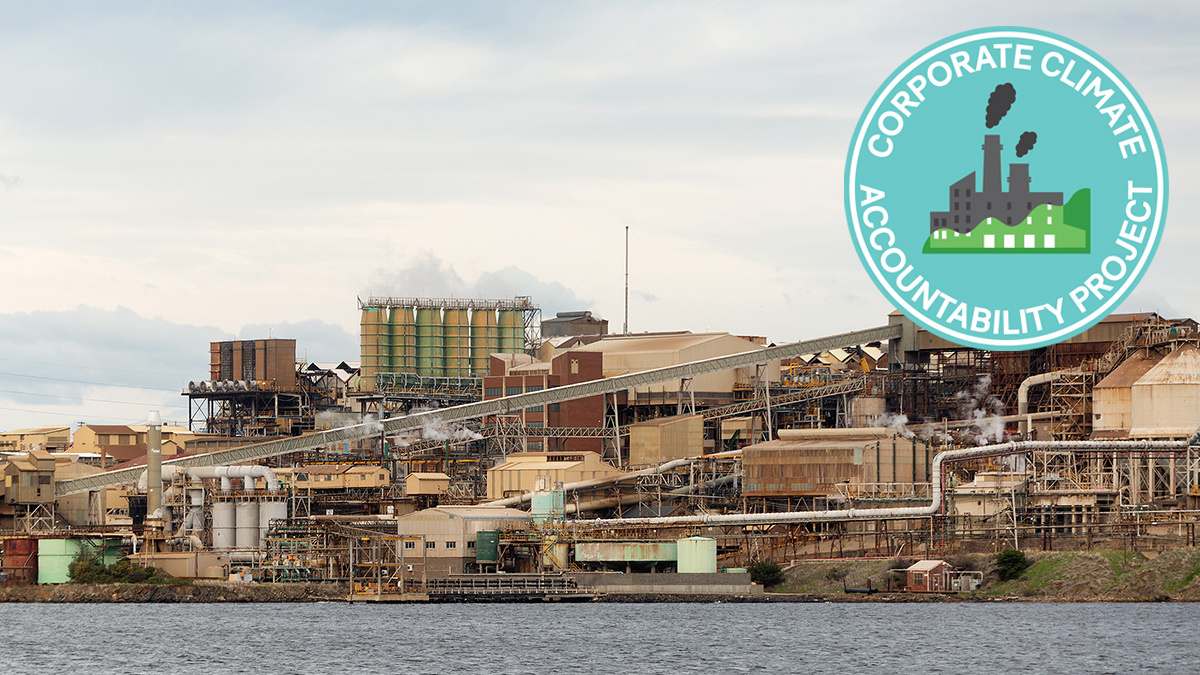
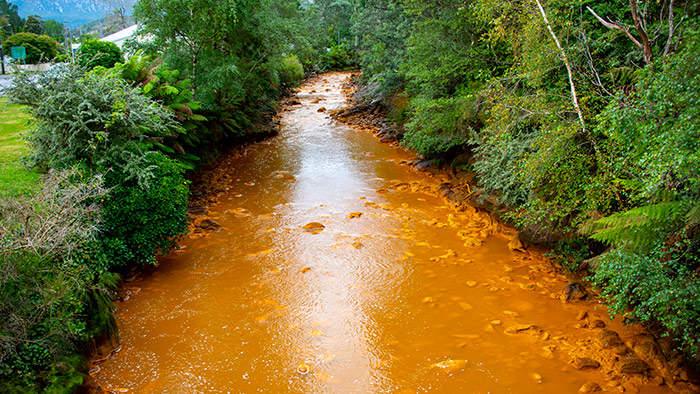
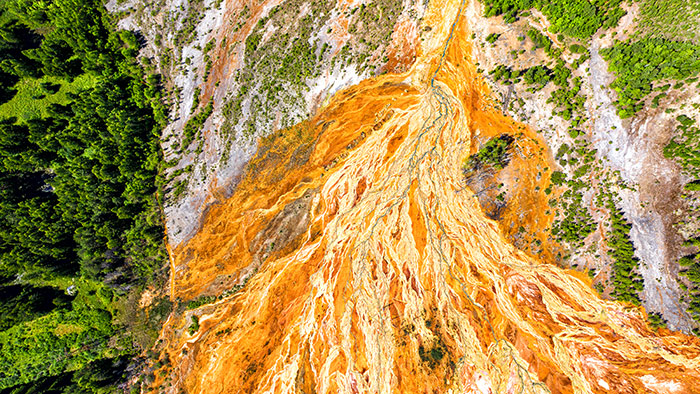
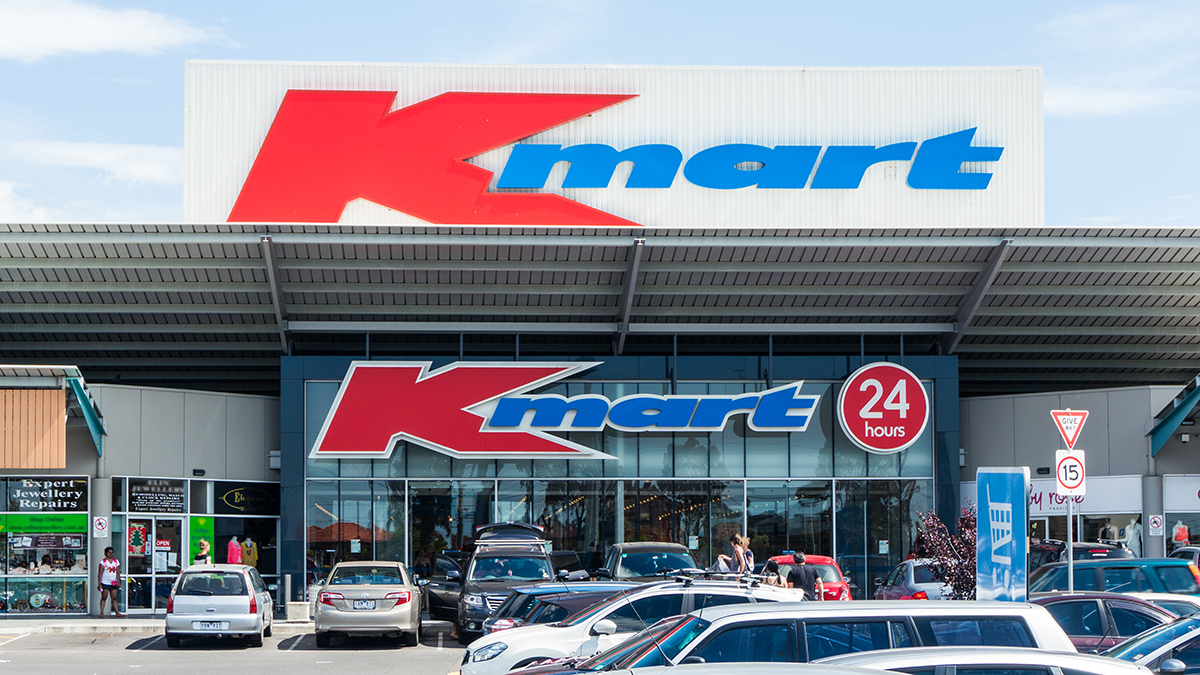
87% of respondents said they didn’t trust very much or didn’t trust at all that mining and resource companies would be accurate in the claims in their climate reporting, while the best performing sectors of the economy, telecommunications and very large retail companies, still registered high levels of distrust (80% and 79% respectively).
There are concerns reporting schemes don’t adequately capture environmental damage.
Nobody performing well
The survey of those who voluntarily engaged is not a nationally representative sample, but shows that even that cohort of people struggled to identify even one company in Australia that was performing well on climate action.
More than half of the respondents did not elect a single company when asked.
“I think a lot of corporate sustainability claims are just greenwashing … In general, companies or brands won’t do anything unless it makes them money or they are forced to by law or consumer demand,” one respondent said.
“I cannot think of any large corporations that are doing a good job on this. Seems to be mostly greenwashing and covering up bad stuff. The banks and superannuation businesses seem to me to be particularly bad as they hold the purse strings,” another respondent said.
Andrew Forest’s Fortescue (16%) was mentioned most often by respondents as a large company performing well on climate, followed by Bank Australia (6%).
Mugdha Rai, director of strategic communications programs at Monash University, has done extensive work on corporate climate communications. She says these results show that, in a small global market like Australia, companies might not be punished for not being good corporate citizens, if the other companies in their industry are all doing the same.
“There is this attitude of no one is doing it [climate action] anyway so why should I? Companies are not going to get punished in this environment where nobody is a strong performer on climate,” she says.
While a level of distrust and scepticism in the survey was to be expected, she adds, the extent to which it runs deep is somewhat surprising.
“I wonder what corporate Australia would say about these results? Do they understand just how deep the scepticism and distrust runs and that whatever they say they are doing on climate is having no effect on people’s perception? If companies are doing anything in this space, it is certainly not cutting through,” Rai says.
Australians have low opinions of large companies’ climate credentials.
New reporting regime
As of last financial year, all large corporations in Australia have been required to submit and publicly publish a climate report under the new Australian Sustainability Reporting Standard.
Large companies are defined as those that meet two of three criteria: they have over $500 million annual revenue, hold $1 billion or more in assets, or have 500 or more employees.
Those thresholds will drop as the scheme expands to capture more companies in future years.
Our survey showed deep scepticism towards the scheme, and whether companies would even be honest with the corporate regulator the Australian Securities and Investments Commission (ASIC) at all. Despite this, those in the investment industry may be seeing things differently.
Sydney Straver, managing director of &Bloom, a climate-focused consultancy firm, says many of their clients are “jumping on the bandwagon” of climate reporting, even if they are currently not in scope for the government’s mandatory scheme.
“Even those that are not in scope, they know that they have value chain exposure and they need to get their ducks in a row to be able to remain competitive and secure their license to operate and grow – they might not have to report on it but someone in their value chain will have to,” she says.
Straver says while the government’s scheme has promoted a “common language” around sustainability, it is somewhat limited and doesn’t take into account bigger questions of environmental or social impact.
This article is part of a bigger project of investigations, reader surveys and citizen research being conducted called the Corporate Climate Accountability Project. If you are interested in following this series head to choice.com.au/climateaccountability
You can read part one of the project here – https://www.choice.com.au/shopping/everyday-shopping/ethical-buying-and-giving/articles/will-these-new-laws-clean-up-corporate-greenwashing
Jarni Blakkarly is an award-winning Senior Investigative Journalist at CHOICE. Jarni has worked for news organisations such as SBS, Reuters, Al Jazeera English, ABC 730, Radio National, BBC World Service and Deutsche Welle.
Jarni won the Walkley Foundation's young journalist of the year student category award in 2016 and was the recipient of a Melbourne Press Club Michael Gordon fellowship in 2022. In 2023 he was a highly commended finalist in the Quill Awards and a winner at the 2024 Excellence in Civil Liberties journalism awards. In 2024 he was elected to serve on the Federal Council (National Media Section) of the MEAA. Jarni has a Bachelor of Communications (Journalism) from the Royal Melbourne Institute of Technology (RMIT).
Jarni Blakkarly is an award-winning Senior Investigative Journalist at CHOICE. Jarni has worked for news organisations such as SBS, Reuters, Al Jazeera English, ABC 730, Radio National, BBC World Service and Deutsche Welle.
Jarni won the Walkley Foundation's young journalist of the year student category award in 2016 and was the recipient of a Melbourne Press Club Michael Gordon fellowship in 2022. In 2023 he was a highly commended finalist in the Quill Awards and a winner at the 2024 Excellence in Civil Liberties journalism awards. In 2024 he was elected to serve on the Federal Council (National Media Section) of the MEAA. Jarni has a Bachelor of Communications (Journalism) from the Royal Melbourne Institute of Technology (RMIT).
For more than 60 years, CHOICE has been fighting the good fight for Australian consumers.
In the past year alone we've uncovered systemic issues with sunscreens, investigated shonky supermarket pricing, fought for stronger scam protections and helped make complex energy pricing fairer and clearer.
CHOICE is here to provide unbiased advice and independent testing in our world-class labs. We buy the products we test, just like you do, and our expert reviews are influence free. We’re here to help you choose smarter. Hopefully you’ll also save some money along the way.
Thanks to CHOICE, you’ll never be alone when a business treats you unfairly. You can support our work by joining or donating to our cause.