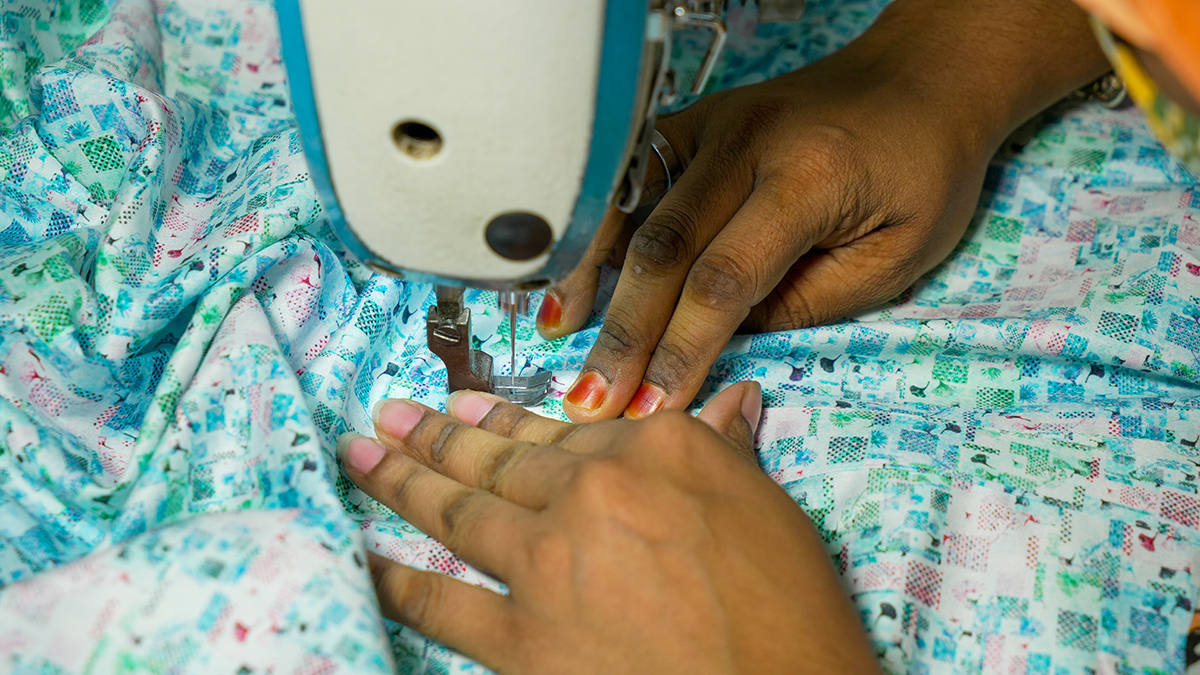
Australia’s Modern Slavery Act came into effect in 2018 and requires large companies to report on what they’re doing to prevent exploitation in their supply chains
The quality of the annual reports has suggested that many companies aren’t serious about tackling the problem
The latest Monash University analysis points to a systemic failure by companies to explain the processes they have for exploited workers to reach out for help
Holding large companies accountable for forced labour and other forms of human exploitation in their far-reaching supply chains was the underlying purpose of Australia’s Modern Slavery Act, which came into effect in 2018.
It was none too soon. Other comparable nations had been doing – and continue to do – a far better job of ensuring the products we buy every day aren’t assembled by workers trapped in servitude.
Earlier this year, we reported that 21.5% of goods imported to Australia come from regions known for exploiting workers, according to an analysis by anti-slavery groups.
Experts say the Act has done little to stop actual instances of modern slavery
Previously, we reported on an Australian Uyghur rights group taking legal action against Kmart Australia to force the retailer to substantiate claims that its supply chains are slavery-free. The most recent calculation at the time of reporting was that Kmart had 856 businesses in its supply chain, based in China, Bangladesh, Cambodia, India, Indonesia, Korea, Malaysia, Pakistan and Vietnam.
The Act was a signal that Australia was serious about tackling its modern slavery problem. But experts say it has done little to stop actual instances of modern slavery, not least because the requirements imposed on companies are mainly administrative.
Penalties for companies that don’t take ‘reasonable steps’
The crux of the legislation is that companies with $100 million or more in annual revenue are required to lodge reports every year that highlight any risks of modern slavery that exist in their global supply chains and explain what they’re doing to reduce them.
A team of researchers at Monash University have been carefully tracking the quality of these reports and have repeatedly flagged serious shortcomings, particularly in the area of supply chain oversight. For many companies, they are tick-the-box exercises.
In the midst of this spotty compliance, the federal government announced earlier this year that it intends to apply criminal penalties to companies that don’t take “reasonable steps” to prevent modern slavery from occurring in their operations.
“The proposed changes will introduce greater accountability, levelling the playing field for the majority of Australian businesses already doing the right thing,” Attorney-General Michelle Rowland said in July.
The proposed changes will introduce greater accountability, levelling the playing field for the majority of Australian businesses already doing the right thing
Attorney-General Michelle Rowland
In December 2023, the office of the NSW Anti-Slavery Commissioner published a guide on defining reasonable steps for preventing modern slavery, which may become a basis for the federal government’s proposed measures. They include having an ongoing and proactive process in place for making sure suppliers aren’t exploiting workers and delivering high-quality annual modern slavery reports that thoroughly explain what companies are doing to prevent slavery.
But these new reasonable steps rules – which are still being written – come at a time when companies continue to fall short on the existing ones.
In their latest report, Grievance Mechanisms and Remediation, the team at Monash reveal further failures in the mandatory reporting regime, focusing on one key area: how well the latest reports of the 39 largest companies operating in Australia in the finance and materials sector explain what they’re doing to help exploited workers blow the whistle.
“Workers, especially migrant, temporary, and low-skilled workers, are vulnerable due to limited knowledge of their rights, language barriers, and fear of retaliation,” says lead author associate professor Nga Pham.
That’s why reporting exploitation should involve as few obstacles as possible and trigger a thorough follow-up process. The Monash researchers developed 40 questions – called the 40-question 8R Framework – that they believe the reports should have addressed if the companies are truly committed to this.
The questions that should have been answered by the company reports start with whether a system even exists for reporting exploitation. The Monash framework also interrogates whether the reports discuss the accessibility of channels for raising concerns, whether such channels are being monitored to ensure privacy and prevent retaliation, whether there are additional safeguards to protect whistleblowers, and whether workers and other stakeholders are aware of and trust the processes on offer.
A grievance mechanism should be more than a hotline or a policy on paper. It must be safe and trusted by workers, warn companies early of harm and provide a pathway to remedy
Associate professor Nga Pham, Monash University
Many of the reports were light on providing details in these areas. On average, companies addressed only around 14 of the 40 questions in the 8R Framework, about 36%. Only five companies addressed at least half of the questions, while nine addressed fewer than 10.
“A grievance mechanism should be more than a hotline or a policy on paper. It must be safe and trusted by workers, warn companies early of harm and provide a pathway to remedy,” Pham says.
“Our findings suggest that companies are much more comfortable reporting on their policies, committees and complaint channels than explaining what happens after a concern is raised.”
Only 10% of companies provided evidence in their reports of consulting people with lived experience or their representatives when designing grievance mechanisms.
Only 5% reported that the company had consulted with complainants about whether the remedy that was provided worked.
Only 5% disclosed remediation outcomes or the proportion of cases resolved to complainants’ satisfaction.
No company disclosed the average or median time taken to complete remediation.
Esty Marcu, director of responsible business and human rights at the University of Sydney, says companies have a long way to go in developing effective ways for exploited workers to report their experiences.
She says the 8R Framework “has been incredibly valuable because it not only provides a clear set of principles to guide good practice, but also enables organisations to self-assess their maturity and identify opportunities for improvement”.
Associate professor Pham says the Monash University framework could help the federal government refine its own definition of the reasonable steps that companies will have to take once the legislation is finalised.
Get the inside story on our investigations, campaigns and the difference they make.
Andy Kollmorgen is the Investigations Editor at CHOICE. He reports on a wide range of issues in the consumer marketplace, with a focus on financial harm to vulnerable people at the hands of corporations and businesses. Prior to CHOICE, Andy worked at the Australian Securities and Investments Commission (ASIC) and at the Australian Financial Review along with a number of other news organisations. Andy is a former member of the NSW Fair Trading Advisory Council. He has a Bachelor of Arts in English from New York University. LinkedIn
Andy Kollmorgen is the Investigations Editor at CHOICE. He reports on a wide range of issues in the consumer marketplace, with a focus on financial harm to vulnerable people at the hands of corporations and businesses. Prior to CHOICE, Andy worked at the Australian Securities and Investments Commission (ASIC) and at the Australian Financial Review along with a number of other news organisations. Andy is a former member of the NSW Fair Trading Advisory Council. He has a Bachelor of Arts in English from New York University. LinkedIn
For more than 60 years, CHOICE has been fighting the good fight for Australian consumers.
In the past year alone we've uncovered systemic issues with sunscreens, investigated shonky supermarket pricing, fought for stronger scam protections and helped make complex energy pricing fairer and clearer.
CHOICE is here to provide unbiased advice and independent testing in our world-class labs. We buy the products we test, just like you do, and our expert reviews are influence free. We’re here to help you choose smarter. Hopefully you’ll also save some money along the way.
Thanks to CHOICE, you’ll never be alone when a business treats you unfairly. You can support our work by joining or donating to our cause.