Our obsession with protein seems to be reaching its peak right now, with seemingly every supermarket product under the sun updating its packaging or formulations to shout about the amount of protein it contains – often at a pricey premium.
While this is a relatively new phenomenon, protein supplements in the form of powders have been used for years by Australians who want or need more protein in their diets.
If you’ve purchased a protein powder, you would expect it to contain the amount of protein it claims to have on its nutrition label, particularly if you’re tracking your protein intake down to the gram for medical or weight management reasons.
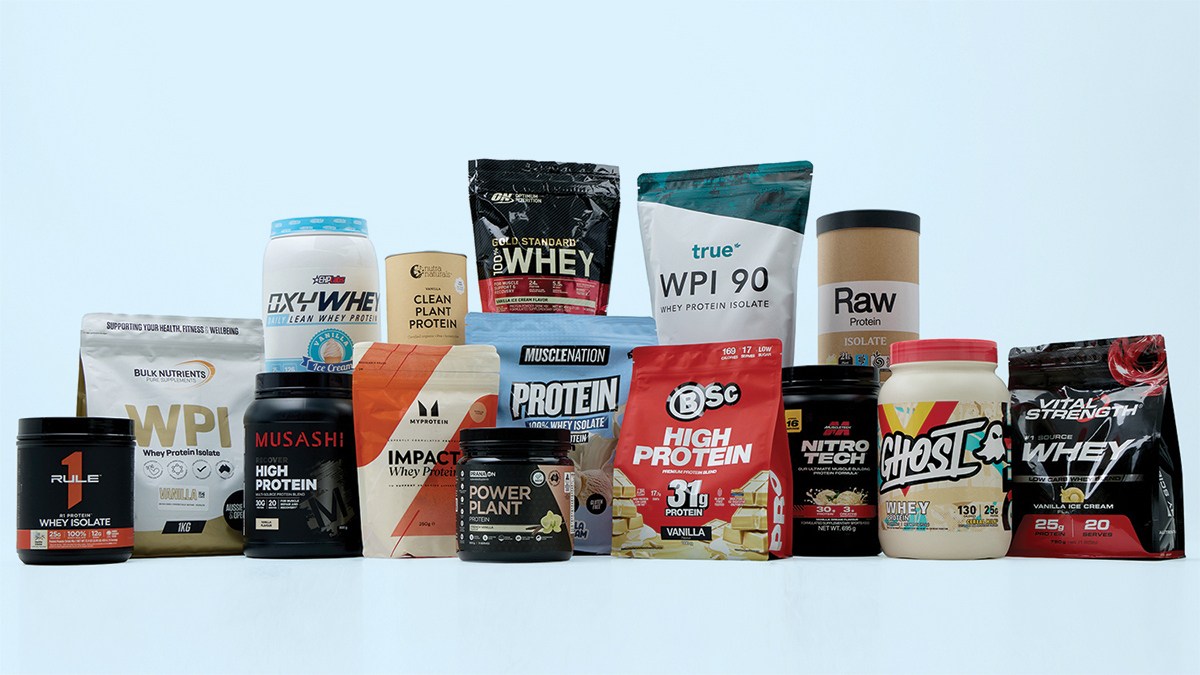
But, we recently lab-tested 30 commonly available protein powders from brands including Musashi, Nature’s Way, True Protein and Macro Mike, and found three products that underdeliver on their protein claims by more than 15%, including one that contains 50% less protein than claimed.
The protein powders that didn’t meet their protein claims
In the course of our testing, we were somewhat surprised to find a number of products contained significantly less protein than they advertised.
One of these products – Happy Way Whey Protein Powder – was found to contain just under half the amount of protein claimed in its nutrition panel. Its measured protein came in at 34g per 100g despite its label claiming it contains 72g per 100g.
Another powder – Inna Plant Protein Isolate – had a claimed protein content of 81g per 100g of powder, but tested at just 68g protein per 100g, 15% less than stated on the packaging.
All the other protein powders we tested ranged from around 9% less than what was claimed on the label, up to over 20% more.
Text-only accessible version
Protein powders with less protein than they claim
Happy Valley Vanilla Whey Protein Powder
53% less than claimed
Claimed protein: 72g per 100g Actual protein in our testing: 33g per 100g
Inna Plant Protein Isolate Powder
15% less than claimed
Claimed protein: 81g per 100g Actual protein in our testing: 68.5g per 100g
Tests reveal all powders free from lead and cadmium
We also tested each of the 30 Australian protein powders for the presence of lead and cadmium.
This testing was prompted by a 2025 investigation by US-based Consumer Reports , which found popular protein powders and shakes contained more lead in a single serving than safety experts consider safe to consume in a day.
In great news for Australian consumers, we found no concerning levels in the protein powders we looked at.
Why the variance in actual protein vs claimed protein?
Contrary to what average consumers might expect, the quantities listed on nutrition panels for food products aren’t required to exactly match what is actually in a product.
Most commercially available protein powders in Australia are regulated as foods under the Food Standards Code rather than as medicines, but it depends on the formulation of the product and how it is represented.
Under the Food Standards Code, brands are required to determine an “average quantity” of a macronutrient like protein in their product. This can be done by using their choice of three specified methods, only one of which is actual lab testing.
Companies are allowed to estimate protein content from reference data or a calculator such as the Nutrition Panel Calculator
Dr Simon Loveday, food scientist
Another acceptable method is to calculate the nutrition information from generally accepted data relevant to that food.
“Companies are allowed to estimate protein content from reference data or a calculator such as the Nutrition Panel Calculator from Food Standards Australia New Zealand or they can have samples analysed in a lab,” explains Dr Simon Loveday, a food scientist and Adjunct Associate Professor at the Riddet Institute, Massey University, who also runs his own food science consultancy, ilovefood.au.
“Testing by accredited external labs is generally more reliable and consistent than estimating values from recipe calculations or reference databases, provided the sampling is representative.”
“Using databases to estimate protein content is not perfect. It’s a legitimate way to calculate nutrition information panels, but the material tested for the database is never exactly the same as the product,” says Simon.
This could explain some of the variances we found in our testing.
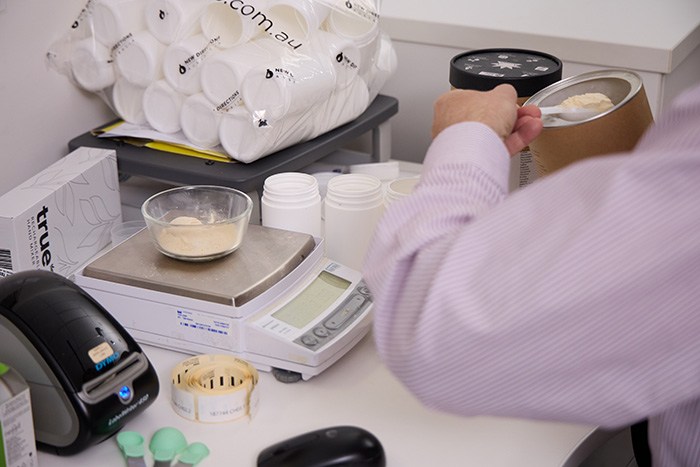
Preparing samples of protein powder for lab testing.
Current standards allow for variance
Food Standards Australia New Zealand (FSANZ) sets the Food Standards Code while state and territory governments enforce these standards through Food Regulatory Agencies, such as the NSW Food Authority.
FSANZ told us there is also no specified allowable difference between what a product declares on a nutrition information panel versus what it actually contains.
This means that the amount of protein in a product could actually legally vary significantly from what you actually get in the packet, as evidenced in our test results.
“The Code does not specify an acceptable margin of variation between the average quantity of a macronutrient (such as protein) declared in a nutrition information panel and the amount actually present in the food,” says a FSANZ spokesperson.
We contacted the brands with the powders that returned vastly different results in our testing to what was claimed on their packaging for comment, but received no explanation for the variance in results.
While variations of around 10% could reasonably be explained or justified by manufacturers, consumers should be able to expect that nutrient values on packaging are a reasonable reflection of what the product contains, especially if someone is specifically tracking their intake or buying a product for a specific purpose.
Consumers should be able to expect that nutrient values on packaging are a reasonable reflection of what the product contains
Accredited practising dietician Shannon Lavery who has 20 years’ experience across clinical nutrition, public health, and the food industry agrees:
“There will always be some degree of variation between the nutrient values stated on a food label and what is actually in the product, which is one reason why tracking nutrient intake with absolute precision can be difficult.”
“That said, consumers should still be able to trust that the information provided on a product label is a reasonable representation of what they are buying, particularly when protein content is one of the product’s major selling points,” she says.
“From a nutritional perspective, protein powders are intended to supplement a healthy, balanced diet rather than be someone’s sole source of nutrition. So a small discrepancy is unlikely to have a significant impact on the health of the average person.”
“However, a substantial difference could be more relevant for someone relying on the product to help meet increased protein requirements or carefully monitoring their intake.“
Do Australians need to use protein powder supplements?
Protein is a vital nutrient our bodies need for basic functions – so we can grow, repair, build muscles and protect our immunity. While the vast majority of Australians are meeting their daily protein needs, there are some groups who may benefit from an increased intake of quality protein, such as for weight loss or to preserve our muscle and bone mass as we age.
Lavery says: “Protein powders may be useful for people who have higher protein requirements or who find it difficult to meet their needs through food alone.”
Most healthy adults can meet their protein needs through everyday foods
“This can include people with smaller appetites or reduced dietary intake, older adults at risk of losing muscle mass, and people with increased requirements due to certain medical conditions or during recovery from illness or surgery.
“Some athletes and highly active people may also find protein powder a convenient way to meet their higher protein needs, particularly around training.”
Lavery says that most healthy adults can meet their protein needs through everyday foods such as meat, fish, eggs, dairy products, legumes, tofu, nuts and seeds.
Protein powders can be a convenient way to increase protein intake, but for most people they are not necessary if they are eating a varied, balanced diet.
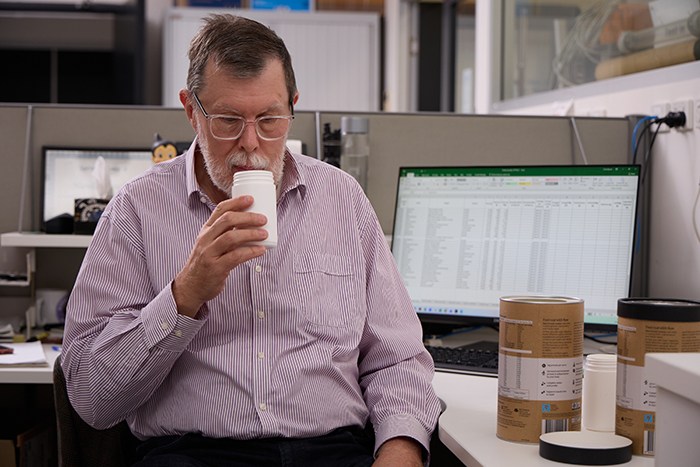
We assessed 30 protein powders on appearance, aroma, texture and flavour.
There are many factors you’ll be considering when deciding which protein powder is right for you. In addition to the type of protein (such as whey, whey isolate, casein or plant-based forms; more on this below), you’ll also be considering the amount of protein per 100g and factors such as cost, added ingredients and taste.
Considering some of the protein powders we looked at cost as much as $14–$15 per 100g, you want to ensure you like the taste before you invest in something you’ll be ingesting regularly.
So, as well as measuring the amount of protein in 30 protein powders, we also conducted a blind taste test with a panel of three protein powder enthusiasts and gave each powder a score based on appearance, aroma, texture and flavour.
Each powder we tasted was vanilla flavoured, and our taste test score accounted for 30% of the overall CHOICE Expert Rating we have given each product.
Our testers deemed the best tasting protein powder to be Maxine’s Burn Protein, with a taste test score of 90%, followed by Keep it Cleaner Daily Boost Protein and Musashi Protein Powder, both with a taste test score of 87%.
Our testers deemed the best tasting protein powder to be Maxine’s Burn Protein
Unfortunately, the other product with a taste test score of 87% rated worst in terms of its protein claims – Happy Way Whey Protein. So, top taste but less protein punch.
The worst tasting? According to our three blind taste testers, that honour goes to Amazonia Raw Protein Isolate, which came in with a score of 30%. Interestingly, the plant-based protein powders generally fared much worse in the taste test than the whey-based and collagen-based products.
How to choose a protein powder
The powders in our test contained protein from various sources, including whey and whey protein isolate, collagen and plant-based sources such as pea, rice and faba bean.
Lavery advises that: “Ultimately, the best protein powder is one that helps you meet your needs, fits your dietary requirements and is something you tolerate and enjoy.”
She offers the following advice for consumers choosing a protein powder:
Check how much protein you actually get per serve. If you are aiming to hit a specific intake from supplements, you should look for/buy products that say that they do independent lab testing.
Look for a product with a relatively simple ingredients list. Some powders contain significant amounts of added sugars, while others use artificial or alternative sweeteners and sugar alcohols, which some people may find cause gastrointestinal symptoms.
Check the serving size, kilojoules, carbohydrate, saturated fat and sodium, particularly if you are using the powder regularly.
Know the products to avoid before you shop. Get our free guide and buy smarter.
Pru Engel is the Audience and Engagement editor at CHOICE. Her job is to ensure as many Australians as possible know about the great work we do at CHOICE.
She works closely with our testers and experts to find the gems of information in our data and research that will resonate with Australian consumers and help them make the best decisions, whether they're purchasing an air fryer, looking for a new mattress or trying to find the cheapest car insurance. She also helps to drive meaningful change for consumers by collaborating with our Campaigns team on content covering issues such as grocery pricing, product safety and scams.
Prior to CHOICE, Pru worked as an editor at many of Australia's leading food and lifestyle titles.
Pru has a Bachelor of Arts in Communication (Journalism) from the University of Technology, Sydney.
LinkedIn
For more than 60 years, CHOICE has been fighting the good fight for Australian consumers.
In the past year alone we've uncovered systemic issues with sunscreens, investigated shonky supermarket pricing, fought for stronger scam protections and helped make complex energy pricing fairer and clearer.
CHOICE is here to provide unbiased advice and independent testing in our world-class labs. We buy the products we test, just like you do, and our expert reviews are influence free. We’re here to help you choose smarter. Hopefully you’ll also save some money along the way.
Thanks to CHOICE, you’ll never be alone when a business treats you unfairly. You can support our work by joining or donating to our cause.