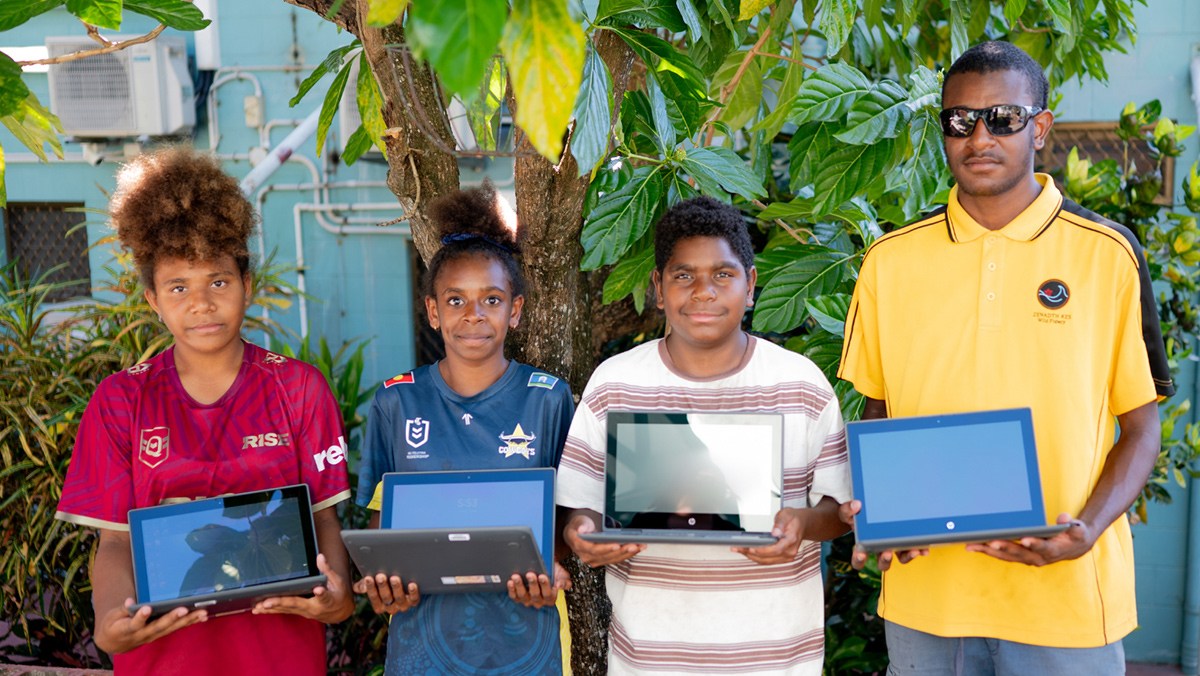
For many First Nations Australians living in remote communities, the problem of the so-called “digital divide” is nothing new, but a pilot program is hoping to address the issue.
The Australian Digital Inclusion Index maps and tracks the issue of digital connectivity nationally, and the 2025 report highlights the major gaps that exist between First Nations and non-First Nations people, particularly those living in remote areas.
Remote First Nations consumers had a digital inclusion score 22.5 percentage points lower than the national average. This score takes into account service availability and also affordability.
Remote First Nations consumers had a digital inclusion score 22.5 percentage points lower than the national average
While many communities are reliant on the internet and telephone services for access to banking, government programs and educational opportunities, barriers continue to exclude people from accessing the services they need.
The problem doesn’t just come down to poor internet service connection – for many people the upfront costs of devices themselves is a major hurdle.
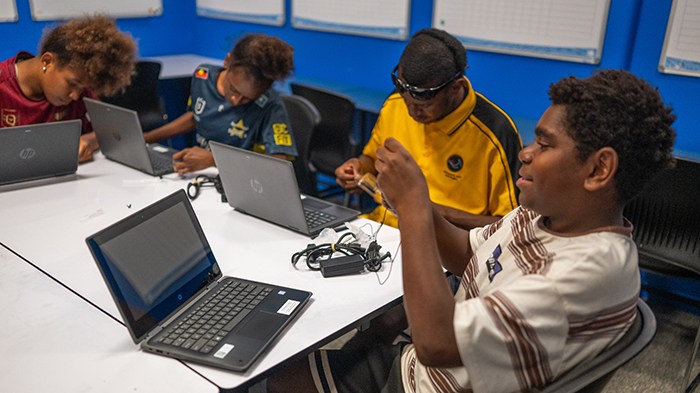
Ikasa Franceska Jomas and Jake unboxing and setting up laptops
“Access is about more than just proximity to telecommunications infrastructure, but also about access to devices. Without a functional mobile, laptop or home computer, households are at risk of being digitally excluded, even if they are within range of mobile and broadband services,” Lyndon Ormond-Parker, co-chair of the First Nations Digital Inclusion Advisory Group says.
“The rapidly changing nature of digital technologies also means we need to be forward thinking in ensuring First Nations communities have the foundation to adapt and take advantage of new innovations.”
Ormond-Parker says at present, low levels of digital inclusion mean that many are missing out on the economic benefits of being online, including job and education opportunities.
One new program hoping to step into the void and address the issue is the First Nations Device Bank run by WorkVentures, which recently received a pilot grant from the Australian Communications Consumer Action Network (ACCAN).
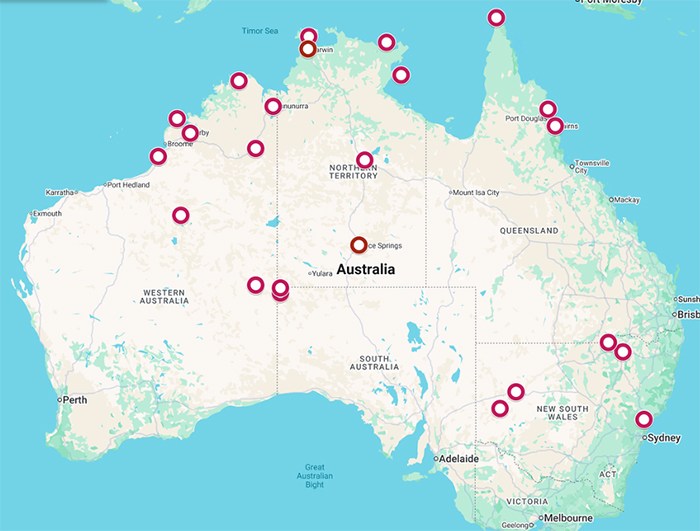
Working in 24 remote and regional communities around Australia, the program has distributed over 500 refurbished devices to either individuals, families or community locations where multiple people could access them.
The not-for-profit encourages big corporations and businesses to donate used laptops and devices when they refresh their stock and put them to good use, either distributing them directly to communities or selling them to fund community activities.
Participating communities across Australia.
What makes this program different to some other donation drives is the ongoing IT and tech support WorkVentures supplies to the community, and the support given to a liaison person in each of the communities they work in.
“We have seen programs in the past where a well-intentioned person has dropped off laptops without cords, or things like that,” Caroline McDaid, CEO of WorkVentures says.
“If a device breaks, we fix it, we’ll provide a replacement. We’ve got an in-house tech support team and so if anything does happen, we can troubleshoot it over the phone, we can jump onto their device and remotely manage it.”
Karen Stephen, who was responsible for distributing the devices in the program and travelled to many of the remote communities, says one of the take away lessons was that a one-size-fits-all approach doesn’t work.
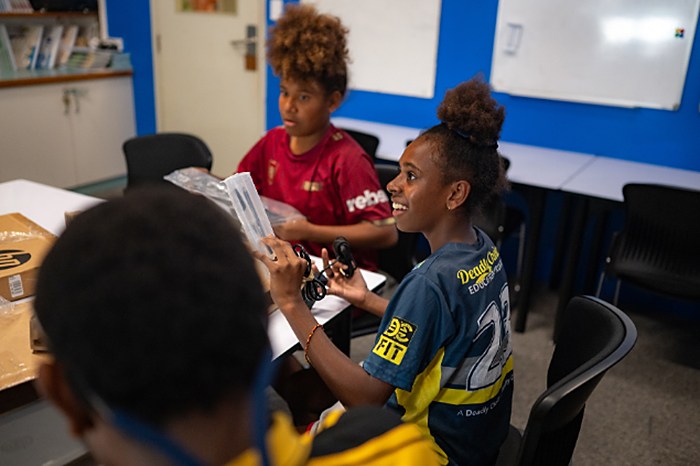
Franceska and Ikasa in Torres Strait setting up devices.
“It was important to be led by what each of the different community needs were and not think a blanket approach was going to be the solution,” she says.
“We worked with those in the community, we listened to what was going to work and trained up people to deliver the program. We didn’t just drop off a device and that was the end of it.”
Ormond-Parker agrees that “one size fits all” approaches often aren’t helpful.
We listened to what was going to work and trained up people to deliver the program
Karen Stephen, WorkVentures
“For some communities, distribution through elders or leaders is appropriate to prevent social harm or misuse, for others, distribution through schools and community centres is also possible. This reflects the importance of place-based approaches.”
He says connectivity is key to meeting a range of the government’s goals and objectives of improving outcomes and opportunities for Aboriginal and Torres Strait Islander peoples and urges the government, as well as more private companies to get involved.
“Digital inclusion is not only a benefit in its own right, but a factor underpinning progress on a number of other Closing the Gap targets and outcomes.”
Get the inside story on our investigations, campaigns and the difference they make.
Jarni Blakkarly is an award-winning Senior Investigative Journalist at CHOICE. Jarni has worked for news organisations such as SBS, Reuters, Al Jazeera English, ABC 730, Radio National, BBC World Service and Deutsche Welle.
Jarni won the Walkley Foundation's young journalist of the year student category award in 2016 and was the recipient of a Melbourne Press Club Michael Gordon fellowship in 2022. In 2023 he was a highly commended finalist in the Quill Awards and a winner at the 2024 Excellence in Civil Liberties journalism awards. In 2024 he was elected to serve on the Federal Council (National Media Section) of the MEAA. Jarni has a Bachelor of Communications (Journalism) from the Royal Melbourne Institute of Technology (RMIT).
For more than 60 years, CHOICE has been fighting the good fight for Australian consumers.
In the past year alone we've uncovered systemic issues with sunscreens, investigated shonky supermarket pricing, fought for stronger scam protections and helped make complex energy pricing fairer and clearer.
CHOICE is here to provide unbiased advice and independent testing in our world-class labs. We buy the products we test, just like you do, and our expert reviews are influence free. We’re here to help you choose smarter. Hopefully you’ll also save some money along the way.
Thanks to CHOICE, you’ll never be alone when a business treats you unfairly. You can support our work by joining or donating to our cause.