
Sunscreen and nanoparticles

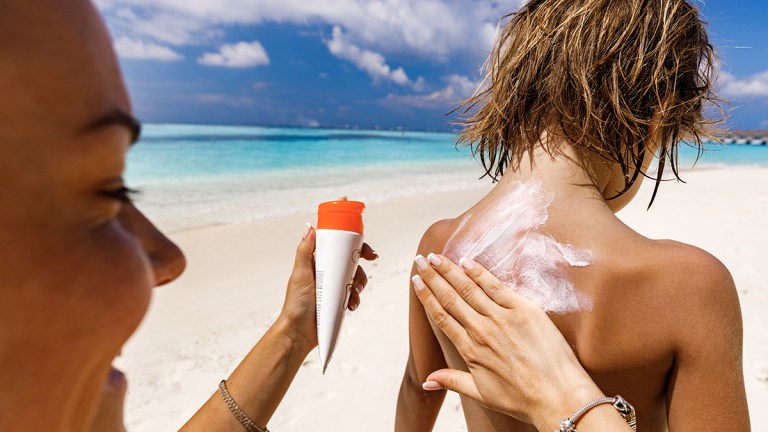
Could your sunscreen be doing you more harm than good?
 
Get access to all CHOICE BENEFITS
$1.91/wk
*Billed quarterly


03.2010 results - Sunscreens tested for nanos


Please note: These are test results from 2010.
For more information about this test, email us at ausconsumer@choice.com.au.

Which sunscreens contain nanoparticles?

CHOICE purchased 12 widely available SPF 30+ sunscreens from top-selling brands. All contained zinc oxide or titanium dioxide; some also contained chemical sunscreens. Where there was more than one product from a particular brand that met purchase criteria, only one from each brand was purchased. The samples we bought were repackaged and sent to a laboratory experienced in this sort of testing. Dynamic light scattering was used to measure the size of the metal particles. 
The testing showed that most sunscreens had some particles of about 100nm or less (which qualifies as a nanoparticle). We didn't test for aggregates or agglomerates of nanoparticles.


No nanoparticles grroup-of-4-2

Four sunscreens tested had no particles of this size. They were:

  • Cancer Council Classic Sunscreen * 
  • Nivea Sun Moisturising Sunscreen Lotion
  • Hamilton Everyday Face Sunscreen
  • Banana Boat Sensitive Sunscreen

It is worth noting that both the Cancer Council and Banana Boat claim on their websites that all their sunscreens are free of nanoparticles. If you’re concerned about nanoparticles, Cancer Council Classic is particularly recommended because it’s nano-free and doesn’t contain chemical absorbers, which have their own concerns.


Some nanoparticles group-of-7

Most of the sunscreens we tested contained low levels of nanoparticles. These were:

  • Woolworths Select Clear Zinc *
  • UV Tripleguard Summer Skin Sunscreen Lotion*
  • Coles Sports Clear Zinc
  • Ego Sun Sense Toddler Milk
  • Chemmart Clear Zinc *
  • Le Tan Sheer Daily Mineral Moisturising Sunscreen *
  • Invisible Zinc *
These sunscreens would all qualify as 'nano-free' according to proposed industry criteria which allow for up to 10% accidental contamination by nanoparticles, though Friends of the Earth would prefer the cut-off to be 5%. These criteria allow for difficulties in the pigment manufacturing process, which is not always very precise. However, some companies (including the four with no nanoparticles above) don't appear to have an issue with contamination, suggesting it's possible to avoid it.

     L'oreal UV

    Lots of nanoparticles  

    L’Oréal UV Perfect contained by far the most nanoparticles under 100nm. L’Oréal defends the use of nanoparticles, pointing out they’re widely found in nature and that “nanopigments do not cross the skin barrier, and public health agencies worldwide acknowledge their innocuity ”. 


    Products marked with an asterisk (*) contain no chemical sunscreens. 

    More information

    Friends of the Earth (FoE) is the most vocal opponent of nanotechnology being used in cosmetics and sunscreens, and recommends people use chemical-free, non-nano sunscreens. You can read more in its Nano-ingredients in sunscreen - the need for regulation.

    The US-based Environmental Working Group has extensively researched chemicals and minerals used in sunscreens, and come up with its 2012 Sunscreen Guide. It favours zinc and titanium products over chemical products and considers the potential risks of nanomaterials are lesser than the known risks of chemical sunscreens.

    See the TGA review of the safety of zinc oxide and titanium dioxide in nanoparticulate form.

    Hamilton Laboratories has released a position paper on Hamilton sunscreens and nanoparticles.

    See our article on mineral foundations and nanotechnology and food for more research information.

     
    Your say - Choice voice

    Make a Comment

    Members – Sign in on the top right to contribute to comments