Reheating last night’s leftovers, or the coffee you didn’t get to drink hot the first time, is perhaps the most common reason you turn to your trusty microwave. It’s also a saviour for overwhelmed home chefs who never seem to remember to take the meat out of the freezer to defrost the night before.
However, getting the best results out of this appliance is a little more complicated than simply pressing the “start” button. It takes trial and error to understand your microwave’s power levels and various settings, but with the right techniques you can reheat meals evenly and defrost safely.
Our kitchen experts have put over 40 microwaves to the test from brands like Breville, LG, Kmart Anko, Sharp and more to find out which are best for cooking, reheating and defrosting. Here they share their tips and tricks to help you get the most out of this appliance.
CHOICE home economist, Fiona Mair says, “a microwave can heat food very quickly, but getting that food to heat evenly throughout is much harder (especially if it’s a non-stirrable food).”
We’ve all been guilty of putting a plate of leftovers into the microwave and just pressing the “start” or “add 30 seconds” button a couple of times to reheat the meal. While this is probably the quickest way to reheat, the results are likely to be less than desirable, and you’ll very likely notice hot and cold spots throughout your meal.
But there are techniques you can follow to get perfect results and it’s also worth looking at the manufacturer’s instructions to understand how to use the programs in your microwave.
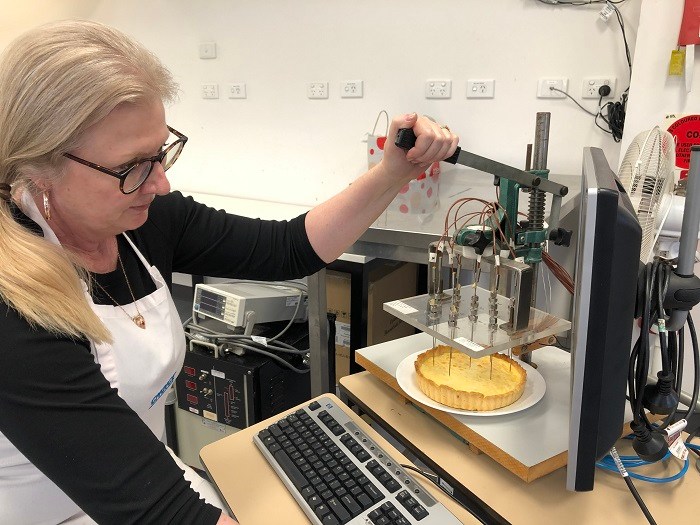
Fiona using the “hedgehog” to measure the evenness of heat distribution when reheating quiche in the microwave.
When we test microwaves in the CHOICE kitchen lab, reheating quiche is one of the main performance tests. Quiche is a non-stirrable, high-fat food, making it perfect for assessing how evenly the microwave can heat. And if you’re wondering how we can measure this, we have a trusty instrument called a “hedgehog” that has 12 needles that can measure the temperature throughout the quiche.
This test is harsh and really separates the best from the worst. The highest score we’ve awarded a standard microwave for reheating is 95%, an excellent result in our books. On the other hand, the lowest score is a poor 45%.
But how can you help the microwave you already have do a good job at reheating? Fiona has some expert tips.
Never reheat on high power, instead use 60–70% power.
Use microwave-safe dishes, preferably glass. Avoid using plastic
Use a vented lid to cover the food and ensure the lid isn’t touching the food.
If the food is non-stirrable, elevate the dish with a saucer to help distribute the microwave energy.
Always allow the food to stand for at least two minutes after reheating.
What could be so tricky about defrosting in your microwave? Unfortunately, uneven thawing, partial edge cooking (where the edges start to cook while the centre remains frozen) and bacterial growth are common issues.
Fiona assesses how well a microwave’s auto-defrost setting works by defrosting mince meat and a whole chicken. If the auto-defrost program is too high in power or takes too long, parts of the meat can start cooking. The best microwaves we’ve tested score a perfect 100% in these tests but the lowest results are only OK by our experts’ standards.
If the auto-defrost program is too high in power or takes too long, parts of the meat can start cooking
“A good microwave should defrost food evenly without warming or cooking some parts while leaving the other areas frozen.”
Once again, following the manufacturer’s instructions is important, as defrosting times and methods can vary between microwaves. Fiona shares some of her tips for defrosting in a microwave:
Turn or check the food: Most microwaves will beep to remind you to turn food or remove any portions that have already defrosted. If your microwave doesn’t do this, set a reminder to check it halfway through.
Remove packaging: When defrosting meat, take it out of its packaging and place it on a microwave-safe dish to catch any juices. A dish designed with holes or raised edges helps keep the food elevated and away from heated juices.
Protect thin parts of meat: Cover parts that are likely to defrost or warm quickly, such as the wings and leg tips of a whole chicken, with a small piece of foil. Make sure there are only small pieces of foil and that the foil does not touch the microwave walls.
Remove defrosted mince as you go: If some of the mince has defrosted while the rest is still frozen, remove the soft portions to prevent them from warming or starting to cook.
Separate pieces as they loosen: Separate steaks, bacon slices and other pieces of meat as soon as they can be pulled apart. This helps them defrost more evenly.
Freezing food strategically for easier defrosting: If you buy meat in bulk, freeze it in smaller portions so you only defrost what you need. Place freezer sheets or baking paper between individual portions so they can be separated easily and divide mince into meal-sized portions and wrap it well (using two layers of plastic wrap or suitable freezer packaging) to help prevent freezer burn.
Many microwaves feature auto programs, which can act as a useful shortcut to getting good results – simply select the food category, select the weight (some models are limited to weight selection only) and press start. The microwave will then apply a preset power level and cooking time depending on your selection.
Fiona says auto programs are only useful if they’re intuitive.
“Auto programs for defrosting, reheating and cooking can make a microwave easier to use, but too many programs or unclear controls can actually make a simple appliance more complicated.”
Sensor cooking takes away the guesswork
Sensor programs take auto functions a step further by doing the thinking for you. When used correctly, this function can be really useful and can take a lot of the guesswork out of using a microwave.
As the name suggests, sensor programs use internal sensors to detect moisture or steam and then automatically adjust the power and cooking time accordingly.
Fiona says, “this is very convenient as you don’t need to enter the weight or cooking time. The microwave will sense the moisture in the food and work this out for you”.
It isn’t foolproof though. Results can vary depending on the portion size, starting temperature, the container used and how the food is arranged. Checking the manufacturer’s instructions can go a long way towards getting the best results.
In CHOICE testing, Fiona uses the sensor function if the microwave has one and our results show that some sensor programs work better than others.
The power settings of a microwave are commonly misunderstood, but they are incredibly important to your microwave’s performance.
“Most people think that reducing the power isn’t necessary, that you can just reduce the cooking time, but following this approach is a sure way to reduce your microwave’s potential.”
Power settings allow you to control how quickly energy is delivered to food and blasting with maximum power isn’t always the best option, as it doesn’t give the microwave a chance to distribute heat evenly. Getting the right power setting can help heat food more evenly, reduce overcooking, prevent food from drying out, improve defrosting and give heat time to travel towards the centre of the food.
Power settings allow you to control how quickly energy is delivered to food and blasting with maximum power isn’t always the best option
Microwaves usually display their power levels as percentages (100%, 70%, 50% or 30%). In conventional microwaves, lower power settings are achieved by switching the energy on and off in cycles. So if you set the microwave to deliver 50% power, it will go through cycles of producing 100% power followed by a period of no power to achieve 50%.
If you have an inverter microwave it uses an inverter circuit to supply a steady and constant amount of power throughout the cooking time without cutting in and out. So if you select 50% power, the microwave will deliver 50% power throughout.
Text-only accessible version
Difference between inverter and conventional microwaves
Non-inverter microwaves
Max power
– The microwave operates at maximum power continuously.
Mid power
The microwave switches between maximum power (ON) and no power (OFF) over time.
This creates periods of full power interspersed with periods of no power.
Low power
The microwave switches between maximum power (ON) and no power (OFF) over time.
The periods of no power are longer relative to the periods of full power.
Inverter microwaves
Max power
– The microwave operates at maximum power continuously.
Mid power
– The microwave delivers a continuous, reduced level of power over time.
Low power
– The microwave delivers a continuous, lower level of power over time.
Fiona says you should always refer to the manufacturers instructions, because recommendations could vary between brands and models. She also says, “if your microwave has auto cook programs they are worth using. If not then you’ll need to adjust the power settings.”
As a general guide:
High power (100%): For cooking and steaming vegetables, boiling water and heating stock.
Medium to high power (70–80%): For cooking rice, sauces and gravies, meats such as mince and fish, reheating stirrable foods like soups and casseroles.
Medium power (50–60%): reheating non-stirrable foods, cooking eggs and heating dairy foods like custards and bechamel sauce, foods with high fat and sugar such as bacon and filled pastries, sugar syrups, making jams and caramel, melting chocolate, heating desserts with fruits like fruit crumbles and sticky date pudding.
Medium to low power (40-30%): slow cooking, defrosting foods and meats, heating sensitive foods like milk and melting butter, warming honey and jams.
Low power (20%): softening butter, cream cheese and ice cream, heating citrus to help release more juice.
Warm (10%): Keeping foods warm.
If you’re used to just hitting start you may find using the power levels takes longer, but you’ll get a better result.
Know the products to avoid before you shop. Get our free guide and buy smarter.
Rebecca Ciaramidaro is a Content producer in the Household team at CHOICE. Rebecca writes about a wide range of children's and household products, ranging from cots and strollers to ovens, BBQs, espresso machines and electric blankets. And also grocery items such as nappies, sanitary pads and laundry detergents.
Previously at CHOICE, Rebecca worked as a Test officer in the kitchen lab.
Rebecca has a Bachelor of Science (Nutrition and Food) from the University of Western Sydney. LinkedIn
For more than 60 years, CHOICE has been fighting the good fight for Australian consumers.
In the past year alone we've uncovered systemic issues with sunscreens, investigated shonky supermarket pricing, fought for stronger scam protections and helped make complex energy pricing fairer and clearer.
CHOICE is here to provide unbiased advice and independent testing in our world-class labs. We buy the products we test, just like you do, and our expert reviews are influence free. We’re here to help you choose smarter. Hopefully you’ll also save some money along the way.
Thanks to CHOICE, you’ll never be alone when a business treats you unfairly. You can support our work by joining or donating to our cause.