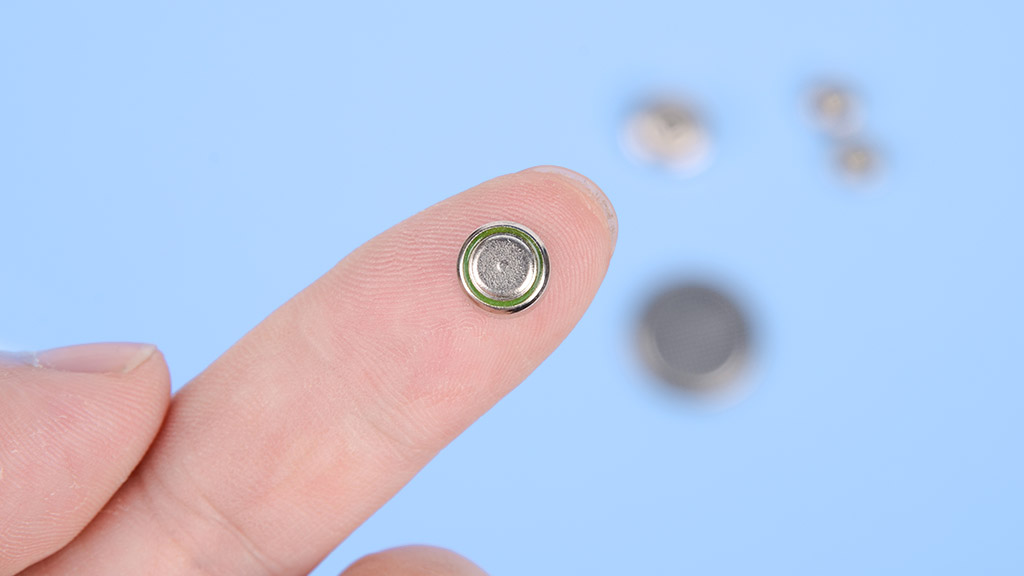
What happens if a child swallows a button battery? These small, circular devices can get lodged in the digestive system and cause severe internal burns in as little as two hours.
Three children have died in Australia since 2013 as a result of ingesting a button or coin battery, and according to Kidsafe, it’s estimated that 20 children a week end up in hospital suspected of having ingested or inserted them.
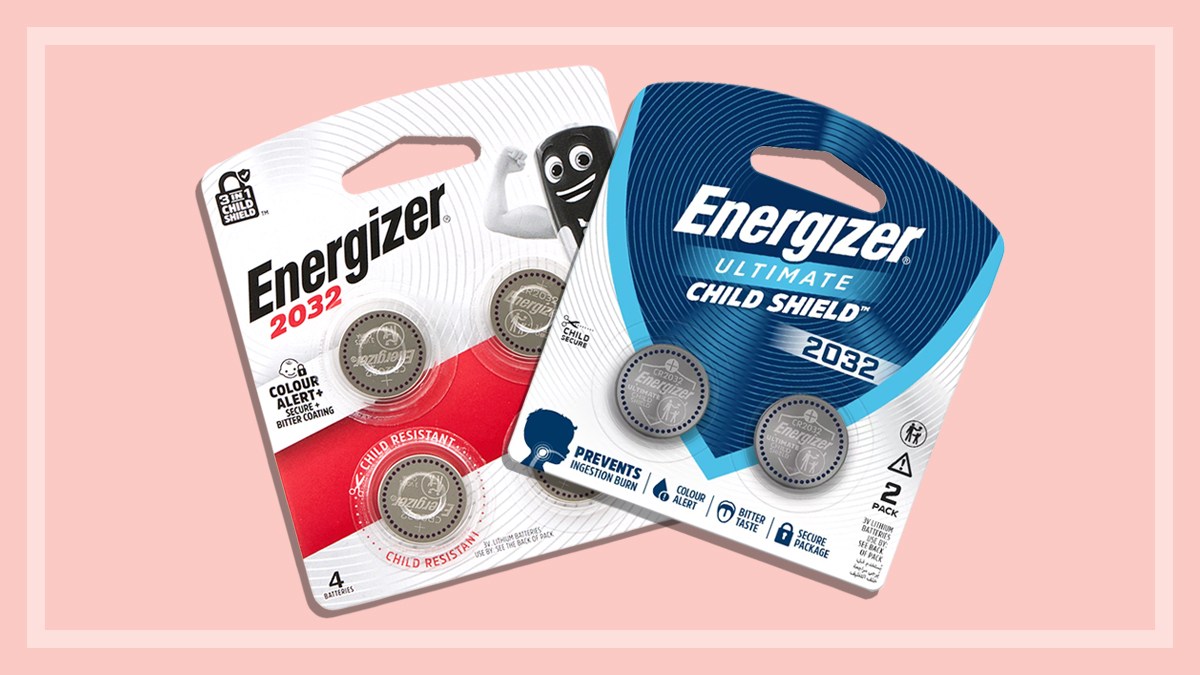
There have long been calls for manufacturers to design safer button batteries, and now Energizer has released a new design that promises to prevent internal burns if ingested.
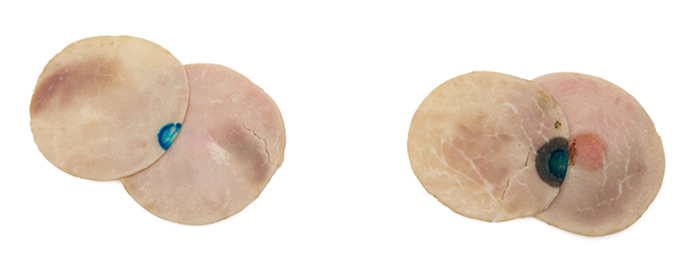
CHOICE put this claim to the test by placing two button batteries on slices of ham (to simulate human tissue) to see what would happen. One is the new Energizer Ultimate Child Shield and the other is a standard button battery from the same manufacturer.
We tested the Energizer Ultimate Child Shield (left) against a standard button battery from Energizer (right).
The test results
Energizer’s new button battery didn’t burn the ham in our test, while the standard version from the same manufacturer left serious burns and turned some of the meat black.
The new version appeared safer than a regular button battery in the scenario we tested, which was over three hours. We can’t know how it would react in a real-world situation, especially over a longer period.
How does the new design work?
Energizer’s Ultimate Child Shield coin batteries are currently the only coin lithium batteries in Australia made with a titanium alloy coating, which helps to prevent burns if swallowed.
Button or coin batteries lead to internal burning when swallowed because they create an electrical current and cause a chemical reaction when they come into contact with moisture, but the titanium alloy coating can help prevent this chemical reaction from occurring.
Both batteries have extra safety features
The titanium coating is only available with the Ultimate Child Shield, but both batteries we tested include other safety features.
They both have a non-toxic bitter coating aimed at discouraging children from ingesting them, and a blue dye that activates once it touches saliva, helping parents and caregivers immediately recognise when a button battery has been put in a child’s mouth.
These aren’t standard on all button batteries in the market.
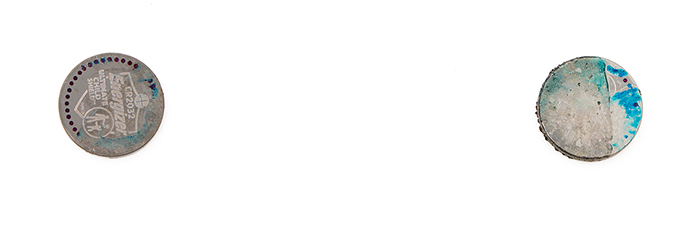
The Energizer with protective coating (left) and the standard button battery (right) showing their blue dye safety feature.
You’ll notice the blue dye is present on both slices of ham we tested, though only the one on the right – the standard button battery – has visibly blackened from caustic burns.
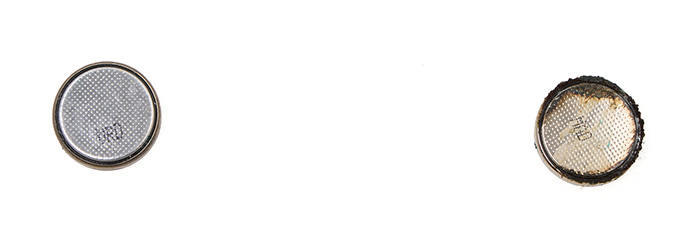
The standard button battery also became corroded, and these effects all occurred within just three hours of testing.
A safer battery like this one is a useful tool like a seat belt is to a car, but it doesn’t completely remove the danger of products that contain button batteries
Kim Gilmour, CHOICE product safety expert
CHOICE product safety expert Kim Gilmour says parents and caregivers should remain vigilant of button batteries and their danger to children.
“While Energizer’s new battery worked in the scenario we tested, we can’t test it in a real-world situation with different variables,” says Gilmour.
“A safer battery like this one is a useful tool like a seat belt is to a car, but it doesn’t completely remove the danger of products that contain button batteries. Even if these new batteries are being used, swallowing any small part like a battery is still a choking hazard,” she says.
Energizer’s regular button battery (right) has corroded after coming into contact with moisture.
How much do the new batteries cost?
Energizer’s Ultimate Child Shield coin batteries are available for about $15 for a pack of two (compared with $12–$18 for its standard type, depending on the retailer).
Why you should still be cautious of button batteries
Button or coin batteries are commonly used in car keys, remote controls, thermometers and watches, and they are also found in plenty of children’s toys.
KidSafe says that children under the age of five are more at risk of swallowing button batteries because the small and shiny objects can draw their curiosity. If they are ingested, kids under five are also more vulnerable to serious injury because they have a smaller oesophagus and the device may get stuck.
Lithium coin batteries, like the ones used in our ham test, pose the highest risk to children because they are generally larger – though still small enough to swallow – and they carry a higher voltage which can cause tissue damage more quickly.
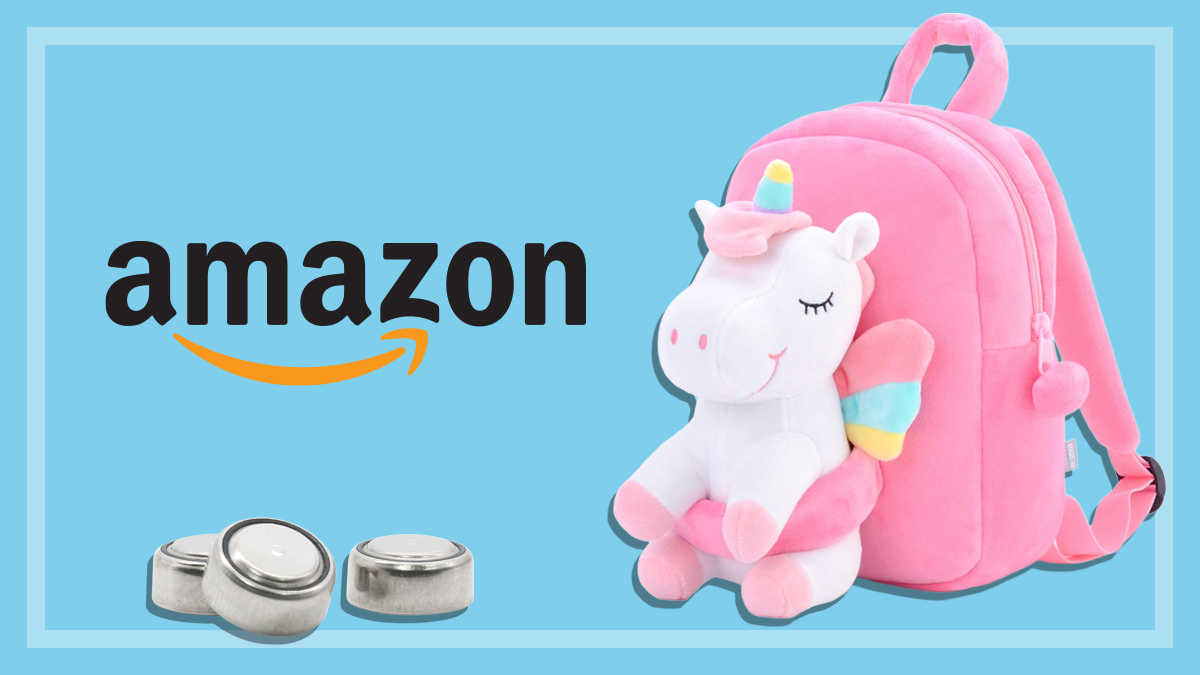
Items bought from Amazon that failed mandatory button battery safety standards.
Battery advocate urges vigilance despite new safety measures
Allison Burns’s 14-month-old child Bella died in 2015 after swallowing a button battery. She is now a powerful advocate for button battery safety.
While Burns can appreciate the new battery innovations, she says the design should have been available much sooner.
“These things should have already been, to me, put in place 10 years ago,” she says.
Burns also urges caregivers to remain vigilant to the dangers of button batteries, and to not become complacent.
“Every single product that we purchase does not have an Energizer battery in it. It does not have this technology. So those batteries are still going to kill kids and still going to seriously injure kids,” says Burns.
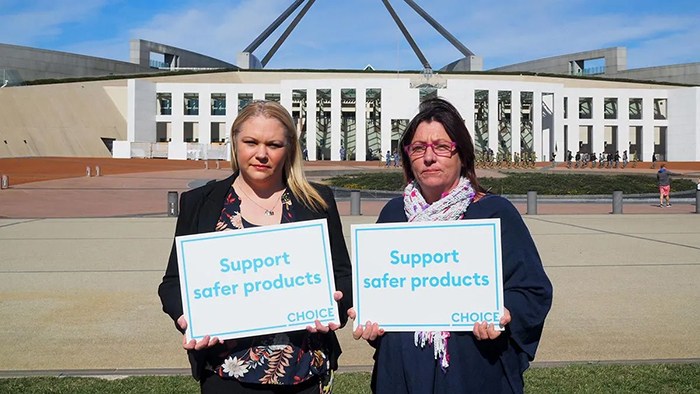
Allison Burns (left) and Andrea Shoesmith have fought for changes to the law.
Unsafe button batteries are lurking in the home
In 2024, CHOICE bought and tested 15 everyday household items to see whether they complied with mandatory button battery safety standards. We found that 10 of the 15 products had serious safety failures.
There are still many button batteries available for sale that don’t have these safety features
Bea Sherwood, CHOICE senior policy and campaigns advisor
CHOICE senior policy and campaigns advisor Bea Sherwood says parents and caregivers should still be alert to products around their home that use button batteries regardless of whether they’re using Energizer’s child-safe version.
“There are still many button batteries available for sale that don’t have these safety features, so consumers should remain cautious and ensure your children are always supervised when playing with any button battery toy,” says Sherwood.
“Caregivers should ensure that any item containing a button battery in the home is compliant with the mandatory standards and in good condition,” she says.
A welcome development in product safety, but at an additional cost
Sherwood called Energizer’s child-safe button battery good progress for children’s safety, though she stresses that all products should be safe, regardless of the price point.
“Energizer’s new button battery is a good reminder that more can be done to keep children safe, even where there are mandatory standards. While these are good innovations, it’s disappointing that Energizer continues to sell button batteries without these features, and that they appear to charge more for them,” says Sherwood.
“They could also lead to a false sense of safety – particularly if they get mixed up with regular button batteries, which could easily happen when replacing them,” she says.
“We continue to call on the government to introduce general safety protections that would make it illegal to sell unsafe products in the first place – no matter the product or who sells it.”
Energizer may roll out more battery sizes
Energizer’s new button batteries are currently only available in one size, but the brand says it’s considering a potential expansion into other coin battery sizes.
“Energizer Ultimate Child Shield initially launched across 20mm coin lithium batteries (types 2032, 2025 and 2016), as these batteries pose the greatest risk of ingestion burns due to their similarity in size to a child’s oesophagus and account for almost 90% of global coin lithium battery sales,” says Amanda Broderick, head of international marketing at Energizer.
Jasmine Gearie is a content producer at CHOICE. She writes about a range of topics including skincare, household appliances and supermarket trends – always with an eye on helping consumers make better-informed choices.
Before joining CHOICE, Jasmine covered personal finance for Mozo and consumer tech at TechRadar.
Jasmine has a Bachelor of Communication (Journalism and Public Relations) from the University of Newcastle. LinkedIn
For more than 60 years, CHOICE has been fighting the good fight for Australian consumers.
In the past year alone we've uncovered systemic issues with sunscreens, investigated shonky supermarket pricing, fought for stronger scam protections and helped make complex energy pricing fairer and clearer.
CHOICE is here to provide unbiased advice and independent testing in our world-class labs. We buy the products we test, just like you do, and our expert reviews are influence free. We’re here to help you choose smarter. Hopefully you’ll also save some money along the way.
Thanks to CHOICE, you’ll never be alone when a business treats you unfairly. You can support our work by joining or donating to our cause.