In 2021, CHOICE lodged an official complaint with ASIC about the timeshare industry following several investigations, urging the regulator to tighten regulations
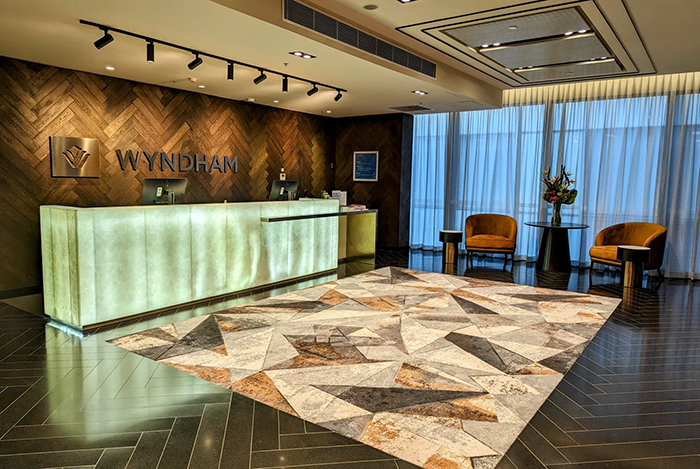
Our case study was subjected to an apparent Wyndham Vacation Club timeshare sales pitch without being given warnings about the risks mandated by ASIC
Wyndham says the promotional tacitc ‘does not meet the standard of experience we seek to provide’
The reputation of the holiday timeshare industry in Australia has taken a beating in recent years, and it seems a longshot that it will continue to lure in new customers. Why sign up to a decades-long scheme that costs tens of thousands to join when it’s much cheaper and easier to book holiday accommodation through a third-party booking service or the property itself?
Many timeshare members have belatedly come to wrestle with this question but can’t exit their schemes due to contracts that run 80 years or more. Some have to keep paying steep annual fees without having booked a property through the scheme for years. Meanwhile, some major operators have begun to unravel.
Timeshare operator Ultiqa, for instance, had its financial services licence cancelled in 2024 after failing to pay $19,000 in reimbursement to a member ordered by the Australian Financial Complaints Authority (AFCA). The sales and promotion arm of the business was subsequently liquidated.
Prior to that, Ultiqa Lifestyle was fined $900,000 in a case brought by the Australian Securities and Investments Commission (ASIC) for breaking financial advice laws.
There is evidence that members still in an Ultiqa scheme aren’t too happy about it. AFCA received 23 complaints about the operator in 2025–26, a proportionately high number to be escalated to AFCA given the size of the business.
Timeshare grievances go back a long way. A 2019 review of the industry by ASIC, which regulates it, found deep-rooted dissatisfaction among timeshare members.
CHOICE has investigated the timeshare industry extensively in recent years, coming to the resounding conclusion that the value for money proposition ranges from poor to terrible.
When we surveyed 351 timeshare members in 2021, around 30% said they’d like to leave their schemes but couldn’t due to inescapable contracts, and another 12.5% said they were thinking about leaving.
In 2021, we lodged an official complaint with ASIC about the timeshare industry
We gave Marriott’s timeshare scheme a Shonky in 2018 after finding that visiting a two-bedroom apartment on the Gold Coast for one week per year in high season would have cost a whopping $450,001 over the lifetime of a Marriott timeshare contract, and $154,823 would have been due in the first five years alone.
Our Marriott timeshare booking was 938% more expensive than a similar accommodation sourced on an online booking site, which cost $14,907 to stay for one week a year over the same five-year period.
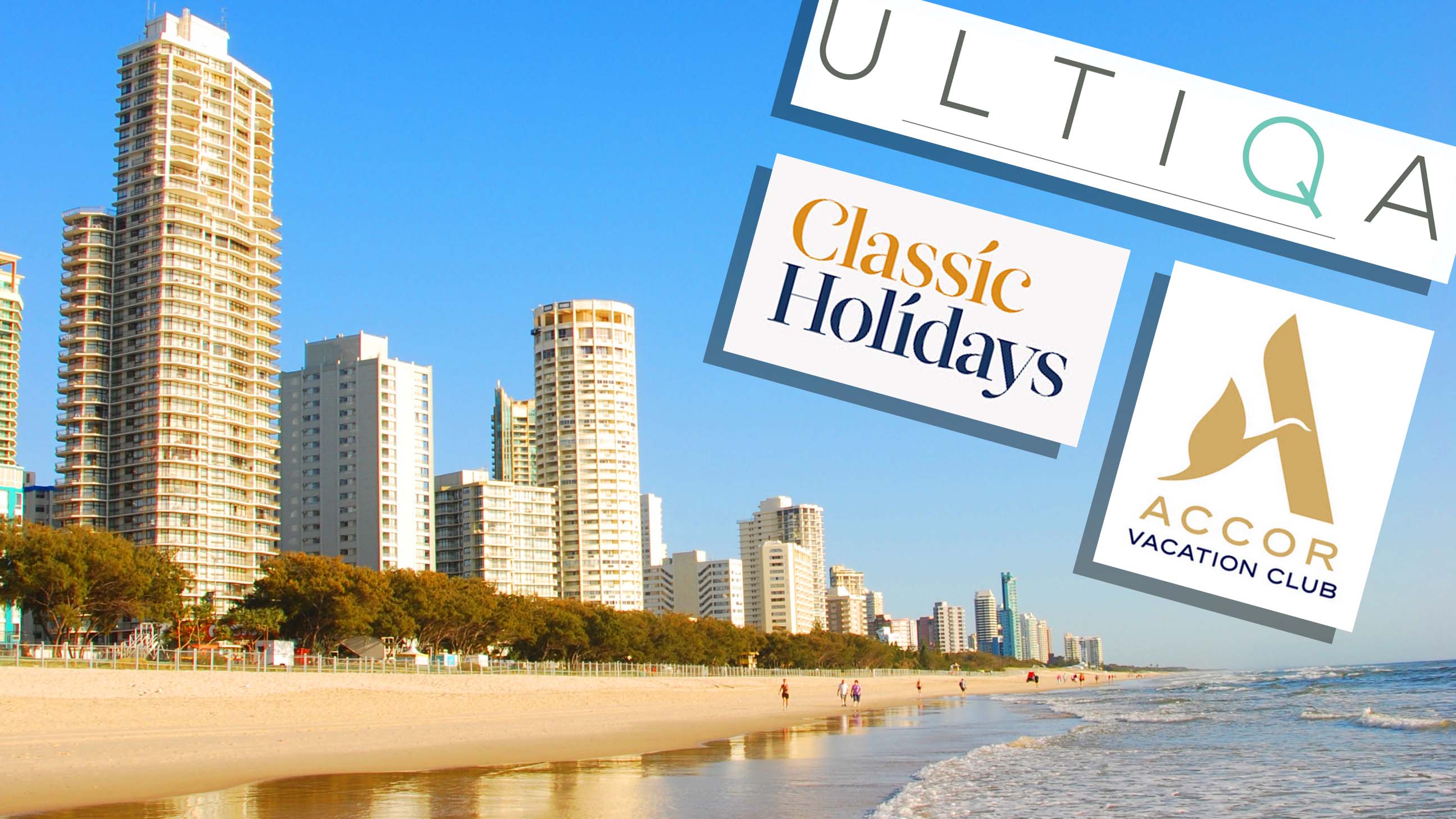
In 2021, we lodged an official complaint with ASIC about the timeshare industry, urging the regulator to tighten regulations. That same year, with COVID-19 lockdowns still in place around the country, the boards of three major scheme operators – Classic Holidays, Accor Vacation Club and Ultiqa Lifestyle – voted not to extend hardship relief to their members.
It meant that people trapped in their schemes had to keep paying fees, even if they were suffering permanent job loss, ongoing financial hardship or illness.
Consumers may be waking up to the fact that timeshare schemes are a long-term money drain masquerading as a special offer, but it seems that the industry is not throwing in the towel or cleaning up its act. In fact, the marketing and promotion practices of one prominent operator, Wyndham Vacation Club, appear to be well in line with the hard-sell tactics that have long characterised the industry.
Wyndham was the subject of 22 AFCA complaints in 2025–26, once again a high number for a business of its size.
The complaints came from people in the scheme, but one consumer we recently heard from, Simon, has called Wyndham out for its underhanded methods of trying to enlist new members.
In October, Simon checked into a TRYP hotel run by Wyndham in Adelaide. It was midday and he asked if his room might be ready. He was told it wasn’t but he could gain access to it earlier if he either paid an extra $50 or watched a 15-minute promotional video.
Simon chose the video option and was promptly led to his room – the one that was not supposed to be ready yet.
Prospective members must be given a verbal warning of the risks of timeshare schemes at the start of a sales presentation.
“The hotel clerk came up at 12.30pm and knocked on the door,” Simon says. “He had a digital tablet in his hands and a face was staring back at me from it. It turned out I was on a live stream to someone in Fiji. So this was not just a video, it was going to be interactive. I figured it would be a video about their other hotels and it would be like watching an ad. I was surprised to see I was on live with a salesperson from Fiji.”
“For the next 45 minutes – not 15 – I had to endure a hideous, AI-generated video and get the hard sell from this salesperson, who made sure I was watching the video,” Simon says.
The live salesperson appeared and spoke to Simon between prerecorded segments of the video. The pitch was to sign up to a trial of what was obviously a Wyndham timeshare scheme right then and there or the offer was off the table, though the salesperson never used the term “timeshare”.
I had to endure a hideous, AI-generated video and get the hard sell from this salesperson
Simon, Wyndham hotel guest
The salesman mentioned that the trial of the scheme was a path toward becoming an “owner”, though it was unclear what that meant.
In December 2020, ASIC announced updated regulations for the timeshare industry, including that operators must “provide consumers with clear and prominent information about the key features and risks of time-sharing, both verbally and in writing, at sales presentations”.
Simon says that didn’t happen.
“I saw an AI-generated video followed by a screenshot that tried to explain how I spend the money now and it turns into points, then I use those points later to book holidays. Nothing about risk was mentioned. The urgency was to ‘sign up now’ to get $1400 worth of points immediately.”
Simon did not take the bait, nor did other hotel guests he chatted to who had been subjected to the same sales pitch. ASIC declined to comment on this specific case but drew our attention to an ASIC regulatory guide that says prospective members must be given a verbal warning of the risks of timeshare schemes at the start of a sales presentation “whether the seminar or presentation is conducted in person, by telephone or by electronic communication”.
The guest’s description of the presentation does not meet the standard of experience we seek to provide our guests
Wyndham spokesperson
We contacted Wyndham and asked whether it knew its timeshare promotional tactics were potentially in violation of ASIC regulations and were told the scenario we described “leads us to believe the guest was offered a short-term trial program and discounted accommodation rather than a product offered under a financial services licence”.
“Nevertheless, the guest’s description of the presentation does not meet the standard of experience we seek to provide our guests, and we have launched our own internal investigation,” the spokesperson says
When we asked whether such discounted accommodation programs include purchasing points – which is how the Wyndham Vacation Club timeshare model works – we didn’t get a response.
Get the inside story on our investigations, campaigns and the difference they make.
Andy Kollmorgen is the Investigations Editor at CHOICE. He reports on a wide range of issues in the consumer marketplace, with a focus on financial harm to vulnerable people at the hands of corporations and businesses. Prior to CHOICE, Andy worked at the Australian Securities and Investments Commission (ASIC) and at the Australian Financial Review along with a number of other news organisations. Andy is a former member of the NSW Fair Trading Advisory Council. He has a Bachelor of Arts in English from New York University. LinkedIn
Andy Kollmorgen is the Investigations Editor at CHOICE. He reports on a wide range of issues in the consumer marketplace, with a focus on financial harm to vulnerable people at the hands of corporations and businesses. Prior to CHOICE, Andy worked at the Australian Securities and Investments Commission (ASIC) and at the Australian Financial Review along with a number of other news organisations. Andy is a former member of the NSW Fair Trading Advisory Council. He has a Bachelor of Arts in English from New York University. LinkedIn
For more than 60 years, CHOICE has been fighting the good fight for Australian consumers.
In the past year alone we've uncovered systemic issues with sunscreens, investigated shonky supermarket pricing, fought for stronger scam protections and helped make complex energy pricing fairer and clearer.
CHOICE is here to provide unbiased advice and independent testing in our world-class labs. We buy the products we test, just like you do, and our expert reviews are influence free. We’re here to help you choose smarter. Hopefully you’ll also save some money along the way.
Thanks to CHOICE, you’ll never be alone when a business treats you unfairly. You can support our work by joining or donating to our cause.