Cleaning your air conditioner is one of those tasks that’s easy to put off, but a little effort is well worth your time. A clean air con means your air quality will improve, and you could even save on your energy bills too.
A dirty air conditioner can become clogged with dust and may even develop mould over time, negatively impacting your indoor air quality.
Clogged filters also mean that your air conditioner has to work harder to move, cool and heat the air, which will drive up your running costs. So a quick clean can also save you money.
Our advice is based on split-system air conditioners – the most common type in Australian homes – but it broadly applies to ducted and wall-window models as well.
Your air conditioner should have come with an instruction manual that details how to access and clean the air filters and any other user-maintainable parts. If you don’t have the booklet anymore, you may be able to download a copy from the manufacturer’s website.
Need to know: Make sure the unit is turned off at the wall before you do any maintenance on it.
How to clean the filters and louvres on your air conditioner
Clean the indoor unit dust filters
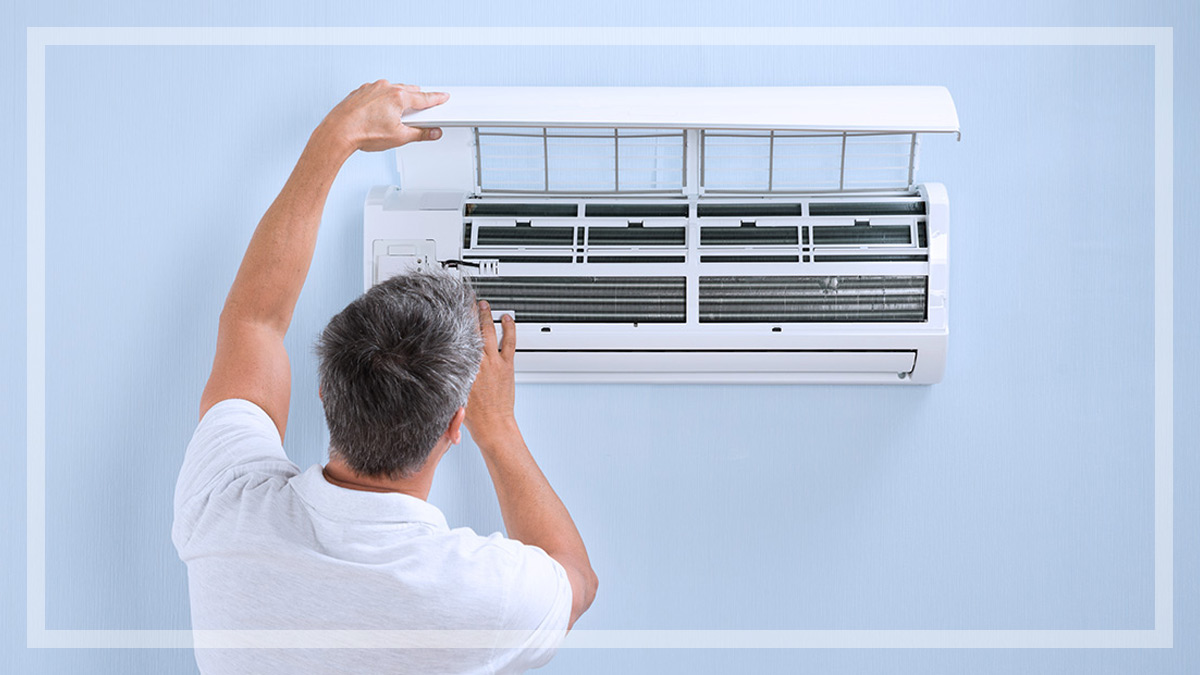
The indoor air conditioner unit has dust filters that need regular cleaning. The more clogged the filter gets, the harder the air conditioner has to work to push air through it. That can mean higher running costs for you.
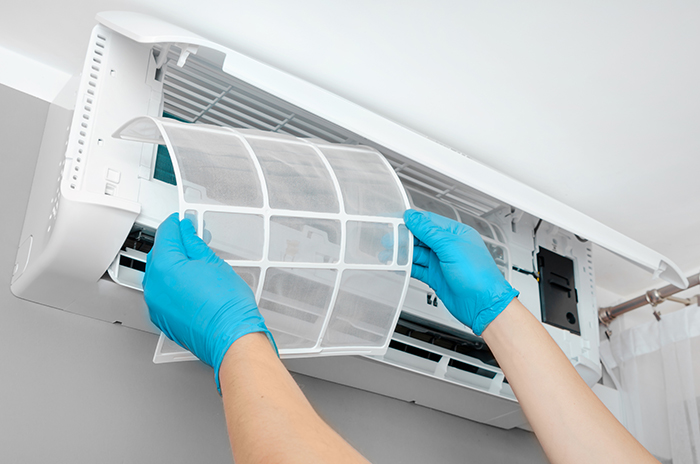
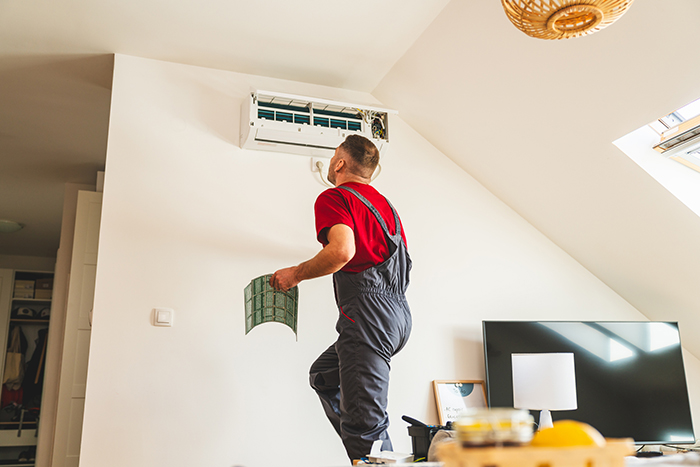
It’s usually a matter of popping open the plastic cover and removing the filter, just note that there may be more than one. If you can’t easily reach the indoor unit, use a small stepladder.
Manufacturers usually recommend that you clean the dust filters every few weeks, but it really depends on how often you use your air conditioner. Simply put, the more you use it, the more often you should clean the filters.
Aim to clean the filters a couple times a year at least. For example, if you mainly use the unit in summer, clean the filters in spring so it’s ready for the peak season, and again when the hot weather is over.
Take the dust filters outside for a good brush or shake. They can usually also be vacuumed for a thorough clean – use the vacuum cleaner’s brush head if you have one.
If you need to give the filter a wash, spray it with a hose from the opposite side to where the dust has accumulated on the filter. That way you’re washing it from the inside out and pushing dirt off the filter.
If the filters are very dirty and grimy, you can wash them in warm water with some mild detergent and rinse them clean. Make sure they are completely dry before putting them back in the unit.
If the filters are damaged, replace them with new ones –check the manual or the manufacturer’s website for where to get spare parts.
Some models also have an air purification filter, such as an ionising filter, that can be removed and cleaned. This type of filter will eventually need to be replaced, perhaps every year or two, depending on usage. Check the instructions for how to clean or replace this filter.
Cleaning your air con’s filters at least once a year helps your air quality at home.
Clean the air conditioner’s louvres
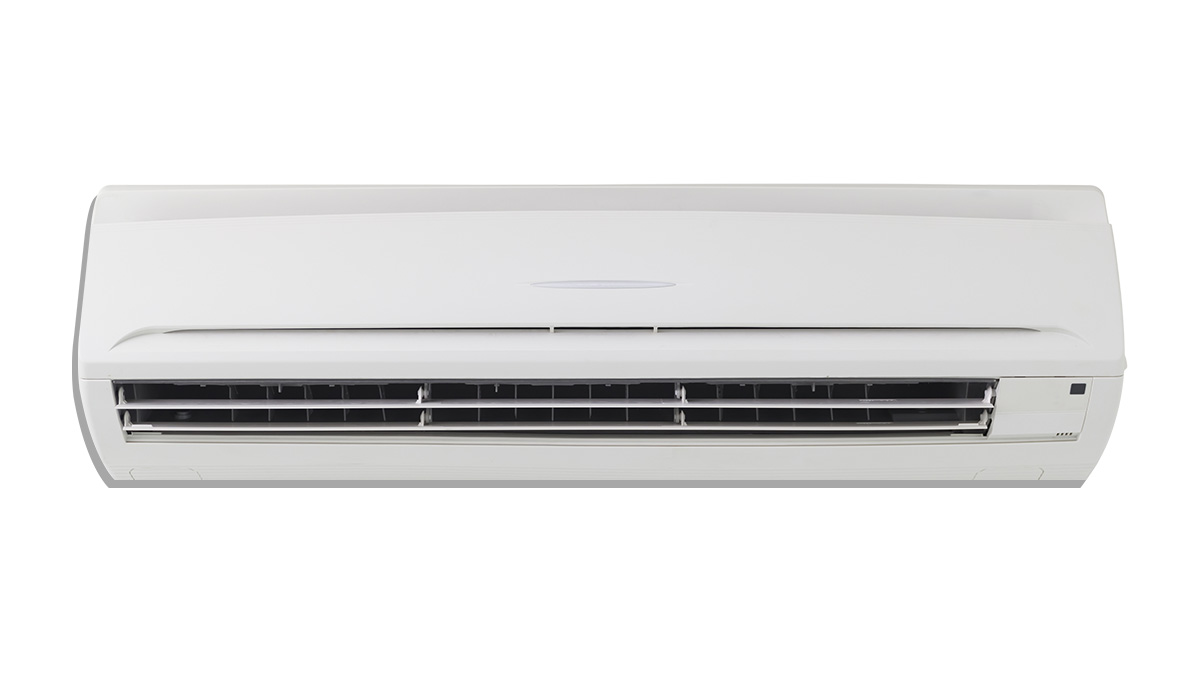
Louvres are the angled blades which oscillate and direct air flow. Make sure the air conditioner unit is powered off before you try to clean them.
Check your manual to see if you can remove them. If you’re not able to remove the louvres, you can still wipe them over with a soft cloth. If you can remove them, do so carefully before cleaning. Just be mindful that plastic louvres may break if handled roughly.
If you’re able to take them out, give the space behind them a clean as well with a soft cloth or a vacuum cleaner with a brush attachment.
In dusty or humid areas
If you live in a dusty or humid environment and use your air conditioner frequently, you might be surprised at how much dust and mould can build up inside the air conditioner.
This can lead to decreased performance as it clogs up, but it can also cause mould spores to grow and be blown into your home. Your air con can also leak water if the indoor unit’s drainage pipe gets blocked by gunk.
Running the unit in fan-only mode, or running a “dry out” program if your unit has one, will help keep the interior of the indoor unit dry. Nevertheless, the occasional professional service and maintenance cleaning is recommended.
Split-system air conditioners include an outdoor compressor unit, and you can help keep it clean by clearing away surrounding grass and plants, and brushing away dust, leaves and cobwebs regularly.
Running a vacuum cleaner over the air intake can also help clear dust from inside.
We don’t recommend that you open up the unit to clean its internal components – leave that to a professional service.
A professional should service your air conditioner at least once a year.
Getting your air conditioner professionally serviced and cleaned
We recommend you get your air conditioning system professionally serviced regularly. The air con technician will check the refrigerant gas levels, test the thermostat and make sure all the internals are in good condition. This will keep the unit running for many years.
Some manufacturers recommend getting a service once a year. Others say that as long as you follow the instructions and regularly clean the filters and units, you’ll only need to have the air conditioner serviced if a fault develops.
Professional cleaning
You can have your air conditioner cleaned by a professional. A maintenance service should include cleaning of internal components such as coils, fins and drainage. This is especially worth considering if you live in a dusty or humid area, where bacteria and mould build-up inside the unit is a risk.
If you use your air conditioner regularly, run the air conditioner in fan-only mode occasionally to evaporate any moisture inside the indoor unit, which helps prevent mould and odours.
Twice a year
For split-system air conditioners, clean the indoor unit’s dust filters twice a year. You’ll need to do this more often if your air con is always on, you live in a very dusty environment, or you experience a noticeable drop in performance.
Ducted air conditioners will also need the filter cleaned. It’s usually located in the return air grill which is often located in a hallway.
Clean any extra filters, such air purifying filters, as per the instructions.
Wipe down the indoor unit or any ducts and vents with a soft cloth. Clean inside the unit if you can safely reach, along with the exterior.
Annually
Clean the outdoor unit with a soft brush or broom, and remove vegetation, obstructions and spider webs as necessary.
Know the products to avoid before you shop. Get our free guide and buy smarter.
Chris Barnes is a Senior Project Officer. He manages the product reviews that are done outside of CHOICE with external labs or data sources. This includes solar panels, electric heaters, air purifiers and detergents.
Chris also manages our testing services through our commercial arm, Test Research, and he is CHOICE's NATA authorised representative for our lab's formal accreditations.
Chris is involved with the standards committee for air conditioners. And he works with government and industry in areas such as product safety and regulation.
In over 20 years at CHOICE, Chris has managed lab teams for a wide range of products, including children's products, kitchen appliances, laundry appliances, garden power tools and more. Chris has a Science degree from the University of Sydney. LinkedIn
For more than 60 years, CHOICE has been fighting the good fight for Australian consumers.
In the past year alone we've uncovered systemic issues with sunscreens, investigated shonky supermarket pricing, fought for stronger scam protections and helped make complex energy pricing fairer and clearer.
CHOICE is here to provide unbiased advice and independent testing in our world-class labs. We buy the products we test, just like you do, and our expert reviews are influence free. We’re here to help you choose smarter. Hopefully you’ll also save some money along the way.
Thanks to CHOICE, you’ll never be alone when a business treats you unfairly. You can support our work by joining or donating to our cause.