Only a relatively small proportion of solar battery owners are taking part in a virtual power plant (VPP)
Lack of understanding is a major impediment, but so is lack of trust in energy companies
Both the ACCC and Energy Consumers Australia are calling for VPP providers to have a consumer duty to act in customers’ best interests
Virtual Power Plants (VPPs) can potentially save households with solar home batteries a bundle of money, so you might think consumers would really be jumping on board.
But only a relatively small proportion of solar battery owners are taking part in the technology, mainly because consumers don’t understand how VPPs work or what the potential benefits are.
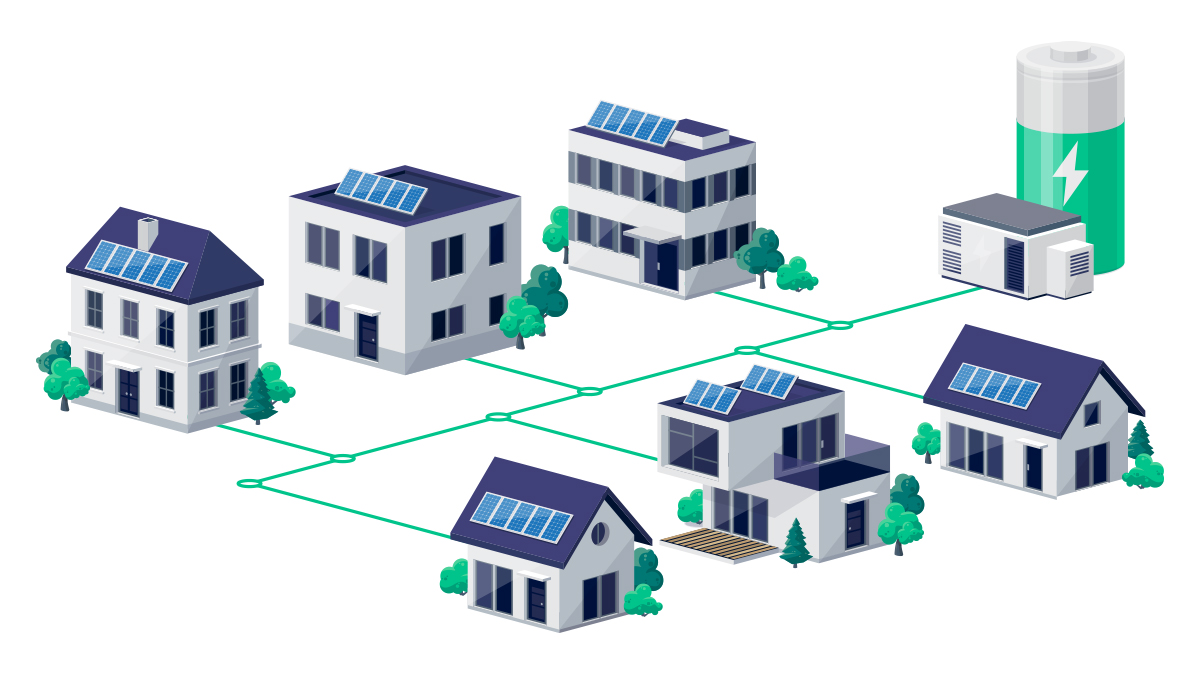
In general terms, VPPs pull together the energy generated by individual household solar batteries and control how it’s used. Belonging to one of these networks can be financially beneficial for households in a number of ways, mainly by VPP operators selling energy back to the grid. To learn more about how they work, read our VPP guide here.
Belonging to one of these networks can be financially beneficial for households in a number of ways
It’s a breakthrough technology, but households have been slow to adopt it. According to data drawn from Energy Consumers Australia’s (ECA) latest energy report card – which is based on a survey of 4507 households – only somewhere between 4% and 10% of households with solar batteries have joined a VPP. The Australian Competition and Consumer Commission, by contrast, estimates VPP participation at 24% of battery owners.
In either case, it’s clear that many of the 400,000-plus households that had a solar battery installed between July 2025 and May 2026 following the launch of the federal government’s Cheaper Home Battery program are not taking part in a VPP.
The market for VPPs and solar products generally is moving well ahead of any attempt to regulate it, as is often the case with new technologies. Consumers are interested, but wary.
Lack of understanding is the overriding issue, which isn’t helped by the fact that some VPPs are only compatible with certain battery brands and VPP plans are complicated and vary wildly.
But another big reason for the low uptake is that battery owners don’t trust VPP providers to take control of their batteries.
When customers join a virtual power plant, they hand over control of their battery to an operator and are rewarded for its use to support the broader system
ACCC Commissioner Anna Brakey
At the moment, these businesses – which include major energy retailers as well as other smaller operators – have no statutory requirement to act in the best interests of battery owners. There are more than a few reasons to be concerned that they may not.
In 2024, we reported on ECA research that showed consumers trust energy businesses even less than supermarkets and banks. And in July this year, the Australian Competition and Consumer Commission (ACCC) warned that “customers bear most of the risk for the [VPP] operator’s performance and whether benefits are achieved”.
A VPP can financially maximise your home battery system, but guidance on finding the right provider is critical.
“When customers join a virtual power plant, they hand over control of their battery to an operator and are rewarded for its use to support the broader system. It is important customers understand this when signing up to participate in a virtual power plant,” ACCC Commissioner Anna Brakey said at the time.
“Depending on their circumstances, some households may be better off with solar and a battery alone. Customers should make sure they understand the benefits and risks of any product that they sign up to.”
ECA acting general manager for advocacy and policy Ashley Bradshaw says until VPP providers are legally required to act in the best interests of solar battery owners, significant uptake will likely be stalled.
“This won’t happen unless energy companies establish trust and give people a clear value proposition,” Bradshaw says.
ECA is calling for a consumer duty that would require VPPs to put customers’ interests first, not least by making the value proposition of a VPP clearer and making sure the offer on hand is right for the specific customer.
“A consumer duty that gives consumers confidence that energy providers are required to use batteries in the consumers’ best interests is just one way we can give Australians more confidence to participate in a virtual power plant. Significant savings and trust are on the line,” Bradshaw says.
ECA is calling for a consumer duty that would require VPPs to put customers’ interests first
The ACCC also reported in July that complaints about battery installations and other new energy technologies had increased by more than 100% over the previous 12 months. The regulator has also called for a consumer duty to be imposed on businesses selling energy products, including VPPs.
“As more Australians invest in batteries and participate in virtual power plants, it’s critical that consumer protections keep pace,” Brakey said.
“Consumers should be able to easily compare offers, switch providers, and fix issues if things go wrong, but gaps in the current suite of consumer protections are preventing people from being able to do so.”
The ACCC has estimated that households could save up to $1000 a year by participating in a VPP, but ECA’s Ashley Bradshaw says “those savings are being left on the table if Australians aren’t aware of, don’t trust or don’t understand what virtual power plants do”.
A consumer duty for VPP providers is needed not only to ensure fairer consumer outcomes but also to ‘maximise the benefits of the solar and battery revolution’
The New Energy Tech Consumer Code, authorised by the ACCC and administered by the federal government’s Clean Energy Council, provides a list of over 2000 approved sellers of home battery systems across Australia.
The code was launched in 2023, but it relies on homeowners dobbing in incompetent or unscrupulous installers and lacks an independent dispute resolution or appeals process. Still, it’s a step in the right direction. No such system exists specifically for VPP providers.
For Bradshaw and ECA, a consumer duty for VPP providers is needed not only to ensure fairer consumer outcomes but also to “maximise the benefits of the solar and battery revolution”.
Know the products to avoid before you shop. Get our free guide and buy smarter.
Andy Kollmorgen is the Investigations Editor at CHOICE. He reports on a wide range of issues in the consumer marketplace, with a focus on financial harm to vulnerable people at the hands of corporations and businesses. Prior to CHOICE, Andy worked at the Australian Securities and Investments Commission (ASIC) and at the Australian Financial Review along with a number of other news organisations. Andy is a former member of the NSW Fair Trading Advisory Council. He has a Bachelor of Arts in English from New York University. LinkedIn
Andy Kollmorgen is the Investigations Editor at CHOICE. He reports on a wide range of issues in the consumer marketplace, with a focus on financial harm to vulnerable people at the hands of corporations and businesses. Prior to CHOICE, Andy worked at the Australian Securities and Investments Commission (ASIC) and at the Australian Financial Review along with a number of other news organisations. Andy is a former member of the NSW Fair Trading Advisory Council. He has a Bachelor of Arts in English from New York University. LinkedIn
For more than 60 years, CHOICE has been fighting the good fight for Australian consumers.
In the past year alone we've uncovered systemic issues with sunscreens, investigated shonky supermarket pricing, fought for stronger scam protections and helped make complex energy pricing fairer and clearer.
CHOICE is here to provide unbiased advice and independent testing in our world-class labs. We buy the products we test, just like you do, and our expert reviews are influence free. We’re here to help you choose smarter. Hopefully you’ll also save some money along the way.
Thanks to CHOICE, you’ll never be alone when a business treats you unfairly. You can support our work by joining or donating to our cause.