With the Black Friday sales fast approaching, the time is ripe to consider buying that shiny new TV you’ve been eyeing off all year.
Maybe your current TV is on its last legs or it’s finally time to ditch the high-definition screen and make the jump to 4K. Or maybe you’re just ready for an upgrade.
You don’t want to become a victim of the unnecessary upsell
In any case, you don’t want to become a victim of the unnecessary upsell or choose the wrong model and then get mad every time you reach for the remote.
To help you avoid severe buyer’s remorse, here’s the common bloopers to watch out for.
1. Picking the wrong size screen
Size envy may be real but don’t feel pressured into buying a behemoth TV just because your mate down the road has one.
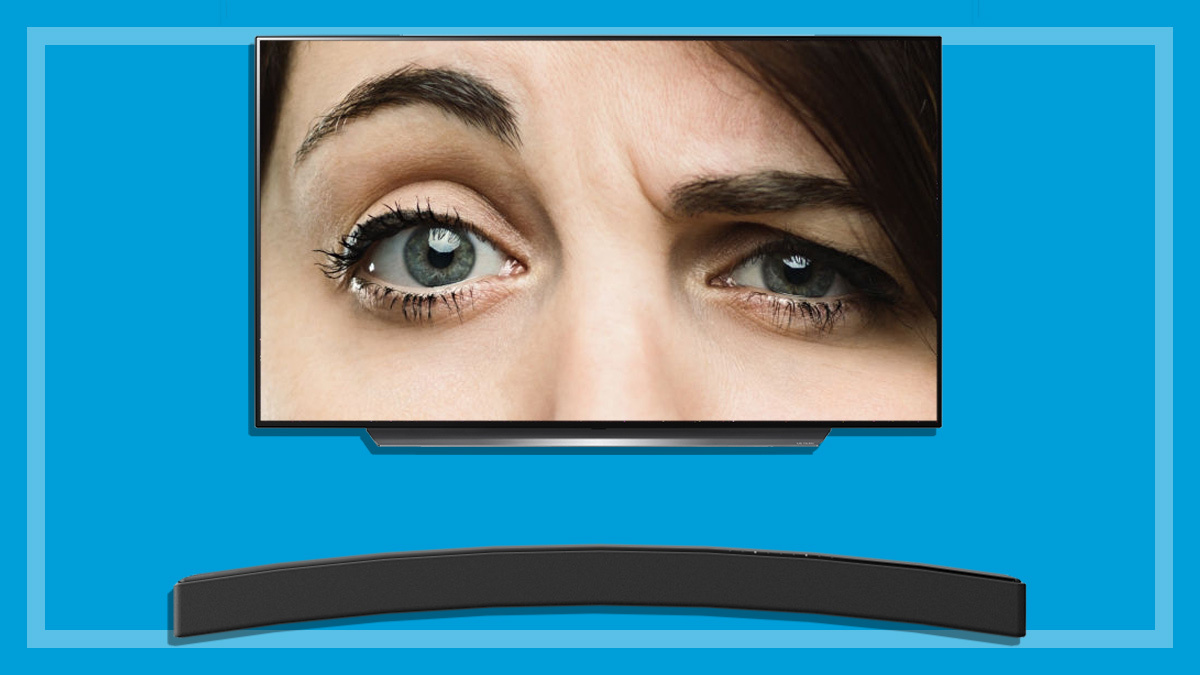
You may feel like you should get the biggest TV you can reasonably afford, but a giant screen in a small room can cause eye and neck strain.
Is a 75-inch TV too big for your loungeroom?
A small TV, meanwhile, may seem like the affordable alternative, but this can make it difficult to focus on your movies and TV shows if the room is too big.
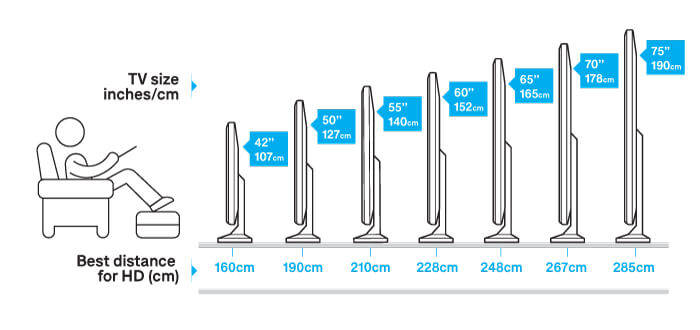
It’s best to try and shop for a screen that suits the room’s size, while staying within your budget. For example, the most popular TV size in Australia is 65 inches.
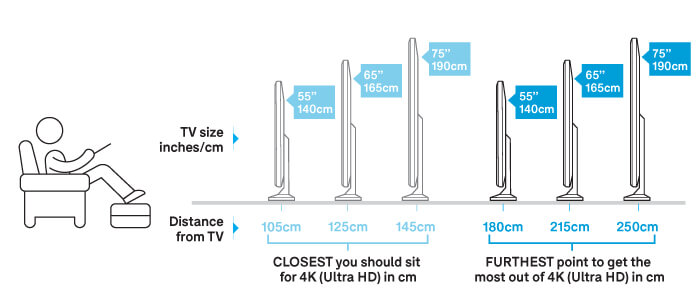
With this size of TV, you’ll get the best picture quality by sitting 1.25–2.5 metres away, depending on the resolution. Check out our TV screen size guide to work out what’s best for your home.
Deciding which HD TV is the best size for you means looking at how big your living room, is and how far away you’ll be sitting.Make sure you measure up your living room before you buy a 4K TV.
2. Being ‘wowed’ by the TV instore
Don’t buy a TV based on the footage playing instore.
Retailers employ a sneaky strategy by showing optimised video in an enhanced, over-saturated store display mode that’s designed to impress with big, bold, bright colours. They also make sure the footage is extremely detailed in 4K or 8K, because almost any TV looks good at these resolutions.
Retailers employ a sneaky strategy by showing optimised video in store display mode
“The TV isn’t going to impress you as much at home, unless you’re watching the retail demo reel or Avatar on repeat,” says CHOICE TV expert Denis Gallagher.
“You’ll quickly get sick of over-the-top, unrealistic colours as well.”
Ask the salesperson to play some regular videos on YouTube, including standard and high-definition (SD and HD) footage, with the store display mode turned off.
You’ll get a better representation of how the TV will look at home and whether it can clearly display SD and HD video on a large, ultra-high definition display. This process, called upscaling, is often the Achilles heel of cheaper or lower-quality TVs.
A good quality TV can be pretty damn expensive. Even a budget 65-inch model can set you back as much as $1500. But a bit of patience and forward planning can net you a great deal on your dream TV that may otherwise be outside your budget.
Major retailers run plenty of tech sales throughout the year. There are the obvious ones like Black Friday and EOFY, but flash sales and manufacturer-specific deals pop up every few months as well.
A TV’s RRP usually has a fair bit of wiggle room. Negotiate a better price or wait for a sale.
In April and May, most of the major retailers clear the previous year’s stock to make room for new models, with serious discounts applied.
“We’ve seen TVs drop as much as 40 percent during the clearance period,” says Denis.
“This works out to be as much as $2000–3000, depending on the size of the screen.
“Unless you’re particularly tech savvy or eager to own the latest tech, a slightly older model will almost definitely meet your needs and look just as good.”
“We’ve seen TVs drop as much as 40 percent during the clearance period.”
Denis Gallagher, CHOICE TV expert
These markdowns also indicate just how much wiggle room exists around the RRP, so if you can’t wait for a sales period, try your hand at haggling. The discounts may not be quite as good but you should be able to talk a few hundred bucks off the price.
Though new tech is exciting, there’s something to be said for the days when “TV” simply meant a box with a screen. There’s a much bigger range of options these days with an equal amount of jargon to get your head around.
LCD, OLED, HDR and QLED are some examples, and you might not be sure what they all mean and how they affect the viewing experience. But you need to understand basic terms or you could end up with a TV that doesn’t suit your eyes or living room.
For example, did you know that OLED TVs tend to have richer colours, deeper blacks and better contrast (which helps the image pop) but they don’t perform very well in bright rooms?
You need to understand basic terms or you could end up with a TV that doesn’t suit your living room
LCD blacks aren’t quite as good but the screens can be brighter and are usually cheaper, making them a good option for daytime viewing in well-lit homes or shoppers on a budget.
“This shorthand is a good starting point so you can narrow down the options to a screen type that suits your needs,” explains Denis. “Though at the end of the day, picture quality is the most important thing to consider.
“Our TV buying guide breaks down the essential technical terms so you can make an informed purchase.
“The best thing to do if you’re unsure of what all the features mean is to view a TV instore and compare it with other models, and look at what each model scores in our independent reviews before buying.”
Audio quality is often overlooked by people buying a television. Even if you’re just shopping for something for a TV to watch the news, sport or a few shows, a crappy speaker can be very distracting.
“You don’t necessarily need home cinema speakers, but we’ve tested some TVs that sound as bad as a transistor radio. It can be really hard to enjoy the cricket when you can’t hear the commentary or when big action moments start to crackle and distort,” says Denis.
You don’t necessarily need home cinema speakers, but we’ve tested some TVs that sound as bad as a transistor radio
Denis Gallagher, CHOICE TV expert
This is where a soundbar can be a good buy, but they aren’t essential, says Denis. “Unless there is some fantastic bundling deal involved, you should see how the TV speakers perform instore and at home. You can always buy a soundbar later on if the TV speakers aren’t up to scratch.”
“Also, if you have an old amplifier and stereo speakers, you may want to try these out first before considering a soundbar.”
Soundbars can improve your overall viewing experience, but make sure you actually need one before being talked into buying.
6. Assuming an 8K TV is worth it
While 4K ultra-high definition TVs have become the new norm, 8K hasn’t quite grabbed consumers in the same way. There hasn’t been much demand for screens with four times the resolution of 4K.
“8K TVs are expensive and not actually that useful for an Australian home, as content at this resolution isn’t mainstream,” says Denis. “The overwhelming majority of content on streaming and disc is available in SD, HD or 4K, and it will likely stay that way for years to come.”
Lack of content isn’t the only issue. While there are plenty of 4K TVs that do a decent job of displaying SD and HD video, there’s only so much that can be done with lower resolutions shown on a big 8K screen.
It’s virtually impossible to stream 8K video into homes over the existing NBN environment we have in Australia
Denis Gallagher, CHOICE TV expert
Your favourite older movies and shows could wind up looking worse on an 8K TV than on a more affordable 4K alternative.
“It’s also virtually impossible to stream 8K video into homes over the existing NBN environment we have in Australia,” Denis adds. “So, if the salesperson starts spruiking the virtues of an 8K TV over a 4K model, tell them they’re dreaming.”
Though that’s not likely to happen. Manufacturers really scaled back 8K TV production in 2025, and in 2026 they didn’t release a single new model. As of now, you’re only going to find old stock sitting on shelves.
If you’re shopping at one of the nation’s major electrical retailers, you’ll probably be offered an extended warranty (for an additional cost) with your purchase of a new TV.
But buyer beware: the sales pitch may mislead you about your consumer rights.
When CHOICE mystery-shopped 80 Harvey Norman, JB Hi-Fi and The Good Guys stores across the country, we found that seven in 10 (71%) of these stores misrepresented the consumer rights you would have access to if you didn’t purchase an extended warranty.
When we asked about consumer rights outside the manufacturer’s warranty period, often the conversation turned immediately to the benefits of an extended warranty. In fact, 73 of the 80 salespeople we spoke to offered to sell us one.
Ask a friend for help when you’re ready to install your new big screen TV.
Only when specifically asked about rights without an extended warranty was it acknowledged that we already had rights under consumer law.
Australian Consumer Law says that if you buy an expensive TV and it breaks through no fault of your own after just a few years, for example, the retailer must offer to fix it, replace it or give you your money back – the choice of remedy is yours.
This holds true even if the manufacturer’s warranty has expired and you didn’t buy an extended warranty.
If you do find your TV acts up and is only a year or two old, contact the retailer and let them know you aren’t happy. There’s a lot of useful advice on how to make a complaint and resolve an issue on our consumer rights and advice pages.
Whether you’re using an entertainment unit or a discreet wall mount, installing a TV is a two-person job, according to Denis.
“Anything bigger than a 50-inch screen requires a second set of hands,” he says. “You could end up breaking your brand-new TV if you try to go it alone and this probably won’t be covered by warranty.”
Anything bigger than a 50-inch screen requires a second set of hands
Denis Gallagher, CHOICE TV expert
Budget and mid-range TVs can be bulky and difficult to manoeuvre while higher-end models are often very thin, light and easy to bend. They may also sit on a heavy stand which can be very hard to lift.
“This is where your shiny new screen can come in handy,” suggests Denis. “Coax a friend or family member into helping with the promise of pizza and a movie night.”
Alternatively, many retailers can install your TV during delivery for a small additional fee.
Pru Engel is the Audience and Engagement editor at CHOICE. Her job is to ensure as many Australians as possible know about the great work we do at CHOICE.
She works closely with our testers and experts to find the gems of information in our data and research that will resonate with Australian consumers and help them make the best decisions, whether they're purchasing an air fryer, looking for a new mattress or trying to find the cheapest car insurance. She also helps to drive meaningful change for consumers by collaborating with our Campaigns team on content covering issues such as grocery pricing, product safety and scams.
Prior to CHOICE, Pru worked as an editor at many of Australia's leading food and lifestyle titles.
Pru has a Bachelor of Arts in Communication (Journalism) from the University of Technology, Sydney.
LinkedIn
Peter Zaluzny is a Content producer in the Digital home team. He covers everything from home entertainment and personal safety devices to tech for your car and mattresses.
Peter enjoys cutting through the nonsense to help people understand the products they’re considering to buy. He helps consumers make educated, informed decisions.
Peter has a Bachelor's degree in Journalism and a Bachelor of Arts from the University of Wollongong.
For more than 60 years, CHOICE has been fighting the good fight for Australian consumers.
In the past year alone we've uncovered systemic issues with sunscreens, investigated shonky supermarket pricing, fought for stronger scam protections and helped make complex energy pricing fairer and clearer.
CHOICE is here to provide unbiased advice and independent testing in our world-class labs. We buy the products we test, just like you do, and our expert reviews are influence free. We’re here to help you choose smarter. Hopefully you’ll also save some money along the way.
Thanks to CHOICE, you’ll never be alone when a business treats you unfairly. You can support our work by joining or donating to our cause.