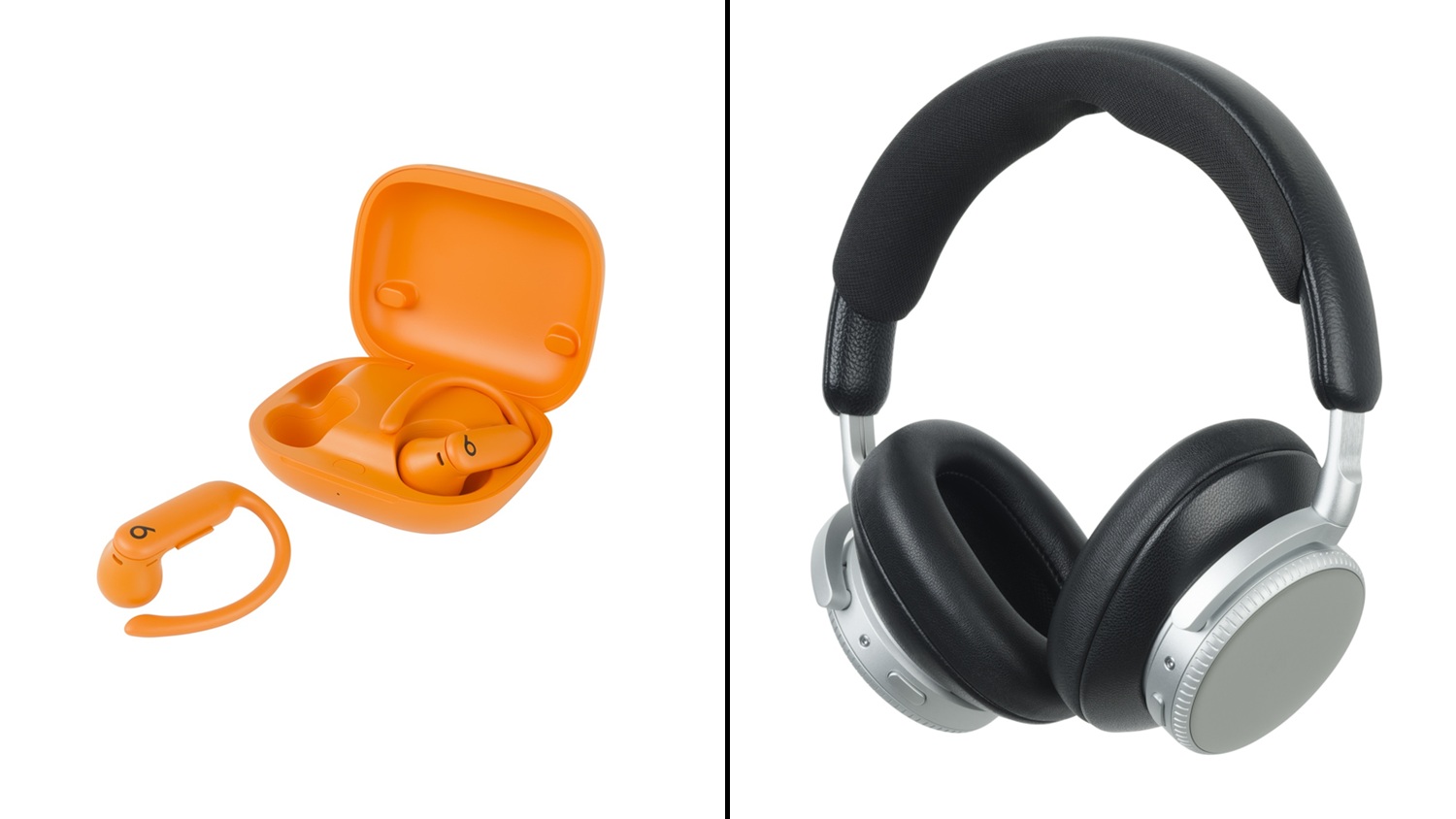
Australia is heading into summer holiday season, where exciting adventures are regularly punctuated by long, boring stints on planes, trains and automobiles. Entertainment is essential for these typically dull moments, not to mention its usefulness in drowning out the hubbub across crowded locations.
There’s a lot that goes into finding the best pair of headphones for traveling. Plus, you probably want to make sure they’re also great for daily use on the bus, at work or around the house. Sound quality is important, but there are many more factors to consider.
We’re also just around the corner from some of the biggest sales periods of the year. Headphones are almost always guaranteed to get solid discounts across Black Friday and Boxing Day, so now’s the time to find the ideal pair for your jet-setting lifestyle.
To ensure your next holiday is on song, we dive into the different headphone types and features available, plus we reveal the best performing pairs from our lab test (available to CHOICE members – jump to the results).
Before you even start thinking about sound quality, you need to consider battery life and active noise-cancellation (ANC) performance. Battery life is particularly important as you don’t want your headphones to die partway through a long travel leg.
That doesn’t mean you should dismiss sound quality, of course. But a slightly lower score in this area may be a worthwhile compromise for particularly good battery life and ANC.
Battery life is particularly important as you don’t want your headphones to die partway through a long travel leg
Comfort is also key, but it can be subjective. As such, these results in our test are best used as a general guide. Durability is a big factor too, as your headphones are going to get banged around when you’re living out of a backpack or suitcase.
Consider which accessories come with the headphones as well. Look for a sturdy travel case, a detachable cable (to switch between wired and wireless connectivity) and a plane adaptor to access in-flight entertainment. Some of these accessories are sold separately.
Bigger, better battery life
We measure battery life with ANC turned on, but you can stretch it even further by turning this feature off. Most headphones give you the option to toggle it on and off using touch controls or via an official smartphone app. This is covered in the instructions included with the headphones.
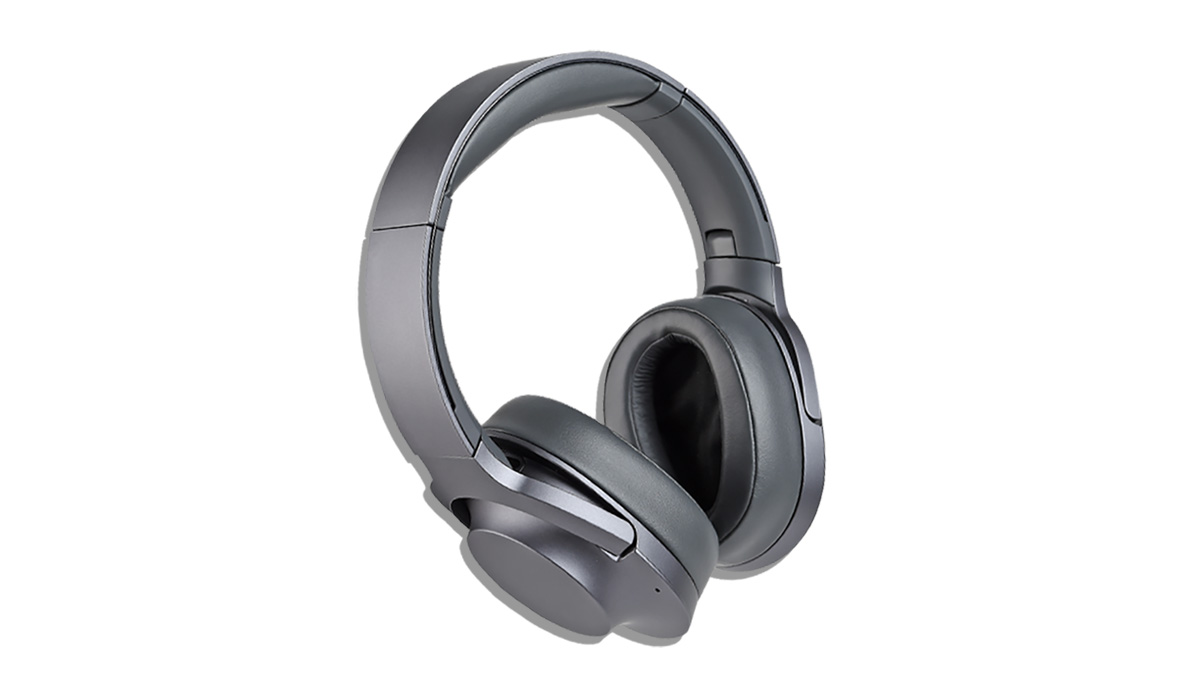
Though this is largely a question of what you prefer, over/on-ear headphones (aka cans) are usually the better option. If they’re well-made, they’ll have considerably longer battery life with better sound and ANC quality, compared to buds.
However, they’re not exactly compact. They take up more space in your bag, they can’t fit discreetly in your pocket and may even weigh a lot more. In these respects, earbuds are a step ahead.
Earbuds are convenient, but on/over-ear headphones usually have better sound quality and battery life.
Comfort is a tricky one, simply because everyone’s ears are different. For example, earbuds might feel lighter and more comfortable in the short term, but would you want them sitting in your ear canals for an eight-hour flight?
Ideally, you want a pair that strike the right balance across these categories. Aim for products that earn good results or higher in our comfort tests.
It’s worth paying for coverage if you’re traveling with headphones that cost more than $150–200. Most standard travel insurance policies include electronics up to a certain amount but you may need to provide the brand and model info so the insurer can determine the payout in the event of a claim.
This is because claims often factor in the age of the electronics to pay out a depreciated value. In other words, your insurer is unlikely to replace four-year-old headphones with the latest model (or equivalent value).
Most insurers offer additional levels of electronics coverage for a fee. This could be worth it if you’re traveling with lots of tech (laptop, headphones, smartphone) that’s no more than three or so years old. Remember to read the terms before paying for extended coverage.
Our detailed headphone testing data is available exclusively for CHOICE members.
If you’re not yet a member, join CHOICE to get instant access to our expert, independent reviews of headphones, plus hundreds of other products, from fridges and freezers, toasters and TVs, kettles and cots, and more.
Or log in to unlock this article and find out which cheap headphones are rated the best by our experts.
Below are the best earbuds and on-ear/over ear headphones for traveling.
Peter Zaluzny is a Content producer in the Digital home team. He covers everything from home entertainment and personal safety devices to tech for your car and mattresses.
Peter enjoys cutting through the nonsense to help people understand the products they’re considering to buy. He helps consumers make educated, informed decisions.
Peter has a Bachelor's degree in Journalism and a Bachelor of Arts from the University of Wollongong.
Peter Zaluzny is a Content producer in the Digital home team. He covers everything from home entertainment and personal safety devices to tech for your car and mattresses.
Peter enjoys cutting through the nonsense to help people understand the products they’re considering to buy. He helps consumers make educated, informed decisions.
Peter has a Bachelor's degree in Journalism and a Bachelor of Arts from the University of Wollongong.
For more than 60 years, CHOICE has been fighting the good fight for Australian consumers.
In the past year alone we've uncovered systemic issues with sunscreens, investigated shonky supermarket pricing, fought for stronger scam protections and helped make complex energy pricing fairer and clearer.
CHOICE is here to provide unbiased advice and independent testing in our world-class labs. We buy the products we test, just like you do, and our expert reviews are influence free. We’re here to help you choose smarter. Hopefully you’ll also save some money along the way.
Thanks to CHOICE, you’ll never be alone when a business treats you unfairly. You can support our work by joining or donating to our cause.