Home batteries come with plenty of benefits: lower electricity bills, energy independence, back-up power, and less reliance on dirty fossil fuels.
But they also come with a lot of questions. One of the biggest is: what size is best for your home?
Battery capacity will determine its price, how much you can lower your electricity bills over time (by using it instead of pricey grid power) and your potential to trade any surplus for extra credits, so it’s an important decision to make.
Plus, with batteries costing around $500–800 per kilowatt hour (kWh) installed after the government rebate, according to SolarQuotes, they can get very expensive very quickly.
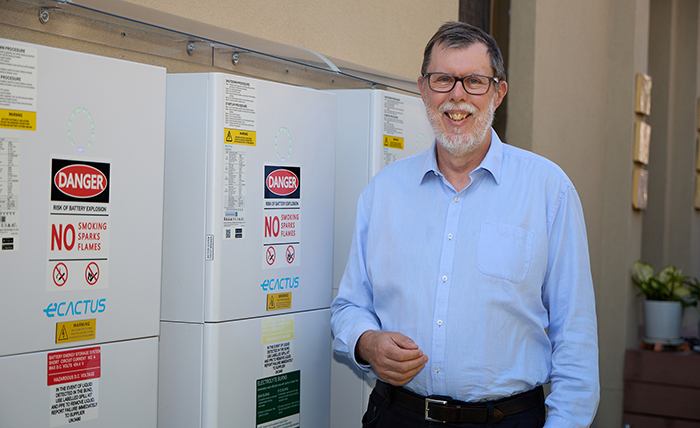
“A good installer will advise you on the appropriate size for your home, but it is valuable to do your own research and maths beforehand,” says CHOICE solar expert Chris Barnes.
“That way you’re in the best position to ask the right questions, compare differing quotes and get the best deal.”
CHOICE expert Chris has been reviewing solar products for over 10 years.
To help you select the right system and avoid costly mistakes, here’s our handy guide to sizing and the key questions to ask along the way.
Understanding key battery and inverter specs
Still getting your head around home batteries? Here’s a quick crash course on key terms and specs to take into account before you buy.
Battery capacity
This is how much electrical energy the unit can store, measured in kilowatt hours (kWh), when charged from your solar panels or the grid.
There’s two types of capacity to know. Nominal capacity is the battery’s total physical capacity. Usable capacity is the amount of electricity you can actually access, as the unit requires a small reserve to preserve battery life.
For example, a battery might have a 10kWh nominal capacity but a 9kWh usable capacity.
Keep these terms in mind when browsing battery offers, as some promote one over the other.
Battery architecture
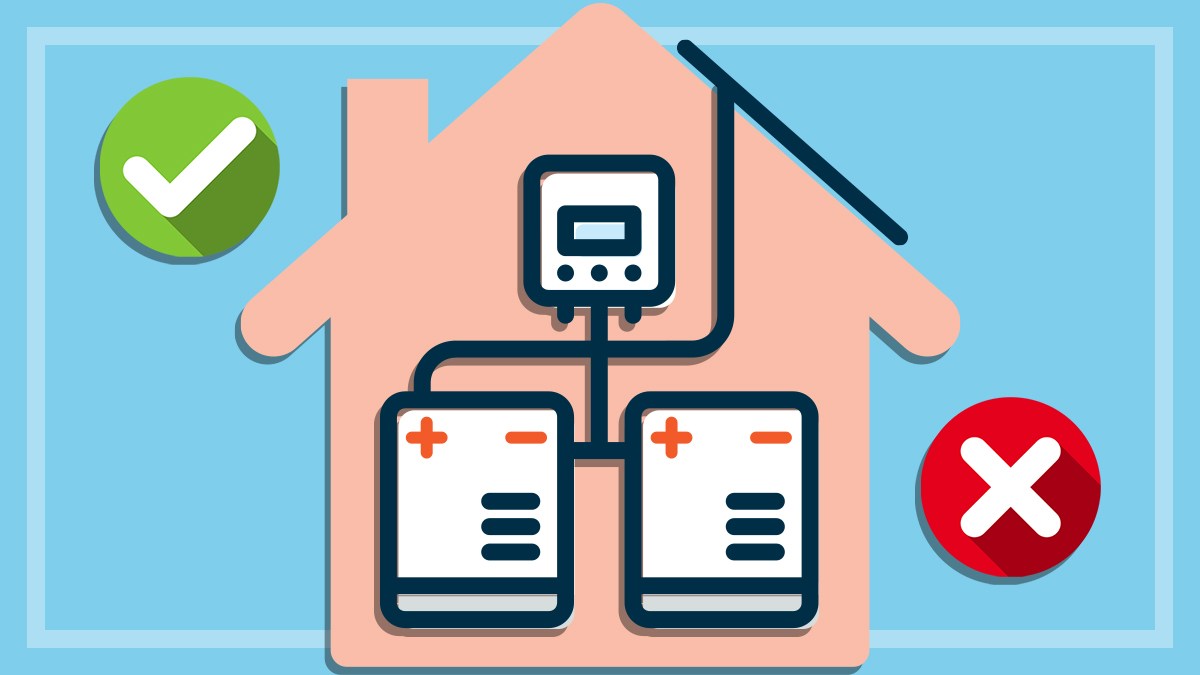
Batteries come as single units (also called monolithic) or modular units.
Single units are simpler, larger and come with a fixed capacity, so if you want more storage you need to buy another whole unit.
Modular units are more compact and use smaller stackable or connected battery cells. This allows you to add more modules if you wish to increase capacity later (depending on the brand).
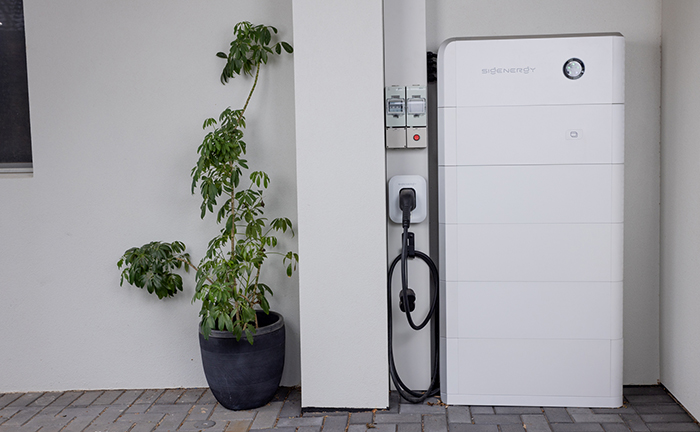
Sigenergy’s Sigenstor system is an example of a modular battery with in-built inverter.
Inverter size
An inverter converts the battery’s direct-current (DC) power to alternating-current (AC) power, which is what your home uses. Inverter size – also known as its power rate – is measured in kilowatts (kW) and determines the maximum power the battery can absorb or discharge at the time.
If that’s confusing, think of a battery like a water tank and the inverter as the size of the hose – the hose controls how much water can go in or out of the tank at that moment.
So if your 20kWh battery comes with a 5kW inverter, this means the battery will only be able to charge (absorb) or discharge 5kW at a time. If your home needs more power at that time, it will draw the extra from the grid.
1. Know your daily grid power use
A battery saves you money by storing cheap power (generated from your solar panels) to use later, reducing how much expensive electricity you need to buy from the grid.
Knowing your current grid usage is an important first step to figuring out your battery ballpark.
On average, a typical Australian home uses around 15–20 kilowatt hours (kWh) per day, but it can be much more depending on:
number of occupants
your location and climate (are you using air con or heaters often?)
how much power your solar panels generate if you already have them
whether you use electricity or gas for cooking or hot water
your daytime routine (are you home or at work?)
additional needs like EV charging or pool heating and pumps.
“You’ll find your current average daily use on your power bill, which gives you a good starting point,” says Chris.
“Ideally, it’s worth checking 12 months of bills so you can see how this average changes over the different seasons – this will give you a good consumption guide.”
CHOICE tip: At this stage, it’s important to factor in your future power needs too. For example, are you considering starting a family? Will you be buying an EV?
.
Why we've partnered with SolarQuotes

We've partnered with SolarQuotes to help you find and buy the right solar, battery, heat pump and EV charger. While we make money if you use SolarQuotes to find an installer, this doesn't influence our ratings. 100% of the money we make goes directly back into our nonprofit mission.
2. Calculating your night-time power needs
Now you’ve got a grasp on your overall grid usage, it’s time for an even more vital question: how much of it do you use at night?
“If you work a nine to five job, you’ll probably only use about 30% of your energy during the day, [which] means 70% of your [energy] usage happens at night, when you’re not generating solar power,” says SolarQuotes founder Finn Peacock, who’s been in the industry since 2009.
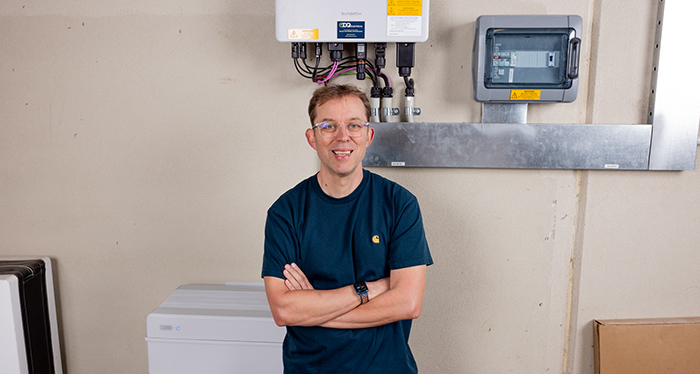
Finn Peacock founded SolarQuotes in 2009.
This is the amount of energy you want a battery to provide (or at least a good chunk of it – see our capacity vs cost section below) so you’re not paying for pricey power from the grid.
This is especially true if you’re on a time-of-use retail plan, which charges higher rates (often 40+ cents per kWh) during peak rate periods in the evening.
Remember, your own nightly power percentage will depend on your individual situation and daily routine.
Estimates and bill averages are a handy start, but precise info will give you the best read on your power needs.
If you have a smart meter installed, the good news is that you can get this information by requesting your grid usage file (called a NEM12 file) from your electricity distributor.
It details your daily consumption and solar exports by timed intervals. Again, look at 12 months’ worth of info to get an accurate range throughout different seasons. You don’t want to just check spring figures and miss huge spikes in summer when you’re cranking the air con.
Avoid rough estimates and averages – analyse your real usage data for the best battery fit.
This step might feel like data overload if you’re not savvy with spreadsheets, so consider using a battery calculator like SolarQuotes’ tool to help you.
“It may seem like a lot of work to dig through the data, but it will give you the clearest picture of your power use and how much you want to cover with a battery,” says CHOICE expert Chris.
“Most people start with the idea of wiping out their grid electricity bills completely, [which] sounds good in theory — but in practice, it gets expensive fast,” says Finn.
If you’re on a tight budget, it’s fine to consider a smaller unit that covers the majority of your overnight consumption but not all, with your home drawing extra from the grid as needed (ideally on off-peak rates through the night).
Ask installers for their input to help find that sweet spot between capacity and cost. Any quote worth its salt should contain payback projections for different system sizes.
And also talk to them about buffer capacity for back-up power in case the grid goes down. This will vary depending on your needs (i.e. if you’re in a rural area that’s prone to black outs).
“Now you’ve got an idea of your ideal capacity, you need to be sure you can adequately charge it each day – especially if you’re considering a bigger than average battery,” says Chris.
Primarily, you’ll fill it with solar-generated power from your panels as it’s free and plentiful during the day. How much your panels can produce will depend on:
the size of your solar panel array
its age and condition (if it’s an older smaller system, you may need to upgrade )
where you live (i.e. how much sun you get)
any panel shading or other obstruction.
Additionally, if your electricity plan offers free or cheap power during the day (i.e. a Solar Sharer Offer), you can top up your battery that way.
Depending on your battery model, retail plan and inverter size, you may be able to charge simultaneously from both panels and the grid.
Location, roof size, aspect and shade can greatly affect solar power generation.
How to determine your solar surplus power
To start with, look at your bills or information from your solar panel monitoring app to get a sense of your current daily export average – will you be able to comfortably charge your proposed battery capacity, while also meeting your home’s daytime power needs?
Again, if you want to be exact, dive back into that NEM12 file to assess exact export numbers. Remember to review the last 12 months – you don’t want to just look at summer data when sunshine’s at its peak and then get caught out in winter when you’re generating half of that.
4. Understand the rebate’s new tiered system and discount checkpoints
In May 2026, the federal battery rebate discount changed to a tiered system, which now depends on the capacity installed. As you can see below, the first 14kWh gets the full rebate, and any extra kWh beyond that gets a reduced discount:
0–14kWh capacity: Rebate applied at 100%
14–28kWh capacity: Rebate applied at 60%
28–50kWh capacity: Rebate applied at 15%
So if you get a 20kWh battery, you get 100% of the rebate for the first 14kWh and 60% for the 6kWh over that.
The battery rebate now pays less per kWh the bigger you go.
“As you can see, after 14kWh, the discount drops off notably and you’re paying substantially more yourself per kWh of storage,” says Chris.
“That might be worth it depending on your needs, but it’s definitely something to keep in mind if you’re eyeing a bigger unit.”
5. Consider if you’re going to trade electricity too
In addition to getting a battery to cut your bills, some owners use them to trade power to make money (usually in the form of bill credits).
They do this by juicing up their battery for free or cheaply and then selling their surplus to the grid during peak demand periods (i.e. during the evening or special events like heatwaves or cold snaps).
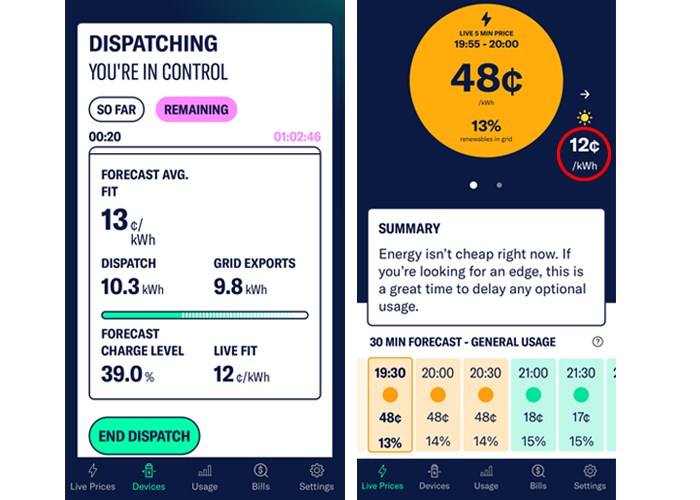
Some retailers or virtual power plants (VPPs) offer a substantial fixed feed-in tariff for trading during peak times, while other VPPs like Amber let you earn the wholesale market price of the power sold.
The Amber app showing the wholesale electricity price you can sell for (circled in red).
First, you need more capacity than just your own home’s requirements, which can cost a lot more (especially now the rebate pays less for larger installs).
Second, if you join a VPP, they’ll need to share control of your battery and cycle it more (learn more in our VPP pros and cons article).
Third, trading can be a hands-on experience, requiring you to monitor market rates and change app settings or even plans to optimise pay-outs. If life’s too busy and you’d rather set and forget, trading might not be right for you.
And lastly, with more batteries being installed and exporting to the grid, the market is in flux and what you can earn via trading may change as time goes on. See the aforementioned battery owner article to see how quickly the energy landscape is evolving.
Jason is a Content Editor and journalist at CHOICE. He writes about a diverse range of subjects, from solar to robot vacuums to why Easter eggs are a rip-off. He's previously written for Sydney Morning Herald, Rolling Stone and many other publications.
Jason is a Content Editor and journalist at CHOICE. He writes about a diverse range of subjects, from solar to robot vacuums to why Easter eggs are a rip-off. He's previously written for Sydney Morning Herald, Rolling Stone and many other publications.
For more than 60 years, CHOICE has been fighting the good fight for Australian consumers.
In the past year alone we've uncovered systemic issues with sunscreens, investigated shonky supermarket pricing, fought for stronger scam protections and helped make complex energy pricing fairer and clearer.
CHOICE is here to provide unbiased advice and independent testing in our world-class labs. We buy the products we test, just like you do, and our expert reviews are influence free. We’re here to help you choose smarter. Hopefully you’ll also save some money along the way.
Thanks to CHOICE, you’ll never be alone when a business treats you unfairly. You can support our work by joining or donating to our cause.