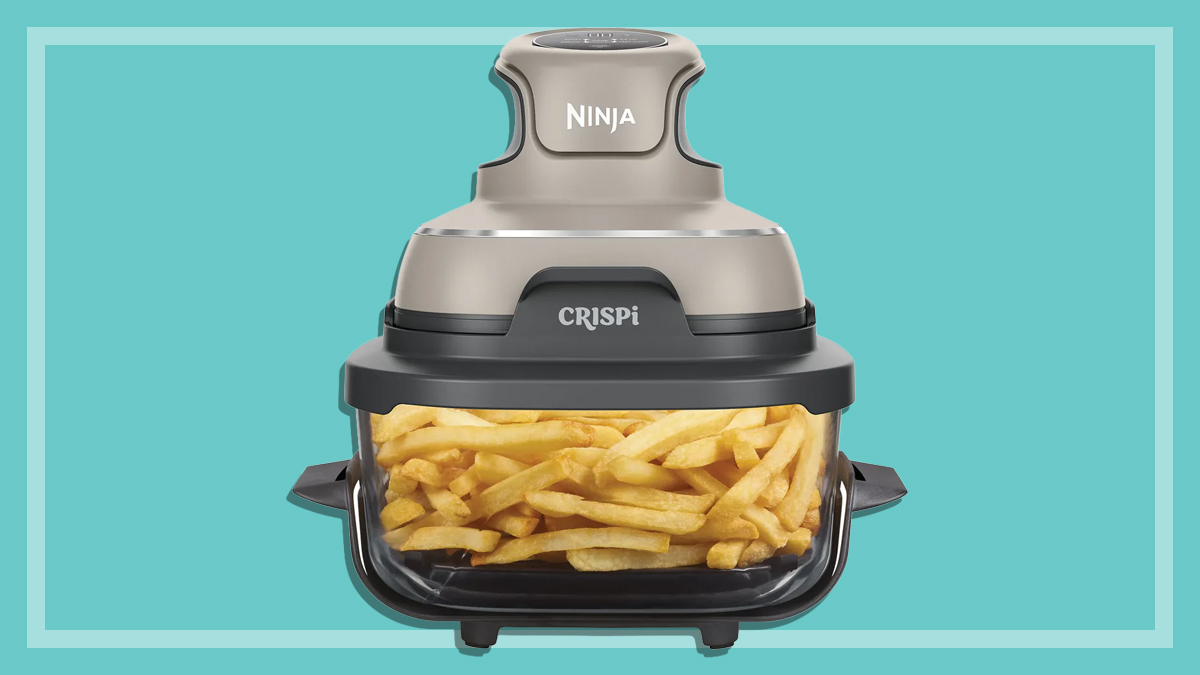
Ninja’s new 4-in-1 portable fryer ($299.99) is their latest model to hit Australian kitchens, and their first one with a glass basket
Our full kitchen lab review is coming soon – in the meantime, CHOICE editor Pru took it home to test-drive
Become a CHOICE member to access our comprehensive tests of over 40 air fryers from Philips, Aldi, Kmart and more
CHOICE started testing air fryers around 2016 when their popularity began to skyrocket (remember when Oprah famously added one to her “Favourite Things” list?).
Back then, we were baffled at the fuss over what is essentially a mini oven, but we started to see brands such as Philips and Kmart swoop in and take advantage of air-fryer fandom, dominating the market and releasing product after product.
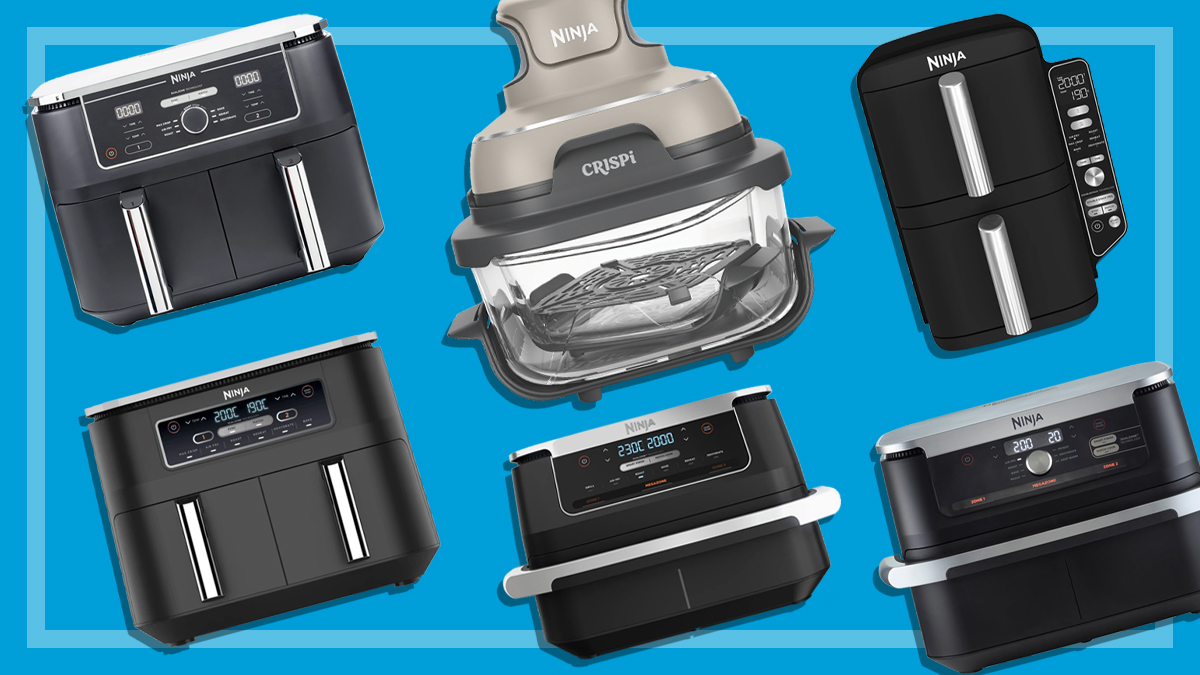
Fast forward 10 years, and US-owned Ninja, previously known mostly for its vacuums, blenders and cult novelty appliances such as the Ninja Creami ice-cream maker, has well and truly joined the air-fryer fray, with 12 Ninja air fryers currently available in Australia.
The Ninja Crispi 4-in-1 Portable Glass Air Fryer ($299.99) is the latest Ninja air fryer to hit Australian kitchens, and the first iteration with a glass basket.
CHOICE experts are currently putting the Ninja Crispi through a set of stringent tests in our labs and the results will soon be available in our air fryer review.
In the meantime, I took it home for a test ride myself (hi, CHOICE editor and air-fryer-sceptic-turned-fan, over here). CHOICE’s current air fryer review includes 10 models from Ninja, with six scoring high enough in our testing to be recommended by our experts, so I was keen to know how this one stacked up.
What’s different about the Ninja Crispi air fryer?
I’m a little abashed to admit this, but this model is the third Ninja air fryer taking up space in my kitchen, so I’m well placed to make a comparison.
I realise the irony considering I used to write articles about how air fryers were limited-use appliances that were bound to go the way of breadmakers, pasta machines and ice-cream makers as dust-collectors.
I’m a little abashed to admit this, but this model is the third Ninja air fryer taking up space in my kitchen
Consider myself schooled. Because, as it turns out, I’m obsessed with the convenience of air fryers and the unique (and speedy) crisp golden-ness they lend to an astonishing array of foods, from potato chips and roast chicken to meatballs, fish fillets and baked goods.
My youngest child’s protein intake is pretty much limited to chicken nuggets so I appreciate any appliance that lends a hand on that front.
My kitchen is blessed with some deep cupboards, currently home to my adored Ninja Foodi SmartLid multi cooker (which functions as an air fryer), and up until last week, my 4.7L Ninja Air Fryer Pro sat on the bench and was used almost daily. I was keen to see how the Ninja Crispi measured up.
1700-Watt power (air fryers in the current CHOICE review range in power from 1570W up to 2400W).
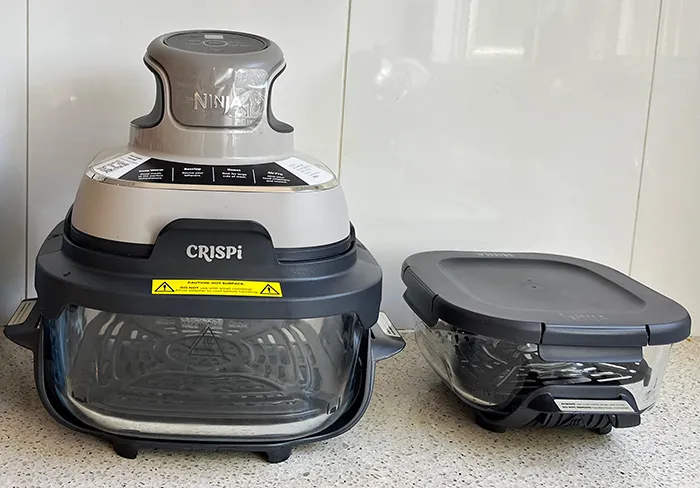
Two CleanCrisp glass containers to choose from when cooking: 1.4L and 3.8L. They are marketed as being portable as they come with fixed, heat-safe feet you can place on most kitchen surfaces as well as snap-lock lids and crisper plates.
Four cooking modes: Roast, Air Fry, Recrisp and Keep Warm.
Small footprint (when using the small basket, it’s not much bigger than a wide kettle or toaster).
The Ninja Crispi comes with two glass containers so you can adjust based on the amount of food you want to cook.
How does the Ninja Crispi air fryer work?
Unlike the drawer-style air fryers, the Crispi has a unique design, with a ‘Powerpod’ adaptor that sits on top of whichever of the supplied glass containers you’re using. The heat element lives in the Powerpod and circulates the hot air that crisps up your food.
I’m a big fan of appliances that don’t require poring over complicated instructions, and the Crispi delivers on that front: just plug it in, pop your food on the crisper plate inside the glass container, add the Powerpod on top, then select your cooking mode and time. That’s it.
The first hurdle I came up against though was the fact that perfect air-fried food requires frequent shaking – sometimes two or three times, depending what you’re cooking.
Unlike with my other Ninja air fryer, where I can easily pull the extremely light drawer out with one hand, give a quick shake and replace, the Crispi requires you to remove the (slightly heavier) Powerpod with one hand and use tongs or a utensil to rotate your food with the other – the fixed heat-safe feet and glass bowl are tricky to shake.
A small thing, yes, but dinnertimes in my house are often chaotic explosions of ingredients, dirty dishes and noisy kids, so the less fuss the better in my book.
Initially, I thought the glass basket on the Ninja Crispi was an immediate tick.
Air fryers with glass baskets are becoming increasingly popular, after all, with brands including Healthy Choice, Smith and Nobel and Dreame releasing their own versions alongside Ninja.
CHOICE home economist and seasoned air fryer tester, Fiona Mair, understands that attraction.
“The appeal of an air fryer with a glass basket is that you can observe your food while it’s cooking, so you don’t have to constantly open the air fryer to see if it is burning or when it needs a shake. Glass containers can also go in the dishwasher for easy cleaning and removal of odours and you don’t have to worry about non-stick coatings that can scratch or degrade over time.”
I’ve just turfed all my non-stick frying pans in favour of stainless steel pans free of forever chemicals, so an air fryer without non-stick coatings is a big plus for me.
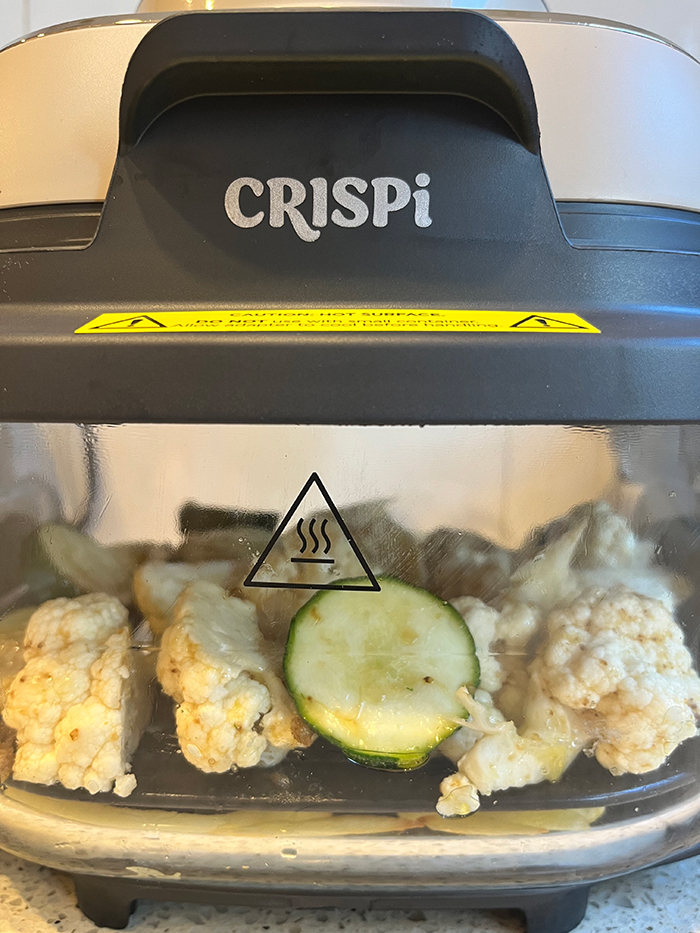
The glass basket means you can easily keep an eye on your food as it cooks, but it does get very hot.
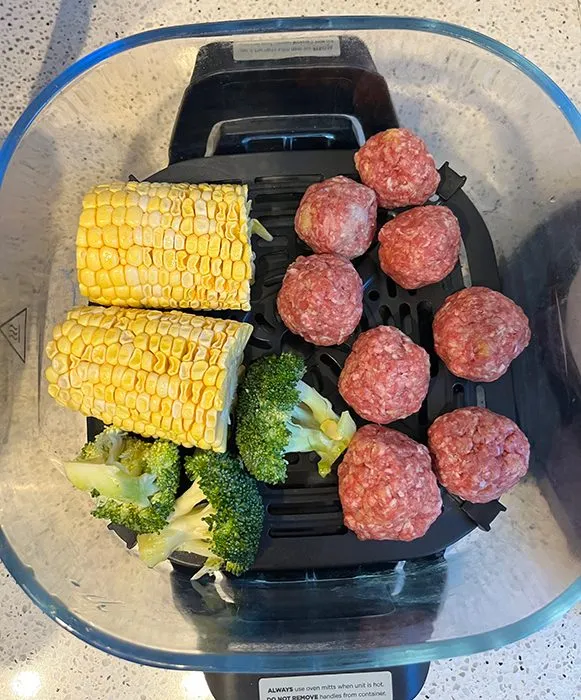
But, while other glass-basket air fryers (such as this model from Healthy Choice) come with stainless steel crisping trays to sit in the base of the glass basket while cooking, the Ninja Crispi comes with crisper plates that have a non-stick ceramic coating.
The purpose of the crisper plate is to elevate the food in the container so that air can flow under it to cook ingredients evenly and give maximum crispiness (one of the key calling cards of air-fried foods). No crisper plate means limited golden crispiness.
This means your food will still come into contact with a non-stick coating, and that coating could easily scratch or degrade over time.
If this is a concern for you but you are still keen on the Crispi, there are a variety of stainless steel air fryer basket inserts in different sizes available through Amazon that you may want to use instead (but this might grate a little, considering you’ve already paid $300 for the air fryer).
Also, the glass basket gets really, really hot. There are heat-safe handles to grab onto and a heat-warning symbol printed on the basket, but you can easily touch the exposed edges of the basket.
With curious kids always hanging over my shoulder when I’m preparing dishes, it feels more hazardous than my other Ninja air fryers, where the hot basket and heating elements are contained.
The Ninja Crispi is small, which is both good and bad
Size matters in air fryers. In fact, I’d go out on a limb and say it’s one of the most important factors that will determine if you use your air fryer every day or whether it will be banished to the back of the cupboard.
But while an adequate capacity is key, there’s a balance to be struck with bench space.
CHOICE’s air fryer aficionado Fiona has always advised that to get the most use out of your air fryer, it’s best to buy a model that can sit on your benchtop so you don’t have to lug it out of your cupboards for every use.
That’s why I favour my compact 4.7L Ninja Air Fryer Pro – it’s small enough that it takes up limited space but large enough to cook enough food for my family, whether that’s a bunch of veg for a side or 10 chicken nuggets for the kids’ dinner.
This is also the appeal of the Ninja Crispi – it’s very compact, and when using the small basket, takes up little more space than a kettle or a toaster.
This obviously limits the amount of food you can cook though, and it’s really only suited for meals for 1–2 people or for cooking sides. The smaller basket fits either a single sausage roll or about 4–5 nuggets and the larger basket fits about 9 chicken nuggets, a few lamb cutlets or up to a 1.2 kg whole chicken (but that’s a tight squeeze – I tried it). While I love the compact design, this is a little too small for my family of four.
The amount of food that can fit in the larger basket suits a meal for my two kids.
How well does it actually cook?
I have zero complaints about how well the Crispi cooks – it’s powerful for such a little gadget and, while cooking times were slightly longer than my other Ninja air fryer, true to its name it delivers sufficiently crisp results.
Like other Ninja appliances, it also comes with a recipe booklet and a chart of recommended cooking times, which is handy to refer to.
I mostly used the air-fry function, but the Recrisp feature was great for reviving last night’s chicken schnitzel. I also cooked homemade sausage rolls, meatballs, a whole chicken, salmon fillets, kale, broccoli, corn cobs and cauliflower with great success.
Although the preset cooking modes are useful, one downside is that you are unable to manually adjust temperatures, so it may take a bit of trial and error to determine the ideal cooking times.
The Ninja website specifies the following uses for each cooking mode, and the temperature each cooking mode will operate at will vary depending on the size of the container you are using.
Recrisp – use for reviving leftovers (about 185°C)
Air Fry – use to crisp all your favorite food with little to no oil (from about 175°C to 185°C)
Roast – use to get an extra-crispy crunch with rapid heat. Best for prepackaged frozen foods (from about 175°C to 185°C)
Keep Warm – designed to maintain food at a safe serving temperature (around 80°C) without overcooking.
The fact that the Ninja Crispi can’t go any hotter than 185°C explains why the food took longer to cook than it does in my Ninja Pro air fryer, which can reach higher temperatures over 200°C.
Fiona says that many air fryers now have cooking temperatures above 200°C up to 240°C.
“The higher temperature of 200°C is perfect for cooking food from frozen, such as pastries like meat pies and sausage rolls as well as nuggets and frozen chips,” she says.
“At 180°C it will take longer and you might see less browning for frozen foods. 180°C is perfect for reheating though, as you don’t want to dry out the food.”
After cooking, the glass basket is quite easy to clean which is another plus, although the heat-safe handles and feet are slightly awkward – you can’t remove them for cleaning.
Ninja says the glass containers, adapter and crisper plates can all be washed in the dishwasher, but CHOICE recommends you avoid putting accessories with non-stick coatings in the dishwasher as it could degrade the coating over time.
The snap-lock lids are designed to allow the cooking container to be transformed into a food-storage container, although personally I found the handles too bulky for this to be a convenient option.
CHOICE verdict: Would I trade in my other air fryer for a Ninja Crispi?
If you’re looking for a compact air fryer that’s suitable for cooking foods for 1–2 people, relatively easy to use and clean, and you like to be able to observe your food while it’s cooking, the Ninja Crispi is definitely up to the task.
I didn’t love the way the glass basket becomes extremely hot and has exposed surfaces, or the fact you can’t easily shake food with one hand.
And even with the flexibility of two container sizes, my family needs a larger basket. For now, I’ll be sticking with my Ninja Pro for everyday air frying.
Know the products to avoid before you shop. Get our free guide and buy smarter.
Pru Engel is the Audience and Engagement editor at CHOICE. Her job is to ensure as many Australians as possible know about the great work we do at CHOICE.
She works closely with our testers and experts to find the gems of information in our data and research that will resonate with Australian consumers and help them make the best decisions, whether they're purchasing an air fryer, looking for a new mattress or trying to find the cheapest car insurance. She also helps to drive meaningful change for consumers by collaborating with our Campaigns team on content covering issues such as grocery pricing, product safety and scams.
Prior to CHOICE, Pru worked as an editor at many of Australia's leading food and lifestyle titles.
Pru has a Bachelor of Arts in Communication (Journalism) from the University of Technology, Sydney.
Find Pru on LinkedIn.
Pru Engel is the Audience and Engagement editor at CHOICE. Her job is to ensure as many Australians as possible know about the great work we do at CHOICE.
She works closely with our testers and experts to find the gems of information in our data and research that will resonate with Australian consumers and help them make the best decisions, whether they're purchasing an air fryer, looking for a new mattress or trying to find the cheapest car insurance. She also helps to drive meaningful change for consumers by collaborating with our Campaigns team on content covering issues such as grocery pricing, product safety and scams.
Prior to CHOICE, Pru worked as an editor at many of Australia's leading food and lifestyle titles.
Pru has a Bachelor of Arts in Communication (Journalism) from the University of Technology, Sydney.
Find Pru on LinkedIn.
For more than 60 years, CHOICE has been fighting the good fight for Australian consumers.
In the past year alone we've uncovered systemic issues with sunscreens, investigated shonky supermarket pricing, fought for stronger scam protections and helped make complex energy pricing fairer and clearer.
CHOICE is here to provide unbiased advice and independent testing in our world-class labs. We buy the products we test, just like you do, and our expert reviews are influence free. We’re here to help you choose smarter. Hopefully you’ll also save some money along the way.
Thanks to CHOICE, you’ll never be alone when a business treats you unfairly. You can support our work by joining or donating to our cause.