Domestic mobile roaming allows your phone to connect to another company’s network tower when your provider has no signal – it’s already in use in New Zealand, Canada and parts of the US and Europe
Consumer advocates say mobile roaming would increase competition, reduce consumer costs and offer more reliable coverage during emergencies
The telco sector in general and Telstra in particular have long been opposed to a mandatory infrastructure sharing arrangement
The endless pockets of mobile phone black spots across Australia are a reminder to millions of us that the telecommunications sector is failing in critical areas. When calls don’t go through to Triple Zero, the problem can be life-threatening. The cause is generally that your telco provider doesn’t have access to the infrastructure to ensure good service in the area, and it’s probably not in any hurry to install it.
This is the problem that domestic mobile roaming is meant to solve. It’s a telco infrastructure sharing arrangement that’s already in place in countries including New Zealand (since 2001) and Canada (2015) as well as in parts of the US and Europe.
What this would mean in practice is that if you’re a Telstra customer and there’s no Telstra towers within range, your phone will automatically connect to an Optus or TPG (Vodafone) tower. Your trusty device will seek out the best connection, regardless of who your telco provider is.
The big players are concerned that being forced to share access to mobile phone towers and other technologies will threaten their market share
In the case of Triple Zero, the Australian government has mandated the temporary sharing of infrastructure, allowing you to make an emergency call even if your provider’s network is down. But as the recent major Telstra outage and a similarly huge Optus outage last year showed, these makeshift “camp-on” arrangements are far from failproof. In both cases, hundreds of Triple Zero calls still didn’t go through.
There has been some piecemeal progress. In April last year, TPG and Optus announced a mobile roaming agreement to improve coverage in regional Australia.
According to Optus, TPG gained access to 2444 Optus mobile network sites, increasing its national 4G coverage from around 400,000 square kilometres to around 1,000,000 square kilometres.
Yet the telco sector in general, and Telstra in particular, have long been opposed to a mandatory sharing arrangement that would make expanded coverage permanent and overcome the faults of the camp-on system.
According to industry critics, the big players are concerned that being forced to share access to mobile phone towers and other technologies will threaten their market share.
With the telco sector unwilling to set aside commercial interests for the greater good, consumer advocacy group the Communications Consumer Action Network (ACCAN) says that now is the time for the federal government to mandate domestic mobile roaming, as governments in New Zealand and Canada have done. As a result, competition and coverage has improved in both countries, advocates say.
In Australia, complaints to the Telecommunications Industry Ombudsman about mobile phone service are increasing, and mobile phone dropouts remain routine for many Australians.
In a recent policy paper, ACCAN makes the case that mandatory mobile roaming would increase competition, reduce consumer costs and offer more reliable coverage during emergencies and natural disasters.
In a national ACCAN survey, 94% Australians supported the introduction of domestic roaming.
Mandatory mobile roaming would increase competition, reduce consumer costs and offer more reliable coverage during emergencies and natural disasters
Outside observers think it’s a good idea as well. A January 2026 survey of the Australian economy by the Organisation for Economic Co-operation and Development (OECD) pointed out that the lack of competition in the telco market has led to high prices and poor service. The report recommended that telcos share infrastructure to improve outcomes for telco customers.
Meanwhile, telcos are subsidised to maintain the Mobile Black Spot Program and other government programs designed to mitigate unreliable coverage. In recent decades, government subsidies have topped $1 billion.
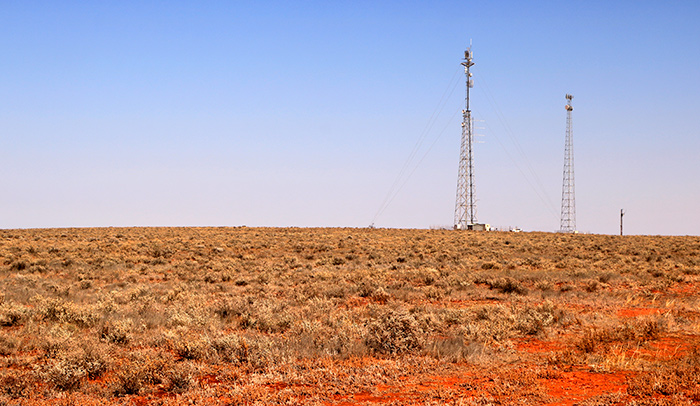
Many remote parts of Australia have extremely limited mobile phone reception.
Market forces haven’t reduced prices
ACCAN CEO Carol Bennett says Telstra in particular has a long history of opposing changes that would improve connectivity and coverage but that offer no obvious commercial advantage for the company.
“Telstra has the greatest coverage and most terrestrial mobile infrastructure available in the country, and it’s not in their interest to share that with other providers,” Bennett says. “It reduces their capacity to market themselves as having the lion’s share of coverage. Telstra has effectively blocked mobile roaming for a long time.”
The question we have to ask is why are we not doing this?
ACCAN CEO Carol Bennett
The Australian Competition and Consumer Commission (ACCC) decided in 2017 that mobile roaming would reduce competition, echoing the views of industry. The idea was that market forces would eventually lead to better coverage in poorly served areas of the country.
“Well it hasn’t done that, and we’re paying some of the highest mobile phone prices in the world,” Bennett says.
“It is now time to ask why Australians don’t get the same advantages that New Zealand and Canada and other countries do, or even international tourists who come here and are able to roam onto all of our networks. The question we have to ask is why are we not doing this?”
Associate Professor Mark Gregory of RMIT University says Telstra’s resistance to mandatory mobile roaming is out of step with global standards.
“We now have strong evidence from jurisdictions overseas that have domestic roaming that it’s been a success for them,” Gregory says.
He says Telstra’s claims that domestic mobile roaming would overextend the networks of competing telcos and act as a disincentive for telcos to strengthen their networks in rural and remote areas is “demonstrably false”.
“If we move to domestic roaming, what happens is that the telcos can no longer compete on the basis of ‘my network’s bigger than your network’,” Gregory says.
We now have strong evidence from jurisdictions overseas that have domestic roaming that it’s been a success for them
Associate Professor Mark Gregory, RMIT University
New rules overseen by the Australian Communications and Media Authority (ACMA) took effect on 30 June this year that require the standardisation of mobile network coverage maps so customers can make like-for-like comparisons between providers.
The new regulations meant that Telstra “had to remove an area the size of New South Wales off their coverage map”, Gregory says.
“Telstra’s coverage maps were always rubbish, but they’ve been advertising that they’ve got the biggest network. What domestic roaming means is that Telstra would have to find some other way to market their network.”
“It means the telcos are going to have to start improving reliability and performance. We’d have competition occurring in areas other than coverage. These are things that other countries have seen happen, but it’s not happening here because we’re stuck in the 20th century.”
The lack of reliable mobile reception in remote First Nations communities has many harmful flow-on effects.
Telstra rejects mandated model
A Telstra spokesperson tells CHOICE that the company “supports commercially negotiated roaming arrangements where they make sense – where providers agree terms that are practical and enable investment and uplifts that deliver real benefits for customers”.
“We don’t support a mandated model that forces access without properly accounting for investment, capacity, cost and long-term network expansion and upgrade.”
The company says it has invested $12.4 billion in its national mobile network over the seven years to 30 June 2025, including $4.7 billion in regional Australia.
Mandated roaming doesn’t build a single new mobile tower, extend coverage into a single new community, or improve resilience where no network exists today
Telstra spokesperson
“Mandated roaming doesn’t build a single new mobile tower, extend coverage into a single new community, or improve resilience where no network exists today. If we want better connectivity in regional Australia, the focus must be on encouraging investment in new infrastructure, not reducing the incentive to build it,” the spokesperson says.
In a country as vast and lightly populated beyond its major cities as Australia, extending reliable mobile coverage across the vastness will require more than just sharing infrastructure.
But Mark Gregory says domestic mobile roaming “would have an immediate positive impact in regional and remote Australia”.
The government needs to step in and just require it
ACCAN CEO Carol Bennett
“We’ve been having this conversation endlessly with regional communities, desperate for reliable connectivity,” Carol Bennett says. “Domestic roaming would make a big difference to the capacity we would have to deliver connectivity in these regions. And it makes sense in a country like Australia, with huge geographical challenges, that we would enable this to serve the public interest.”
“The government needs to step in and just require it. That’s what’s happened in New Zealand and Canada. They have said that we want this, and you will do this.”
Get the inside story on our investigations, campaigns and the difference they make.
Andy Kollmorgen is the Investigations Editor at CHOICE. He reports on a wide range of issues in the consumer marketplace, with a focus on financial harm to vulnerable people at the hands of corporations and businesses. Prior to CHOICE, Andy worked at the Australian Securities and Investments Commission (ASIC) and at the Australian Financial Review along with a number of other news organisations. Andy is a former member of the NSW Fair Trading Advisory Council. He has a Bachelor of Arts in English from New York University. LinkedIn
Andy Kollmorgen is the Investigations Editor at CHOICE. He reports on a wide range of issues in the consumer marketplace, with a focus on financial harm to vulnerable people at the hands of corporations and businesses. Prior to CHOICE, Andy worked at the Australian Securities and Investments Commission (ASIC) and at the Australian Financial Review along with a number of other news organisations. Andy is a former member of the NSW Fair Trading Advisory Council. He has a Bachelor of Arts in English from New York University. LinkedIn
For more than 60 years, CHOICE has been fighting the good fight for Australian consumers.
In the past year alone we've uncovered systemic issues with sunscreens, investigated shonky supermarket pricing, fought for stronger scam protections and helped make complex energy pricing fairer and clearer.
CHOICE is here to provide unbiased advice and independent testing in our world-class labs. We buy the products we test, just like you do, and our expert reviews are influence free. We’re here to help you choose smarter. Hopefully you’ll also save some money along the way.
Thanks to CHOICE, you’ll never be alone when a business treats you unfairly. You can support our work by joining or donating to our cause.