The Telecommunications Industry Ombudsman’s 2024–25 annual report revealed that hardship complaints to the ombudsman went up 46% compared to the previous 12 months
Many of these complaints likely stemmed from a gaping hole in the TCP Code around sales and credit assessment practices
The Australian Communications and Media Authority has now committed to scrapping the code in favour of enforceable industry standards
According to research released by Roy Morgan in early March, the telecommunications sector is Australia’s least trusted, and Optus is the least trusted telco.
At the heart of the issue is the fact that the telco sector regulates itself. It writes the Telecommunications Consumer Protection (TCP) Code, which is then reviewed and approved by the Australian Communications and Media Authority (ACMA).
In the view of many consumer advocates, this is basically a rubber stamp, and we continue to be poorly served by the consumer services sector we arguably depend on the most.
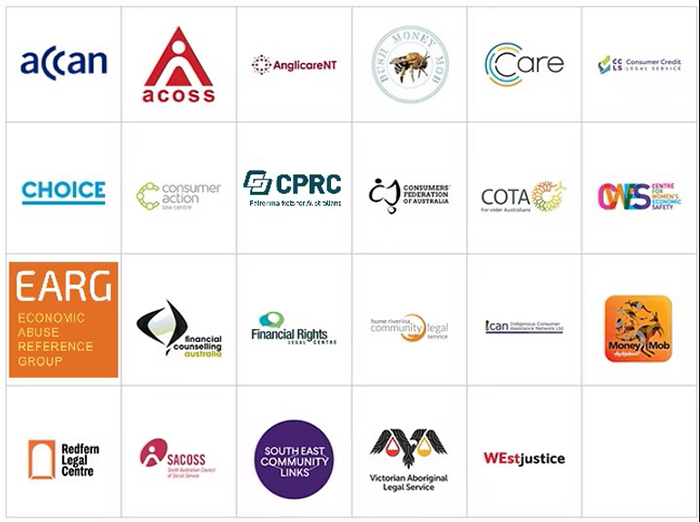
Selling customers services they don’t need and probably can’t use is one major longstanding issue, and it’s one that is only getting worse according to the Fair Call Coalition, an alliance of 23 consumer and community organisations (including CHOICE).
In 2024, CHOICE reported on one particularly egregious case, in which Optus pressured around 429 consumers into paying for telco services that were grossly unsuitable for their circumstances, both financially and technologically. Many were First Nations Australians from regional and remote areas or people from culturally and linguistically diverse backgrounds.
Optus paid a $100 million penalty for the conduct in a case brought by the Australian Competition and Consumer Commission. An ACCC case arising from similarly unconscionable practices resulted in a $50 million penalty for Telstra in 2021. ACMA rarely takes action on TCP Code violations, and simply reminds telcos to follow the code when it does.
ACCAN CEO Carol Bennett has long argued that telco self-regulation isn’t working.
Recent research from the Australian Communications Consumer Action Network (ACCAN) – which leads the Fair Call Coalition – reveals that one in five Australians have felt pressured to purchase a more expensive plan than they wanted, and over one in three have experienced unexpected changes to their contracts around terms and conditions. (The data comes from Wave 3 of ACCAN’s Consumer Sentiment Tracker, which was based on nationally representative survey responses taken between 13 February and 2 March 2026.)
For ACCAN CEO Carol Bennett, the results are further evidence that ACMA should scrap the TCP Code and directly regulate the sector, especially in problem areas such as sales practices, credit assessments, disconnections and coverage information. It’s a move that the Fair Call Coalition has repeatedly called for.
On 27 March, ACMA acceded to this longstanding demand and announced that it would replace the code with enforceable industry standards.
The change comes none too soon. The latest research “has reinforced that trust in this sector is in the doldrums and consumer wellbeing is at threat. Consumers feeling unprotected plays no small part in this result,” Bennett says.
The Fair Call Coalition is made up of advocacy and community groups that are calling for stronger consumer protections around telco sales.
The Telecommunications Industry Ombudsman’s 2024–25 annual report revealed that hardship complaints to the ombudsman went up 46% compared to the previous 12 months. Many of these complaints would have stemmed from a gaping hole in the TCP Code around sales and credit assessment practices. The industry-written code lacks enforceable standards in these areas. Whether ACMA’s new enforceable standards will improve matters remains to be seen.
Managing director of Bush Money Mob Alan Gray says ACCAN’s consumer sentiment data “aligns exactly with what our remote Aboriginal clients are experiencing around the Outback. Remote financial counsellors know that large telcos simply have not learned the lessons [from the Optus and Telstra cases].”
Jillian Williams, advocacy manager at the Indigenous Consumer Assistance Network, says the advocacy group “has been supporting hundreds of people who have experienced significant loss and stress as a result of telco misconduct that was allowed to occur over many years”.
Telco consumers must have confidence that selling practices are fair and that they will not be sold services they cannot afford
ACMA chair Nerida O’Loughlin
“A strong and enforceable code, delivering stronger consumer protections, could have prevented much of the harm our service has seen,” she adds.
ACMA chair Nerida O’Loughlin says the regulator already enforces industry standards for complaint handling, financial hardship obligations and protections for people experiencing domestic and family violence.
But the TCP Code, which will remain in effect until it formally retired at a date yet to be determined, leaves too much room for harm.
“Now is the time to move the remaining consumer protections into direct regulation so that expectations are consistent, obligations are clear and are backed by stronger and more immediately available enforcement powers for the regulator,” O’Loughlin says.
“Telco consumers must have confidence that selling practices are fair and that they will not be sold services they cannot afford, do not deliver the service for which they paid or the coverage they have been promised.”
Andy Kollmorgen is the Investigations Editor at CHOICE. He reports on a wide range of issues in the consumer marketplace, with a focus on financial harm to vulnerable people at the hands of corporations and businesses. Prior to CHOICE, Andy worked at the Australian Securities and Investments Commission (ASIC) and at the Australian Financial Review along with a number of other news organisations. Andy is a former member of the NSW Fair Trading Advisory Council. He has a Bachelor of Arts in English from New York University. LinkedIn
Andy Kollmorgen is the Investigations Editor at CHOICE. He reports on a wide range of issues in the consumer marketplace, with a focus on financial harm to vulnerable people at the hands of corporations and businesses. Prior to CHOICE, Andy worked at the Australian Securities and Investments Commission (ASIC) and at the Australian Financial Review along with a number of other news organisations. Andy is a former member of the NSW Fair Trading Advisory Council. He has a Bachelor of Arts in English from New York University. LinkedIn
For more than 60 years, CHOICE has been fighting the good fight for Australian consumers.
In the past year alone we've uncovered systemic issues with sunscreens, investigated shonky supermarket pricing, fought for stronger scam protections and helped make complex energy pricing fairer and clearer.
CHOICE is here to provide unbiased advice and independent testing in our world-class labs. We buy the products we test, just like you do, and our expert reviews are influence free. We’re here to help you choose smarter. Hopefully you’ll also save some money along the way.
Thanks to CHOICE, you’ll never be alone when a business treats you unfairly. You can support our work by joining or donating to our cause.