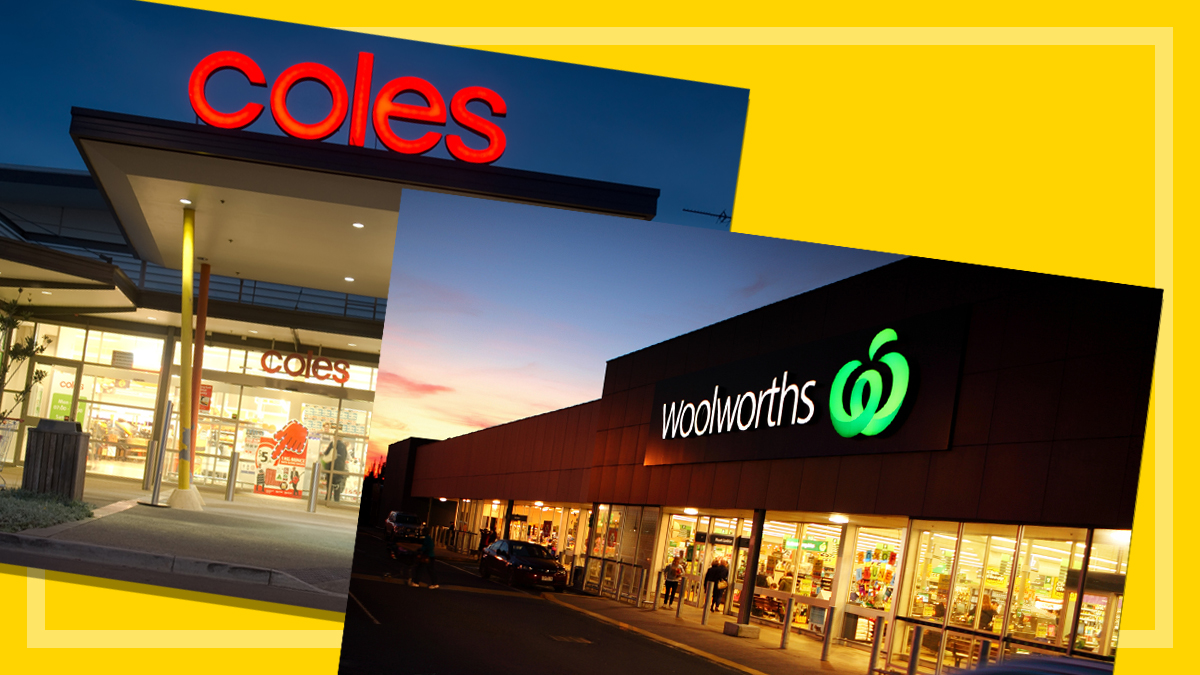
The ban came into effect on 1 July, but how and where it will be enforced remains a work in progress
The ACCC says it will focus on products ‘where excessive pricing is likely to cause the most harm to consumers’
CHOICE is calling for an expanded price gouging regime that would target excessive pricing across the entire economy
It’s hard to keep track of the many ways the two big supermarkets push us into paying more. The recent court win by the Australian Competition and Consumer Commission (ACCC) against Coles for deceptive promo pricing shined a light on just one example. It’s no surprise to many shoppers that the ACCC is pursuing a parallel case against Woolworths for the same sort of conduct.
Fake promotions on certain products trick us into believing we’re bagging a bargain, but grocery pricing manipulation goes much deeper than this. In 2023, we gave Coles and Woolworths a Shonky for pursuing excessive profit margins throughout their stores.
It was all the less palatable that this was happening in the midst of a cost-of-living crisis. The duopoly claimed the higher prices reflected their higher costs, but neither shoppers nor the ACCC bought it.
The federal government has taken notice of our efforts to expose supermarket price gouging in recent years, and in December last year it announced a new excessive grocery pricing prohibition to be enforced by the ACCC.
The excessive pricing prohibition provides us with another tool within our broader toolkit to protect consumers and promote competition in the supermarket sector
ACCC acting chair Catriona Lowe
This ambitious measure comes into effect on 1 July 2026. Will it mean grocery prices will noticeably decrease? It is far too soon to tell, but regulatory intervention in such a highly concentrated sector at least holds the promise of a win for consumers. The prohibition applies to supermarkets with an annual revenue of more than $30 billion, which would currently only include Coles and Woolworths.
“The excessive pricing prohibition provides us with another tool within our broader toolkit to protect consumers and promote competition in the supermarket sector,” says ACCC acting chair Catriona Lowe, adding that the competition watchdog will focus its attention on products “where excessive pricing is likely to cause the most harm to consumers”.
Consumer vigilance has been a big part of unearthing supermarket pricing tactics, and Lowe says the ACCC invites both shoppers and supermarket suppliers to blow the whistle on excessively priced products following the introduction of the ban.
It goes without saying that Coles, Woolworths and other major grocery retailers should be allowed to be profitable like any other business. The question is whether the profits are coming at an unreasonable expense to consumers, given that essential services don’t get much more essential than food.
The prohibition gives the ACCC the power to open the supermarkets’ books to check on the difference between how much they’re paying suppliers for products and how much they’re asking customers to pay.
Consumers are feeling the pinch across a range of essential services and the government should introduce an economy-wide price gouging regime to stamp out unfair pricing wherever it occurs
CHOICE senior policy and campaigns adviser Bea Sherwood
If the gap is too wide, it could be a case of excessive pricing. Retailers found to be fleecing consumers could be fined $10 million, three times the value of the benefit derived or 10% of their annual turnover during the preceding 12 months, whichever is greater.
“The government has progressed critical reforms on price transparency and unit pricing, but these measures need to be delivered quickly, in tandem with the new excessive pricing regime, in order to adequately restore fairness at the checkout,” says CHOICE senior policy and campaigns adviser Bea Sherwood.
“Excessive pricing is also not confined to the major supermarkets. Consumers are feeling the pinch across a range of essential services and the government should introduce an economy-wide price gouging regime to stamp out unfair pricing wherever it occurs.”
The ACCC has acknowledged that it will be a formidable task to catch supermarkets out, given the innate complexity of product pricing across thousands of products.
Associate Professor Dr Meg Elkins of RMIT University says “the law’s real test won’t be in court, it’ll be in the public’s gut. Shoppers don’t compare prices to a retailer’s costs, they compare them to what they remember paying last time”.
“The law’s test is cost-based, asking whether the price is excessive relative to the cost of supply. But the public’s test is memory-based, asking whether this price is higher than expected,” she explains.
Supermarkets sell thousands of products with shared costs, so isolating one item’s true margin is close to impossible
Associate Professor Dr Meg Elkins, RMIT University
Prices increases due to a bad harvest or rising freight costs “will still feel like gouging at the checkout,” Elkins adds.
“The law doesn’t define what ‘excessive’ means, or what counts as a reasonable margin. That’s not a drafting oversight – it reflects how genuinely hard this is to pin down. Supermarkets sell thousands of products with shared costs, so isolating one item’s true margin is close to impossible.”
But granular analysis appears to be possible. The ACCC’s case against Coles focused on 245 everyday products sold between February 2022 and May 2023, where prices were increased by at least 15% for a short time and then placed on a ‘Down Down’ promotion.
The ACCC was able to determine that promo prices were the same or higher than the previous regular prices. The court case focused on 14 representative promotions. Penalties have yet to be determined.
Andy Kollmorgen is the Investigations Editor at CHOICE. He reports on a wide range of issues in the consumer marketplace, with a focus on financial harm to vulnerable people at the hands of corporations and businesses. Prior to CHOICE, Andy worked at the Australian Securities and Investments Commission (ASIC) and at the Australian Financial Review along with a number of other news organisations. Andy is a former member of the NSW Fair Trading Advisory Council. He has a Bachelor of Arts in English from New York University. LinkedIn
Andy Kollmorgen is the Investigations Editor at CHOICE. He reports on a wide range of issues in the consumer marketplace, with a focus on financial harm to vulnerable people at the hands of corporations and businesses. Prior to CHOICE, Andy worked at the Australian Securities and Investments Commission (ASIC) and at the Australian Financial Review along with a number of other news organisations. Andy is a former member of the NSW Fair Trading Advisory Council. He has a Bachelor of Arts in English from New York University. LinkedIn
For more than 60 years, CHOICE has been fighting the good fight for Australian consumers.
In the past year alone we've uncovered systemic issues with sunscreens, investigated shonky supermarket pricing, fought for stronger scam protections and helped make complex energy pricing fairer and clearer.
CHOICE is here to provide unbiased advice and independent testing in our world-class labs. We buy the products we test, just like you do, and our expert reviews are influence free. We’re here to help you choose smarter. Hopefully you’ll also save some money along the way.
Thanks to CHOICE, you’ll never be alone when a business treats you unfairly. You can support our work by joining or donating to our cause.