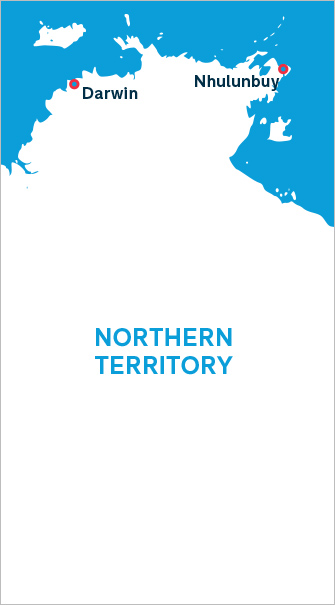
Perched on the eastern tip of East Arnhem Land in the Northern Territory, Nhulunbuy is a remote town on the edge of a great uncertainty.
The land is home to the Yolnu people, who have been central to national struggles for Aboriginal land rights for decades.
Outside the town, the Rio Tinto-owned bauxite mine, whose workers and money have sustained much of the growth in Nhulunbuy for the last 55 years, is nearing the end of its life. It’s expected by 2030 the mine will be closed, leaving a question mark over the future of the town.
Nhulunbuy is over 1000 kilometres drive from Darwin.
While the probable exodus of much of the population is some years off, changes to the way all residents meet basic needs are coming much sooner.
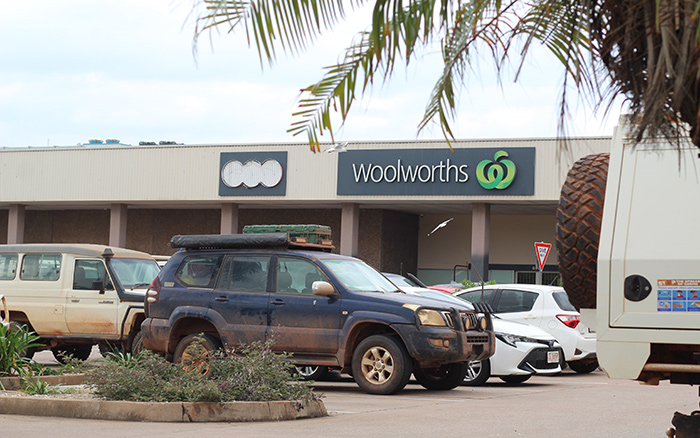
Woolworths, which runs the town’s only supermarket, has announced it’s pulling out by the middle of 2027 and there is no clear picture of what, if anything, will replace it.
Residents increasingly anxious about Woolies’ departure
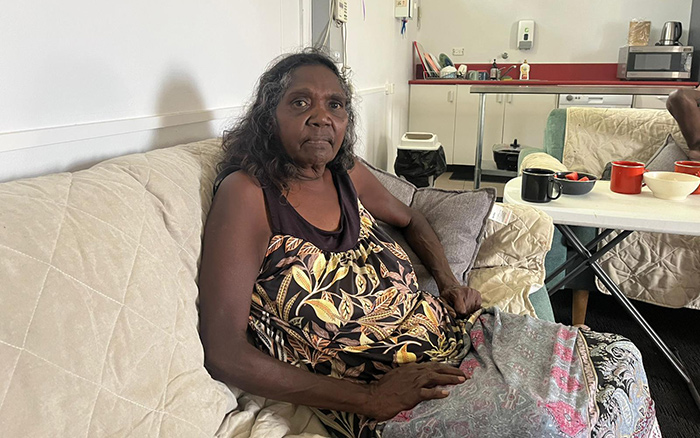
For Yolnu woman Lucille, who comes into the local Anglicare NT women’s group each week, it is a concerning development.
“When Woolworths closes, we are worried. As someone who loves eating, I am worried,” she says with a laugh.
Lucille, who lives in a community called Ski Beach outside of the main town, says that when times are tough they gather food the traditional way, but that even that is getting harder due to rising fuel prices.
When Woolworths closes, we are worried. As someone who loves eating, I am worried
Ski Beach resident Lucille
“When there’s no food, we go out fishing, crabbing, get mussels or we eat yams. But I have no car now and petrol is very expensive,” she says.
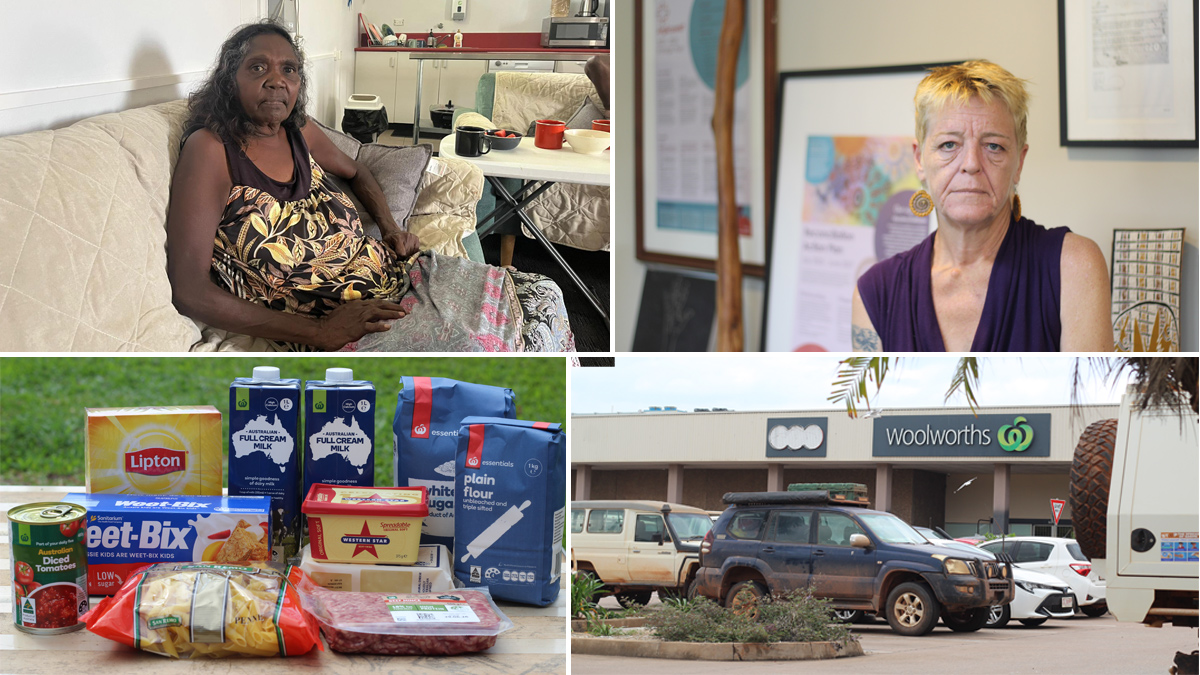
Yolnu woman Lucille is concerned about Woolworths leaving.
‘The lack of food security in town is massive’
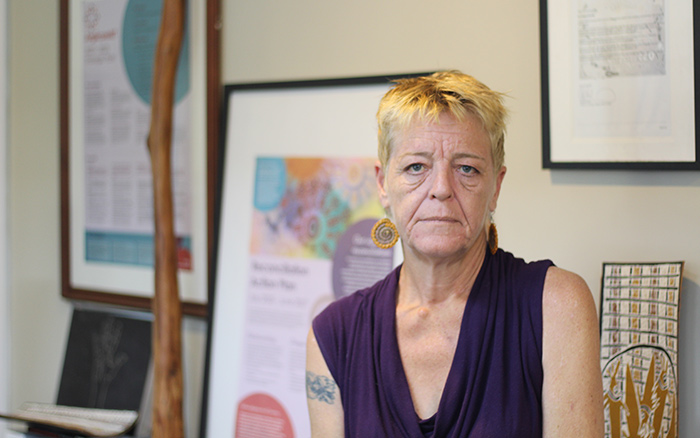
Kim Bryant, a program manager at Anglicare NT, who has lived in Nhulunbuy for 12 years, says food insecurity across the region is common.
“Obviously cost of living is an issue for the whole country and the whole world at the moment, but in remote areas it’s particularly challenging,” she says.
“The lack of food security in town is massive for many people in the community.”
Kim Bryant says food insecurity is a big issue across the region.
Woolworths Nhulunbuy says they will be leaving by June 2027.
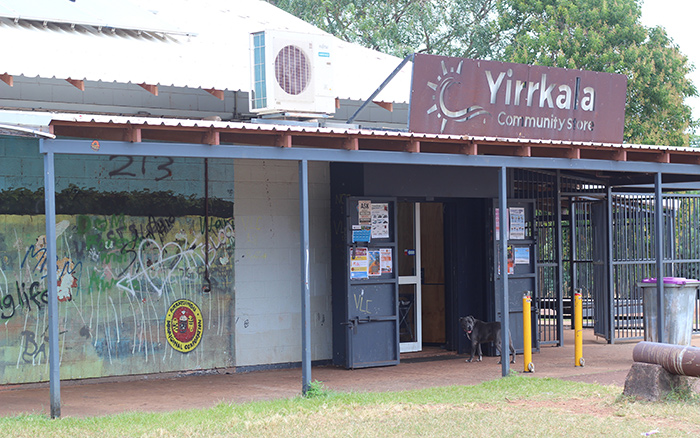
The next nearest option to buy groceries it the much smaller Yirrkala Community Store
Bryant says for the majority of Anglicare NT’s clients, food security is just one of many challenges, including electricity and telco costs, as well as poor quality and overcrowded housing.
The chances of being able to have a meal three times a day is very low
Anglicare NT program manager Kim Bryant
“We have a lot of people who come in for emergency relief, food vouchers, sometimes we’re able to give them donations of food as well, but it’s a daily challenge for people up here to get enough to eat and obviously healthy and nutritious food as well,” she says.
“The chances of being able to have a meal three times a day is very low.”
Woolworths, whose store in the town was established more than 50 years ago to serve the community that grew around the local mine, said the planned Rio Tinto exit meant the store’s viability was now being considered.
“Nhulunbuy is one of our most remote stores. All stock is delivered by ocean barge, making it our most difficult store to access,” a spokesperson says.
“We are in conversation with another organisation about whether they would like to take over the running of the supermarket. If this goes ahead, we expect it to happen by 30 June 2027.”
Nhulunbuy is one of our most remote stores. All stock is delivered by ocean barge
Woolworths spokesperson
CHOICE understands that “other organisation” is the Arnhem Land Progress Aboriginal Corporation (ALPA), which runs several community stores in smaller towns, however ALPA declined to confirm or comment more broadly on the issue.
Woolworths declined to comment on what would happen if ALPA didn’t assume ownership of the supermarket and left open the possibility that it would leave the town with no food store at all.
We asked Australia’s largest retailer, which made an underlying net profit of $1.38 billion in the 2025 financial year, if it had any responsibility for ensuring the food security of the community, even if the store in question was not substantially profitable. Woolworths did not directly respond to the question.
“We are in close consultation with our Nhulunbuy team members, traditional owners and the wider community, and we understand the importance of providing certainty for our customers and team as soon as we can,” a Woolworths spokesperson says.
In its Reconciliation Action Plan for First Nations peoples launched in June 2023, the company said it “recognises the role of the retailer in helping to increase access to affordable and nutritious food in Australia’s most remote communities”.
The next-closest place to Nhulunbuy to buy groceries is the much smaller community of Yirrkala, around 20 kilometres away.
The Yirrkala Community Store is significantly smaller, however, and while it stocks many essential items, a box of sweet potatoes was the only fresh vegetable available when CHOICE visited in June and there was no fresh fruit at all.
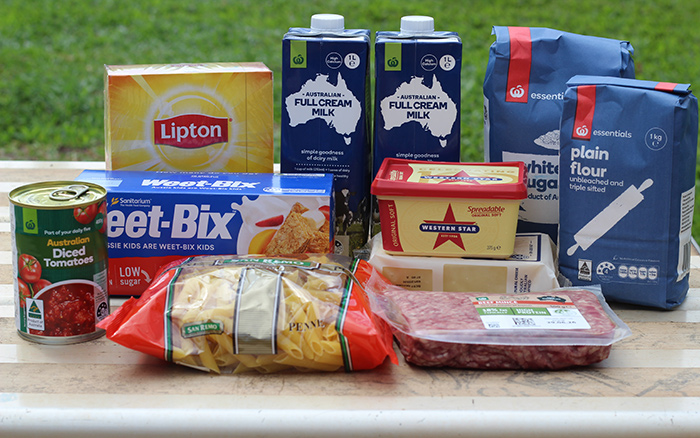
To measure the price differences between the two stores, and gauge the hike in expenses that community members may be faced with if the Nhulunbuy Woolworths is not replaced, we purchased a grocery basket of 10 essential items, including pasta, tinned tomatoes, sugar, flour, tasty cheese and minced meat.
While the 10 items cost $47.05 at the Nhulunbuy Woolworths, the same basket (including some substitutes of equivalent cheapest goods of different brands) was a whopping $85.68 at the Yirrkala store. That’s 82% more expensive.
While the 10 items cost $47.05 at the Nhulunbuy Woolworths, the same basket … was a whopping $85.68 at the Yirrkala store
Woolworths Nhulunbuy costs were consistent (40 cents different) with the prices paid for the same items in a suburban Sydney Woolworths.
The basket of items purchased from Nhulunbuy Woolworths.
Government’s price-cap scheme failing on the ground
It’s not the first time CHOICE has investigated remote community store grocery pricing and found huge price differences.
In 2024, an investigation focusing on the NT and Western Australia found that remote First Nations communities were paying more than double on average for a basket of essential goods compared to prices in metropolitan areas.
In early 2025, Prime Minister Anthony Albanese cited CHOICE’s investigation when announcing a new voluntary price-cap scheme for stores based in remote communities. It was initially rolled out to 76 First Nations community stores and placed caps on the cost of 30 essential items.
A $50 million four-year investment in the scheme was announced later in 2025, and the government said the number of stores participating was expected to expand to over 150. But voluntary schemes only go so far.
The Yirrkala Community Store has signed up to the government’s price cap scheme, but the basket of items we bought was still significantly higher than the Nhulunbuy Woolworths.
Four of the ten items in our mystery shopping basket are listed as capped items and some were not being sold at the price they were meant to be capped at.
For example, San Remo pasta (500g) is meant to be capped in April 2026 at $2.50, yet was on sale for $4.95. While Essential Plain Flour (1kg) is meant to cost $1.30 and was sold for $6.40.
Senior campaigns and policy advisor at CHOICE, Bea Sherwood says while the government’s remote grocery price-cap scheme is welcomed, not enough stores are included in the scheme and it is unclear whether monitoring is sufficient.
“We are yet to see evidence about whether or not it is making a substantial difference to food security across remote communities around the country,” she says.
Jarni Blakkarly is an award-winning Senior Investigative Journalist at CHOICE. Jarni has worked for news organisations such as SBS, Reuters, Al Jazeera English, ABC 730, Radio National, BBC World Service and Deutsche Welle.
Jarni won the Walkley Foundation's young journalist of the year student category award in 2016 and was the recipient of a Melbourne Press Club Michael Gordon fellowship in 2022. In 2023 he was a highly commended finalist in the Quill Awards and a winner at the 2024 Excellence in Civil Liberties journalism awards. In 2024 he was elected to serve on the Federal Council (National Media Section) of the MEAA. Jarni has a Bachelor of Communications (Journalism) from the Royal Melbourne Institute of Technology (RMIT).
Jarni Blakkarly is an award-winning Senior Investigative Journalist at CHOICE. Jarni has worked for news organisations such as SBS, Reuters, Al Jazeera English, ABC 730, Radio National, BBC World Service and Deutsche Welle.
Jarni won the Walkley Foundation's young journalist of the year student category award in 2016 and was the recipient of a Melbourne Press Club Michael Gordon fellowship in 2022. In 2023 he was a highly commended finalist in the Quill Awards and a winner at the 2024 Excellence in Civil Liberties journalism awards. In 2024 he was elected to serve on the Federal Council (National Media Section) of the MEAA. Jarni has a Bachelor of Communications (Journalism) from the Royal Melbourne Institute of Technology (RMIT).
For more than 60 years, CHOICE has been fighting the good fight for Australian consumers.
In the past year alone we've uncovered systemic issues with sunscreens, investigated shonky supermarket pricing, fought for stronger scam protections and helped make complex energy pricing fairer and clearer.
CHOICE is here to provide unbiased advice and independent testing in our world-class labs. We buy the products we test, just like you do, and our expert reviews are influence free. We’re here to help you choose smarter. Hopefully you’ll also save some money along the way.
Thanks to CHOICE, you’ll never be alone when a business treats you unfairly. You can support our work by joining or donating to our cause.