Modern slavery is a difficult concept to grasp. When you think of slavery you probably imagine people bound by chains, trapped, stripped of their rights.
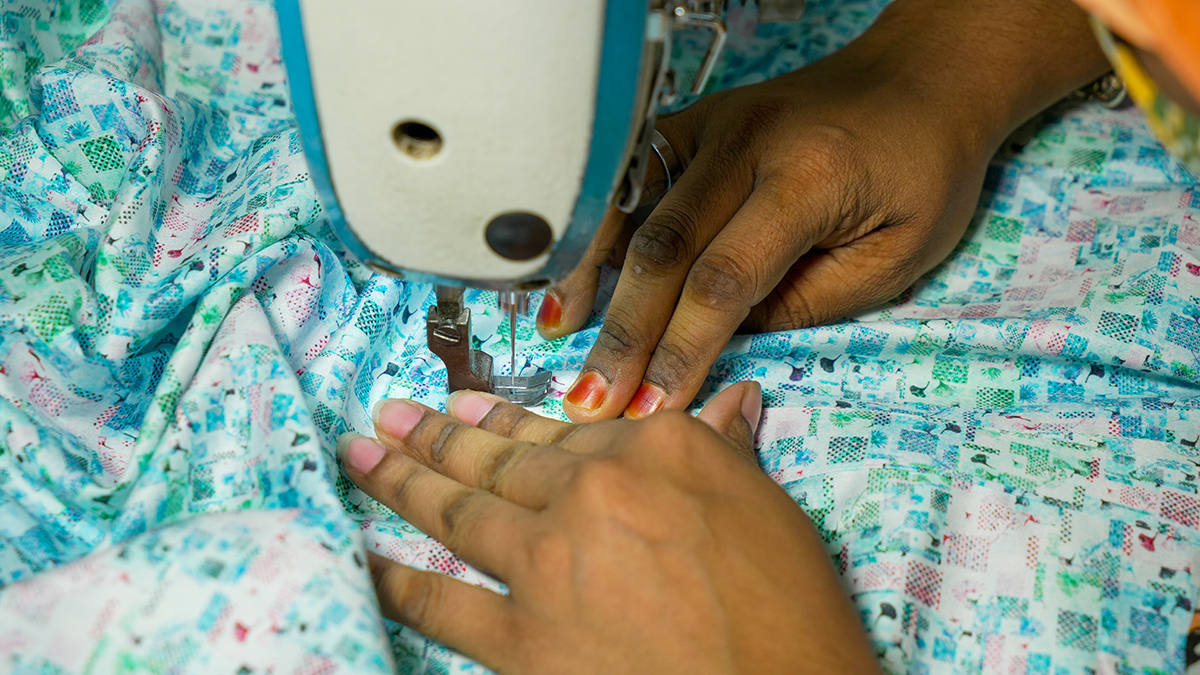
In Australia, victims may not be physically bound, but they are often subject to false promises, then kept captive with threats of visa or employment termination. The work of these modern slaves often contributes to the production of the clothes we wear, the food we eat, the technology we use and the items we furnish our homes with – all hidden from plain sight.
In June, the US Trade Representative labelled Australia as one of the 54 countries who have failed to “impose and effectively enforce a prohibition on the importation of goods produced with forced labor”.
The Australian government plans to introduce a new criminal ‘failure to prevent’ offence
To combat the many claims included in this report, the Australian government plans to introduce a new criminal “failure to prevent” offence, which will be applied to large corporations who fail to prevent modern slavery from occurring in their supply chains. Experts say it’s an overdue extension of the Modern Slavery Act which was introduced in 2018.
The new law will target companies generating over $100 million in annual revenue, holding them accountable to report the “reasonable steps” they have taken to prevent modern slavery risks.
But what are these “reasonable steps”? And what are the consequences if companies don’t take action?
The Australian anti-slavery Commissioner Chris Evans says modern slavery is a significantly unreported crime.
“While the goods on our shelves and the workers in our communities may seem far removed from modern slavery, the evidence shows it is closer to home than more Australians may realise.”
Fair Supply is a not-for-profit that has helped many Australian businesses assess the presence of modern slavery in their supply chains. It estimates $98.6 billion of imports have risks of modern slavery in their production.
This can be hidden in complex supply chains “layered across subcontractors and multiple countries,” the Commissioner says.
While complex overseas supply chains are a factor, modern slavery also occurs at home.
In Australia alone, the global slavery index estimates there may be 41,000 people living in situations of modern slavery.
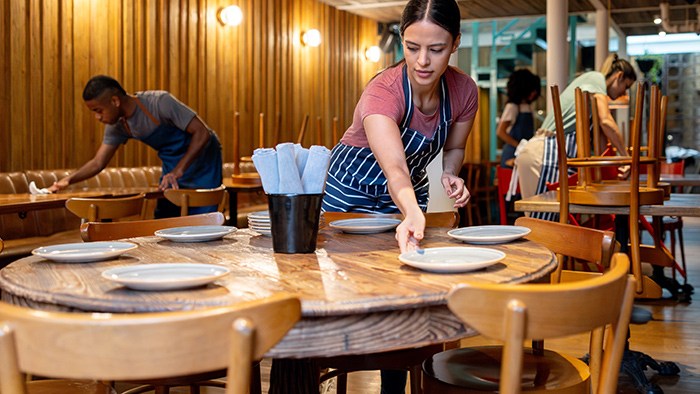
Modern slavery often involves migrant workers and can occur in a range of industries, including hospitality.
Case Study: 11-hour days, paid in ‘piece rates’
Jin Young Lee, an English speaking South Korean national, dreamed of living in Australia. He applied for an extended working holiday visa to live and work here in 2024.
To apply for a second-year working holiday visa he had to complete at least 88 days (3 months) of “specified work” in a designated regional area while on his first visa.
In June of 2024, Jin arrived in Sydney, aware of these requirements, and began browsing the internet in desperate need for employment to support his life in Sydney and extend his visa.
He searched the internet for “jobs for backpackers” and the first website that appeared in his search, referred to itself as a “premium employer”.
So Jin dropped everything, sold all of his belongings and moved to the advertised farm in the Mid North Coast region of New South Wales to complete his 88 days of farm work in December of 2024.
Upon arrival at the farm, Jin quickly realised the horror of the situation he had fallen into.
From day three or so onwards, they had us working from seven in the morning to six in the evening
Jin Young Lee, a migrant worker in Australia
“All the doors were broken, the windows were broken and had holes in the screen protector so bugs could come in, cockroaches everywhere, I mean everywhere.”
Working in the December heat, Jin says the company provided “no UV sun protection, water, clothing, equipment, buckets”, adding that the accommodation provided (at a cost) was a “dilapidated rundown house”.
Almost as soon as he arrived, he was required to work 11-hour days in these conditions with no breaks. “From day three or so onwards, they had us working from seven in the morning to six in the evening,” he says.
“They didn’t provide food, they didn’t provide water, there wasn’t even a porta potty in half those farms.”
The living situation consisted of two small houses joined together, one with air conditioning that leaked and the other with none, sleeping a total of 18 workers on mattresses, not beds. Only five of the workers spoke English.
They told me that we would be paid fairly, but there was no hourly minimum award that they paid
Jin Young Lee, a migrant worker in Australia
Jin and the other workers were expected to pay out of their own pockets for accommodation, food and transport, strictly in cash.
“They told me that we would be paid fairly, but there was no hourly minimum award that they paid,” he says. Jin was actually told he would be getting paid “piece rates”, an illegal method of payment based on how many berries were picked.
While Jin was working at the farm, a regulator inspection took place. Management went to great lengths to make everything look clean, before things quickly returned to normal.
Jin’s story is not dissimilar to other victims of modern slavery in Australia. Many of these companies who advertise farm work for travellers target non-English speakers, in the hope they won’t be able to advocate for their rights without the requisite language skills.
Jin says the farm management told him to leave after two weeks. He believes it was because he spoke English and pushed for better conditions.
The Australian Red Cross and others working to combat modern slavery see situations like Jin’s each year. Natalie Maxwell-Davies, Australian Red Cross senior manager for modern slavery, says the new laws are “a step in the right direction, but the test is really whether survivors and people in situations of risk see any change”.
The Modern Slavery Act of 2018, which established national modern slavery reporting requirements for large companies, underwent a government review in 2022.
Unless we have very strong monitoring and very, very strong enforcement, then the proposed reforms won’t be able to achieve what it wants to achieve
Nga Pham, Monash University
Maxwell-Davies says the review found that there was “no evidence that the modern slavery act was having a positive impact for people in situations of modern slavery”. She’s worried the new “failure to prevent” laws currently proposed by the government could be the same.
The Albanese government said the new scheme would “significantly strengthen Australia’s response to modern slavery in supply chains by enhancing accountability and encouraging effective risk management while maintaining a practical and proportionate framework for business”.
But experts want more clarity.
Nga Pham, associate professor at Monash University works on modern slavery and corporate governance. She says that while the reforms are ambitious, for them to actually address the challenges at hand, the guidance from the government has to be crystal clear.
“Unless we have very strong monitoring and very, very strong enforcement, then the proposed reforms won’t be able to achieve what it wants to achieve, which is mainly to improve the working conditions of the vulnerable communities.”
The Red Cross says these new laws need to be formulated around what survivors are desperately seeking: more awareness and understanding of modern slavery in the community and easier access to information on work rights, as well as education for vulnerable communities.
This ensures those who may be vulnerable to exploitation are able to understand the legalities of their pay, work breaks and rights as workers in Australia.
Maxwell-Davies says, “a law that creates a corporate liability can contribute to this, but unless survivors have those trusted, accessible channels to raise concern, access to appropriate support, and access to remedy, they’re not likely to come forward”.
Jin says there needs to also be a change to the working laws in Australia that are causing him and others to end up in situations of modern slavery.
Unless survivors have those trusted, accessible channels to raise concern, access to appropriate support, and access to remedy, they’re not likely to come forward
Natalie Maxwell-Davies, Red Cross
“The laws themselves are the ones perpetuating modern slavery because of the 88 days requirement,” Jin says, adding that the system is open to exploitation.
Anti-slavery commissioner Chris Evans adds that in cases of modern slavery, Australians need to be reminded of the human element.
“These are people, just like you and me. They make the goods we consume every day, and like everyone they deserve to live and work in freedom and dignity.”
Get the inside story on our investigations, campaigns and the difference they make.
Riley is in her final year at RMIT University majoring in Journalism with a minor in Literary Studies. She has a passion for impactful journalism and through her studies she has gained experience crafting meaningful stories through radio, broadcast production and news writing. She has previously contributed to student news organisations such as Newsline, as well as projects with local radio at Southern FM.
Riley is in her final year at RMIT University majoring in Journalism with a minor in Literary Studies. She has a passion for impactful journalism and through her studies she has gained experience crafting meaningful stories through radio, broadcast production and news writing. She has previously contributed to student news organisations such as Newsline, as well as projects with local radio at Southern FM.
For more than 60 years, CHOICE has been fighting the good fight for Australian consumers.
In the past year alone we've uncovered systemic issues with sunscreens, investigated shonky supermarket pricing, fought for stronger scam protections and helped make complex energy pricing fairer and clearer.
CHOICE is here to provide unbiased advice and independent testing in our world-class labs. We buy the products we test, just like you do, and our expert reviews are influence free. We’re here to help you choose smarter. Hopefully you’ll also save some money along the way.
Thanks to CHOICE, you’ll never be alone when a business treats you unfairly. You can support our work by joining or donating to our cause.