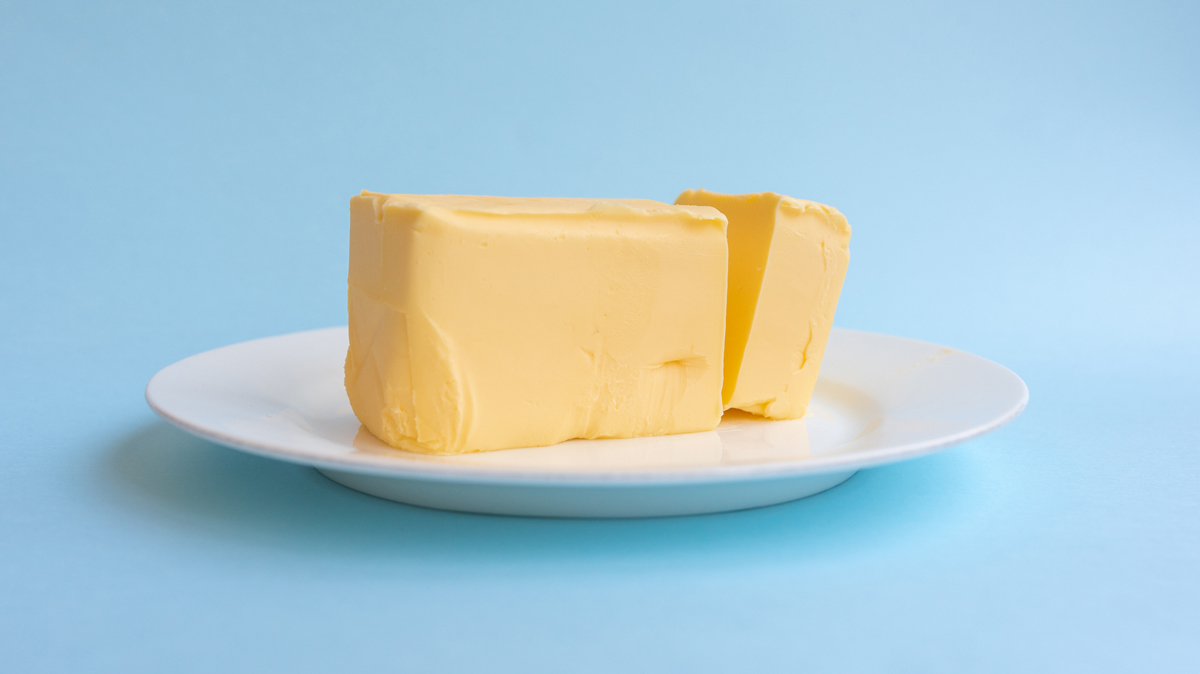
Butter and margarine spreads guide
When you're faced with so many different butter and margarine spreads in the supermarket dairy cabinet, it's hard to know which is the healthiest.
Last updated: 11 Aug 2014
If you’re looking for a healthier alternative to butter, which is usually more than 50% saturated fat, there are plenty of options.
Although margarine used to have a big presence on the shelves at supermarkets, it’s not so common these days. Healthwise, it’s a step in the right direction. Under the Food Standards Code, margarine is a spread that contains at least 80% fat. As most spreads now have less fat than this, they can’t be called margarine and still comply with labelling regulations (unless they’re called margarine spreads).
The other benefit of oil and margarine spreads is that they’re also now fortified with vitamin D.
Choosing a healthy butter or margarine spread
As far as your heart’s concerned, the overriding consideration in choosing a spread is to avoid saturated and trans fats by looking at the per 100g amounts.
Canola spreads
Canola oil is rich in monounsaturates and also has heart-healthy omega-3 fatty acids. Don’t be put off by the rumours circulating on the internet that canola oil is toxic – there’s no truth to them.
Olive oil spreads
Olive oil has acquired a certain mystique as a key ingredient of the heart-healthy Mediterranean diet, but in fact it’s only one of a number of healthy oils. It’s rich in monounsaturates, but so is canola. And although you pay a premium for most of these spreads, you don’t get as much olive oil in them as you might think.
Polyunsaturated spreads
These contain sunflower, flaxseed or soybean oils that are rich in omega-3 and omega-6 fats.
Cholesterol-lowering spreads
These claim to contain natural plant sterols that lower cholesterol absorption – and the scientific evidence that plant sterols work is quite strong. They can lower the level of harmful LDL cholesterol in your blood by more than 10%.
But you’d need to eat at least 25g of the spread each day to get that level of benefit. Just smearing the occasional slice of toast with one of these spreads won’t make much difference.
Unfortunately, plant sterols also lower the absorption of beta-carotene, which forms vitamin A in the body. So if you eat these products a lot, it’s a good idea to include an additional daily serve of yellow or orange vegetables and fruits.
And these products aren’t a substitute for cholesterol-lowering medication. If in doubt, get medical advice.
Dairy blends/spreadable butter
If you really like the flavour of butter, dairy blends might seem like a good compromise.
They’re made from butter blended with vegetable oils, or from butterfat processed to remove some of the saturated fat. They have less saturated fat than traditional butter, with the added bonus that they come out of the fridge easier to spread.
Unfortunately, they still have more saturated fat than most spreads based on vegetable oil.
Fats in spreads
We all need some fat in our diet. Fats provide essential fatty acids that our bodies can’t manufacture. They also aid in the absorption of fat-soluble vitamins A, D, E and K, and fat-soluble antioxidants like beta-carotene. Fat also makes our food tastier and more palatable, adding to the enjoyment of eating.
Fat does, however, contribute more than twice the kilojoules as the same weight of protein or carbohydrate, so you’ve still got to watch how much you eat.
Expert opinion has shifted towards the view that the type of fat we eat matters even more than the quantity. Eating foods rich in saturated and trans fats increases your risk of heart disease, while replacing saturated with mono- and polyunsaturated fats lowers the risk.
Saturated fats
Saturated fats are solid at room temperature and are mainly found in animal products, but there are also plant sources, such as coconut oil and
palm oil.
As well, saturated fat is found in full-fat dairy products, fatty meats, sausages and in the processed vegetable oils used in biscuits, cakes, pastries, snack foods, confectionery and fried take-away foods.
Trans fats
Trans fats are created by a process called hydrogenation, which is used to convert liquid oils into the solid fat needed to get the right consistency in a spread.
Australian spreads have a lot less trans fat than in the past, largely because advances in food technology have made it possible for manufacturers to produce spreads without depending so much on hydrogenation.
The World Health Organization (WHO) recommends that no more than one percent of our daily kilojoule intake comes from trans fat. The good news is that Food Standards Australia New Zealand (FSANZ) monitors trans fats in the food supply and says that only about 0.5 percent of Australians’ daily energy needs come from trans fats.
But Australia has far more lax laws around trans fats than some countries, making it hard to know how much you’re consuming. Back in 2003, Denmark was the first country in the world to ban the use of hydrogenated fat, making it illegal to sell products in which trans fat is more than two percent of the total fat content. Various places in the US have also since moved to legislate against trans fats.
In Australia, manufacturers don’t have to declare trans fats on the label unless they make a nutrition content claim around cholesterol, saturated, trans, polyunsaturated, monounsaturated, omega-3, omega-6 or omega-9 fatty acids.
Can I cook with low-fat spreads?
Probably not. Check the total fat content – if it’s less than about 60%, the spread’s likely to be unsuitable for making cakes, scones or pastry. It’s also likely to splatter too much if you try to fry with it.
For baking, you can use one of the spreads that has more fat overall but is still low in saturated and trans fats. And for frying, simply use a small quantity of vegetable oil.
Rachel Clemons is an award-winning journalist who worked at CHOICE from 2004–2022.
During her time at CHOICE her core focus was on food and nutrition, from reviewing breakfast cereals and fast food to dispelling myths about the benefits of detox kits and gourmet salt or translating confusing food labels – with the occasional taste test thrown in for good measure.
Prior to CHOICE she lived overseas, working predominantly in hospitality when she wasn't travelling and eating her way through various cuisines. She holds a Master of Science in Nutrition from King's College London (where she also researched and wrote for CHOICE's UK sister organisation, Which?), and a Bachelor of Science, Health Sciences from the University of Adelaide.
In 2017 she won the Dietitians Association of Australia's Nutrition Journalism Award and she's currently on the Steering Committee as a Parent Member of Parents' Voice.
You can find her on Twitter and LinkedIn.
Rachel Clemons is an award-winning journalist who worked at CHOICE from 2004–2022.
During her time at CHOICE her core focus was on food and nutrition, from reviewing breakfast cereals and fast food to dispelling myths about the benefits of detox kits and gourmet salt or translating confusing food labels – with the occasional taste test thrown in for good measure.
Prior to CHOICE she lived overseas, working predominantly in hospitality when she wasn't travelling and eating her way through various cuisines. She holds a Master of Science in Nutrition from King's College London (where she also researched and wrote for CHOICE's UK sister organisation, Which?), and a Bachelor of Science, Health Sciences from the University of Adelaide.
In 2017 she won the Dietitians Association of Australia's Nutrition Journalism Award and she's currently on the Steering Committee as a Parent Member of Parents' Voice.
You can find her on Twitter and LinkedIn.