Online retailers are giving shoppers the option of paying extra to secure compensation if products are damaged or go missing during delivery
These insurance policies can cost as much as $25 and are sometimes pre-selected at the checkout, making them hard to avoid
Some policies offer unique benefits, but others sell rights you already get for free under Australian Consumer Law
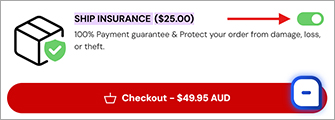
Imagine you’re shopping online and, just before you check out, you get offered the option to pay a bit extra for a “100% guarantee” your order will be protected from damage or loss while it’s being shipped to you.
It sounds like a good deal. So good, in fact, the retailer has assumed you’d be crazy not to take it and has already added it to your purchase. All you have to do is pay.
But at $25, this insurance policy will almost double the price of the single product you planned on buying. Is it worth it?
Some retailers charge as much as $25 for shipping protection and add it to your purchase by default.
It’s a predicament Australians say they’re finding themselves in more and more when buying online from small businesses around the country.
We encountered this scenario ourselves on the website of a Melbourne audio appliance outlet earlier this month.
Contributors on Reddit and our own CHOICE Community forum have vented about the add-on charges, accusing the businesses of obscuring their obligations under Australian Consumer Law (ACL) and exploiting shoppers’ anxieties.
“Everybody has their hand out,” says CHOICE member Phil Tannenbaum, an online shopper who often sees offers of shipping protection on the sites he buys from. “They’re getting very, very creative, adding text to make it seem like you really need to [buy] this.”
Shoppers aren’t the only ones questioning these prompts – consumer regulators have labeled them as a “sneaky” example of a “dark pattern” – a feature built into an app or website designed to make us spend more.
So is shipping protection ever worth paying for? We’ve taken a look at several policies, and while some do offer unique perks, others may be selling rights you already have.
Most shipping protection policies cost a few dollars, but what they provide varies.
Shipping protection, shipping insurance or transit cover policies are add-on “protections” consumers can choose to add to their purchase when ordering something online.
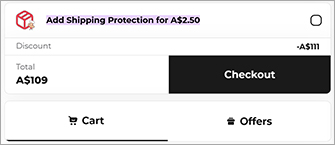
They’re usually presented when you’re about to pay for a product – often with a check box you can select at the checkout to add the cost of the policy to your purchase.
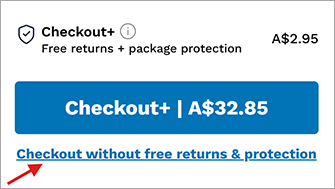
Options to check out without shipping protection can be difficult to spot.
But in some cases, policies are pre-selected and added to your cart by default, or the checkout page is designed to make the option of checking out without shipping protection less obvious.
Policies tend to cost a few dollars, but some will set you back as much as $8, or even $25.
What they provide and how it’s sold to you varies widely.
Some businesses threaten to wash their hands of any responsibility in cases where your parcel is lost, damaged or stolen while in transit, unless you stump up for their shipping protection.
Others strike a friendlier and more generous tone, offering extra perks, such as the right to a replacement if you change your mind or priority customer support if you opt in.
While some large online retailers freely offer credits if something goes wrong with your delivery, it appears small businesses are more likely to try and reserve such perks for those who pay extra – most shipping protection policies we’ve seen are offered by modest-sized enterprises.
We’ve looked at shipping protection and delivery guarantee policies from several Australian small businesses, and while some sell unique benefits, it’s unclear if others offer anything more than the rights you already have.
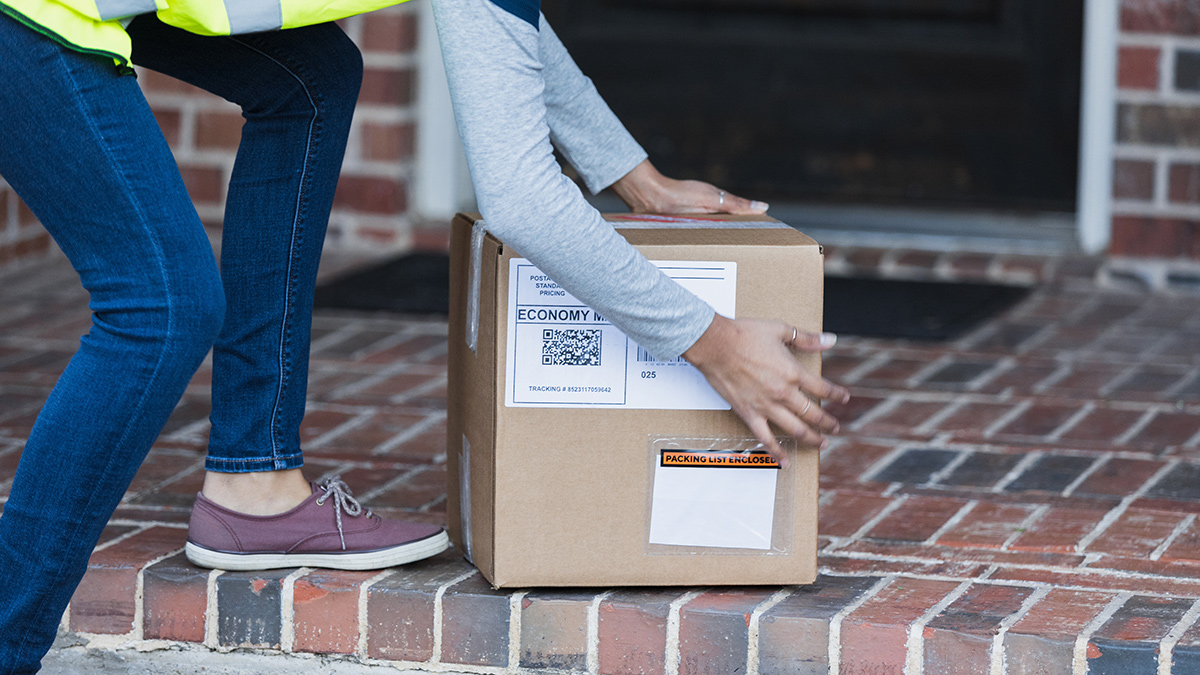
Despite what some businesses might tell you, the ACL gives you – for free – the right to compensation in certain situations where something has gone wrong with a parcel delivery.
Know your rights
Under the ACL, you are entitled to a refund, replacement or repair if you receive damaged goods. This includes if you bought the goods online and they were mailed to you.
The business or online store you bought the goods from should provide this remedy and shouldn’t pass you off to the courier company they used.
The business you bought the goods from should provide the remedy and shouldn’t pass you off to the courier company they used
Your rights are weaker if a product arrives late or never reaches you at all. The ACL doesn’t protect you in cases when this happens for reasons outside the retailer’s control, including when it’s the fault of the courier or postal service provider.
However, businesses may still provide you with a remedy in these situations (even if you didn’t buy shipping protection) thanks to their own rights to compensation from courier and postal companies.
These rights appear to be working in many circumstances. We’ve had reports from consumers who have received refunds or replacements for broken or incorrect items, even though they never took up a business’ offer of shipping protection.
Is your parcel protected after it’s been delivered?
The exploits of porch pirates – thieves who steal unattended deliveries left outside residential properties – have gained infamy in recent years, thanks to the rise in online shopping and more of us fitting our homes with security cameras and smart doorbells.
Unfortunately, neither the ACL nor most shipping protection policies cover you if your parcel is stolen by someone creeping around on your verandah.
If the delivery has made it as far as your home, what happens to it while it’s waiting for you is usually considered outside the retailer or courier’s control
If the delivery has made it as far as your home, what happens to it while it’s waiting for you is usually considered outside the retailer or courier’s control.
The only possible exception may be if the delivery service provider left the parcel in a location not considered secure under the terms and conditions of your purchase.
How to know if shipping protection is worth adding
Next time you’re presented with the option of paying a bit extra to get shipping protection with an online purchase, follow these steps to determine if it’s worth it.
1. Check your rights
Understand your rights around parcels and deliveries under the ACL listed above and compare these to the information the retailer has provided on its shipping insurance policy.
Protection policies appearing to just sell your rights back to you probably aren’t worth getting.
2. Look for carve outs
Beware of protection policies that don’t offer cover for parcels that arrive late or go missing for reasons outside of the retailer’s control – these are offering the same rights you already get for free under the ACL.
3. Consider extras
Some shipping insurance policies carbon offset your delivery, promise quicker customer service or allow you to swap what you’ve bought if you change your mind.
Businesses aren’t obliged to extend you these benefits under the ACL, so a policy that comes with these extras may be worth buying if it suits your circumstances and you feel the price is appropriate.
Some protection policies sell rights you already have. Check what’s included in a policy to know if it’s worth paying for.
Who to talk to when something goes wrong
If something you’ve ordered arrives damaged, late or goes missing, contact the retailer you bought it from.
If you deserve a remedy under the ACL for a broken product, the business should provide this.
If not, such as when the product has been delayed or lost by a third party, you should still contact the retailer and give them a chance to provide a solution. Retailers who send products to customers via the mail often have their own rights to compensation from courier companies, so may be able to reimburse you.
In all cases, retailers should never direct you to their delivery service provider or courier and tell you to resolve the issue with them.
If you made your purchase with a debit or credit card, consider applying for a chargeback.
CHOICE tip: Don’t place too much faith in overseas operators. Retailers based in other countries that sell into Australia are technically required to follow the ACL, but we see many cases where they don’t. Even if you escalate your complaint, it may be difficult for state and territory agencies to bring these businesses to account.
Retailers are being encouraged to offer add-on shipping protection by business publications and e-commerce service providers that operate online stores.
Some of these groups point to statistics overseas and warn their business customers that instances of parcel theft, loss and damage are on the rise.
Others say consumers expect faster resolutions to delivery issues, and warn that retailers taking on the “burden” of issuing refunds or replacements may not be able to provide these quickly enough, losing repeat customers and money.
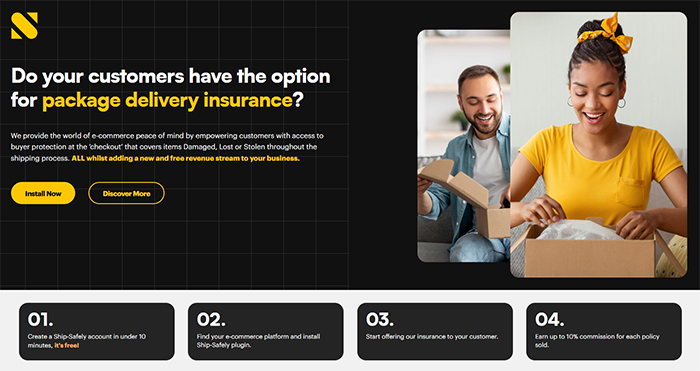
In fact, e-commerce company Ship-Safely, in an attempt to get retailers to integrate its shipping insurance product into their checkout pages, glosses over the rights provided to Australian businesses and consumers by the ACL altogether.
e-commerce company Ship-Safely glosses over the rights provided to Australian businesses and consumers by the ACL altogether
The company tells its clients they shouldn’t be considered responsible for parcels arriving damaged and warns that most delivery service providers aren’t legally obliged to guarantee delivery or replace lost products.
It’s worth noting that articles sent via mail get damaged or go missing relatively rarely in Australia. The Commonwealth Ombudsman hears complaints about Australia Post and Star Track., and says that of the 4566 complaints it received in 2024–25, 20% related to missing parcels or letters and 4% were to do with damaged articles.
Furthermore, contrary to the claims of Ship-Safely, the ACCC has previously taken action against delivery providers who didn’t compensate businesses after products they delivered to customers got damaged in transit.
In 2023, Australia Post and StarTrack were ordered by a court to pay $2.9 million to businesses after admitting they had denied valid compensation requests.
E-commerce company Ship-Safely pays retailers a commission for every shipping protection policy they sell. Image: Ship-Safely
Policies deliver money to retailers
Some insurance providers also highlight the opportunity for retailers to earn extra money by offering shipping protection to customers.
Ship-Safely says retailers integrating its insurance product into their websites can earn up to 10% commission for every policy a customer buys.
ShipSure, a similar provider, promises to let business owners set their own percentage markup when selling policies and “make additional revenue”.
Businesses voice concern over fraud costs
It’s worth noting that small Australian retailers have previously argued they face rising costs associated with facilitating return requests for products they sell online.
These include cases where customers are abusing refund and return processes for financial gain by submitting fraudulent chargebacks. Some operators report losing thousands of dollars and say dealing with returns has eaten into their profits.
Liam Kennedy is a Journalist with the Editorial and investigations team. He answers consumers' most burning questions, from which scams to be aware of and how to save money, to whether new services and products are worth using and how the latest developments in consumer news could affect them.
Prior to CHOICE, Liam worked in production in daily news radio and podcasting.
Liam has a Bachelor of Communication (Journalism) and a Bachelor of Arts in International Studies from the University of Technology Sydney. LinkedIn
Liam Kennedy is a Journalist with the Editorial and investigations team. He answers consumers' most burning questions, from which scams to be aware of and how to save money, to whether new services and products are worth using and how the latest developments in consumer news could affect them.
Prior to CHOICE, Liam worked in production in daily news radio and podcasting.
Liam has a Bachelor of Communication (Journalism) and a Bachelor of Arts in International Studies from the University of Technology Sydney. LinkedIn
For more than 60 years, CHOICE has been fighting the good fight for Australian consumers.
In the past year alone we've uncovered systemic issues with sunscreens, investigated shonky supermarket pricing, fought for stronger scam protections and helped make complex energy pricing fairer and clearer.
CHOICE is here to provide unbiased advice and independent testing in our world-class labs. We buy the products we test, just like you do, and our expert reviews are influence free. We’re here to help you choose smarter. Hopefully you’ll also save some money along the way.
Thanks to CHOICE, you’ll never be alone when a business treats you unfairly. You can support our work by joining or donating to our cause.