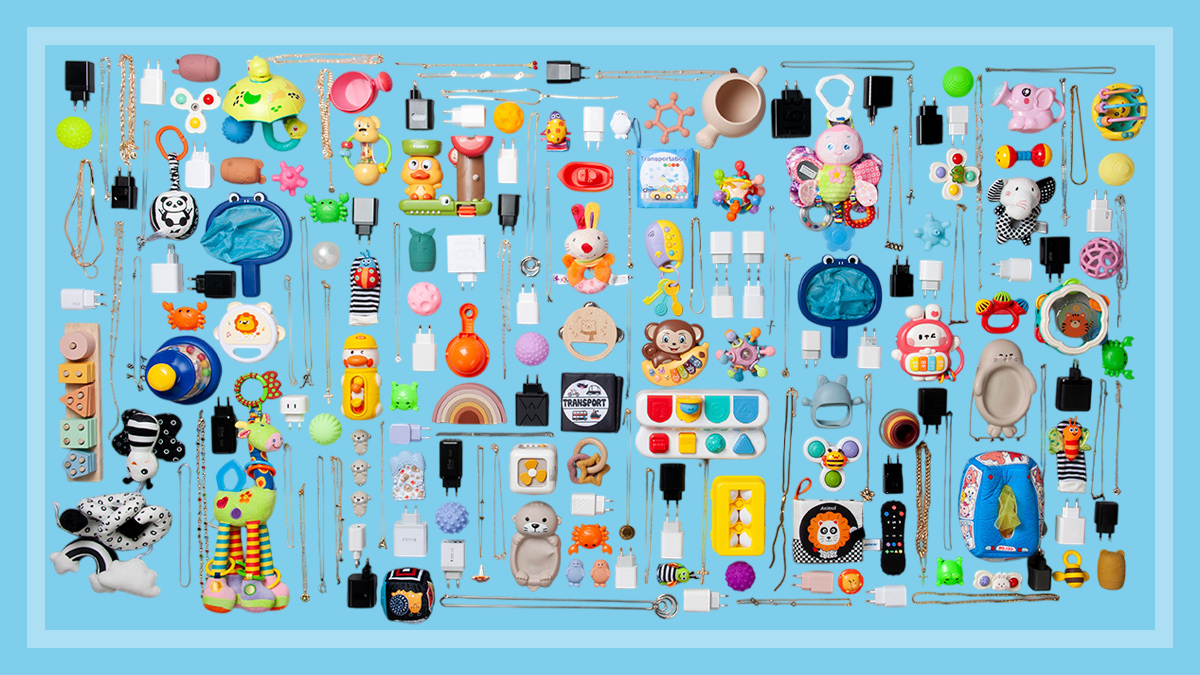
Consumer organisations in Germany, France, Denmark and Belgium tested 162 products purchased on Shein and Temu across three categories
65% percent of the products bought on Temu failed to comply with EU safety standards, while the failure rate for Shein was 73%
The worst safety failures were in the children’s toys category, where all 27 products purchased on Shein and 26 out of 27 bought on Temu failed
Nobody knows how many unsafe products are for sale on the world’s most popular online marketplaces, but it’s safe to say the numbers are staggering. These borderless operators have become a conduit for super cheap goods of dubious quality.
In recent years CHOICE has called out several shopping platforms for making unsafe products available to Australians, but it’s clearly an international issue.
In a recent mystery shopping exercise, International Consumer Research and Testing (ICRT), a London-based global consortium of consumer organisations (including CHOICE), provided fresh evidence.
What they tested
Researchers from consumer organisations in Germany, France, Denmark and Belgium found that a high percentage of products purchased on two of the world’s biggest marketplaces, Temu and Shein, both based in China, failed EU safety standards and posed a safety risk to children as well as adults.
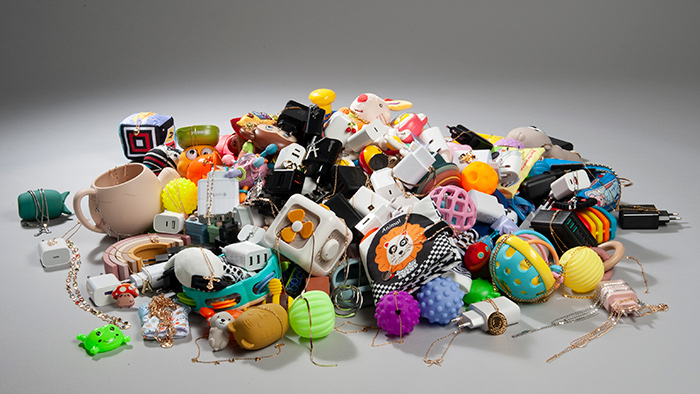
In the ICRT project, the researchers tested 162 products across three categories: toys and products for children under three, USB chargers, and necklaces.
The forensic detail of the reporting reveals the multitude of health risks that can lay hidden in items purchased on these platforms.
Children’s toys and products were tested for physical hazards such as sharp edges, long cords, or poor construction; and for chemical hazards including phosphorus flame retardants, formaldehyde, phthalates, cadmium, PAH (polycyclic aromatic hydrocarbon) and pentachlorophenol.
The forensic detail of the reporting reveals the multitude of health risks that can lay hidden in items purchased on these platforms
Children’s products were also tested for the risk of electrical shock, overheating and burns, and access to batteries. And they were checked to see whether safety labelling was compliant with EU standards.
Necklaces were tested to see if they contained potentially dangerous substances that are regulated in the EU, including cadmium, lead, nickel, PAHs and phthalates.
USB chargers were tested to see if they complied with safety requirements to prevent shock, fire and overheating and were durable enough to withstand impacts and repeated use.
In all cases, the results were enough to recommend a rethink on buying certain goods from these sites. Sixty-five percent of the products bought on Temu failed to comply with EU safety standards, while the failure rate for Shein was an even less impressive 73%.
Most of the safety risks that the ICRT team discovered were of medium to high severity. Overall, about one quarter of the products tested posed a serious safety risk, while in other cases products lacked required safety warnings, had misleading warnings or had other comparatively minor safety risks.
The worst safety failures were in the children’s toys category, where all 27 products purchased on Shein contravened EU standards, and 26 out of 27 bought on Temu failed.
The worst safety failures were in the children’s toys category.
Several teething rings, rattles and bath toys contained small parts, stickers, or suction cups that could easily detach and be swallowed, posing a choking hazard.
A toy tissue box shaped like a bus sold on Temu had excessive amounts of formaldehyde in the cloth tissues, a substance that’s commonly used in clothing to reduce wrinkles. The EU limit for children under 36 months is 30mg of formaldehyde per kilogram of material. In two of seven cloth tissues the testers found 164mg and 143mg respectively.
A silicone teething glove sold on Temu had around four times the permitted levels of nonylphenol ethoxylates (NPEs), which can adversely affect human hormones.
A toy tissue box shaped like a bus sold on Temu had excessive amounts of formaldehyde in the cloth tissues
Of the 52 USB chargers tested, only one from each marketplace was fully compliant. The rest had a high or medium level of non-compliance. Seventeen of the chargers (12 from Shein and five from Temu) posed a serious fire risk.
A Temu spokesperson tells CHOICE that the success of its platform “depends on keeping out bad actors so that responsible merchants can operate and customers are protected. Our approach aligns with the public interest in preventing unsafe or illegal goods from reaching consumers”.
“Most sellers on Temu operate lawfully and responsibly,” the spokesperson says. “When violations occur, they differ in severity, and we investigate each case thoroughly. Every incident we identify strengthens our system and helps us stay ahead of emerging risks.”
A Shein spokesperson says the company “takes product safety very seriously and is committed to offering safe and reliable products to customers. All products in question were offered for sale on the Shein marketplace by independent third-party vendors”.
“As soon as we were informed of these findings, out of an abundance of caution, we immediately initiated our standard protocol to ensure that these items were removed from sale globally.”
The ICRT project manager who oversaw the coordinated mystery shop, Berlin-based Sílvia Gomes da Silva, tells CHOICE that the sample size was relatively small given the volume of products sold into the EU via Temu and Shein, but the findings nevertheless deliver a “strong warning signal”.
The failure of two-thirds of the products to meet EU safety standards shows that “the current system struggles to cope with the realities of cross-border e-commerce,” Gomes da Silva says.
Rather than revealing a failure of regulation, however, the results highlight “a structural mismatch between traditional market surveillance tools and a business model based on millions of low-value parcels shipped directly from outside the EU to consumers”.
“Authorities were set up to inspect warehouses and physical shops, not to control billions of individual parcels from thousands of third-party sellers,” says Gomes da Silva.
The legal and enforcement framework has not yet fully caught up with the scale, speed, and opacity of these China-based online marketplaces
ICRT project manager Sílvia Gomes da Silva
Any workable way forward must include online marketplaces such as Temu and Shein doing their own proactive surveillance to prevent unsafe goods from being offered on their platforms in the first place, Gomes da Silva says. But at the moment the opportunity for profit far outweighs any risk of consequences for non-compliance.
“The legal and enforcement framework has not yet fully caught up with the scale, speed, and opacity of these China-based online marketplaces, and the platforms have not used their considerable technical and financial resources to close those gaps proactively. They’re taking advantage of the profit gains while they can,” Gomes da Silva says.
While it’s nearly impossible to measure the impact the mass importation of unsafe products is having on people who live in the EU, there are indicators.
At the moment the opportunity for profit far outweighs any risk of consequences for non-compliance
The EU’s Safety Gate system collects notifications of dangerous non-food products found in the EU and their associated risks, such as chemical exposure, electric shock, burns, and choking. Recent Safety Gate annual reports show that alerts have reached record highs, with toys, electrical products and items containing hazardous chemicals among the top categories. A disproportionate share of the alerts are linked to products originating outside the EU.
“We have strong evidence that unsafe goods including those sold online can and do cause real injuries and health risks, and that alerts are rising,” Gomes da Silva says.
Stine Müller of the Danish Consumer Council was involved in the ICRT testing of children’s products purchased on Shein. He points to a critical regulatory loophole, one that also exists in Australia.
The EU’s Digital Services Act (DSA) requires online marketplaces to remove goods from their platforms that don’t comply with EU standards, including goods from third-party suppliers. But there’s no law that says they have to prevent these products from being put up for sale in the first place.
“From our perspective, this is the key problem [that] needs to be addressed as it poses an unacceptable risk to European consumers,” Müller says.
Requiring marketplaces such as Temu and Shein to ensure that products are safe before they go on sale is the key because no regulator has the resources to hold thousands of sellers around the globe accountable.
Preemptive measures by these marketplaces would make it at least possible for the authorities to enforce regulations
Stine Müller, Danish Consumer Council
“The rules and requirements are there for a reason, to decrease the risk of accidents to children and to consumers in general. Preemptive measures by these marketplaces would make it at least possible for the authorities to enforce regulations. This is now all but impossible, since they often can’t even reach the seller from the country in question, in this case China,” Müller says.
The Danish Consumer Council believes that global online marketplaces should be held to the same standards as any other business importing goods into the European market. But the relentless onslaught of super cheap goods bought online is a different challenge for regulators than automobiles or beef or computers or other goods coming in by sea or air.
When informed by the consumer organisations about products with serious safety defects, both Temu and Shein removed them. But it was an infinitesimally small step toward protecting consumers.
The scale of goods flooding into the continent makes an effective solution look like building the pyramids. In 2024, about 12 million low-cost parcels per day were imported to Europe from China according to the European Commission, many of them via Temu and Shein. That equals about 4.6 billion parcels for the year. It was twice as many as in 2023 and three times as many as in 2022.
Andy Kollmorgen is the Investigations Editor at CHOICE. He reports on a wide range of issues in the consumer marketplace, with a focus on financial harm to vulnerable people at the hands of corporations and businesses. Prior to CHOICE, Andy worked at the Australian Securities and Investments Commission (ASIC) and at the Australian Financial Review along with a number of other news organisations. Andy is a former member of the NSW Fair Trading Advisory Council. He has a Bachelor of Arts in English from New York University. LinkedIn
Andy Kollmorgen is the Investigations Editor at CHOICE. He reports on a wide range of issues in the consumer marketplace, with a focus on financial harm to vulnerable people at the hands of corporations and businesses. Prior to CHOICE, Andy worked at the Australian Securities and Investments Commission (ASIC) and at the Australian Financial Review along with a number of other news organisations. Andy is a former member of the NSW Fair Trading Advisory Council. He has a Bachelor of Arts in English from New York University. LinkedIn
For more than 60 years, CHOICE has been fighting the good fight for Australian consumers.
In the past year alone we've uncovered systemic issues with sunscreens, investigated shonky supermarket pricing, fought for stronger scam protections and helped make complex energy pricing fairer and clearer.
CHOICE is here to provide unbiased advice and independent testing in our world-class labs. We buy the products we test, just like you do, and our expert reviews are influence free. We’re here to help you choose smarter. Hopefully you’ll also save some money along the way.
Thanks to CHOICE, you’ll never be alone when a business treats you unfairly. You can support our work by joining or donating to our cause.