Buying solar can be a stressful decision. It’s expensive, plugged into your biggest asset (usually) and will impact your power bills for the next ten to twenty years.
It can also be confusing with its head-spinning combo of prices, solar components, configurations, rebates, complex maths and tech jargon.
Hiring a good installer will definitely help but there’s still plenty of missteps you can make on your way to energy independence. To give you a head start, our CHOICE solar expert Chris Barnes reveals the common blunders people make so you don’t.
Let’s face it: reading power bills the first time can be confusing enough, let alone going back to study them and ascertain your annual power needs and patterns.
On average, a typical Australian home uses 16–20 kilowatt-hours (kWh) per day but it depends greatly on the number of occupants, location and climate (e.g. how much sun do you get? Are you using heaters/air cons?), and what else you’re running (i.e. EVs, hot water systems, a pool).
By analysing your power bills, you can determine your average daily usage, and when you use it most (peak or off peak? summer or winter?).
You should also factor in your future needs (are you starting a family, getting an EV?) and your overall solar goals, i.e. do you want solar to minimise your bills or cut them completely?
“By looking at your bills, you’ll get a good idea of the size of the solar system you’ll need to meet your requirements,” says CHOICE expert Chris Barnes.
“A good installer should help you with this before they quote, but understanding your own usage always gives you a great head start.”
It’s also vital to understand the solar panel rebate and battery rebate, their eligibility criteria and if there are any additional state or territory rebates available to you.
.
Why we've partnered with SolarQuotes

We've partnered with SolarQuotes to help you find and buy the right solar, battery, heat pump and EV charger. While we make money if you use SolarQuotes to find an installer, this doesn't influence our ratings. 100% of the money we make goes directly back into our nonprofit mission.
2. Only getting a quote from one installer
We get it, chasing quotes is time-consuming so it’s tempting to just get one from the company your mate used or to go for that “great deal” on social media (see point four). Plus, organising numerous home inspections for quotes is a chore and turning down unsuccessful installers can be awkward.
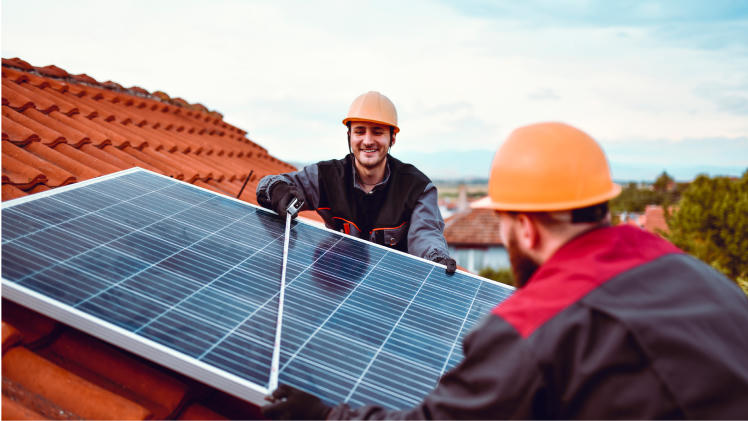
The best installers will visit your home to tailor a system specifically for your needs.
But despite all that, it’s still essential to collect multiple quotes for many reasons.
“We recommend always shopping around and getting at least three solid quotes,” says CHOICE solar expert Chris Barnes.
“Not only can prices vary dramatically, but installers can offer very different system configurations, brands and levels of service so it’s good to assess your options. The best ones will take time to tailor a system specifically to your home and budget.”
We recommend always shopping around and getting at least three solid quotes
CHOICE solar expert Chris Barnes
To share my own story, a few years back I got quotes for solar panels. One company just emailed me back a photo of my house’s roof taken from Google Earth with little “solar panel” boxes drawn on to estimate the amount needed.
The second installer visited my home, got up on the roof to inspect it, brought a drone to do a flyover and sat down with me to talk through the proposed system and answer all my novice questions.
The quoted prices were similar, but the service and attention to detail were miles apart. Needless to say, we went with the second company.
It’s boom time now for installers, so inevitably some will say that they’re too busy to visit you for an on-ground quote. Instead, they will ask questions and get you to supply photos of your home to base a quote on.
But for a better installation and greater peace of mind, it’s important to insist they make time to visit. Not only does it give you a chance to suss them out, they can also fully inspect the premises to:
decide the best position for the battery (i.e. away from full sun, doorways, windows or other appliances like air conditioners)
preempt any required safety measures (i.e. is a fire-retardant barrier needed, or protective bollards if installed in a garage?)
consult on more cosmetic decisions like where the cable conduits will run (they can get pretty ugly pretty quickly if left unchecked).
It’s a lesson I learnt earlier this year myself when sourcing battery quotes. The first installer said they didn’t need to visit and just quoted a certain price solely based on photos I’d sent.
The second company came out and instantly spotted that my old switchboard would need to be upgraded to comply with new regulations – a task that would add thousands of dollars to the job.
It was a key issue totally missed by the first installer and would have made for a chaotic installation day of delays and extra costs if I’d chosen them.
Start shopping for solar panels or batteries online and you’ll soon be bombarded with targeted ads promising you everything under the sun. These tempting deals take many forms, including:
Offering “free solar” or “$0 upfront cost”, which usually means agreeing to give away your generated electricity to someone else and buying it back from them
Claiming your suburb is now eligible for huge savings (not really, panel and battery rebates are available to everyone Australia-wide)
Claiming rebates are ending soon (they’re not, although they do decrease incrementally and some state rebates will eventually disappear)
Referencing official-sounding rebates or schemes that don’t actually exist (do your research)
Offering a free eligibility check which is just a lead generator for them
Social media is saturated with solar ads, including this obvious AI-generated one. Credit: NSW Solar Program Facebook.
Also, be very wary if you’re approached by door-to-door salespeople and telemarketers using pushy sales tactics to make quick commissions.
Not only are these deals often not competitive or specifically tailored to your home, being ambushed like this gives you little time to read over the deal’s often complicated terms and conditions. That’s something you can’t afford to skip.
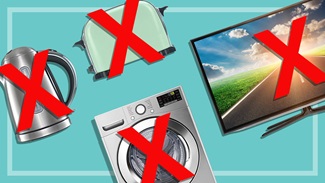
This is related to the previous tip but also different. Going cheap might work for a new kettle or toaster, but when you’re investing in something as costly, complex and long-term as solar, it’s important to choose quality over price.
“Solar is expensive but the cost pales in comparison to the value of your home, so it pays to find a good installer who will look after both,” says Chris.
“The margins on solar aren’t big, so if a company is offering you an outrageously cheap deal, they’re likely cutting corners elsewhere. This could include inferior components, shoddy or unsafe installation, or poor warranty support later.”
If a company is offering you an outrageously cheap deal, they’re likely cutting corners elsewhere
CHOICE expert Chris Barnes
If you are tempted by a cheap offer, at least safeguard yourself by getting two more quotes to compare the different packages (as suggested in point two).
Also remember you can only get the solar panel and battery rebates once per premises, so you really need to get it right the first time because the second time is going to cost a lot more.
If you’re investing in solar, you want a solution that’s optimised for your specific power needs.
A sloppy installer or a generic ‘one size fits all’ type package is unlikely to deliver that. If your battery system set-up is undersized, the solar panels will struggle to charge your battery through the day so you’ll still need to draw peak-priced power from the grid at night.
If your set-up is undersized, the solar panels will struggle to charge your battery
The size of the inverter can also be a bit of a trap. Many online deals currently spruik huge batteries with 40–50kWh capacity but only include a 5kW inverter, which will struggle to charge and discharge such a big battery.
“A good installer will look at your usage patterns and design a system that meets your energy expectations all year round and anticipates your future usage too,” says Chris.
The good news is that the solar industry has more accreditation than ever to protect consumers. But that won’t help if you don’t do the necessary checks before engaging an installer.
Companies must be accredited by Solar Accreditation Australia (SAA) and you can verify them by searching the SAA website.
Reputable companies may also be “approved sellers” under the New Energy Tech Consumer Code (NETCC). Unlike accreditation, this is not compulsory but is a good indicator of service.
Always check installers’ accreditation before signing on.
The risks of using an unaccredited or subcontracted installer include:
Voiding solar component warranties
Voiding eligibility for government rebates for solar panels or a home battery
Voiding any home insurance claims
Dangerous safety issues including shoddy installation and risk of electrical fires
If the installer seems new, you should also check their ABN online. If they’ve only been registered since April 2025, when the government battery rebate was first announced, then that’s a red flag and you should tread carefully.
It’s highly unlikely that a good installer would be using unapproved components, but if in doubt, you should check that the components for the system quoted are clearly specified by make, size and model, and include a CEC-approved battery.
Know the products to avoid before you shop. Get our free guide and buy smarter.
Jason is a Content Editor and journalist at CHOICE. He writes about a diverse range of subjects, from solar to robot vacuums to why Easter eggs are a rip-off. He's previously written for Sydney Morning Herald, Rolling Stone and many other publications.
Jason is a Content Editor and journalist at CHOICE. He writes about a diverse range of subjects, from solar to robot vacuums to why Easter eggs are a rip-off. He's previously written for Sydney Morning Herald, Rolling Stone and many other publications.
For more than 60 years, CHOICE has been fighting the good fight for Australian consumers.
In the past year alone we've uncovered systemic issues with sunscreens, investigated shonky supermarket pricing, fought for stronger scam protections and helped make complex energy pricing fairer and clearer.
CHOICE is here to provide unbiased advice and independent testing in our world-class labs. We buy the products we test, just like you do, and our expert reviews are influence free. We’re here to help you choose smarter. Hopefully you’ll also save some money along the way.
Thanks to CHOICE, you’ll never be alone when a business treats you unfairly. You can support our work by joining or donating to our cause.