Rice cookers are a popular kitchen addition – they free up hob space and help you turn out perfect rice for all your mealtime and meal prep needs
They range from basic models that just cook rice to fancy multi-program machines that make everything from porridge to congee
Our current review includes 19 models we’ve independently tested in our kitchen labs, from brands including Sunbeam, Breville, Kambrook, Anko, Big W and more
How many of you find the absorption method of cooking rice elusive and utterly confounding? If you can’t seem to find the sweet spot between soggy grains and a burnt saucepan, you may be a prime candidate for a rice cooker.
Or perhaps you just like to eat a lot of rice and you’re looking for a convenient way to prepare it. After all, it’s a cheap, nutritious and crowd-pleasing way to bulk out a number of family-favourite dishes, from stir-fries to chilli con carne, salads and more.
A rice cooker can make it easy to get fluffy, perfectly-tender grains, every time.
Prices range from just $20 or less for a budget option, all the way up to about $350 for a premium model.
So why the huge price differences? What can expensive rice cookers do that the cheaper ones can’t? And is it worth spending the extra money in pursuit of first-rate rice?
You don’t need to spend big for decent performance
CHOICE experts have tested dozens of rice cookers in our kitchen labs over the years, and their results reveal some well-performing models at both ends of the price scale.
When it comes to more frugal options, our experts found three examples – from Big W and the Anko brand available from Kmart and Target – that scored relatively well in our performance tests.
Two of them will leave you with change from a $50 note, while the other which comes with more features costs less than $70.
One model even scores high enough to be recommended by our experts, outperforming some more expensive products while representing great value for money. (CHOICE members can view recommended rice cookers.)
The budget models aren’t perfect, but CHOICE kitchen expert Fiona Mair says: “If you’re aware of the issues and don’t feel they’re a problem for you, then these models are worth considering if you’re on a tight budget.”
Note: These budget retailers frequently release new models and discontinue others, so there are other rice cookers on their websites that we haven’t yet tested. These are the three models that we’ve reviewed that are currently available.
We’ve tested two Anko rice cookers (available now in Kmart and Target stores) that cost $69 or less.
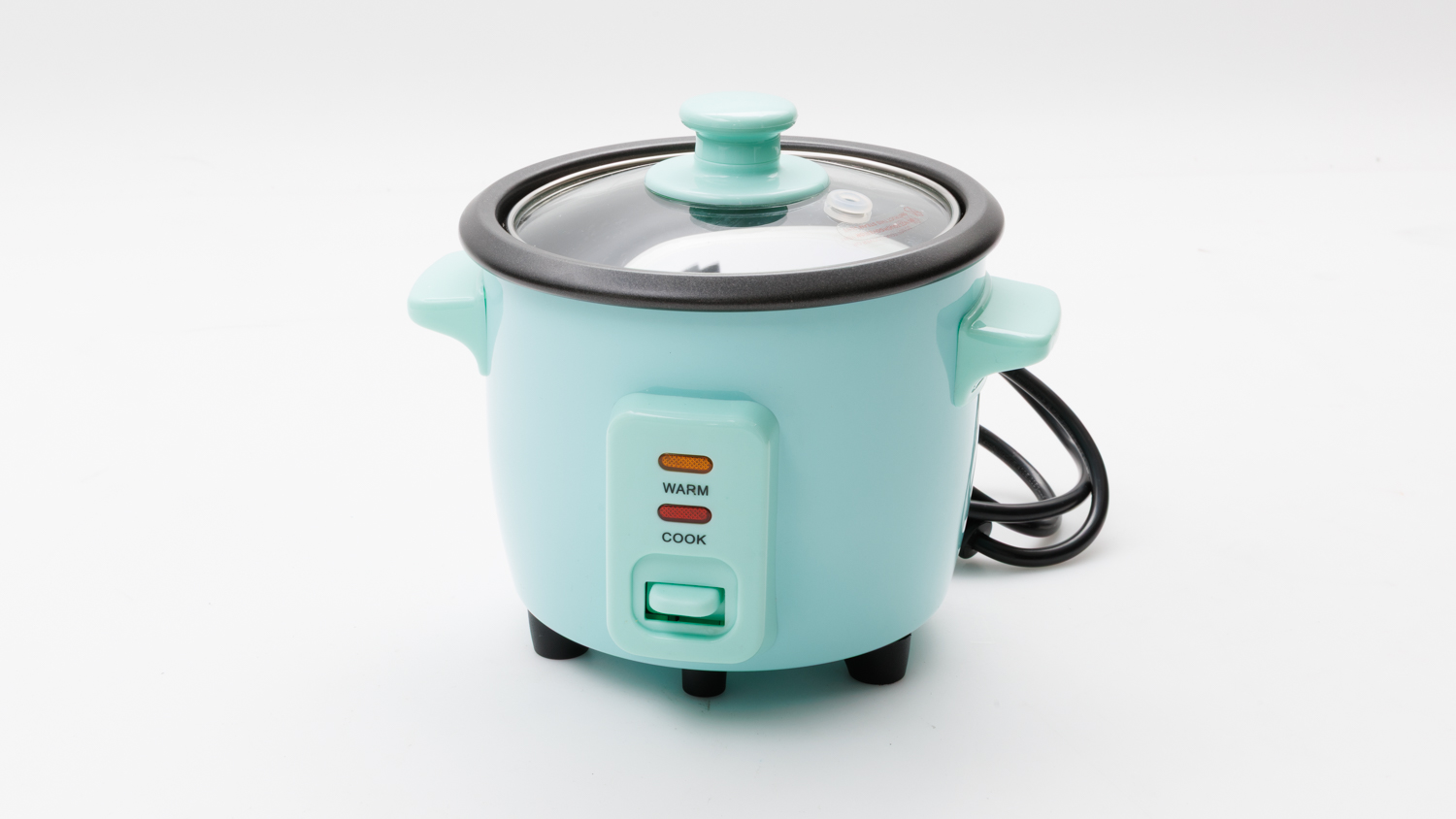
Anko Mini Rice Cooker
It cooks just 1.5 cups of uncooked rice, which results in about 4–4.5 cups of cooked rice. Depending on your portion sizes and the dish you’re serving, this could be enough for two to three people.
This mini Anko rice cooker is one of the cheapest models we tested, although it has some drawbacks.
If it suits your needs, our experts say this tiny appliance will give you mighty performance for a mini price tag.
“This basic rice cooker from Kmart is well-suited for a small family or small kitchen due to its size – it scores a very good 83% on cooking rice, and achieved better results cooking brown rice than jasmine rice,” says Fiona.
“The positives are that it’s a very simple appliance that’s easy to assemble and easy to store, with clear indicator lights that switch to ‘warm’ function once your rice is finished cooking.”
If it suits your needs, our experts say this tiny appliance will give you mighty performance for a mini price tag
But, as Fiona warns, the mini cooker does come with some down sides too.
“It falls down slightly in its ease of use score, which is 76%. It comes with only very basic instructions and the lid needs a lot of scrubbing to deal with the starch that accumulates around the metal edge,” she says.
“We found that the lid handle can become loose over time and the lid can rattle during cooking when the cooker is filled to its maximum capacity.”
Most rice cookers make an audible beeping sound when your rice is finished – but this one doesn’t.
“The cord is not removable, and you should take care when using this model as the surfaces can become very hot. Also, as the appliance is so small that it can be tricky removing the inset bowl.”
Still, for such a small price tag, you may be willing to forgive these issues for rice at the touch of a button.
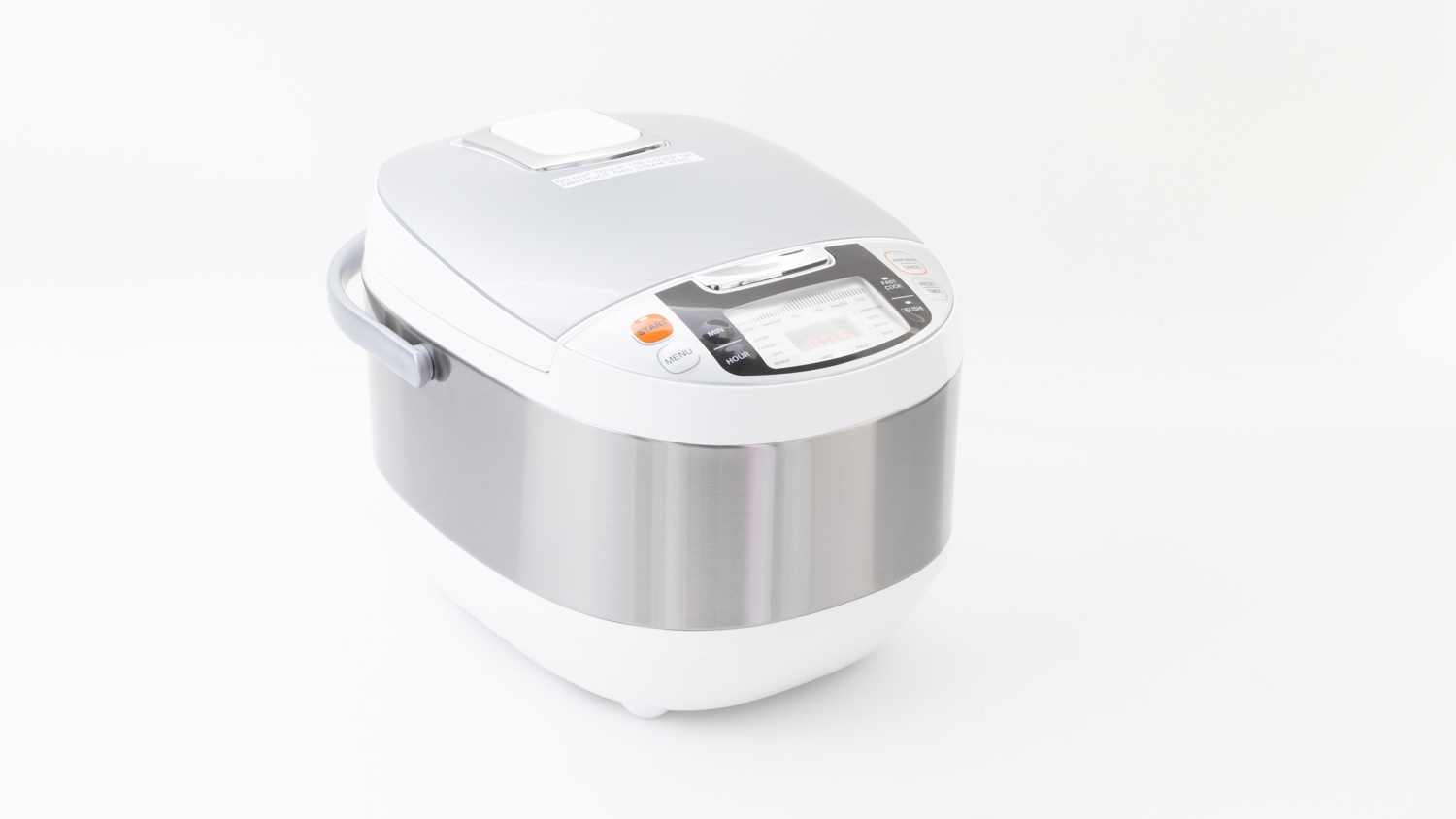
Anko Rice Multi Cooker
Then there’s the Anko 10-cup rice multi cooker that costs $69.
For an extra $54 you’ll get more functionality and a larger capacity rice cooker.
This 10-cup rice cooker has a larger capacity and is an impressive performer at $69.
The controls have written labelling with bright indicator lights as well as eight settings: white rice, brown rice, crispy rice, congee, cake, reheat, steam and soup.
It’ll also alert you when cooking is completed.
However, this model also doesn’t suction to the bench and can slide easily, and it also only comes with basic instructions.
How does it perform? Better than its mini counterpart across all our tests.
If you’re looking for a larger-capacity rice cooker and you’d like some extra features, then this is worth a look.
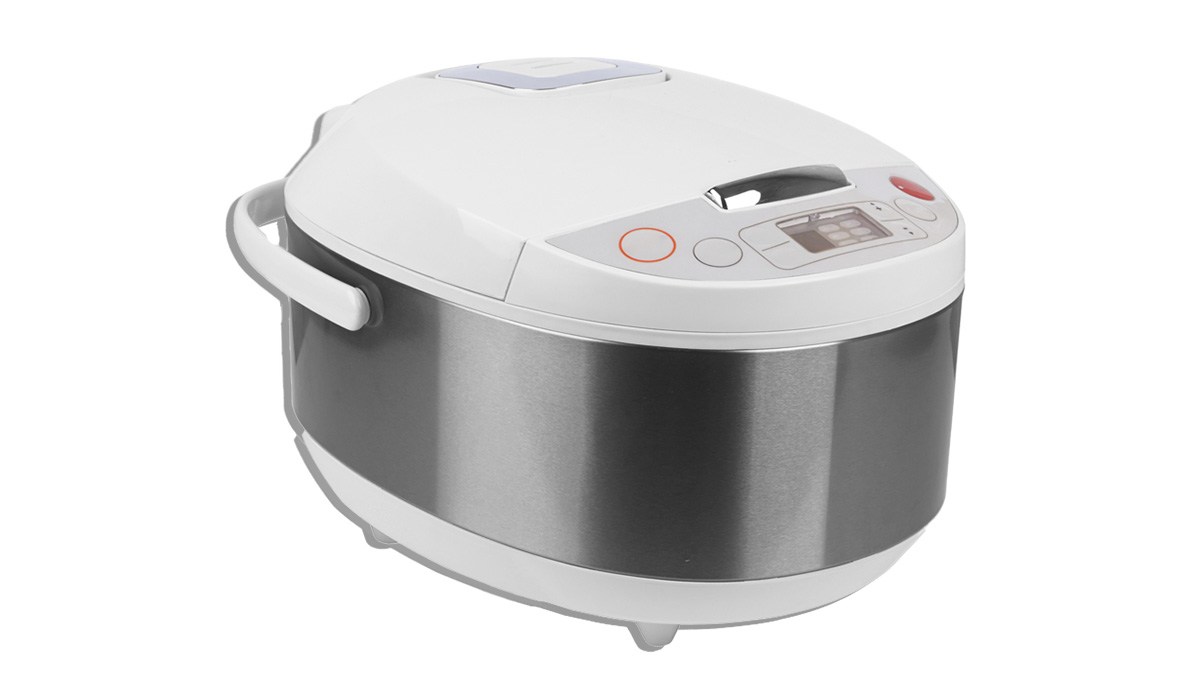
Next up is Big W. We’ve tested the 10-cup model that’s priced at $39, plus other models that have since been discontinued.
Big W’s large multi cooker performs well, but not as good as other budget options. Image credit: Big W.
If you’re after a rice cooker for a larger family, our testers say that the Kmart multi cooker is the better overall performer and is well worth the extra $20.
“We found that the Big W model wasn’t as good at cooking brown and jasmine rice,” says Fiona.
“The brown rice ended up with dark browning on the base – though depending on your tastes, that could be a good or bad thing.”
“It doesn’t beep when it’s finished cooking, and the water level inside the bowl can be hard to view.”
Our testers warn users to be prepared for a bit of spillover with the Anko and Big W rice cookers.
“With all three models, we found that they can bubble up over the glass lid and starchy water can splatter onto the bench,” says Fiona.
Aside from being irritating, this also makes the glass lid difficult to clean. And although each of these models automatically sets to warm once the rice has finished cooking, that’s not always a good thing, as Fiona says this can overcook the rice.
You can expect some budget rice cookers to cook near (but not quite) perfect rice. Some more expensive models in our tests received a 100% success rate in this singular function, while others don’t stack up as well for the price you pay.
The two Kmart models get relatively close, proving that some budget cookers can give great results, and in some cases, perform better than their more expensive counterparts.
But spending less also means you’re likely to be sacrificing multi-functionality and detailed electronic displays.
Cheaper appliances may also use cheaper parts and have shorter warranties than more expensive products. Replacement parts may also be hard to come by and you may receive better customer service from an established brand rather than a discount retailer.
Things to consider before buying a cheaper rice cooker
The temptation to serve up delightfully fluffy rice each time may be enough to send you running to the checkout with your low-cost rice cooker, but before you scan, you might want to consider the following points.
After all, it’s just another appliance on your benchtop, and if you’re not an avid rice eater or you have a large family, smaller machines don’t necessarily provide bang for your buck.
Do you really need it?
These simple models cook rice, that’s it. If you’re looking for something to assist in making risotto, porridge or congee, you’d be better off spending more and choosing a model with pre-programmed settings.
You could also consider a multi-cooker kitchen appliance if you don’t already have one. These workhorses can carry out functions like slow and pressure cooking as well as many others depending on the model.
A multi-cooker could be a better investment if you think you’ll make use of its many functions. Models we’ve tested do a good job of steaming or pressure cooking rice too.
And if you want to get away without buying yet another appliance, you can always have a go at cooking rice using your cooktop – using our kitchen expert’s method.
Cooking rice on a stovetop using the absorption method
Ingredients
1 cup or 200g white long grain rice
10g butter
1½ cups or 400ml hot water
½ teaspoon salt
Method
Place rice in a mesh strainer and rinse well under cool running water until water runs clear. Allow to drain in the strainer and set aside.
On medium heat, melt butter in a medium saucepan, add rice and fry, stirring until all the rice is coated in butter, approximately 1 minute.
Increase heat to the highest setting, add hot water and salt, stir and bring to the boil.
Turn heat to low setting, cover saucepan tightly with foil and lid. Cook without lifting the lid for 16–18 minutes (depending on your cooktop).
Remove from the cooktop, and remove the lid and foil to allow steam to escape, then fluff rice with a fork.
Note: Rice ratio is 1 cup uncooked rice to 1.5 cups water.
Are cheap appliances realistically repairable?
Cheaper appliances often cost less because they may be made with lower quality components that may not last as long or are unable to be repaired.
This means that cheaper models may be destined for landfill much sooner, rather than lasting for decades as better quality appliances can. It’s likely that any cost to repair or replace parts of a cheap, broken cooker would be more expensive than the initial purchase.
CHOICE experts don’t test rice cookers for longevity, but it’s likely that cheaply made appliances will reach the end of their lifespan quicker.
Looking after your rice cooker
“If you’re overloading the bowl and don’t maintain your rice cooker – for example, if it boils over inside the unit – and you don’t clean it after each use, it’s possible it won’t last the year,” warns Fiona.
Still, for avid rice eaters, these little units can be a real time saver.
“For families who cook rice regularly, a rice cooker can be extremely handy,” says Fiona.
“But if you only occasionally cook rice, try the absorption method on your stove, or if your microwave has a sensor rice function, use it – the results are often perfect.”
We choose popular rice cookers from a variety of brands and put them through their paces in our test kitchen. As rice cookers all share the prime function of cooking rice well, that’s exactly what we look for, using both brown and white rice.
The grains should be firm (with brown rice having a slightly chewier texture), not mushy, and remain separate.
We also look at how easy the appliance is to use, store, clean and disassemble. If a rice cooker comes with specific settings for functions such as risotto or congee, we’ll take those into account, too.
Know the products to avoid before you shop. Get our free guide and buy smarter.
Pru Engel is the Audience and Engagement editor at CHOICE. Her job is to ensure as many Australians as possible know about the great work we do at CHOICE.
She works closely with our testers and experts to find the gems of information in our data and research that will resonate with Australian consumers and help them make the best decisions, whether they're purchasing an air fryer, looking for a new mattress or trying to find the cheapest car insurance. She also helps to drive meaningful change for consumers by collaborating with our Campaigns team on content covering issues such as grocery pricing, product safety and scams.
Prior to CHOICE, Pru worked as an editor at many of Australia's leading food and lifestyle titles.
Pru has a Bachelor of Arts in Communication (Journalism) from the University of Technology, Sydney.
LinkedIn
Pru Engel is the Audience and Engagement editor at CHOICE. Her job is to ensure as many Australians as possible know about the great work we do at CHOICE.
She works closely with our testers and experts to find the gems of information in our data and research that will resonate with Australian consumers and help them make the best decisions, whether they're purchasing an air fryer, looking for a new mattress or trying to find the cheapest car insurance. She also helps to drive meaningful change for consumers by collaborating with our Campaigns team on content covering issues such as grocery pricing, product safety and scams.
Prior to CHOICE, Pru worked as an editor at many of Australia's leading food and lifestyle titles.
Pru has a Bachelor of Arts in Communication (Journalism) from the University of Technology, Sydney.
LinkedIn
Drawing on more than 15 years' experience writing and editing for some of Australia's best-loved brands, my background in food, travel and lifestyle publishing has given me a thorough understanding of a wide range of subjects and their relevant demographics, enabling me to connect with the interests of CHOICE readers.
Beginning my career at Qantas magazine, I've lent my creativity and attention-to-detail to publications such as donna hay magazine, Feast magazine, delicious., escape, and SBS Food.
As the former editor of Australian Traveller magazine and digital editor-in-chief of both Australian Traveller and International Traveller, I curated fascinating and engaging content and also worked closely with commercial partners to deliver their messages to new audiences. I now freelance for a range of lifestyle publications, businesses and not-for-profits.
As a CHOICE author, I enjoys researching products and services to share this knowledge with consumers, helping them to make well-informed choices.
Find me on LinkedIn.
Drawing on more than 15 years' experience writing and editing for some of Australia's best-loved brands, my background in food, travel and lifestyle publishing has given me a thorough understanding of a wide range of subjects and their relevant demographics, enabling me to connect with the interests of CHOICE readers.
Beginning my career at Qantas magazine, I've lent my creativity and attention-to-detail to publications such as donna hay magazine, Feast magazine, delicious., escape, and SBS Food.
As the former editor of Australian Traveller magazine and digital editor-in-chief of both Australian Traveller and International Traveller, I curated fascinating and engaging content and also worked closely with commercial partners to deliver their messages to new audiences. I now freelance for a range of lifestyle publications, businesses and not-for-profits.
As a CHOICE author, I enjoys researching products and services to share this knowledge with consumers, helping them to make well-informed choices.
Find me on LinkedIn.
For more than 60 years, CHOICE has been fighting the good fight for Australian consumers.
In the past year alone we've uncovered systemic issues with sunscreens, investigated shonky supermarket pricing, fought for stronger scam protections and helped make complex energy pricing fairer and clearer.
CHOICE is here to provide unbiased advice and independent testing in our world-class labs. We buy the products we test, just like you do, and our expert reviews are influence free. We’re here to help you choose smarter. Hopefully you’ll also save some money along the way.
Thanks to CHOICE, you’ll never be alone when a business treats you unfairly. You can support our work by joining or donating to our cause.