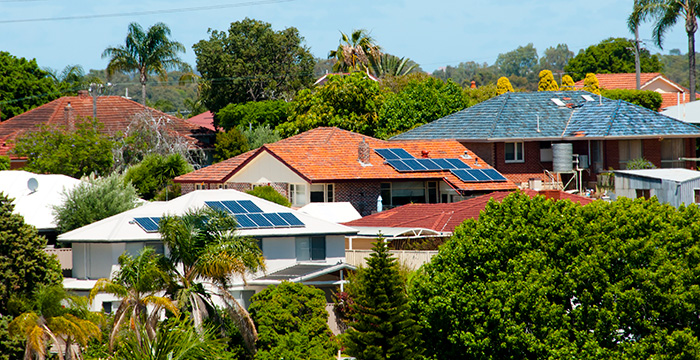
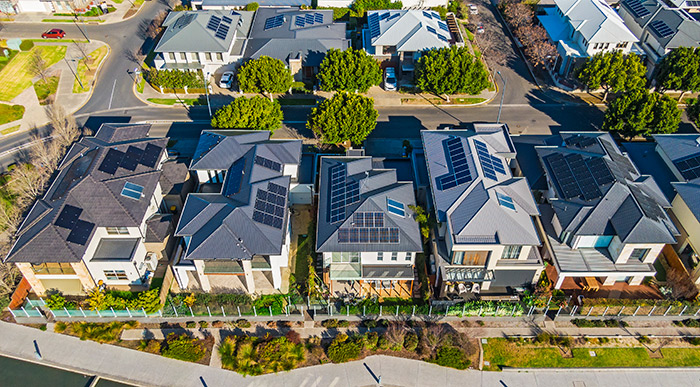
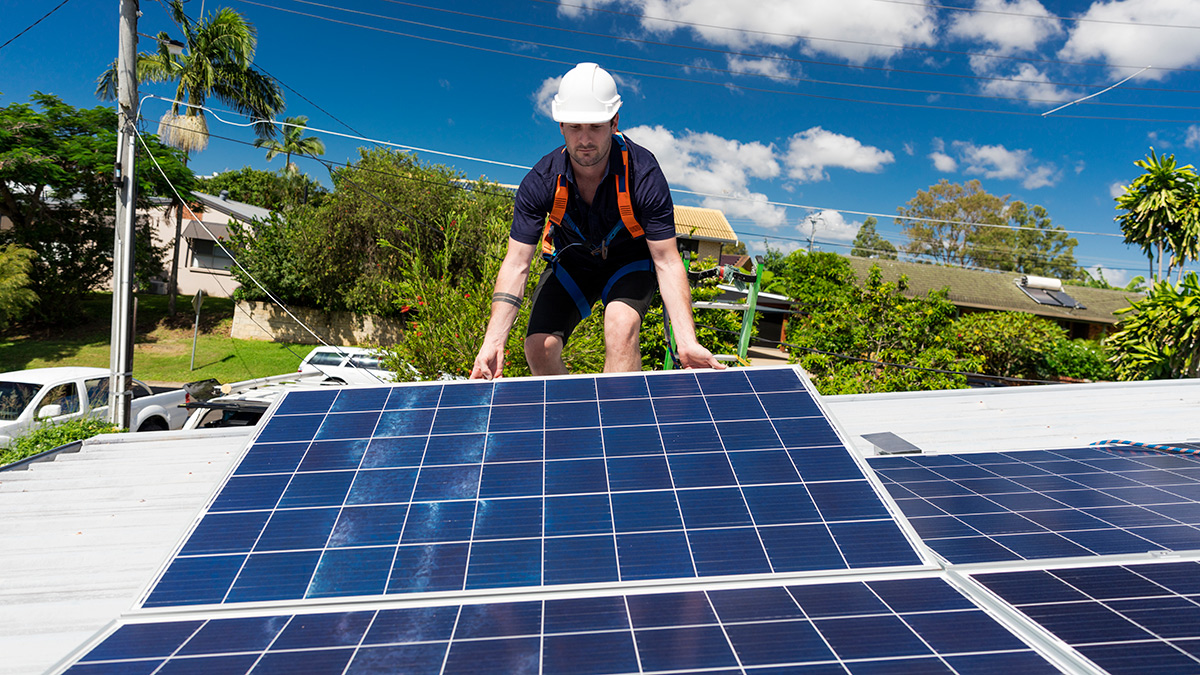
Australia is the world leader in rooftop solar generation, with over four million photovoltaic (PV) systems now installed across the country – that’s approximately one in every three households.
With peak-time power costs on the rise and generous government rebates still available, more and more homeowners are choosing solar to cut their power bills, reduce carbon emissions and, increasingly, store their surplus power in a home battery to use at night.
Solar has many benefits, but installation is expensive and can be complex to understand. Additionally, the electricity landscape has changed a lot over the years as retail plans, feed-in tariffs and new rebates continue to evolve and impact the market.
To help you make sense of it, here’s our easy guide to everything you need to know.
Materials such as silicon can be made to produce electricity when light falls on them. This is called the photovoltaic effect (PV). Solar panels use this to convert energy from sunlight into direct current (DC) electrical power.
An inverter unit then changes this into alternating current (AC) for your home’s electrical circuits so you can use it. Any excess energy can be fed back to the electricity grid or stored in your own battery storage system.
Electricity generation is measured in watts and kilowatts.
Watt (W) and kilowatt (kW): A unit used to quantify the rate of energy transfer. One kilowatt = 1000 watts. With solar panels, the rating in watts specifies the maximum power the panel can deliver at any point in time.
Watt-hours (Wh) and kilowatt-hours (kWh): A measure of energy production or consumption over time. The kilowatt-hour (kWh) is the unit you’ll see on your electricity bill, because you’re billed for your electricity usage over time. A solar panel producing 300W for one hour would deliver 300Wh (or 0.3kWh) of energy.
Solar panel prices
Solar panels have come down in price over the past decade thanks to economies of scale in manufacturing, a competitive market and improvements in panel technology.
According to our partners at SolarQuotes, these are the current price ranges for good quality solar panel systems:
5 kilowatt: $4500–$8000
6.6 kilowatt: $5500–$9000
10 kilowatt: $8000–$13,000
These prices include the federal government STC rebate and could be further reduced by any state or territory rebates currently available.
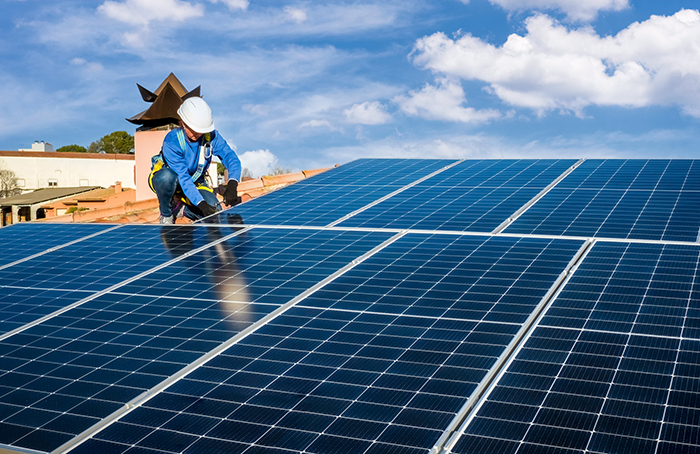
Do expect to pay at the higher end of the range if you’re going for top quality components or if your home requires a tricky installation (such as multiple levels, difficult access or requiring tree trimming).
.
Why we've partnered with SolarQuotes

We've partnered with SolarQuotes to help you find and buy the right solar, battery, heat pump and EV charger. While we make money if you use SolarQuotes to find an installer, this doesn't influence our ratings. 100% of the money we make goes directly back into our nonprofit mission.
Choosing the right size system
How many panels do you need?
People often think about their solar PV system in terms of how many panels it has, but far more important is the maximum electricity capacity the system can deliver.
For example, your set-up might use 15 x 440W panels, or 16 x 415W panels – either way, it adds up to about 6600W (6.6kW) and that’s the number that really matters.
Keep in mind that fewer panels can mean a quicker, cheaper installation, and it leaves room if you want to add additional panels later.
Determining your system size
This will be based on your power needs, so you’ll need to look at how much electricity you use at home and when you use it.
As a guide, a typical Australian home uses 15–20kWh per day, but consumption can vary depending on key factors like:
how many people live there
your location (are you running air con or heaters 24/7?)
whether you use gas instead of electricity for cooking or hot water
daytime routine (are you home or at work?)
additional power needs like EV-charging, a pool, or air conditioning.
For example, a single-person home will typically use about 8–12kWh per day, while a household of five people with a pool and multiple air conditioners could use 30–40kWh per day.
Solar panels are relatively cheap, so it makes sense to install the biggest system you can within your budget
These days solar panels are relatively cheap, so it makes sense to install the biggest system you can within your budget.
Excess electricity can go back into the grid for feed-in tariffs (see below), or charge a home storage battery so that you have cheap power after sunset. The most common size for new systems is 6.6kW, but bigger systems (9 to 10kW or more) are becoming more popular.
If you’re including a battery in your system, then you’ll want to go big with the solar panel capacity to make sure there’s enough daytime power to run your home while also charging the battery.
Talk to installers about the best panel configuration for your home.
Solar panel payback times
It can take anywhere from two to six years for a solar system to pay for itself – depending on what price you paid for it, your local electricity rates and what feed-in tariff (FiT) you can get for exporting excess power (learn more about FiTs below).
Thankfully Solar Quotes have crunched the numbers and calculated the average payback time for each capital city, as shown below.
Adelaide: 4 years, 1 month
Brisbane: 4 years, 3 months
Canberra: 3 years, 11 months
Darwin: 3 years, 9 months
Hobart: 4 years
Melbourne: 6 years, 5 months
Perth: 5 years, 3 months
Sydney: 4 years, 1 month
Prices are for a typical 6.6kW system (as of January 2026), based on the default settings for the SolarQuotes calculator. The payback times factor in typical power prices, feed-in tariffs, hours of sunlight and other factors relevant to each location.
Prices as of January 2026, based on default settings for the SolarQuotes calculator. The payback times factor in typical power prices, feed-in tariffs, hours of sunlight and other factors relevant to each location.
The solar ‘rebate’ and how to get it
Designed to incentivise solar panel uptake, the federal government’s Small-scale Renewable Energy Scheme (commonly called a rebate) gives eligible residents a considerable discount on installing a certified solar system.
It does this by issuing a form of currency called a Small-scale Technology Certificate (STC) for every megawatt hour of electricity generated by your new solar system. Generally, the bigger the system and the sunnier the region it’s in, the more STCs it will generate.
Most people assign their STCs to their chosen installer, who will sell them on your behalf and give you an upfront discount on the system price, minus a small admin fee.
Alternatively, you can sell the STCs yourself, which involves considerable paperwork, applications and time. You might get a better price this way, but it does take a lot more effort.
You may see scare campaigns from some solar installers urging you to “buy solar now before the rebate ends”. The government scheme isn’t about to end, but it does decrease each year and will eventually become zero in 2031.
Other rebates and loans
Some states and territories also offer their own incentives to install solar panels and batteries. These do change from time to time, so check the federal government energy website to see what’s available in your area and their criteria.
The federal rebate gives homeowners a sizeable upfront discount on installation.
Feed-in tariffs
A feed-in tariff (FiT) is a monetary credit your electricity retailer pays you for each kWh of excess power you export back to the grid.
Nowadays you don’t make much money from FiTs, so it’s best to maximise your own use of your solar PV and minimise your export to the grid.
How FiTs work
Almost all FiTs around Australia are now net FiTs. This means a household is only paid for surplus electricity fed into the grid after domestic use is subtracted.
Gross feed-in tariffs, where households are paid for all the electricity their panels produce, irrespective of their own domestic electricity consumption, are no longer available for new applicants in any state or territory.
Daytime FiT rates around the country have dropped a lot in the last decade as more solar power saturates the grid and state governments cease regulating the minimum rate payable.
On average, FiTs now average around 5c/kWh, but it does depend on your location, the energy retailer you’re with and when you signed onto your plan. Some new plans now cap FiTs to certain amounts during the day, or pay you a lower rate after you exceed a certain threshold.
With daytime FiTs dropping, it’s best to use your own solar power as much as you can.
Home batteries: Should you buy one?
A home battery lets you store surplus electricity generated by your solar panels during the day so you can use it at night or on a cloudy day.
By doing this, you can avoid paying peak prices for grid power in the evening and save some substantial money (instead of paying 35–40c per kWh, you’re using free power).
If you still have excess electricity in your battery after that, you can also export that back to the grid for an evening FiT, which pays a lot higher than a daytime one, or feed it into a virtual power plant (VPP), which might even pay more.
Batteries aren’t cheap, so they’re a big decision – check our home solar battery guide for all the info you need.
Accessing solar power when you live in an apartment or you rent is possible, but there are more challenges to overcome. We outline your options below.
Solar for apartments
Apartment buildings face more challenges than a freestanding house when it comes to installing solar panels.
The elevated roof space may require cranes for access, and it can be complicated to share and meter the solar power between all the apartments. The owner’s corporation needs to agree to any such installations, and despite the potential benefits of solar, it may be hard to get enough owners to agree to the work.
One solution can be to have the solar panel system supply power only to the common areas and facilities, such as foyer, carparks, lifts, swimming pool pumps and so on. This will help reduce the building’s running costs, and therefore keep strata levies down.
If the apartment building is relatively small, it can be possible to install solar panels that directly feed into individual apartments. But this can still be a big project – fair allocation of roof space and the complexity of the wiring are just two of the hurdles you need to clear.
Solar panels for rented homes
Renters have limited options for going solar. While some rented properties will already have solar panels, most do not.
As a renter, you could put a case to the property owner for getting solar installed. You might offer to pay more rent in return for the reduced power bills you’ll get. The owner gets the benefit of increased rent, plus longer-term added value for the property.
Installing solar on rented homes or apartments can be difficult and expensive.
Solar panel buying guide checklist
Assess your power use by analysing your bills over the past 12 months (to account for seasonal highs and lows) – this will help you choose the solar capacity you need.
Check what direction your roof faces – panels work best when facing north.
Make sure there are no trees, power lines or other structures shading your roof.
Find out what local council approval is needed. Increasingly, local councils have staff on hand to help people make the best decisions on solar.
Try to figure out your system’s payback time (see graphic further up).
The inverter (which converts DC power from the panels into AC power for your home) is a key part of the system. See our guide to buying a solar inverter for all the details.
Get multiple quotes from installers to ensure you’re getting a good deal, and make sure your installer is CEC-accredited (see below).
Ensure your solar panels meet the required standards (see below).
Check your solar panels’ product and performance warranties – see below for what these are.
Choosing the right installer and products
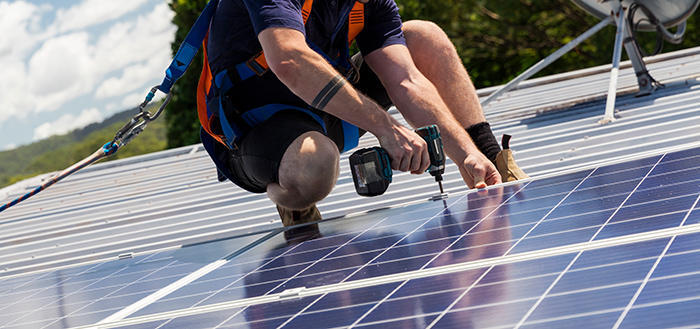
If you want to be eligible for small-scale technology certificates (STCs), your solar and/or battery system must be installed by an accredited installer.
Solar panels in Australia work best when they’re facing north, pointed directly at the sun, at an optimal angle and not blocked by trees or shading.
However, as the electricity market changes (with FiTs during the middle of the day dropping) it may become practical to have some panels facing east and west to generate power in the early morning and late afternoon.
Panels to suit hot climates
Some panels have better temperature tolerance than others (look for a lower ‘temperature coefficient’) and are therefore a better choice in hot climates.
Although solar panels are meant to sit on roofs in direct sunlight, they actually become less efficient as they get warmer, due to the physics of the photovoltaic effect.
So you’ll sometimes get less power from the panels on a very hot day than on a mild day (and remember, even on a 25°C day, your rooftop panels could be operating at well above 40°C). Solar panel power ratings are based on standard conditions (25°C panel temperature).
Panels should be installed in a way that allows air to circulate underneath to help keep them cooler.
Quality standards and certification
You should make sure any solar PV system you consider has met Australian and international standards.
To be eligible for small-scale technology certificates, your solar panels must be certified – ask your installer to supply proof. You can check the CEC’s list of currently approved inverters, modules (panels) and approved batteries to confirm.
Ensure you get a range of installer quotes to compare before signing on.
Also, the Clean Energy Regulator has partnered with the solar industry and peak bodies to introduce the Solar Panel Validation Initiative. This scheme allows businesses in the Small-scale Renewable Energy Scheme supply chain to check if solar panels are genuine before they are installed.
Participating installers and suppliers will be able to use the scheme to provide you with a verified report confirming that the panels they’ve installed on your roof are genuine and that you’re getting what you’ve paid for.
Types of warranties
There are two main warranties provided for solar panels: one for the product, and another for its performance.
Product warranty
This is the warranty for the panel itself. It’s the typical type of warranty that offers repair or replacement if there are any manufacturing faults.
Typical solar panel product warranties used to be 12 or 15 years, but now you can expect 25 years or more. As always, a longer warranty is a good indication of the manufacturer’s confidence in their product.
It’s important to know the difference between the product and performance warranties – you’ll see a 25-year performance warranty promoted more loudly than a 10-year product warranty, but the product warranty is the one that you’re more likely to call on if there’s any problem.
Performance warranty
The performance warranty is a guarantee that as long as the panel is functioning and undamaged, it will still produce a guaranteed minimum percentage of its claimed power rating after a certain period, typically about 80% after 25 years.
The warranty usually also promises that the panel will degrade in an orderly, linear fashion – that is, it will only lose a small and predictable amount of power output each year.
Most solar panels have 25-year performance warranties, and most solar PV systems should last at least that long (with some maintenance along the way). Some performance warranties now run longer, for 30 or 40 years.
Note that it can be hard to tell whether your panels are truly performing as they should, especially after several years. If you believe your panels aren’t performing as expected, the performance warranty may put the onus and cost on you to have the panels tested in order to make a warranty claim.
It’s also a question as to whether a manufacturer will still be around in 20+ years to honour a warranty claim. Nevertheless, these warranties do give some assurance that manufacturers are confident in the long-term performance of these products.
Other warranties
As well as the warranties for the solar panels, you should also get a warranty from the installer for their workmanship in installing the system – the mounting racks, wiring and connections.
This will typically be one or two years – which should be enough to detect any major problems – but as always, a longer warranty is better.
The inverter will also have its own warranty, typically five years but they can be up to 10 years or more.
Solar panel specifications explained
When you look at the specs for a solar panel, you’ll see a lot of numbers and terminology that you might not understand. Here are the basics.
Nominal power
This is the amount of power (electricity) the panel should deliver under standard lab conditions (25°C, sea level air pressure and a specific amount of sunlight or irradiance). It’s measured in watts (W). When you see a panel described as 350W or 400W, that’s the nominal power rating.
The higher the number, the more electricity you’ll get from the panel.
Note that real-world conditions on your rooftop are rarely very close to the standard lab conditions – temperature, humidity and the amount of sunlight will all vary depending on the time of day, the weather and the season, and on average each panel will usually deliver less than its rated amount.
But in ideal conditions, the panel should deliver close to its rated power.
Efficiency
A measure of how efficient the panel is at converting sunlight to electricity; or looked at another way, it’s the panel’s electricity output (in watts) compared to its surface area. The bigger the number, the better.
Due to the physics and engineering of solar cells, a large amount of the sunlight energy can’t be converted directly to electricity; efficiencies of about 19% to 22% are common.
Power tolerance
This is how much you can expect any individual sample of the panel to vary from its nominal power rating. Small variations in the manufacturing process mean that not every panel is identical.
For example, a 400W panel with a claimed power tolerance of 0 to 5W should deliver at least 400W under standard lab conditions, but could actually be up to 405W. So the rated nominal power is actually a minimum rating in most cases.
Temperature coefficient
This shows how well the panel responds to higher temperatures. The hotter a solar panel gets, the less efficient it becomes. A panel with a lower temperature coefficient will be better suited to operating efficiently in hot climates. The temperature coefficient is shown as a percentage change per degree Celsius, such as -0.37%/°C. In this example, for every degree the temperature rises above 25°C, the power output of the panel will drop by 0.37%.
That doesn’t sound like much, but it adds up; even on a mildly warm sunny day of 25°C, the temperature of a black solar panel on your rooftop could be up to 50°C. In this example, (50-25) x 0.37 = 9.25. So the panel has lost 9.25% of its capacity due to the heat; for a 400W panel, that means it’s effectively operating at 363W.
Typical panels on the market today have temperature coefficients ranging from -0.30%/°C to -0.40%/°C.
Don’t worry too much about this number, but if you live where the rooftop temperatures are often going to be fiercely hot, then it’s worth considering panels with a good (low number) temperature coefficient.
Types of solar panel
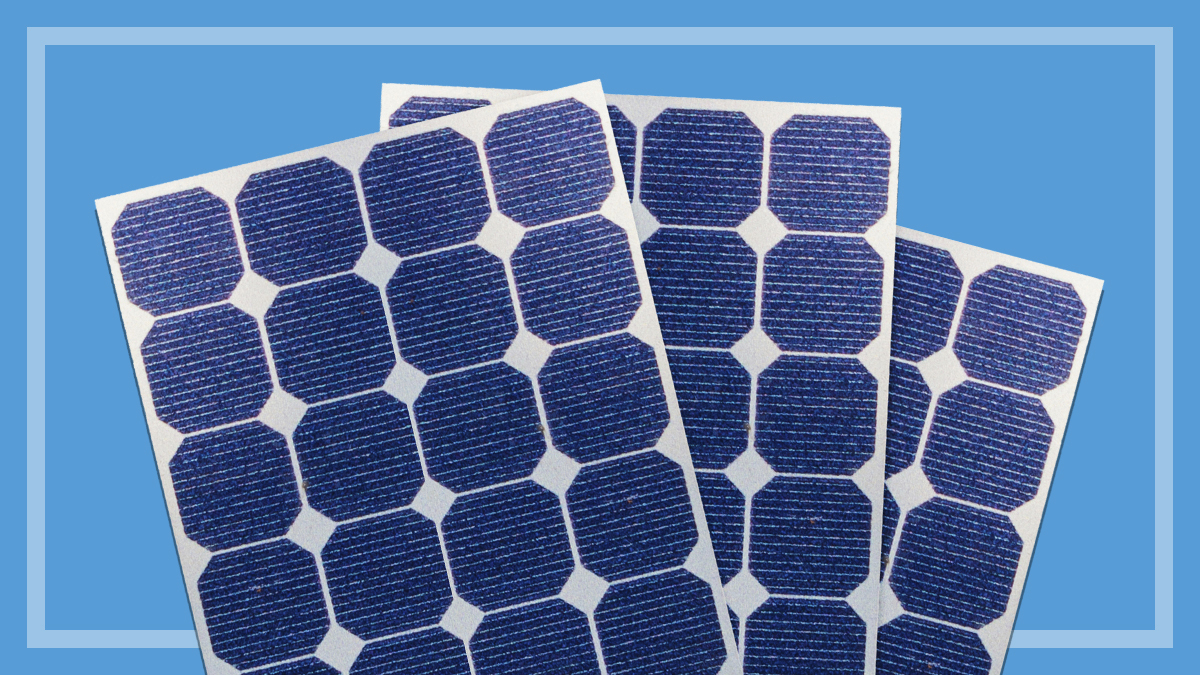
The main types of solar panels you’ll see on homes are monocrystalline and multicrystalline panels (aka polycrystalline), but there are other types too.
Here’s a quick explanation of the main solar panel types on the market today.
DC or AC
Most solar panels are DC, meaning they generate a high voltage direct current (DC), which goes to the inverter unit (called a string inverter) on your wall, which in turn changes that to alternating current (AC) for use in your home’s electrical circuits.
Some panels classed as AC come with a pre-installed microinverter on each panel, typically an Enphase microinverter. Though the panel itself generates DC power as usual, it’s immediately converted to AC by the microinverter. See our solar inverter buying guide for the pros and cons of string inverters vs microinverters.
Mono and multicrystalline
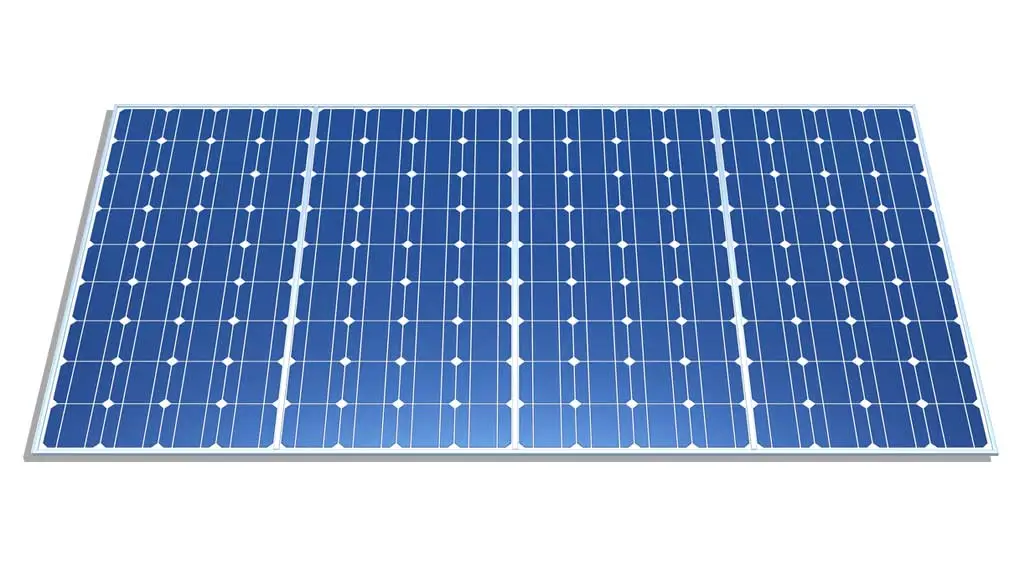
Monocrystalline panels are typically black and have a reputation for higher efficiency than multicrystalline (or polycrystalline) models, which are typically dark blue and are sometimes said to have better temperature tolerance.
The differences come from the manufacturing processes of the silicon cells in each case. Monocrystalline panels are increasingly the common option for home installations.
In practice there’s not necessarily a clear advantage either way: as with most high-tech products, solar panels are a complex assembly of many components and the overall performance depends on more than simply the type of cell.
Interdigitated back contact solar cells (IBC)
Interdigitated back contact solar cells (IBC), or rear contact solar cells, are a variant of standard solar cells. They can achieve higher efficiency by having all the electrical contacts on the rear of the cell (rather than at the front), so there are no metal contact strips preventing light getting to the cell surface.
PERC
A PERC cell, or Passivated Emitter and Rear Cell (also Passivated Emitter and Rear Contact), is a high-efficiency form of solar cell. The back of the cell is more reflective, which means that any light that passed through the cell and missed its chance to cause the silicon to generate electricity can be reflected back through the cell for a second chance.
There’s a lot more to it than that, and there are some potential pitfalls with this technology, but the basics are that PERC cells are generally more efficient at producing electricity than non-PERC cells.
Heterojunction (HJT)
Heterojunction or HJT is a solar panel design that’s been around for many years, and is often claimed to be the simplest and most effective design for improving solar panel efficiency, with the potential to surpass PERC cells for efficiency as the technology continues to develop. It combines layers of conventional crystalline silicon cells with thin film solar cells.
Thin film
Thin filmsolar cells are made from a thin layer of photovoltaic material (such as amorphous silicon, cadmium telluride or copper-indium-gallium-selenide) on a base plate of glass, metal or other substance.
This technology is evolving and while it promises more flexible applications than standard solar panels, it’s so far generally less efficient and is rare in rooftop arrays. It’s used in various large and small applications, from building-integrated PV systems to solar-powered calculators and garden lamps.
Bifacial
Bifacial panels have solar cells on both faces, i.e. front and back, as their name implies. When mounted in the same way as a regular solar panel, the front faces the sky as usual, and the back picks up scattered and reflected sunlight from the roof or ground.
They can also be mounted vertically, for instance facing east-west, to maximise solar power generation all through the day (one side catching the morning sun in the east, while the other side catches the afternoon sun in the west) – this may be particularly useful in mass arrays on a commercial solar farm.
Depending on how they’re mounted and how much reflected sunlight is available, they can deliver anything from 5% to over 20% more power than a single-faced panel of the same power rating. Their power output is very dependent on how they’re mounted (more so than for regular panels) and industry is still working on an agreed standard method to rate their overall power output.
Our solar panel review includes some bifacial models as they are now starting to be offered for home installations. Test results show that when used in a well-designed installation, bifacial modules can indeed deliver more power than an equivalent single-faced panel, but it’s not guaranteed.
Chris Barnes is a Senior Project Officer. He manages the product reviews that are done outside of CHOICE with external labs or data sources. This includes solar panels, electric heaters, air purifiers and detergents. Chris also manages our testing services through our commercial arm, Test Research, and he is CHOICE's NATA authorised representative for our lab's formal accreditations. Chris is involved with the standards committee for air conditioners. And he works with government and industry in areas such as product safety and regulation. In over 20 years at CHOICE, Chris has managed lab teams for a wide range of products, including children's products, kitchen appliances, laundry appliances, garden power tools and more. Chris has a Science degree from the University of Sydney. LinkedIn
Chris Barnes is a Senior Project Officer. He manages the product reviews that are done outside of CHOICE with external labs or data sources. This includes solar panels, electric heaters, air purifiers and detergents. Chris also manages our testing services through our commercial arm, Test Research, and he is CHOICE's NATA authorised representative for our lab's formal accreditations. Chris is involved with the standards committee for air conditioners. And he works with government and industry in areas such as product safety and regulation. In over 20 years at CHOICE, Chris has managed lab teams for a wide range of products, including children's products, kitchen appliances, laundry appliances, garden power tools and more. Chris has a Science degree from the University of Sydney. LinkedIn
Jason is a Content Editor and journalist at CHOICE. He writes about a diverse range of subjects, from solar to robot vacuums to why Easter eggs are a rip-off. He's previously written for Sydney Morning Herald, Rolling Stone and many other publications.
Jason is a Content Editor and journalist at CHOICE. He writes about a diverse range of subjects, from solar to robot vacuums to why Easter eggs are a rip-off. He's previously written for Sydney Morning Herald, Rolling Stone and many other publications.
For more than 60 years, CHOICE has been fighting the good fight for Australian consumers.
In the past year alone we've uncovered systemic issues with sunscreens, investigated shonky supermarket pricing, fought for stronger scam protections and helped make complex energy pricing fairer and clearer.
CHOICE is here to provide unbiased advice and independent testing in our world-class labs. We buy the products we test, just like you do, and our expert reviews are influence free. We’re here to help you choose smarter. Hopefully you’ll also save some money along the way.
Thanks to CHOICE, you’ll never be alone when a business treats you unfairly. You can support our work by joining or donating to our cause.