Three currently available portable cots reviewed by our experts failed to meet key safety standards
The safety failures relate to suffocation, which can increase the risk of sudden unexpected infant death, and neck entrapment
CHOICE experts say the new mandatory safety standards for infant sleeping surfaces should mean products are safer, but there’s still a way to go
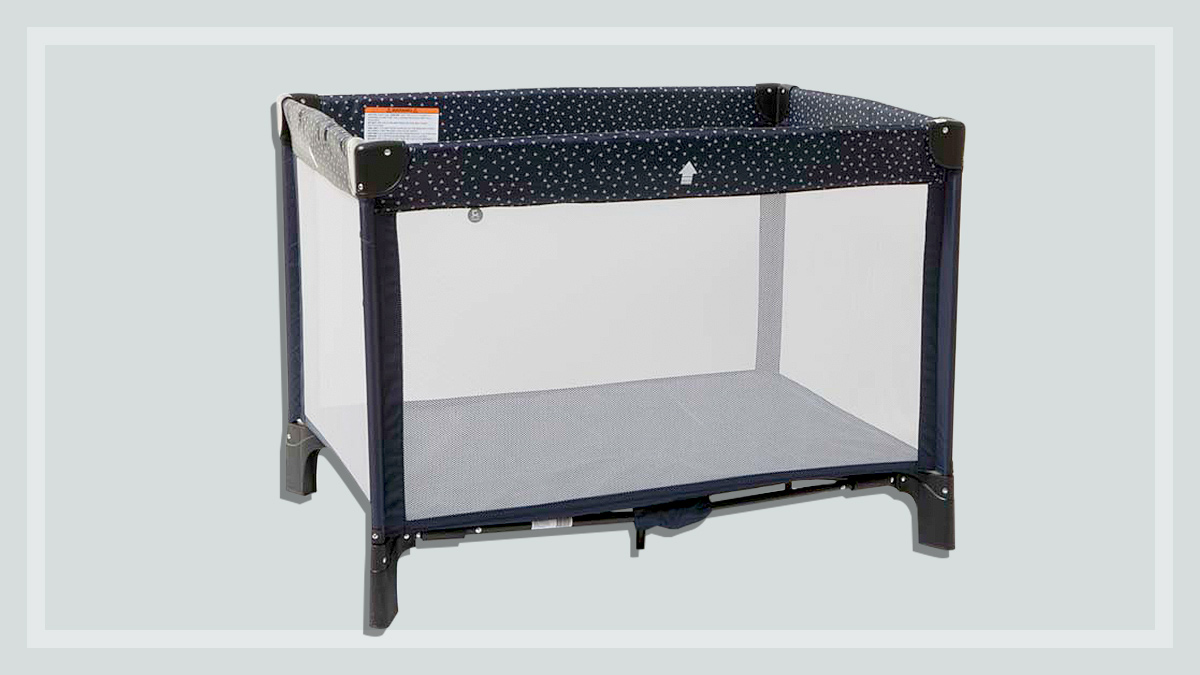
A portable cot (also known as a travel cot or portacot) is a handy item to have in the first few years of your child’s life. It’s great for holidays and sleepovers, and a convenient option if you want a second, collapsible cot at the grandparents’ or another carer’s house.
But CHOICE experts recommend being cautious when you’re buying a portacot, as some pose serious safety risks to babies.
While only three portable cots had serious safety failures, even three unsafe cots on the market is three too many
“In our expert labs, we regularly test a selection of portable cots currently available on the Australian market,” says CHOICE testing expert Kim Gilmour.
“Mandatory Australian standards for all infant sleeping surfaces, including portable cots, came into effect in January 2026. They’re more stringent than older standards, with updated design and construction requirements to reduce the risk of infant death and injury.
“While only three portable cots had serious safety failures based on the tests we conducted, even three unsafe cots on the market is three too many.”
With the new standards now in effect, we’ve removed all previous results from our portable cot reviews. Our most recent results include a mix of retested models (using batches purchased after the laws came into effect), and some newly available models.
If the locking mechanism fails and the cot collapses inwards, a baby’s neck could become trapped at the top sides of the cot.
2. Nuna Paal – suffocation risk
The top of the mattress sits below the mesh panels at the side of the cot, which means a child may not be able to breathe because their face would be level with solid fabric rather than breathable mesh.
3. Uppababy Remi – mattress firmness
The mattress is not firm enough, which means it can create a suffocation risk if a baby rolls onto their side or front.
Some cots had minor safety issues, such as finger entrapment risks, pinch points, or the possibility a child may be able to open a zipper or combination of zippers and get out of the cot.
These carry a risk of injury but not death, so you should still take that into consideration when buying a portacot.
“The good news is there are still plenty of safe portable cots that do pass our safety tests, and that we can recommend to parents. Others have only minor safety issues,” says Gilmour.
“When choosing a portacot for your baby, you want to make sure you’re making the safest choice possible, so we strongly recommend checking our reviews before you buy.”
Our full portable cot reviews include detailed information on why these models failed safety tests (and responses from the manufacturers), plus portable cots that we do recommend as safe options.
Manufacturers’ responses in regards to our tests
In response to our tests, manufacturers disagreed with our results, showing us reports from third-party labs that indicate that their products pass safety standards.
At CHOICE, we operate our own in-house accredited lab, and we stand by our results.
Here are the manufacturers’ responses:
Responses from manufacturers in regards to our tests:
While the Journey Travel Cot complies with AS/NZS 2195:2010 and has been independently tested by accredited laboratories, we value the potential hazards identified by CHOICE and will consider these as part of our ongoing product development.
The hazards highlighted by CHOICE occurred only during the deliberate folding process. Folding the cot as outlined in the UserGuide requires the mattress to be removed and the folding mechanisms to be intentionally activated by an adult. At this point, it is not possible for a child to be inside the cot unintentionally.
The V-shaped opening hazard is created only during this deliberate folding process and does not occur during normal use of the cot.
As with all portable cots, parents and caregivers should follow the instructions provided and ensure children are removed from the cot before folding or transporting the product.
Nuna Paal
Baby Bunting takes safety of their products seriously. All Baby Bunting products are tested at independent accredited and globally recognised third party laboratories and stand by the results of those test reports.
Uppababy Remi
The Remi Portacot has been compliant with the Consumer Goods (Infant Sleep Products) Safety Standard 2024 and the Consumer Goods (Infant Products) Information Standard 2024 since January 2025, a full twelve months ahead of the 19 January 2026 mandatory commencement date.
It has also been independently tested twice in that period by accredited laboratories, and both returned a pass on both occasions.
On firmness, your focus appears to be on AS/NZS 8811.1:2013, Sleep surfaces – Test for firmness. This has been tested with no issues, and the mattress specification has not changed since. [CHOICE previously recommended a model from an older batch.]
Tips for buying a portacot and how to use it safely
“Price or brand is not an indicator of how safe these products are,” says Gilmour.
“We find that even some of the leading brands of portacots have issues that pose safety risks for babies.
It’s important that you not only buy a safe portacot, but also that you use it safely.
“Our advice is to always check our reviews and do some research before you settle on which one to purchase.”
Here are some tips on how to buy and use a portacot safely:
Travel cots are designed to be used temporarily only – they are not suitable to use as a permanent sleep option.
Before you buy, check the government’s product safety website to see if there have been any product recalls or safety issues with particular brands or models.
Only use the mattress or padded base supplied by the manufacturer – don’t use other mattresses, as they can pose a suffocation risk if they don’t fit well. They can also make the cot too shallow, allowing a child to climb out too easily.
The mattress should be firm and snug-fitting all around to avoid trapping the baby’s head.
Make sure there is breathable mesh material all around where it meets the top of the mattress area.
Make sure there’s nothing sticking out that could snag the baby’s clothes or act as a foothold for the baby to climb out.
Don’t position the cot beside blind cords, power points, windows or other hazards.
Never put pillows, cot bumpers or soft toys in the portacot – not only because they’re a suffocation risk, but because they can also be used to climb out.
Once the baby weighs more than 15kg, or can undo the folding latches, stop using the portacot.
Lack of clarity around new mandatory standard creates confusion
To keep people safe, Australian standards are very complex and give very specific instructions around how to test products.
Unfortunately, one part of the new mandatory standard for portable cots is ambiguous and has caused confusion in the industry about how they should be tested to ensure they’re safe.
The section relates to what’s called “curvature” – a mattress needs to be flat so that if a baby rolls over, it doesn’t curve up too much. If it does, it could press up against a baby’s face, causing a suffocation risk.
However, the way the test method is described in the standard could be interpreted in different ways, which can affect whether a portacot mattress passes or fails this safety test.
The mandatory standard doesn’t clearly define how much a mattress can curve before it’s considered unsafe
Andy Kelly, CHOICE director of consumer impact
“The biggest problem with the mandatory standard is that it doesn’t clearly define how much a mattress can curve before it’s considered unsafe and doesn’t meet the safety standard,” says CHOICE director of campaigns Andy Kelly.
“Using a level measures whether the product is level between two points, not the amount of curvature.
“The same product could fail if it’s tested according to one interpretation of the standard, but pass if it’s tested to a different interpretation.
“This leaves consumers in the dark about whether a portacot is safe for their baby or not.”
CHOICE has raised the issue with the ACCC and is awaiting clarification. We will update our test results once we have more information.
About our labs and testers
The state-of-the-art CHOICE labs are accredited by the National Association of Testing Authorities (NATA) to test products to a wide range of standards.
Our children’s products lab is NATA-accredited to test products such as prams/strollers, cots, cot mattresses, portable cots, highchairs and dummies.
Our NATA accreditation helps ensure that our lab test results are rigorous and trustworthy.
With more than 20 years of experience, our expert testers know the ins and outs of babies and children’s products. They’ve seen all sorts of portable cot configurations on the market, and have put each type to the test.
Our testers also sit on the Australian Standards committees for children’s products, making them very well qualified to determine which products are safe and which aren’t.
Pru Engel is the Audience and Engagement editor at CHOICE. Her job is to ensure as many Australians as possible know about the great work we do at CHOICE.
She works closely with our testers and experts to find the gems of information in our data and research that will resonate with Australian consumers and help them make the best decisions, whether they're purchasing an air fryer, looking for a new mattress or trying to find the cheapest car insurance. She also helps to drive meaningful change for consumers by collaborating with our Campaigns team on content covering issues such as grocery pricing, product safety and scams.
Prior to CHOICE, Pru worked as an editor at many of Australia's leading food and lifestyle titles.
Pru has a Bachelor of Arts in Communication (Journalism) from the University of Technology, Sydney.
LinkedIn
For more than 60 years, CHOICE has been fighting the good fight for Australian consumers.
In the past year alone we've uncovered systemic issues with sunscreens, investigated shonky supermarket pricing, fought for stronger scam protections and helped make complex energy pricing fairer and clearer.
CHOICE is here to provide unbiased advice and independent testing in our world-class labs. We buy the products we test, just like you do, and our expert reviews are influence free. We’re here to help you choose smarter. Hopefully you’ll also save some money along the way.
Thanks to CHOICE, you’ll never be alone when a business treats you unfairly. You can support our work by joining or donating to our cause.