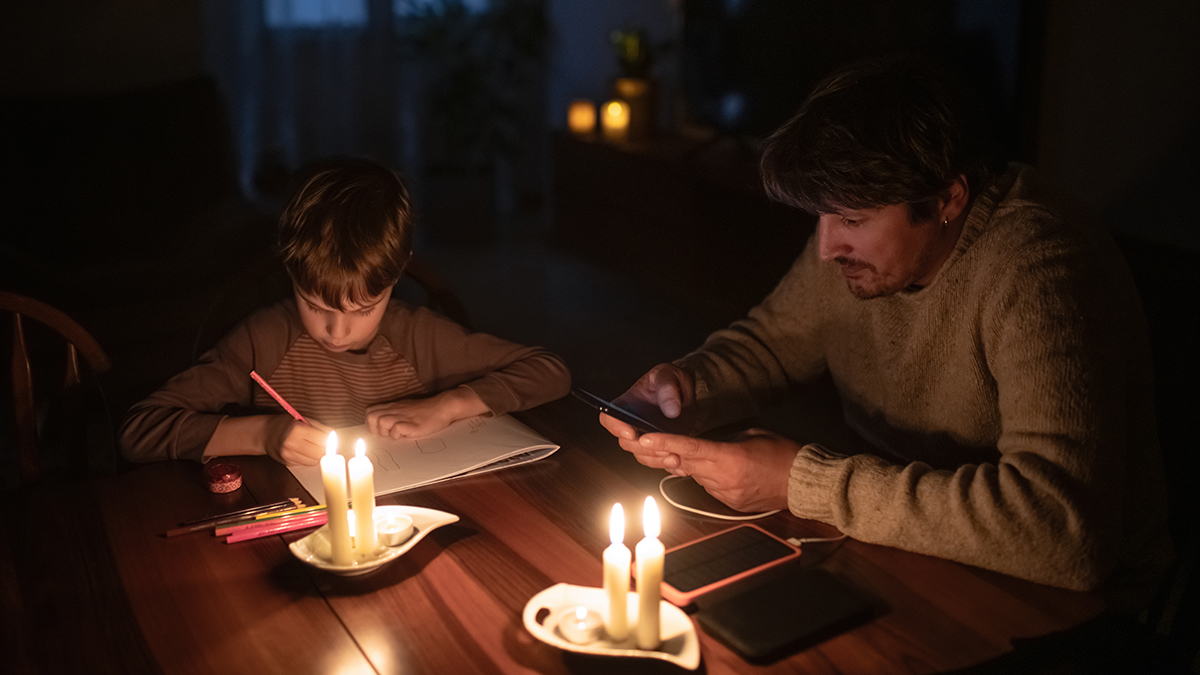
Around 1383 residential electricity disconnections due to non-payment occurred in Victoria in March alone
Some energy retailers are reportedly asking customers to pay off substantial debts before their power is turned back
Energy customers in Victoria have the right to come up with their own payment plans if they’re unable to pay their bills
Service providers generally dictate the terms of repayment when we fall behind on our bills, but thankfully this is not always the case.
Energy customers in Victoria have the right to come up with their own payment plans if they’re unable to pay their bills in full – or at all.
The plan has to include regular, equal payments at intervals up to one month, and the payments must clear any outstanding debt within two years, including usage along the way. As long as these elements are in place, the retailer is required to accept the arrangement.
Month after month, disconnections in Victoria have been on the rise
It’s an important right, given that around 1383 residential electricity disconnections due to non-payment occurred in the state in March alone. Forty percent of these customers had previously asked for assistance from their retailers to give them more time to pay.
Month after month, disconnections in Victoria have been on the rise, and the state’s Essential Services Commission (ESC) – which regulates the energy retail sector – has recently been hearing some concerning stories about how retailers are dealing with these customers.
Some are reportedly asking customers to pay off substantial debts before their power is turned back on, a form of extortion that runs counter to the spirit of the state’s Payment Difficulty Framework.
“We want to be clear about the intent of Victoria’s energy rules so there’s no room for misinterpretation – disconnection is a last resort and reconnection processes should focus on helping customers reestablish workable arrangements, rather than creating additional barriers,” says ESC chairperson and commissioner Gerard Brody.
“We know that when people are struggling to pay their energy bills, they are often making very difficult trade-offs. Approaches that support realistic repayment arrangements are more likely to lead to long-term positive outcomes for both customers and retailers.”
Disconnection is a last resort and reconnection processes should focus on helping customers reestablish workable arrangements…
ESC chairperson and commissioner Gerard Brody
Kane Johnson, a senior financial counsellor at the National Debt Helpline and Consumer Action Law Centre, says “we often see energy providers using disconnection, or the threat of disconnection, as a debt collection tool”.
“Energy debts are one of the most common issues discussed with financial counsellors on the National Debt Helpline. Our data shows threats of disconnection are increasing, which is alarming and indicates retailers may not be complying with their obligations.”
Our data shows threats of disconnection are increasing, which is alarming and indicates retailers may not be complying with their obligations
Kane Johnson, senior financial counsellor at the National Debt Helpline
“We urge energy providers to comply with all their obligations under the Energy Retail Code of Practice before disconnection is even considered,” Johnson says. “This includes setting customers up on affordable payment plans, putting payments on hold for short periods or applying for government grants for eligible consumers.”
In many other countries, disconnection for non-payment is not allowed, and consumer advocates would like to see such measures adopted in Australia, as CHOICE reported in March this year.
“Ending harmful disconnections is a policy choice, not an inevitability of how energy markets operate,” RMIT associate professor Nicola Willand said in March.
Commenting for the same article, Australian Energy Regulator chair Clare Savage told us “it’s important we focus on what else can be done before it even gets to a situation where disconnection is considered”.
Where this leaves affected customers in Victoria at the moment is unclear. The ESC says energy retailers are required to help customers who are struggling to pay their bills “in a way that is fair and reasonable for their individual circumstances”.
“Customers who are asked to pay substantial debts before reconnection should ask their energy retailer about affordable payment arrangements and hardship support. They may not need to pay the full amount upfront to have their energy restored,” the ESC says.
In cases where a retailer is uncooperative or appears to be shirking its hardship duties, customers should lodge a complaint with the Energy and Water Ombudsman Victoria.
Andy Kollmorgen is the Investigations Editor at CHOICE. He reports on a wide range of issues in the consumer marketplace, with a focus on financial harm to vulnerable people at the hands of corporations and businesses. Prior to CHOICE, Andy worked at the Australian Securities and Investments Commission (ASIC) and at the Australian Financial Review along with a number of other news organisations. Andy is a former member of the NSW Fair Trading Advisory Council. He has a Bachelor of Arts in English from New York University. LinkedIn
Andy Kollmorgen is the Investigations Editor at CHOICE. He reports on a wide range of issues in the consumer marketplace, with a focus on financial harm to vulnerable people at the hands of corporations and businesses. Prior to CHOICE, Andy worked at the Australian Securities and Investments Commission (ASIC) and at the Australian Financial Review along with a number of other news organisations. Andy is a former member of the NSW Fair Trading Advisory Council. He has a Bachelor of Arts in English from New York University. LinkedIn
For more than 60 years, CHOICE has been fighting the good fight for Australian consumers.
In the past year alone we've uncovered systemic issues with sunscreens, investigated shonky supermarket pricing, fought for stronger scam protections and helped make complex energy pricing fairer and clearer.
CHOICE is here to provide unbiased advice and independent testing in our world-class labs. We buy the products we test, just like you do, and our expert reviews are influence free. We’re here to help you choose smarter. Hopefully you’ll also save some money along the way.
Thanks to CHOICE, you’ll never be alone when a business treats you unfairly. You can support our work by joining or donating to our cause.