The e-mark found next to the weight on a product’s packaging means a product should comply with the Average Quantity System (AQS)
The AQS is overseen by the National Measurement Institute
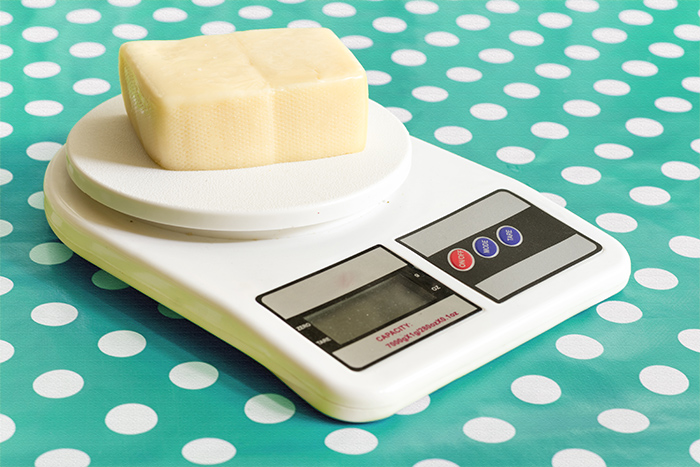
You can check the weight of products you buy at home, but you probably won’t get an entirely accurate reading
You’ll see it on everything from packaged salads to frozen chips, beef mince to crackers, honey to brown sugar. In fact, once you start to notice it, you’ll realise just how many of the products you buy from the supermarket carry the ‘e’ symbol next to the weight. But do you know what it actually means?
If you’re the kind of shopper who pays careful attention to what’s written on the packaging of the products you buy (and if you’re a CHOICE reader, you probably are), then you might have noticed a lowercase letter e (known as the e-mark) beside the weight on many of the products you buy from the supermarket.
This symbol, which many mistakenly believe indicates that the weight shown is only an estimate, actually denotes that the product complies with the Average Quantity System (AQS).
The system, overseen by the National Measurement Institute (NMI), confirms that the goods being sold comply with the AQS. To carry the mark, a product must meet the system’s requirements.
Compliance with this system means that products are packed to the same constant quantity. They are subject to three testing rules:
The average net content in a sample from a production run cannot be less than the stated quantity marked on the packages
Allowance is made for a small number of packages to exceed a “tolerable deficiency”. This is the legally allowed shortfall in a particular product, and it will vary depending on the product and package size.
None of the packages can have more than twice the prescribed tolerable deficiency.
A facility producing packaged foods can turn out more than 15,000 items in an hour
A tolerable deficiency will vary depending upon the size of the product in question, but it can be quite small. For example, a 3% deficiency is allowed on a package weighing 300g to 500g.
A facility producing packaged foods can turn out more than 15,000 items in an hour, so the NMI’s inspectors can’t check every single item produced. Instead, they test samples from the batch and the results must comply with the allowed tolerance limits.
How is the system enforced?
The NMI ensures products that carry the e-mark comply with the code through checks at different stages of a product’s journey to the consumer.
Non-compliance can mean different things. For example, it might mean that the labels on a package don’t meet the requirements or that there are short measures in the packaged goods.
In their 2024/25 report on compliance activities, the NMI reported that of the 5152 traders they audited, 71% complied with measurement laws in an initial audit and 80% complied in the follow-up.
Retail checks
Quick screenings are conducted at retail stores and used as a guide to direct further checks at higher levels. In these tests, inspectors will visit retail stores and select products to assess for compliance. If discrepancies are detected, more testing will take place further up the supply chain.
Manufacturer checks
Manufacturer checks involve inspections and tests of both production lines and stored goods, as well as a review of records to ensure proper practices are followed.
Importer checks
Checks on importers are also conducted, including reviews of records and tests of products arriving in Australia.
Where products fail an inspection, there are a number of enforcement options open to the inspector. These can include everything from verbal warnings all the way up to prosecution.
It isn’t just products that carry the e-mark that are regulated to ensure consumers get what they pay for, and there are two other types of quantity markings overseen by the NMI.
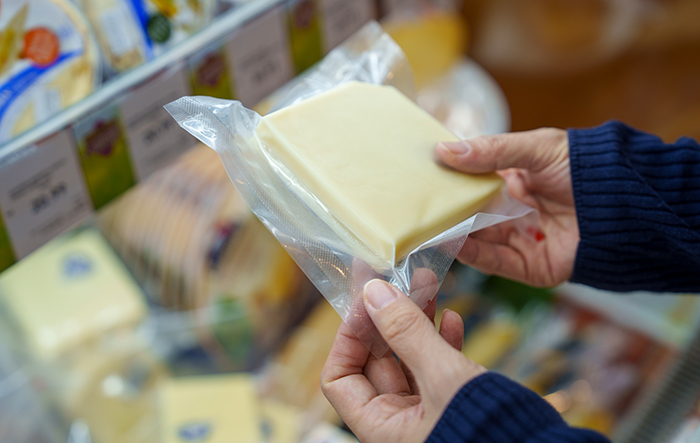
Random weight is used where products vary in quantity and are sold by unit price. Cheese and meat are common examples of this. For these kinds of items, the random weight should never contain less than its marked quantity, so unlike products covered by the AQS, there is no tolerable deficiency.
The non-average quantity system (non-AQS) might also be used. In this system, products are packed to the same constant quantity, but they don’t carry the e-mark. When testing these products, inspectors check that the average of at least six packages is equal to or more than the marked quantity.
They also check to ensure that no single package contains more than 5% less than the marked quantity. So, for example, if you sell paper plates labelled as packs of 100, an inspector should find that the average of a sample of those packs is at least 100, and no single package should contain fewer than 95 plates.
We often hear from CHOICE readers who are concerned that when they check a product’s weight, they find it weighs less than they expected.
While it can be helpful to check a product’s weight yourself, you need to take a few things into account.
Firstly, your kitchen scales can vary in accuracy, and any measurements you make on them should be treated as a general guide only.
When packing and labelling products producers need to allow for weight loss due to dehydration
You also need to be mindful that it is the product’s net weight that needs to be measured, and this includes anything that is naturally part of the product.
For example, in mince meat – a product that readers write to us about from time to time after weighing at home and finding less than they expect – the blood contained within the soaker pad is considered part of the net weight.
One thing you don’t need to worry about is shrinkage. When packing and labelling products, producers need to allow for weight loss due to dehydration, and the NMI expects the net quantity to stay within the legal limits for the entirety of a product’s shelf life.
Reporting a problem
So, what do you do if you find a product doesn’t weigh as much as it ought to? As we’ve said, your home kitchen scales can only ever be a guide, but the NMI does want to hear from you if you have concerns.
The NMI encourages consumers to get in touch via telephone, by calling 1300 686 664, or by email, by writing to [email protected].
Margaret Rafferty joined CHOICE in 2018 as a Content editor and since then has filled the roles of Commissioning editor, Managing editor and now Editorial consultant.
Margaret has written on a wide variety of topics and enjoys making complex subjects easy to understand. With over 20 years of media experience, Margaret brings a strong storytelling background to CHOICE. She works closely with people across the organisation to help tell stories that make a positive difference to people and is passionate about uncovering bad practices and helping Australians to avoid falling victim to shonky products and services. LinkedIn
Margaret Rafferty joined CHOICE in 2018 as a Content editor and since then has filled the roles of Commissioning editor, Managing editor and now Editorial consultant.
Margaret has written on a wide variety of topics and enjoys making complex subjects easy to understand. With over 20 years of media experience, Margaret brings a strong storytelling background to CHOICE. She works closely with people across the organisation to help tell stories that make a positive difference to people and is passionate about uncovering bad practices and helping Australians to avoid falling victim to shonky products and services. LinkedIn
For more than 60 years, CHOICE has been fighting the good fight for Australian consumers.
In the past year alone we've uncovered systemic issues with sunscreens, investigated shonky supermarket pricing, fought for stronger scam protections and helped make complex energy pricing fairer and clearer.
CHOICE is here to provide unbiased advice and independent testing in our world-class labs. We buy the products we test, just like you do, and our expert reviews are influence free. We’re here to help you choose smarter. Hopefully you’ll also save some money along the way.
Thanks to CHOICE, you’ll never be alone when a business treats you unfairly. You can support our work by joining or donating to our cause.