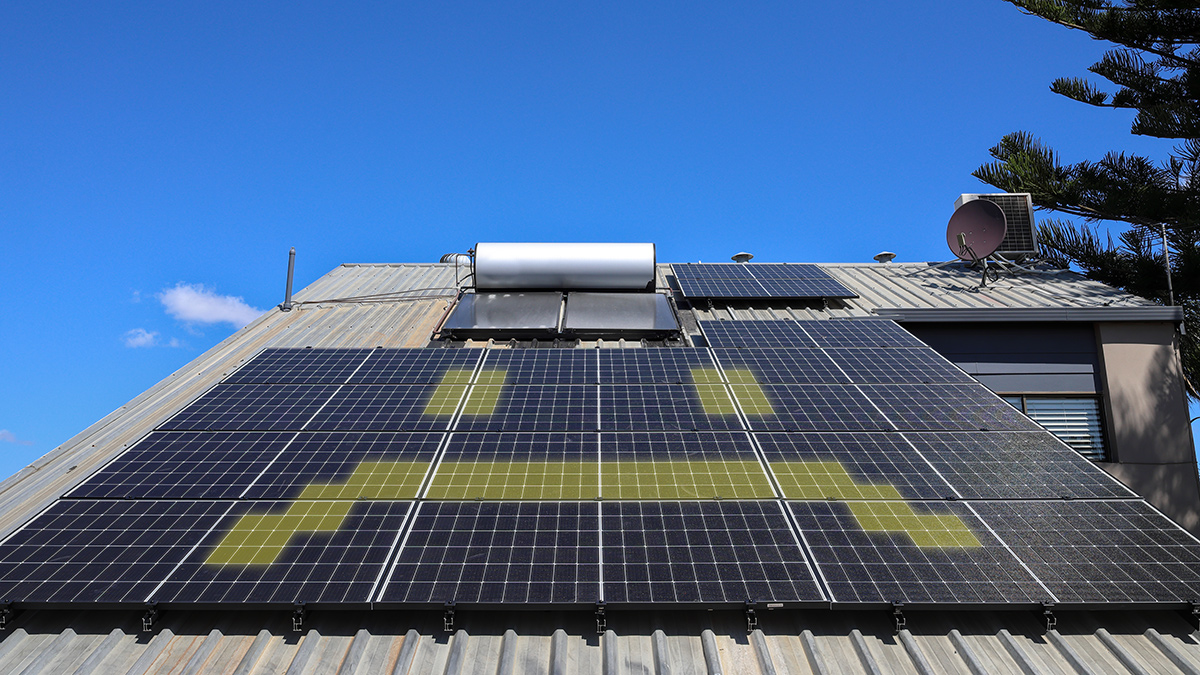
If you own an electric vehicle or have solar panels on your roof, you’ve taken steps to reduce your carbon footprint. Does that mean you should now be selling carbon credits?
According to a new carbon credit exchange platform called Aetium, the answer is yes.
Aetium is set up to issue carbon credits to people who have EVs or solar technology and offer them for sale to businesses or individuals who want to offset their carbon emissions. The scheme is also open to people who have forests on their property, defined as more than 50 trees.
Aetium’s aim, like that of other grassroots schemes, is to turn households into issuers of carbon credits
The company claims that buyers of the carbon credits are making contributions that reduce net carbon dioxide (CO₂) emissions, thereby reducing the buyers’ carbon footprints.
Aetium is a new entry in the world of voluntary carbon credit schemes as opposed to mandatory, government-regulated ones. Its aim, like that of other grassroots schemes, is to turn households into issuers of carbon credits.
But the advocacy group Climate Integrity has taken issue with the company’s claims of being able to contribute to the effort of reducing CO₂ in the atmosphere.
The not-for-profit says Aetium’s claims lack supporting evidence and are not validated by any third-party certifier of voluntary carbon offsets or independent standards regime. They are also not certified by any government-operated crediting scheme, the not-for-profit says. In short, the business isn’t regulated by anyone.
Advocacy group Climate Integrity has taken issue with the company’s claims of being able to contribute to the effort of reducing CO₂ in the atmosphere
Working with lawyers from the Environmental Defenders Office (an Australian NGO), Climate Integrity recently filed a complaint with the Australian Competition and Consumer Commission about Aetium, flagging potentially misleading and deceptive conduct.
The not-for-profit has also filed a complaint with Ad Standards, charging that Aetium’s claims may be in breach of the Environmental Claims Code.
In order for a carbon credits scheme to prove its credits represent genuine CO₂ reductions, Climate Integrity says it needs to pass the “additionality” test. This measures whether emissions reductions can be linked directly to the scheme or would have happened without the scheme in place.
The requirement to achieve additionality has been endorsed by virtually all carbon crediting regimes around the world as well as by climate scientists, Climate Integrity says.
“An additionality test is a critical integrity safeguard in all major carbon credit standards. It assesses whether a project genuinely creates additional emissions reductions, beyond business as usual and which would not have occurred in the absence of the incentive,” says executive director Claire Snyder.
“Aetium’s credits fail to meet an additionality test because consumers signing up to the scheme would have bought and used their EVs or solar panels whether Aetium existed or not.”
Aetium’s credits fail to meet an additionality test because consumers signing up to the scheme would have bought and used their EVs or solar panels whether Aetium existed or not
Climate Integrity executive director Claire Snyder
The credits issued therefore don’t satisfy the principle of additionality and do not represent genuine reductions in carbon emissions, Climate Integrity says.
It also makes the case that Aetium’s methodologies are based on the contentious concept of “avoided emissions”, whereby emission reductions are calculated by comparing the activity in question (in this case driving an EV, having solar panels, or owning a forest) against hypothetical emissions-intensive alternatives.
For Climate Integrity, the hypotheticals lack a firm grounding in the real world. “Avoided emissions offsets cannot cancel out emissions, and claims of their environmental benefits are likely to mislead consumers,” the group says.
Emission reductions are calculated by comparing the activity in question (e.g. driving an EV) against hypothetical emissions-intensive alternatives
Aetium has signed up to the Australian Carbon Industry code of conduct, but when Climate Integrity contacted the organisation, it was told that it doesn’t assess whether carbon credits are legitimate or not.
“Aetium’s claim that it aligns with the industry code of conduct is another example of the integrity crisis in Australia’s carbon market,” Snyder says.
Aetium managing director Christopher Ride tells CHOICE that the company is a new type of carbon credit platform that shouldn’t be compared to more traditional models. He suggests that Climate Integrity is damning a carbon credit scheme it doesn’t understand.
The company acknowledges that it’s not endorsed by the widely accepted certification or standards schemes, but says such bodies weren’t designed to oversee small-scale voluntary operations such as Aetium.
“Innovation often opens necessary debate, particularly in carbon markets, where concepts such as additionality and their interpretations continue to evolve,” Ride says. “Our view is clear – for Australia to reach Net Zero, voluntary community actions, like solar or EVs, must be recognised and rewarded, not ignored.” (Net Zero means the human race taking out as much CO₂ – or greenhouse gasses – from the atmosphere as we put in.)
Our view is clear – for Australia to reach Net Zero, voluntary community actions, like solar or EVs, must be recognised and rewarded, not ignored
Aetium managing director Christopher Ride
The company says that around 4000 people in Australia are currently using the platform but stresses that it has yet to collect fees, sell credits or retire carbon units. (Usually units are retired when one unit of CO₂, normally a tonne, is confirmed to have been removed from or prevented from entering the atmosphere though the project that issued the credit.)
Ride says there is no regulatory framework at the moment that captures the “necessary evolution” that Aetium represents. The current additionality rules do not allow smaller, voluntary projects to be formally recognised, the company says.
Aetium argues that the lack of government certification doesn’t mean it and other voluntary carbon credit schemes aren’t contributing to a reduction of CO₂ emissions, as long as the accounting of reductions is transparent and defensible.
The theory that carbon credits can offset CO₂ emissions has been widely discredited.
“We are a technology-first company measuring positive impact, actively working with regulators to identify the appropriate path forward,” Ride says.
He maintains that the company’s methodologies are robust.
“From an ESG reporting perspective, Aetium’s aggregated reporting of current and future actions is designed to the highest level of accuracy, transparency, and consistency. Moving beyond simple estimates, it takes into account up to twice as many variables and parameters than current methods.” (ESG stands for Environmental, Social, and Governance and is used to assess a company’s sustainability profile.)
Voluntary schemes may have their place, but the whole idea of carbon credits – that overall CO₂ emissions will be reduced when companies that produce a lot of CO₂ pay money to projects focused on reducing it – appears to be on shaky ground at this point.
In a recent article published by Renew Economy, Climate Integrity head of corporate accountability Michael Mazengarb argues that multiple academic studies have shown that claims of emission reductions through carbon credit schemes have either been untrue or “grossly exaggerated”.
He cites one study that found that around 90% of carbon credits issued under some schemes could not be linked to actual emissions reductions.
A 2023 article by public policy think tank The Australia Institute said depending on carbon credits to offset emissions “is mathematically impossible and a recipe for climate disaster”.
He cites one study that found that around 90% of carbon credits issued under some schemes could not be linked to actual emissions reductions
In 2024, CHOICE reported on Climate Integrity’s case against Qantas Airlines’ carbon neutral claims. The charge was that such claims in its marketing materials were highly suspect due to its heavy reliance on fossil fuels. Whatever mitigation efforts it claimed to be doing couldn’t possibly offset this.
In a response to our queries at the time, Qantas acknowledged that the science behind its marketing messages was a work in progress.
“The integrity flaws are well documented, and become doubly problematic when offsets are used to pardon other emissions-intensive activities,” Mazengarb wrote in Review Economy, referring to carbon credit schemes in general.
Last year, EnergyAustralia discontinued its Go Neutral carbon offset scheme after the environmental advocacy group Parents for Climate took the company to court, alleging greenwashing.
“While EnergyAustralia participated in the Climate Active certified carbon offset program in good faith, today EnergyAustralia accepts that there is legitimate public concern about the efficacy of these programs,” the company’s chief customer officer, Kate Gibson, said at the time, adding that carbon offsets “should not be used to delay or diminish the important work that needs to be done to actively decarbonise”.
The real focus should be on the world’s major CO₂ emitters finding ways to pollute less, or not at all
An October 2025 article written by a group of carbon credit experts (including several from Australian universities) and published in the journal Nature argues that the use of carbon offsets, particularly those whose credibility is suspect, “undermines decarbonisation by enabling companies and countries to claim that emissions have been reduced when they have not. This results in more emissions, delays the phase-out of fossil fuels and diverts scarce resources to false solutions”.
In the big picture, there may be valid views on both sides about whether voluntary carbon credit schemes such as Aetium are helping to reduce overall greenhouse gas emissions. But for organisations such as Climate Integrity and Parents for Climate, the real focus should be on the world’s major CO₂ emitters finding ways to pollute less, or not at all.
Allowing them to keep pumping out carbon dioxide and contributing to global warming while claiming that they’re offsetting this through questionable schemes – whether voluntary or mandatory – doesn’t seem to be moving the needle in the right direction.
Andy Kollmorgen is the Investigations Editor at CHOICE. He reports on a wide range of issues in the consumer marketplace, with a focus on financial harm to vulnerable people at the hands of corporations and businesses. Prior to CHOICE, Andy worked at the Australian Securities and Investments Commission (ASIC) and at the Australian Financial Review along with a number of other news organisations. Andy is a former member of the NSW Fair Trading Advisory Council. He has a Bachelor of Arts in English from New York University. LinkedIn
Andy Kollmorgen is the Investigations Editor at CHOICE. He reports on a wide range of issues in the consumer marketplace, with a focus on financial harm to vulnerable people at the hands of corporations and businesses. Prior to CHOICE, Andy worked at the Australian Securities and Investments Commission (ASIC) and at the Australian Financial Review along with a number of other news organisations. Andy is a former member of the NSW Fair Trading Advisory Council. He has a Bachelor of Arts in English from New York University. LinkedIn
For more than 60 years, CHOICE has been fighting the good fight for Australian consumers.
In the past year alone we've uncovered systemic issues with sunscreens, investigated shonky supermarket pricing, fought for stronger scam protections and helped make complex energy pricing fairer and clearer.
CHOICE is here to provide unbiased advice and independent testing in our world-class labs. We buy the products we test, just like you do, and our expert reviews are influence free. We’re here to help you choose smarter. Hopefully you’ll also save some money along the way.
Thanks to CHOICE, you’ll never be alone when a business treats you unfairly. You can support our work by joining or donating to our cause.