It’s a tale as old as time. You scroll through Instagram, you engage a second too long with an advertisement on your feed, and it’s hardwired into your algorithm forever.
That’s how I first found out about Brick.
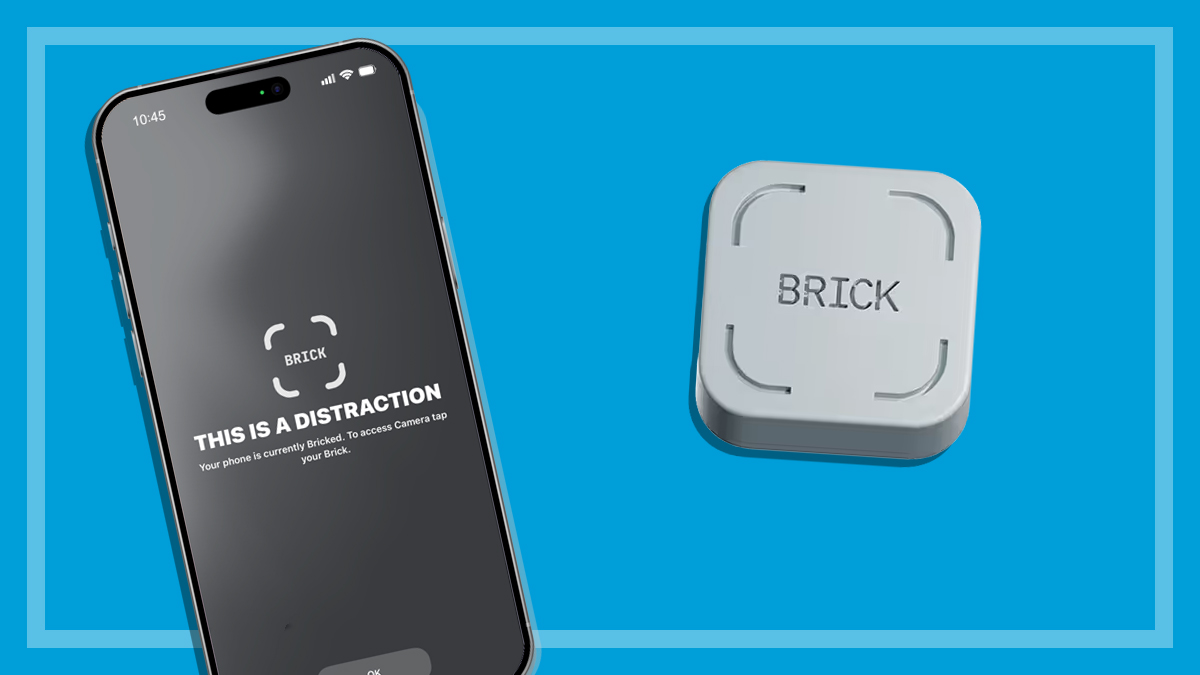
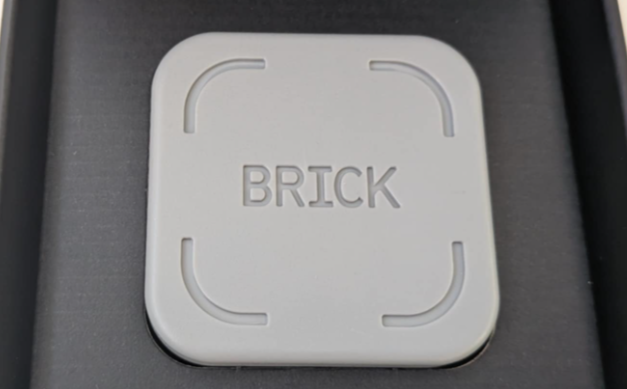
Brick is a physical device designed to limit screen time for those who spend way too much time doom scrolling on their mobile devices – i.e. me. It looks like… a brick. A small, cube-shaped lump of plastic that can fit in the palm of your hand. Using the accompanying Brick app, you can select a number of mobile apps you want to stop using for a specific period of time. Then you simply scan your phone on the device like you’re paying for a coffee and blam: you’re bricked.
Brick is a physical device designed to limit screen time for those who spend way too much time doom scrolling
The Brick was all over my Instagram feed for months, but I never seriously considered getting “bricked” until one argument with my wife. As we were politely exploring one another’s extensive, deep-seated character flaws, my beautiful one-and-only said something along the lines of “… and ANOTHER thing, you spend way too much time on your phone after work!”
The rest of the argument is a blur to me because, as soon as she said those words I started considering, “maybe I should buy that expensive lump of plastic that’s poisoning my social media algorithms and put this problem to bed once and for all”.
So it was decided, when the dust settled on our argument, I quietly jumped on to my mobile phone and ordered myself a “Brick”.
It feels kind of silly to pay for this square of plastic, but its solidity is also weirdly powerful.
First impressions
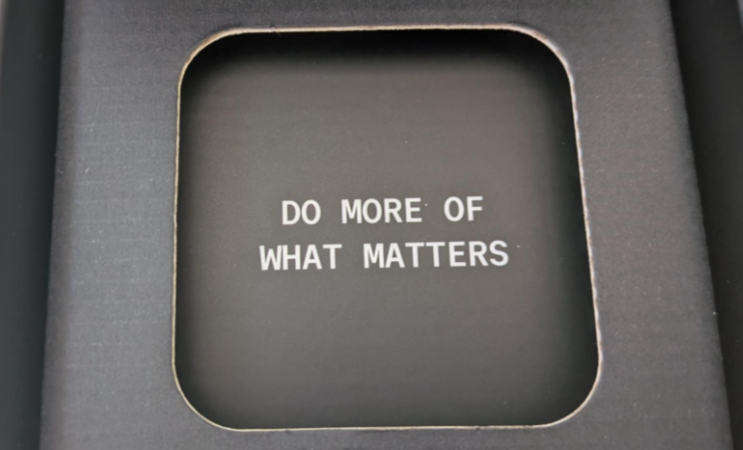
The Brick came encased in packaging that was a lot slicker than I expected, considering it was a product I bought from an Instagram ad.
The black box is emblazoned with the message “your phone is about to become a tool again”. The whole package is polished in a way that makes me almost cynical, like maybe (almost certainly) I overpaid for a product that does what a simple app could probably do.
But another part of me – the part that has experience in these things – says something different. It says “sometimes you have to spend money to get invested”. Maybe I need that sunk cost fallacy to actually motivate me to do something about my bad habits. Anyone who’s paid for a personal trainer or a meal plan or even therapy can probably relate. When you spend money trying to fix yourself, you become accountable to the money you spent.
So instead of chucking the Brick in a corner and getting back to doom scrolling, I install the app and start fiddling around.
The way the Brick works is intuitive enough. It invites you to create a series of different “modes”, and to manage the level of interaction you’re allowed with your phone within each mode.
For example I created “work mode” where I allow myself to take phone calls and receive WhatsApp messages, but block social media apps like Instagram and TikTok. I created a more stringent “family mode” with even more apps blocked for Friday evenings to help me avoid checking my phone when spending time with my kids.
The copywriters over at Brick do a good job of convinvcng you you’ve made the right choice.
Just writing that sounds pathetic – and I get it. As an adult human being I should have better control over my screen habits, but given Silicon Valley is hellbent on using every technique at its disposal to harvest our attention for monetary gain, maybe a tool like Brick isn’t such a bad way to fight back.
But it’s a weird one. Brick has the feel of a Silicon Valley product. Using it has a “snake eating itself” vibe, but I’ve been re-framing it as fighting fire with fire. Because, despite feeling a little pathetic, the Brick is effective. Very effective. Once you’ve tapped on using the Brick, there’s no going back (well, unless you admit total defeat and tap back off).
Brick is effective. Very effective. Once you’ve tapped on using the Brick, there’s no going back
There’s a few ways to use Brick. If you want to be strict with yourself, you can schedule start and end times for your various modes, but you can also just physically tap on and off, like you’re using public transport.
As someone who’s not super big on scheduling my life in advance, I enjoyed this feature the most. If it was dinner time and we were eating as a family, I could simply read the room and tap on to Brick, then tap back off after the kids went to sleep. Very convenient.
Almost too convenient you might suggest – to the extent that it doesn’t really help reduce screentime at all? I wondered if the ease with which I could tap off the Brick might destroy its effectiveness, but that wasn’t really the case. Just the simple fact that an obstacle existed was enough to break some of the patterns of addiction my brain had established. I couldn’t just grab my phone during an ad-break or a lull in conversation, so that was enough to break the base layer of my compulsions.
The Brick works. Sometimes it works a little too well. Just the other day I tapped on to the Brick to rattle through some deep work before heading to a doctor’s appointment I had scheduled later in the day. When I rushed out, late for my appointment, I forgot to tap off. That meant I had to sit for 90 minutes in a waiting room between tests with access to all my apps completely gone! I had to grab one of those ratty copies of Women’s Weekly just to occupy my attention. How did we live before smart phones?
Would I recommend Brick? It depends how much you need it. If you’re a person absolutely desperate to manage your screentime and feel like your impulse control is non-existent, I genuinely feel like a Brick could be useful. I found that it worked for me and I’m not alone. A couple of my terminally online friends also gave Brick a go and they found it as useful as I did.
But if you, unlike me, find it relatively easy to log off and touch grass you can probably go without.
Mark Serrels is the Editorial director at CHOICE. Mark oversees content on a wide variety of topics and enjoys making complex subjects easy to understand.
Prior to CHOICE, Mark worked in technology and games journalism. He edited magazines and worked on sites such as Kotaku, Gizmodo and CNET.
Mark enjoys communicating the CHOICE mission to the broadest audience possible. He wants all Australians to be informed, entertained and above all, empowered as consumers.
Mark has a Master of Arts from the University of Stirling, Scotland. LinkedIn
Mark Serrels is the Editorial director at CHOICE. Mark oversees content on a wide variety of topics and enjoys making complex subjects easy to understand.
Prior to CHOICE, Mark worked in technology and games journalism. He edited magazines and worked on sites such as Kotaku, Gizmodo and CNET.
Mark enjoys communicating the CHOICE mission to the broadest audience possible. He wants all Australians to be informed, entertained and above all, empowered as consumers.
Mark has a Master of Arts from the University of Stirling, Scotland. LinkedIn
For more than 60 years, CHOICE has been fighting the good fight for Australian consumers.
In the past year alone we've uncovered systemic issues with sunscreens, investigated shonky supermarket pricing, fought for stronger scam protections and helped make complex energy pricing fairer and clearer.
CHOICE is here to provide unbiased advice and independent testing in our world-class labs. We buy the products we test, just like you do, and our expert reviews are influence free. We’re here to help you choose smarter. Hopefully you’ll also save some money along the way.
Thanks to CHOICE, you’ll never be alone when a business treats you unfairly. You can support our work by joining or donating to our cause.