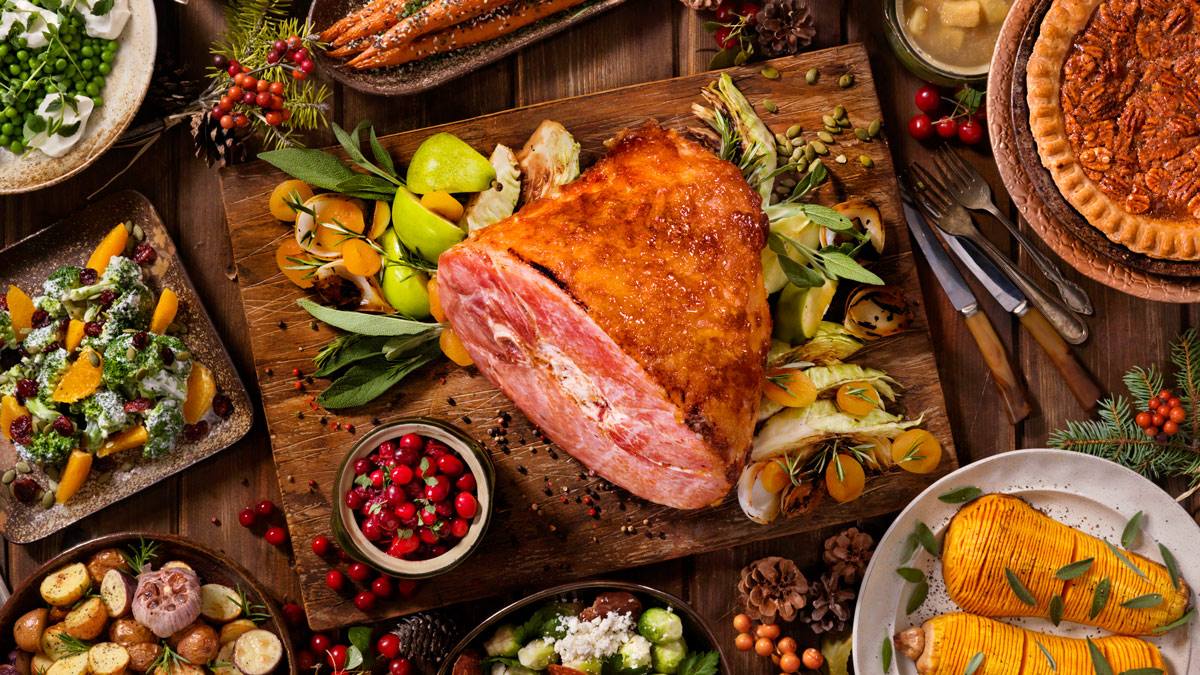
Aussies love ham, and the Christmas ham is a seasonal staple. Whether you’re a foodie with MasterChef abilities or a newbie in the kitchen, choosing and preparing the perfect ham can be a little daunting with so many options on offer and people to impress.
The supermarket giants sell a staggering amount during the festive season, and each of the major supermarkets have at least two hams on offer this year for your Christmas feasting.
To help you choose the best option for your festive table, we bought 12 leg hams available from the major supermarkets and gave them to a panel of experts to see how they taste.
Plus, we’ve gathered some expert advice on buying and cooking the perfect Christmas ham to minimise some of the festive stress.
The best and worst supermarket Christmas hams
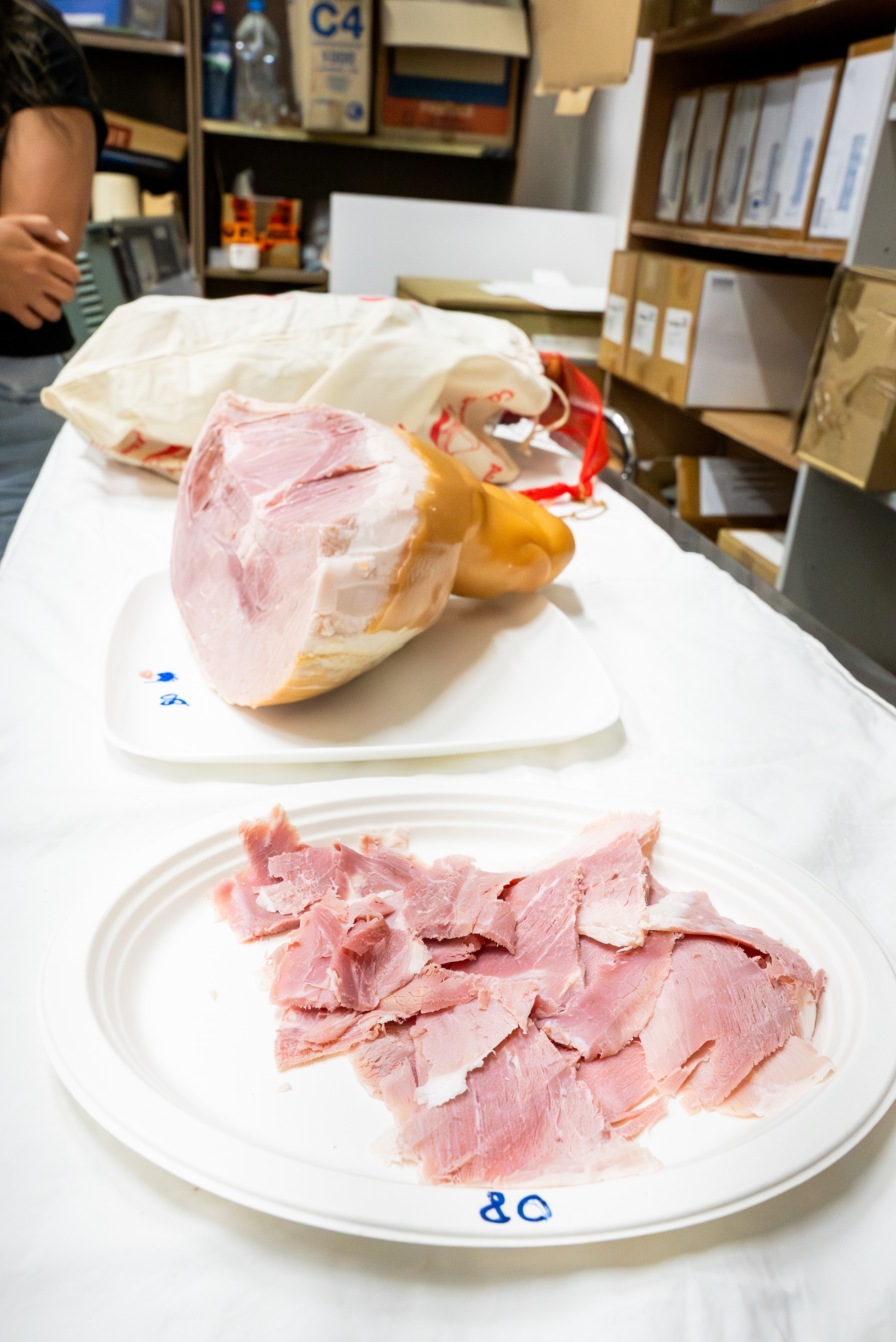
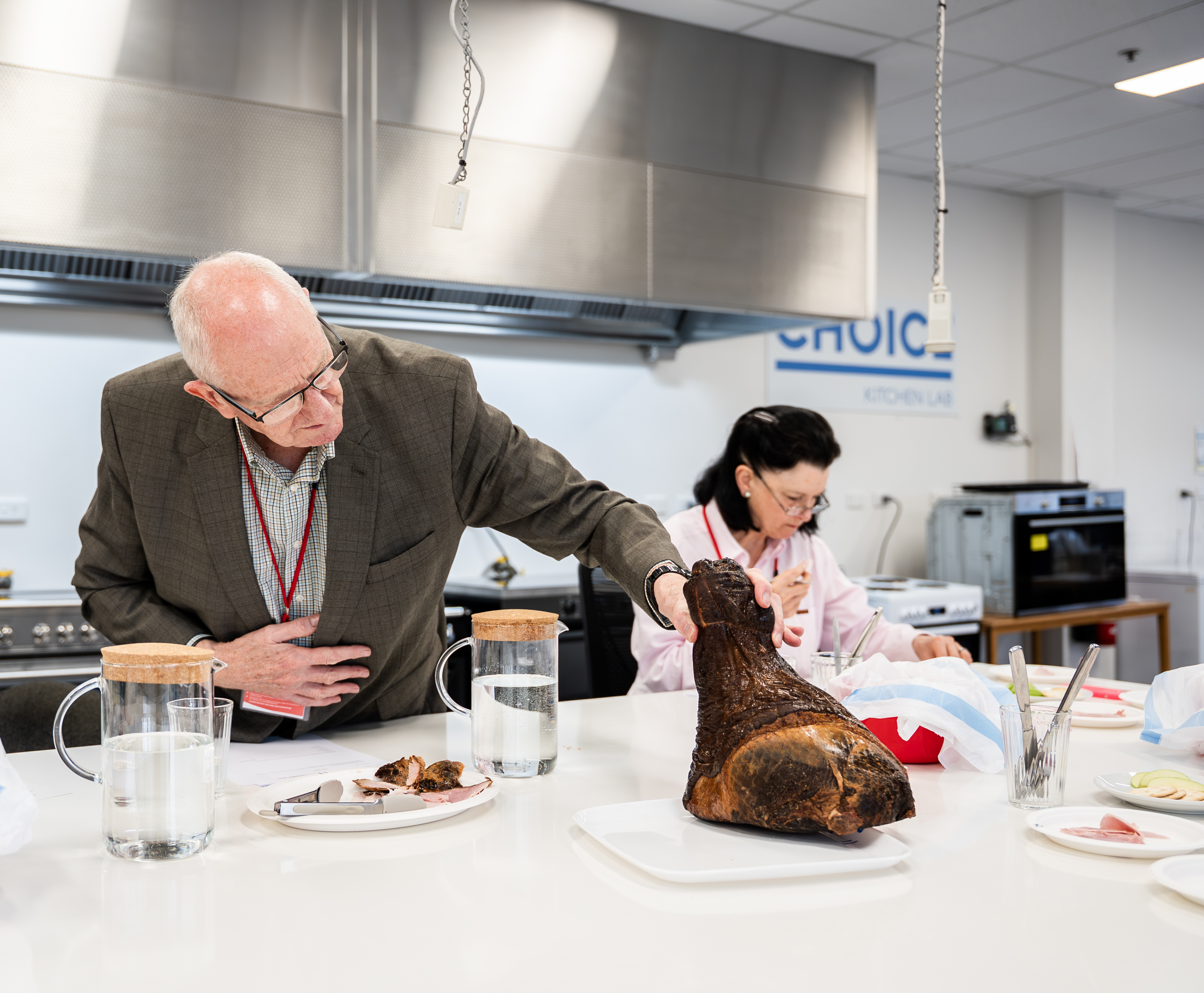
We selected 12 Christmas hams available nationally from IGA, Woolworths, Coles and Aldi. We then set up a blind taste test where our experts tasted each product cold, rating the ham on flavour, texture, appearance and smell.
You may think there’s not much difference between supermarket hams – ham is ham, right?
Well, our blind taste test found that the quality can actually vary dramatically, and price isn’t necessarily an indicator of quality.
The highest ranked ham scored 80% and cost just $8 per kg, while the most expensive ham cost $21.99 a kg, and scored only 68%.
Best tasting ham in our taste test
These products were the panel’s favourites.
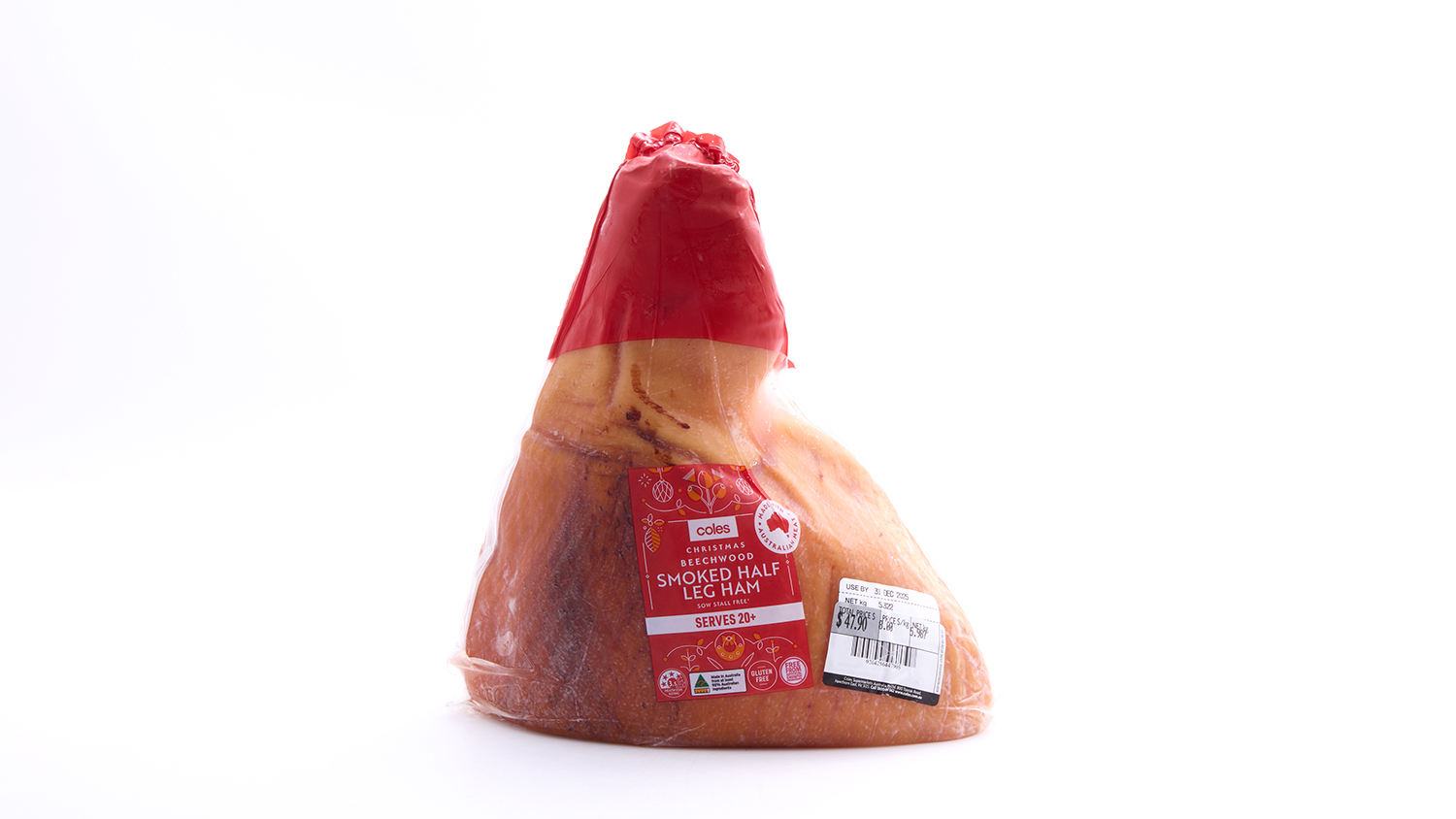
Coles Christmas Beechwood Smoked Half Leg Ham
CHOICE Expert Rating: 80%
Price per kg: $8.00
Experts say: “The whole piece of ham presents well. Aroma is mild but pleasant with a nice balance between sweet and smokey flavours.” “Flavour is balanced with low salt and mild ham taste, and good texture with moist mouthfeel.” “Taste is nice and pleasant, a very good overall ham.”
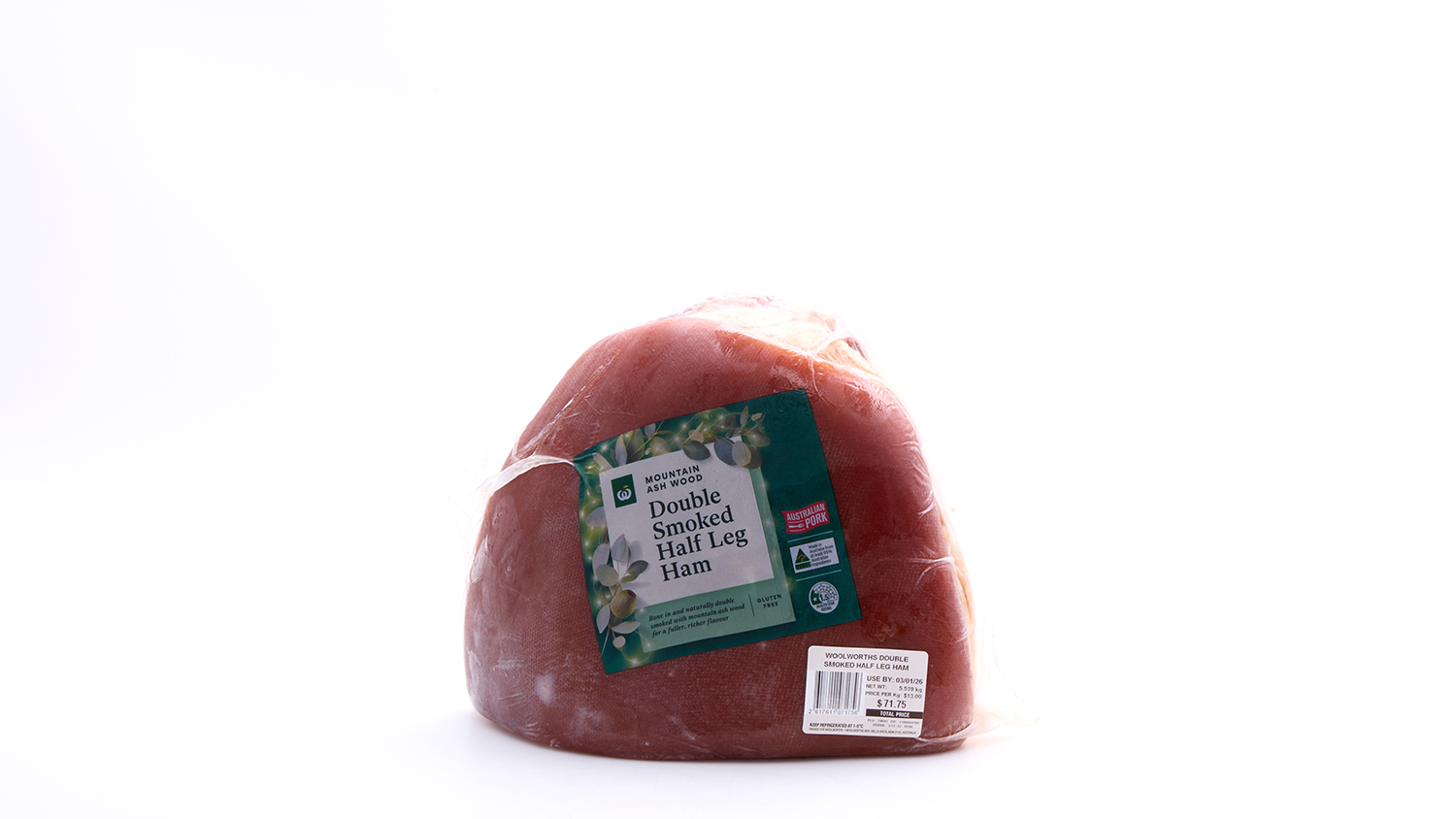
Woolworths Mountain Ash Wood Double Smoked Half Leg Ham
CHOICE Expert Rating: 75%
Price per kg: $13.00
Experts say: “The ham has a good appearance with good pink flesh, clean cream fat, and even smoke colour.” “Aroma is mild and pleasant, and flavour is mild and slightly sweet.” “Texture is mostly moist but can be dry and chewy in thicker slices”. “Some holes are evident in flesh, but overall appearance and quality are good.”
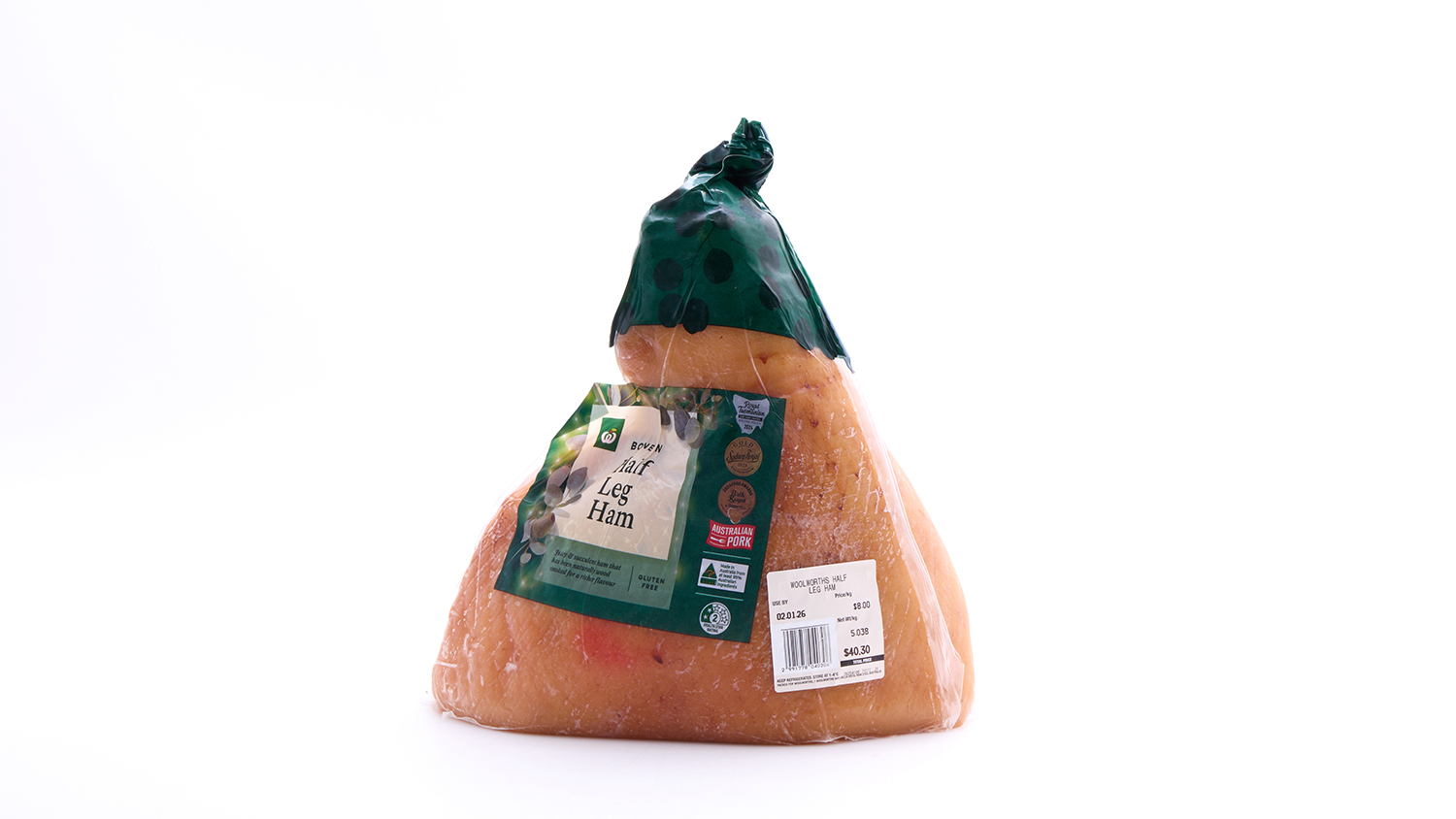
Woolworths Bone In Half Leg Ham
CHOICE Expert Rating: 70%
Price per kg: $8.00
Experts say: “The ham has good overall colour and a natural appearance, with clean fat and mostly even pink flesh, though some sections are pale.” “Aroma is mild with unusual fruity/sweet notes that carry into flavour.” “There’s variation in texture, ranging from moist in some areas to dry in others, with areas of overcooking.” “Flavour is pleasant but bland.”
The hams that scored lowest in our taste test
These products were underwhelming performers as rated by our experts.
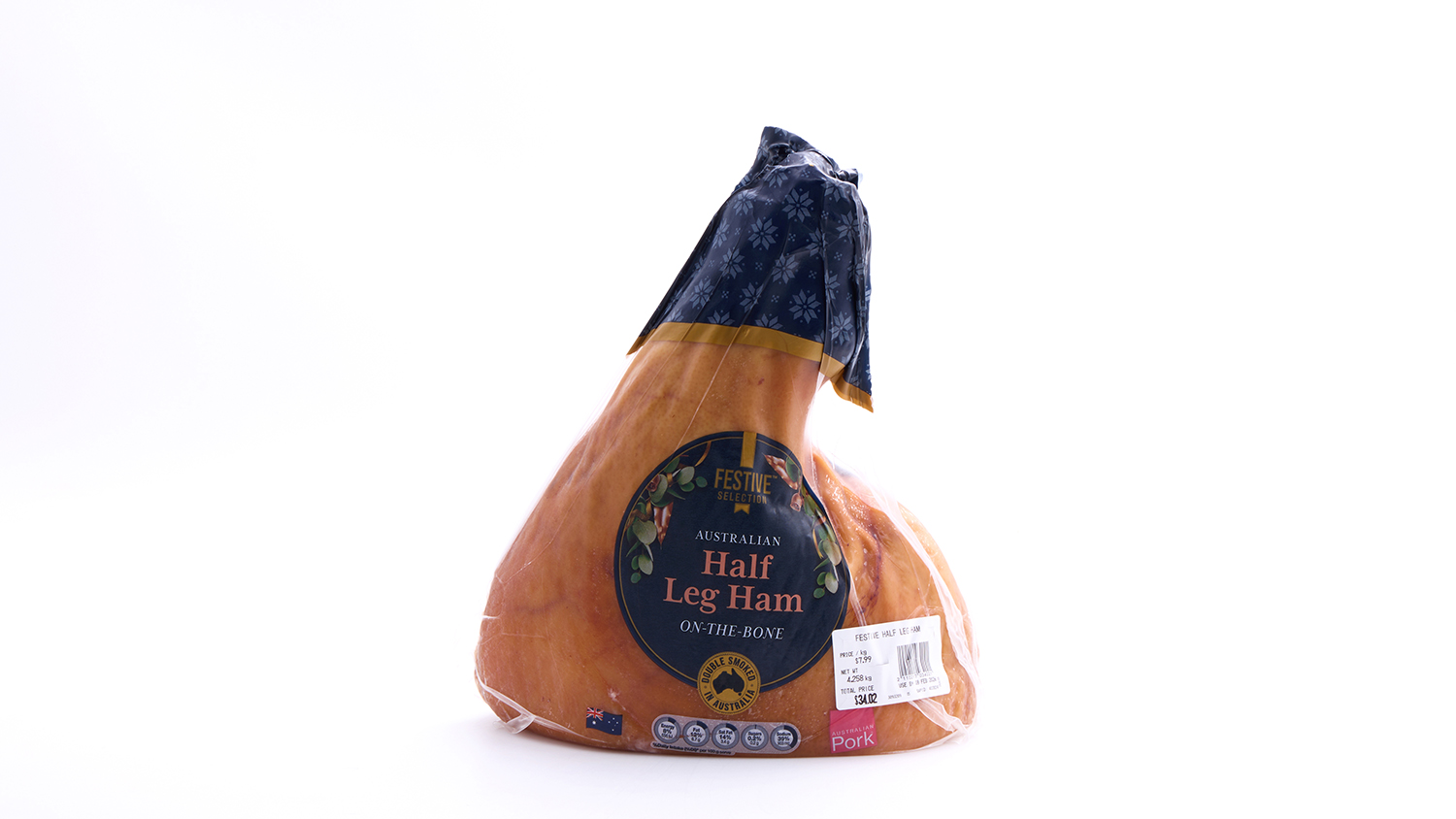
Aldi Festive Selection Australian Half Leg Ham On-The-Bone
CHOICE Expert Rating: 61%
Price per kg: $7.99
Experts say: “Pale, dry, and uneven in appearance with very mild aroma and flavour.” “Texture is dry and powdery.” “Flavour is mild and distracted by powdery, unpleasant texture.”
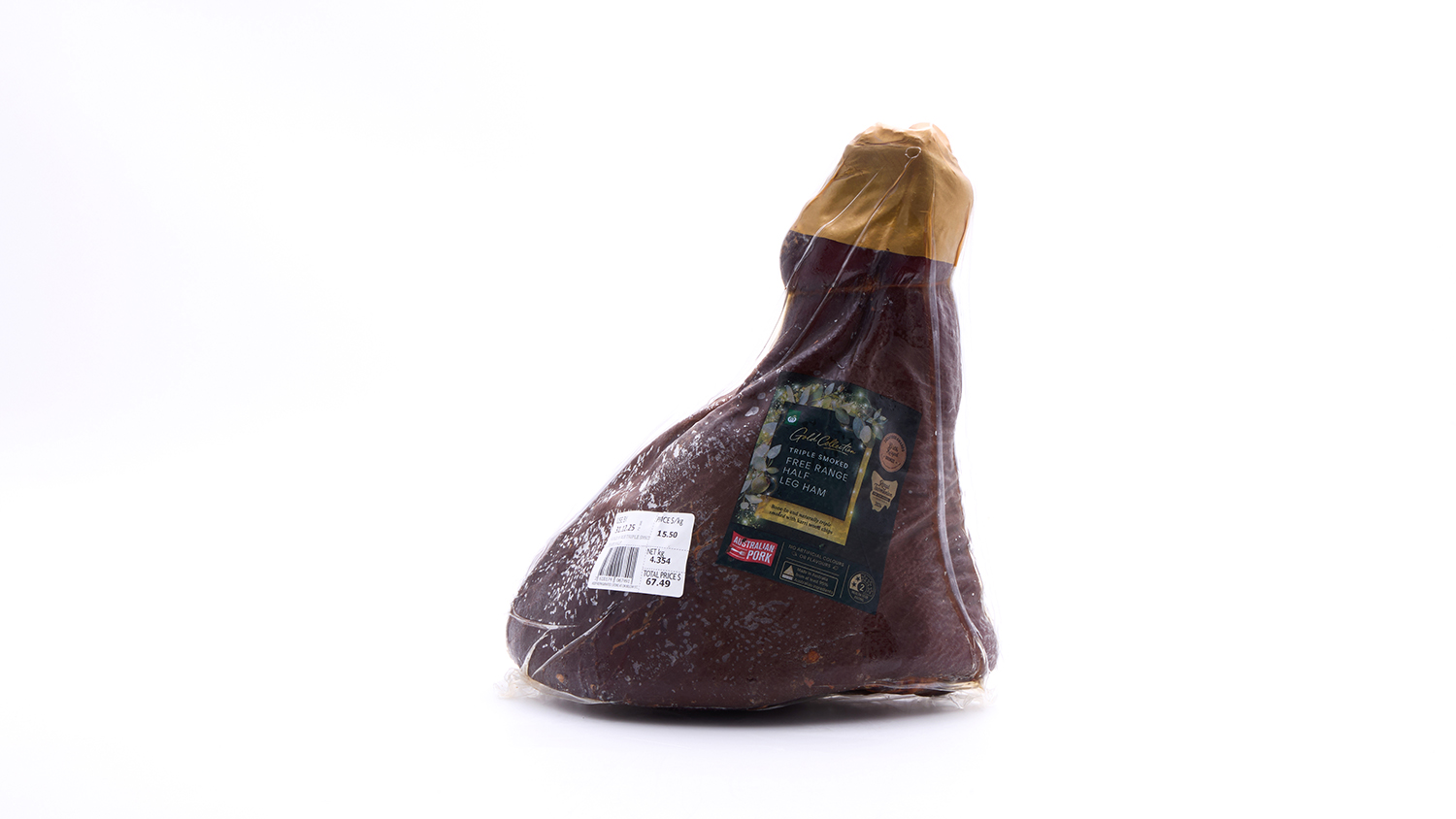
Woolworths Gold Collection Triple Smoked Free Range Half Leg Ham
CHOICE Expert Rating: 62%
Price per kg: $15.50
Experts say: “The ham has a very dark, almost burnt-looking colour, suggesting heavy smoking.” “It has a smoky aroma and flavour but not as smoky as expected from the dark exterior.” “Flavour is balanced but texture is very dry and overcooked, especially near edges.”
What about Christmas ham from a butcher?
We bought a leg of ham from a local butcher to see how it fared against the supermarket hams. At $25 a kilo, this ham was the most expensive we tested, but it is fairly typical of what you can expect to pay at a butcher.
Like the other products in our test, this ham was tasted blind (so the experts were unaware that a butcher ham was mixed in amongst the supermarket products) and overall our experts were impressed.
One of our experts said: “It has a mild ham aroma but does smell like meat. Good even pink colour. No large holes evident. Soft texture so breaks easily but quite chewy on eating. Some slices are more moist and softer than others. Mild but pleasant taste, not too salty, little smokiness but good balance”.
While buying your ham from a butcher will mean paying a premium, there are often positives to spending a bit more on your Christmas ham.
Higher quality: Butchers often source their meat from local or trusted farms where the meat may be raised more naturally without unnecessary hormones and additives.
Fresher meat: Meat sourced from butchers is likely to be fresher resulting in better flavour and texture. One of our experts noted this about the ham purchased from the butcher: “The black hair on the exterior shows the ‘natural’ side, plus it’s not a commercial white-haired pig. This is the least processed-looking ham.”
Better transparency: When you buy from a butcher you can ask questions like where the meat came from, how it was raised and how it was prepared in terms of curing and smoking.
Butchers are the meat experts: When you buy from a butcher you can also receive their expert advice on how to prepare, cook and carve your ham, not to mention you’re (likely) supporting a local small business and local farmers.
How to choose the perfect Christmas ham
If you’re planning to serve ham for Christmas dinner, we recommend buying one as early as the start of December (hams generally have a 3-month expiry window but be sure to check the use-by date when purchasing). But before you start shopping, check these expert tips for choosing the right Christmas ham for you.
1. Type of ham
A traditional Christmas ham is usually ham on the bone – either a shank or a slightly larger leg cut. The meat from these bone-in hams is usually more flavoursome and juicier than what you’d get from a boneless cut. But it is worth noting that boneless ham is easier to carve into uniform slices, so it could be a good option if convenience is a priority.
We tested two boneless hams from Aldi – their Festive Selection Triple Smoked Boneless Ham and Specially Selected Premium Free Range Boneless Ham, priced at $13.99 per kg and $21.99 per kg respectively.
2. Size of ham
Consider the number of guests you’ll be serving. As a general rule, you should allow about 225–340g of ham per person. Standard ham on the bone comes in a half-leg size, but these can vary in weight and some varieties can be found in quarter-leg sizes. These can be the shank end or the thigh end cut of the leg.
3. Quality
Look for hams that have flecks of white fat, known as marbling, for extra juiciness. And if possible, try to buy Australian pork – check for the ‘Australian Pork’ logo or the country of origin labelling. All products we tested (except the Aldi Festive Selection Triple Smoked Boneless Ham) claimed to use Australian Pork, either in their ingredients list or through the ‘Australian Pork’ logo.
4. Sow stall-free
A sow stall or gestation crate is a crate where a pregnant pig (the sow) is kept throughout the pregnancy. The stall is 2m long and 60cm wide, and the sow can sit, stand and take one step forward and backward but can’t turn around.
Due to the size of the crate, the sow’s movement is very restricted, which can lead to injuries and discomfort. They are also unable to express natural behaviours such as socialisation, foraging and exploration. The animal welfare organisation RSPCA says this means they get insufficient sleep and rest, and they are more stressed.
Apart from ethical considerations, a 2023 study found that the less stressed the pigs are, the higher the meat quality, so buying sow stall-free means you’re getting a more ethical and higher quality meat.
Three products we tested claimed to use sow-stall free Australian Pork (two from Coles and one from Aldi), but we didn’t verify those claims.
Smoked ham tends to have a richer deeper flavour, while unsmoked hams have a milder taste.
5. Hormone-free
Three Christmas hams in our test were labelled as containing no added artificial hormones; all were Coles hams. (The other hams did not make such claims, but that doesn’t mean they contained artificial hormones.)
Hormones can be synthetic or natural. Hormones such as estrogen and testosterone can be used to create leaner and more muscular animals that tend to grow larger and more quickly, without consuming as much feed as animals who are not supplemented with hormones.
Growth promotants such as added hormones have been banned by the European Union. The European Commission cites several scientific opinions as the reason behind the decision, which say there is a potential risk to human health from hormone residues in meat products. The World Trade Organization says this decision is not supported by science.
Both natural and synthetic hormone residues can be found in the meat, which may result in health problems. When looking at the labels, be aware that claims of being “free from artificial growth promotants” (which was present on the Coles hams) don’t mean the ham is free from all growth promotants, just artificial ones. This means they still may have used naturally derived growth promotants.
6. Smoked or unsmoked
The process of smoking creates the typical flavour many people associate with ham. Smoked ham tends to have a richer deeper flavour, while unsmoked hams have a milder taste. The smoking process can also be repeated for a stronger, smokier flavour (if that’s your preference), but this generally drives up the cost of your ham. The average price per kilo for single smoked ham was $8.00 (except for Aldi’s Specially Selected Premium Free Range Boneless Ham which was $21.99 per kg), double smoked was $11.50 and triple smoked was $15.12.
7. Other additives
Sugar is often added to counterbalance the saltiness from the brining, but the amount of sugar added is almost negligible. In most cases the values on the packs we checked were less than 1g per 100g.
Nitrites are also added during the brining process to control the growth of bacteria and give the meat a reddish colour and a favourable aroma and texture. Nitrite levels must be kept under certain concentrations to ensure the meat cures safely. They are usually listed as additive number 250 or sodium nitrite, and were found in all the hams tested.
Nitrates generally and processed meats like ham specifically are known to have health risks, so it’s best to limit ham in your diet.
Phosphates are used as water binders and are classified as stabilisers and can be listed as additive numbers 450, 451 or 452. They were present in all the hams we tested and unfortunately may have a negative effect on health.
Now that you’ve selected your ham, it’s time to cook it to perfection. Follow these steps from CHOICE home economist Fiona Mair to ensure a delicious and succulent Christmas centrepiece.
1. Prepare the meat
Remove the ham from the fridge at least an hour before cooking to aid in even heating. Remove the rind (read Fiona’s recipe below for more details on how to do this) and score the fat.
2. Glaze
Create a glaze by mixing together sweet and flavourful ingredients like brown sugar, mustard, honey or fruit preserves and brush it generously over the scored fat.
3. Cooking
If cooking in the oven, allow about 30–35 minutes for every kilogram. The temperature inside the thickest part of the meat must reach 70°C and the bone area should be more than 60°C.
To cook, place the ham on a rack in a roasting pan, skin-side up and add some water to the pan to prevent the glaze from burning. Cover the ham with foil for the first hour so it doesn’t dry out.
Basting the ham with a glaze every 20–30 minutes will build up a flavourful, caramelised crust.
4. Basting
Baste the ham with the glaze every 20–30 minutes to build up a flavourful, caramelised crust.
5. Resting
After cooking, cover the ham in foil and rest it for at least 20 minutes to allow the juices to settle.
6. Carving
Slice the ham to the desired thickness starting at the fat until you reach the bone. Then turn the ham over and slice to the bone again from the other side.
7. Serving
Serve the ham with your favourite sides, like roast vegetables and salads. Don’t forget to include some homemade apple or honey mustard sauce!
8. Minimising waste
Get the most out of your ham by using the bone to make stock (which can be used as a base for pea and ham soup or other savoury dishes).
Any leftover ham can be eaten for the next few days by adding slices to sandwiches or chopped pieces to fried rice. Alternatively, you can freeze it for 3–4 months.
Whether you prefer a classic bone-in ham or a boneless one, the key to a mouth-watering holiday ham is in the quality of your selection and the care you put into its preparation. With these tips, you’ll have a great centrepiece for your festive feast.
How we tested Christmas ham
We chose 12 Christmas hams available in major supermarket chains nationally. We then set up a blind taste test where each product was tasted cold by experts, and given a rating based on flavour, texture, appearance and smell.
Not all characteristics in the taste test were treated equally, with flavour being the most important and given a heavier weighting, followed by texture, appearance and smell.
The CHOICE Expert Rating, our overall score, is made up completely of our taste test score.
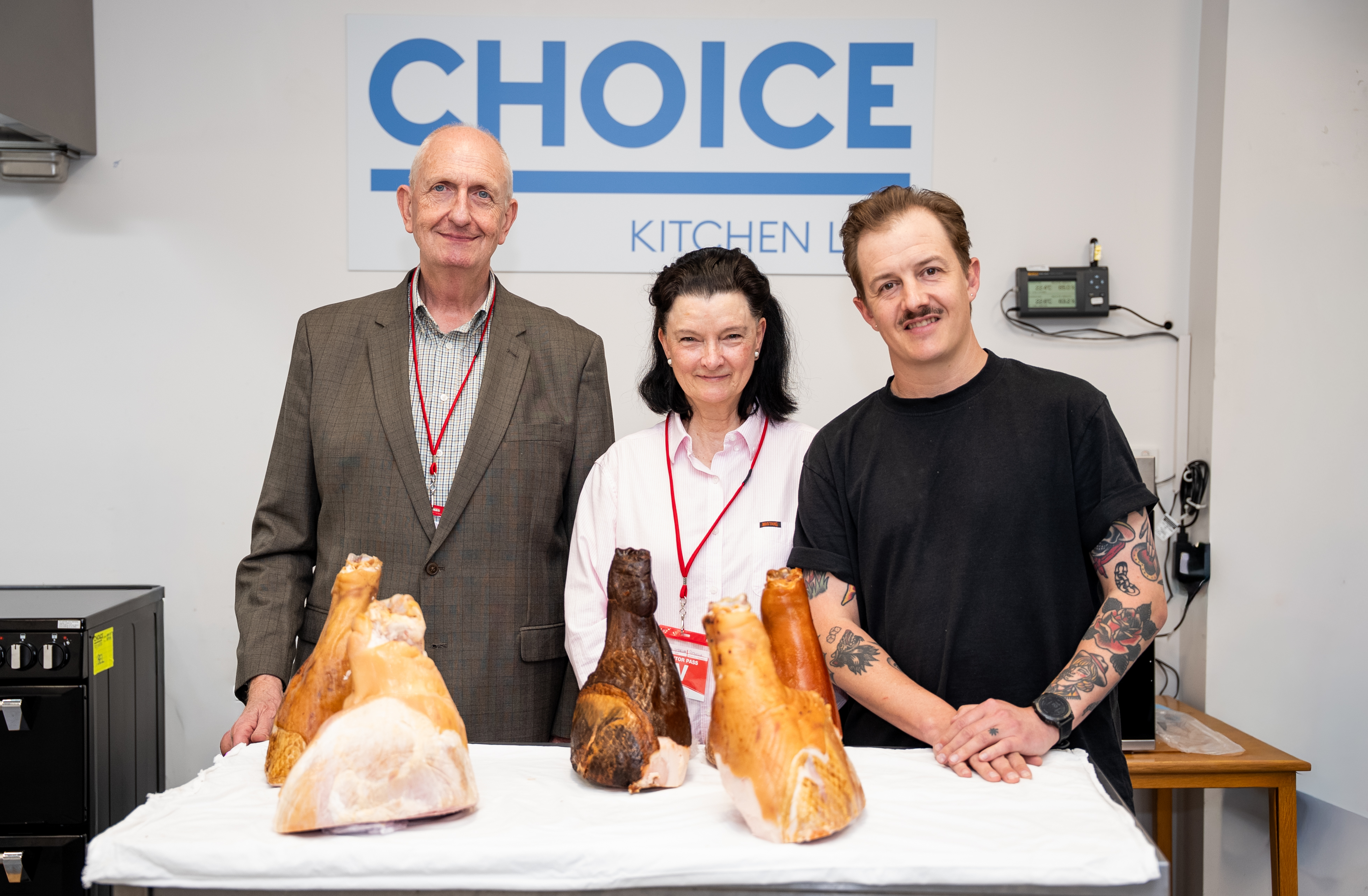
From left to right: Greg Bonnefin, Brigid Treloar, David Stössel.
Meet the testers
Our expert test panel included:
Greg Bonnefin started his career in the processed meat industry at Presto Smallgoods in the quality department, and after a year became chief chemist. During that time, he became involved in the Royal Agricultural Society original ham and bacon judging competitions and was actively involved in the food regulations related to processed meats. His career spans ingredient supply businesses to the smallgoods industry, including regulatory, technical and development roles based in Singapore, Europe and Asia. During this time Greg actively maintained his involvement in processed meat competitions across the globe, holding judging and panel chair positions. He remains a member of the American Meat Science Association, Institute of Food Technology and the Australian Institute of Food Science and Technology.
Brigid Treloar – has been a freelance food consultant for over 30 years. The author of eight cookbooks, and co-author of three others, she also contributes to newspapers and magazines, reviews restaurants and judges cookery and recipe competitions. Brigid has presented specialist cooking classes around Australia and overseas, and often appears on TV and radio. She’s a lecturer at Le Cordon Bleu, consultant with Zest Waterfront Venues, and advises many of Australia’s food companies on product and recipe development. Brigid is Chair of Judges for Sydney Royal Fine Food Speciality Products (which includes products like jams, herbs, teas and chocolate) and is a judge for Professional Bakery, Aquaculture, Pasta, Olive Oil, Dairy Competitions and Sydney Perishable and Non-Perishable foods.
David Stössel – has had a long career in hospitality and has worked closely with leading Australian Chef, Matt Moran, working as general manager at the two-hatted Aria Restaurant Brisbane before moving on to become director of food and dining for Chef Matt Moran and the Solotel Hospitality Group, working across venues including Aria Restaurant, Chiswick Restaurant, and Barangaroo House. He now leads Feather and Bone, Sydney’s leading ethical and sustainable butcher and providore.
Fiona Mair’s Christmas Ham Recipe
Ingredients
5–6kg leg of ham
Cloves
Roasting pan or large foil tray with a roasting rack
Large sheet of foil
Marinade
¼ cup brown sugar
1 tablespoon Dijon mustard
½ cup orange juice
¼ cup maple syrup
Preparation
To prepare the ham, remove the rind by running your thumb around the edge, just above the fat. Gently slide your hand under the rind to release the rind from the fat. If the ham has a shank, cut through the rind of the ham 10cm from the shank end of the leg before removing.
Prepare the fat by scoring with a sharp knife across the ham one way (avoid cutting through to the flesh), and then across the ham the other way, forming diamond shapes approximately 3–4 cm wide.
Method
Combine all marinade ingredients.
Using a pastry brush gently brush the marinade over the fat.
Insert a clove in each diamond.
Place the ham onto the roasting rack in a roasting pan and cover with foil.
Add some water to the bottom of the dish.
Baking ham in an oven
Cook the ham in a preheated oven 180°C fan-forced on a low shelf position for 2.5 to 3 hours. Remove the foil one hour before the end of the cooking time to crisp and brown the fat. Remove from the oven, cover and allow to rest for at least 20 minutes before serving.
Baking ham in a BBQ
Cook in a preheated BBQ indirectly (burners on either side) with the hood closed. For the first hour, the heat should be set to high (240°C). Then reduce the temperature to medium (180°C) for around 2.5 hours. Remove the foil one hour before the end of the cooking time.
Refrain from opening the BBQ as you’ll lose heat and your cooking time will be longer.
Allow to rest covered for at least 20 minutes after cooking.
Storage
Wrap the cool ham in a calico cloth or bag or a tea towel sprayed with a little vinegar. Don’t wrap the ham in plastic as the ham can sweat and spoil more quickly. Make sure the cloth is changed regularly.
Rebecca Ciaramidaro is a Content producer in the Household team at CHOICE. Rebecca writes about a wide range of children's and household products, ranging from cots and strollers to ovens, BBQs, espresso machines and electric blankets. And also grocery items such as nappies, sanitary pads and laundry detergents.
Previously at CHOICE, Rebecca worked as a Test officer in the kitchen lab.
Rebecca has a Bachelor of Science (Nutrition and Food) from the University of Western Sydney. LinkedIn
Rebecca Ciaramidaro is a Content producer in the Household team at CHOICE. Rebecca writes about a wide range of children's and household products, ranging from cots and strollers to ovens, BBQs, espresso machines and electric blankets. And also grocery items such as nappies, sanitary pads and laundry detergents.
Previously at CHOICE, Rebecca worked as a Test officer in the kitchen lab.
Rebecca has a Bachelor of Science (Nutrition and Food) from the University of Western Sydney. LinkedIn
For more than 60 years, CHOICE has been fighting the good fight for Australian consumers.
In the past year alone we've uncovered systemic issues with sunscreens, investigated shonky supermarket pricing, fought for stronger scam protections and helped make complex energy pricing fairer and clearer.
CHOICE is here to provide unbiased advice and independent testing in our world-class labs. We buy the products we test, just like you do, and our expert reviews are influence free. We’re here to help you choose smarter. Hopefully you’ll also save some money along the way.
Thanks to CHOICE, you’ll never be alone when a business treats you unfairly. You can support our work by joining or donating to our cause.