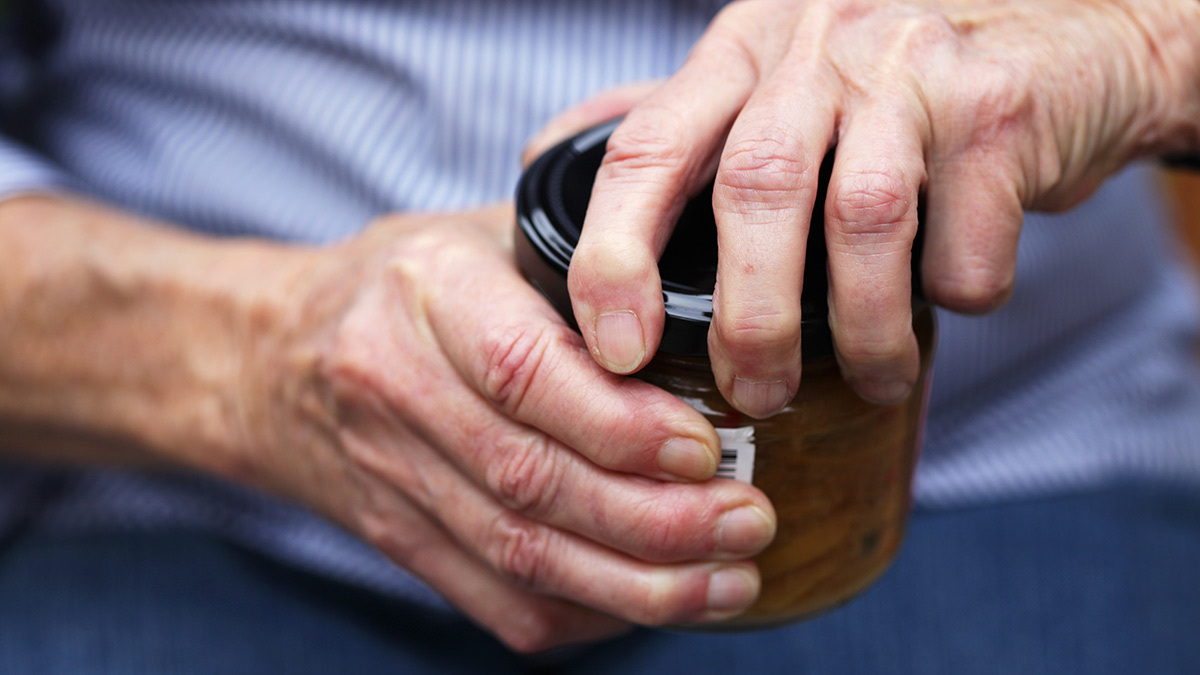
Have you ever battled to open a pack of food – perhaps a jam jar lid that just won’t budge, a plastic cereal bag that spills the contents when you pull it open, or a slippery peel-back corner on the pack of sliced salami that prematurely tears off before you get it open? The struggle is real, and even has a name: “wrap rage”.
Tricky packaging can be frustrating for anyone, but accessibility is even more of an issue for some – if you have arthritis or certain disabilities, if you’re part of the ageing population or a child, for example. And it seems it’s not always high up on the list of priorities for some food companies.
A call out to CHOICE’s audience on Facebook and Community asking people to nominate problematic food packaging elicited hundreds of responses, and identified some of the worst offenders*. Here’s a summary of what you told us.
*Comments have been edited for length and clarity.
Induction seals on bottles
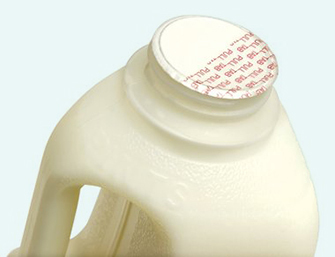
The seals that can be found under the lid of bottles of products including milk, mayonnaise, maple syrup and juice cause people all kinds of grief.
CHOICE Community member @zackarii explains: “The idea is to grip this small tab nearest to the rim and lift, thereby pulling up the neck seal. It is hard to grip, small, slippery and the seal robust. I have resorted to teeth and a paring knife.”
Linda Faye Smith also relies on tools. “Sometimes I have to get a sharp knife and cut a hole in the plastic so I can tear the rest off. I think they stick them on with super glue!”
Referring to milk bottles, @pnicol says “those little stick-up tabs are difficult to pull up if you have weak or wet fingers”.
“If you have arthritis or some other condition it’s near impossible. Sometimes I use my teeth,” adds Heather McLean.
Emma Maree agrees. “I have muscular dystrophy and it’s impossible for me.”
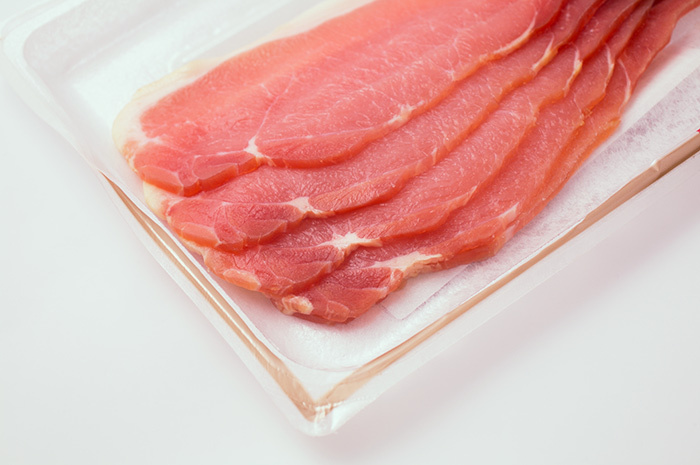
‘Peel here’ tab seals are used on many different products, but seem to be particularly problematic when used in the packaging of salmon, smallgoods (ham, salami etc), tomato paste and feta.
@Guitarfish struggles to find the tab in the first instance. “Flat film-covered packs of cold meats/cheese with one corner different from the other three, which looks as though you should be able to lift it and peel it back, but which in fact is as firmly sealed down as the rest. I swear they put that one there just to taunt us.”
@Obviousman has a particular gripe about packs of Primo sliced ham. “They have a ‘peel here to open’ message normally in the bottom left corner, but trying to get that little piece up enough to grip does my head in! And if you should be successful, it never opens cleanly; it just rips in half, most often diagonally from corner to corner.”
I swear they put that one there just to taunt us
@Guitarfish, CHOICE Community member
“Tomato paste in the plastic yoghurt style pots, why is it stuck with superglue?”, muses Lynette Dot Robertson. To which Julie Farmer responded “And there’s not enough of a tab to enable you to use your teeth.”
And several people singled out Tassal smoked salmon as being troublesome to open.
@BobT starts off by looking on the upside. “It’s good that Tassal has put much effort in achieving food security, but the packets are almost impossible to get into. One has to tear the packets open from the top corners. I’m no weakling but I find it quite difficult. With greasy fingers it’s impossible.”
“The corner of the pack rarely pulls apart as intended,” says @granjalu.
Peel to open vac packed meat
Many people told us they have a beef with what @phb describes as “modified atmosphere meat packs in the supermarket where the plastic film is heat welded to the underlying plastic container”. Or as Karen R. W. Treanor puts it, meat “hermetically sealed in some space-age plastic”.
Lorraine Bunt explains: “I found that I didn’t always have the strength in my bad hands to grip the tiny piece you are supposed to and peel it back.”
Alice Melgar gives the packaging of Cleaver’s kebabs as a specific example, saying opening it is “like trying to open a suction, no peeling back happens, followed by the sticks all getting stuck still in [the] packet, and then if you pull them, the meat chunks fall off.”
A number of people concede to reaching for a tool to assist with opening this type of packaging. “The only way in is with a sharp object like a knife,” says @phb.
Lesley Dwar agrees. “Those space age plastic packs are a huge pain. The answer is to score around the meat with a Stanley blade.”
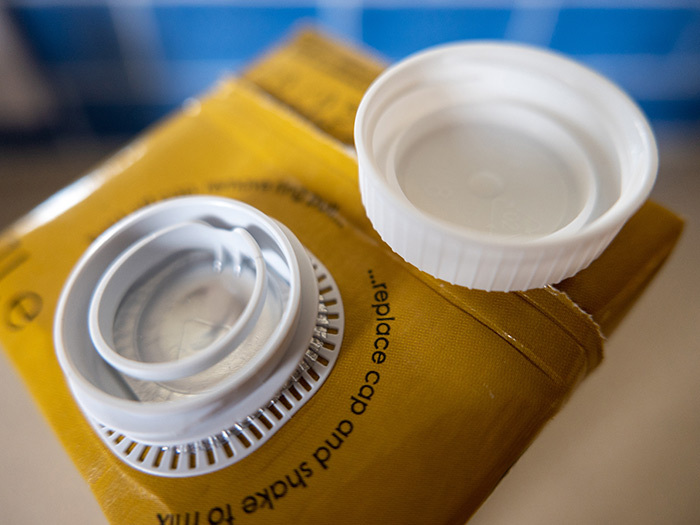
Ring-pull seals, used for some bottles of oil, soy sauce and UHT milk, require both strength and dexterity to open, and attempts to open them often end in a mess, according to your feedback.
Sue Lambert points the finger at Crisco oil plastic bottles “that have a tiny ring pull under the lid. So hard when you have arthritis in your fingers.”
Every so often the plastic ring just snaps off and leaves you to try to cut it out with a knife or push it in to float around in there and mock you for your clumsiness
@Teddlesruss, CHOICE Community member
Lorraine Bunt finds the pulls “aren’t big enough to grip properly, I use a fork.”
Julie Farmer agrees. “Hard to pull off, then suddenly it comes away … and then you find you’ve got splatters of oil down your front.”
“And they break easily creating an even bigger problem,” adds Pauline Crookes.
Glass jars with metal lids
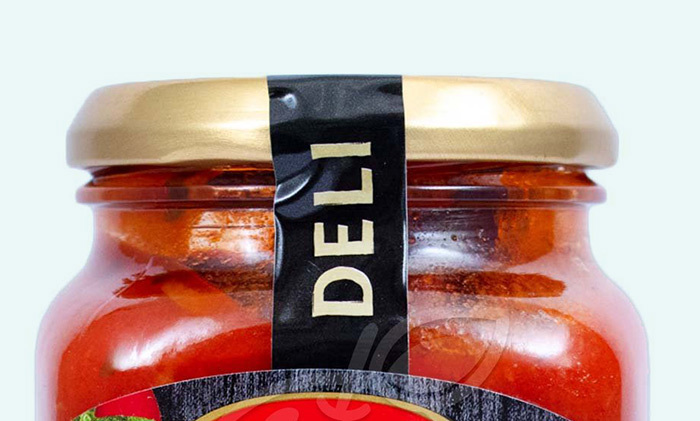
Glass jars are one of the most complained-about types of packaging as many are vacuum-sealed so tightly you need superhuman strength to get them undone.
This experience is summed up perfectly by Catherine Le Breton: “I bought a glass jar of cherries. The metal lid was totally immovable. My two very strong sons could not budge it despite employing every trick in the book. I had to chuck the jar out!”
Salsa jar lids received multiple mentions, and Leggos Stir Through Pasta sauce bottles, which have a taper on the side of the metal lid, received a dishonourable mention from @Fred123. “They are sometimes too well sealed to undo by hand and the metal jar opener we have cannot get a grip on the tapered edge,” he says.
‘Tear here’ serrated edge or notch
Difficulties opening ‘tear here’ packs were numerous and varied. People often couldn’t open them at all, and sometimes the complaint was due to a failure of the associated resealable ‘zip’.
@Guitarfish nominated “the tiny packs of wasabi and pickled ginger that come with sushi that are marked ‘tear here’ and are slightly greasy from the sushi so that it’s impossible to do just that – grr.”
“I have definitely had problems with the packets of Nestlé choc bits. They have a ‘tear here’ but 9/10 times it never happens and I have to get out the scissors,” says @Mare60.
It all ends in tears
@Fred123 takes issue with “the plastic bags of prunes etc., which have a tear line across the top with a small slit on either side. Sometimes they tear completely unevenly and even damage the resealable seal, but mostly they do not tear at all, requiring the use of scissors to cut across the dotted line. Then to add insult to injury, they often will still not open, thus requiring a second, and sometimes a third cut with the scissors.”
And @Meltam’s frustration with the Aldi sultanas pack is undisguised. “It has a zip lock track for sealing it up after you have managed to access the contents. The trouble is that the zip lock generally does not go to the edges of the packet meaning you have a 90% seal and claustrophobic sultanas can flee the confines of their imprisonment through the two outside edges. This necessitates the top of the bag being rolled down and secured with a rubber band… So what then is the point of the zip lock?”
Food packaging should help maintain food quality and safety, but it should also be accessible. Poor packaging design can impact on someone’s ability to eat and drink, and the flow-on effects include increased food waste.
One organisation making a positive change in this space is Arthritis Australia. It’s Accessible Design Division helps industry understand the abilities of those with functional limitations (such as a loss of strength and dexterity caused by arthritis and ageing) and has developed accessibility guidelines that, if followed, ensure products and packaging meet people’s abilities.
Poor packaging design can impact on someone’s ability to eat and drink
Among other initiatives Arthritis Australia operates an Easy to Open certification program and has collaborated with over 65 organisations, including food companies Kellogg’s and SPC, to improve accessibility of their products and packaging.
Speaking up about problem packaging
We can all make a difference by speaking up about tricky packaging. It’s in a food company’s best interest to ensure their products are accessible, so the more vocal we are about problems, the more likely that they’ll make improvements.
After all, if we can’t open a product, chances are we’re not going to buy it again, and ultimately that can affect the company’s bottom line.
Here’s what we can do to help bring about change:
Get in touch with the brand owner directly and tell them what packaging is problematic, and why. Many companies act to improve their packaging as a result of consumer complaints, and have set up a dedicated packaging complaints line for this reason.
Make a complaint to the Australian Packaging Covenant (APCO) by filling out its Consumer Packaging Complaint Form. APCO has over 1500 members, many of them major food and beverage companies including Aldi, Coca-Cola, Coles, Goodman Fielder, Kelloggs and Nestlé, Primo Foods and Simplot. Signatories to APCO have made a commitment to reducing the environmental impact of their packaging, which includes a requirement to design for accessibility, so there can be consequences for companies that don’t meet their obligations.
Fill out Arthritis Australia’s packaging feedback form, and nominate a product for its annual ‘That’s a wrap’ campaign which awards companies for worst (and best) packaging.
Rachel Clemons is an award-winning journalist who worked at CHOICE from 2004–2022.
During her time at CHOICE her core focus was on food and nutrition, from reviewing breakfast cereals and fast food to dispelling myths about the benefits of detox kits and gourmet salt or translating confusing food labels – with the occasional taste test thrown in for good measure.
Prior to CHOICE she lived overseas, working predominantly in hospitality when she wasn't travelling and eating her way through various cuisines. She holds a Master of Science in Nutrition from King's College London (where she also researched and wrote for CHOICE's UK sister organisation, Which?), and a Bachelor of Science, Health Sciences from the University of Adelaide.
In 2017 she won the Dietitians Association of Australia's Nutrition Journalism Award and she's currently on the Steering Committee as a Parent Member of Parents' Voice.
You can find her on Twitter and LinkedIn.
Rachel Clemons is an award-winning journalist who worked at CHOICE from 2004–2022.
During her time at CHOICE her core focus was on food and nutrition, from reviewing breakfast cereals and fast food to dispelling myths about the benefits of detox kits and gourmet salt or translating confusing food labels – with the occasional taste test thrown in for good measure.
Prior to CHOICE she lived overseas, working predominantly in hospitality when she wasn't travelling and eating her way through various cuisines. She holds a Master of Science in Nutrition from King's College London (where she also researched and wrote for CHOICE's UK sister organisation, Which?), and a Bachelor of Science, Health Sciences from the University of Adelaide.
In 2017 she won the Dietitians Association of Australia's Nutrition Journalism Award and she's currently on the Steering Committee as a Parent Member of Parents' Voice.
You can find her on Twitter and LinkedIn.
For more than 60 years, CHOICE has been fighting the good fight for Australian consumers.
In the past year alone we've uncovered systemic issues with sunscreens, investigated shonky supermarket pricing, fought for stronger scam protections and helped make complex energy pricing fairer and clearer.
CHOICE is here to provide unbiased advice and independent testing in our world-class labs. We buy the products we test, just like you do, and our expert reviews are influence free. We’re here to help you choose smarter. Hopefully you’ll also save some money along the way.
Thanks to CHOICE, you’ll never be alone when a business treats you unfairly. You can support our work by joining or donating to our cause.