Easter is a popular time for holidays, making it a profitable period for scammers preying on travellers
Beware of criminals impersonating booking platforms, visa providers, airlines, tour operators and road toll companies
We’ve got tips on how to spot these scams and others while travelling in Australia and overseas
Planning a trip this Easter? You’re not alone.
Australians regularly spend billions of dollars on travel at this time of year, as we take advantage of public holidays and a break from school to explore, either domestically or overseas.
As a new holiday approaches, many of us will be opening our wallets, logging onto accommodation platforms, scoping out airline tickets, signing up for tours and searching for travel advice on social media as we gear up for some time away.
Scammers have been known to exploit our dealings with these services in attempts to secure themselves a tidy Easter bonus
Unfortunately, scammers are aware of this and have been known to exploit our dealings with all of these services in attempts to secure themselves a tidy Easter bonus.
We’re breaking down the most common travel cons to look out for, with tips to follow so you can score a scam-free break.
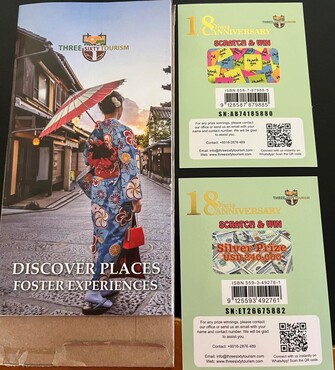
Scratch cards claiming you’ve won a prize look appealing, but are a common scam. Image: WAScamNet
Even just knowing that many of us are thinking about time away is enough for some scammers to try their luck.
State and national consumer regulators say they’ve seen a rise in cases of consumers receiving suspicious scratch cards in the mail promising travel giveaways or discount holidays.
Scrape away the covered sections of these cards and you can expect to be told you’ve won, sometimes as much as $240,000.
Directions on the card will tell you to contact the providers by phone, email or social media to claim your prize.
But there lies the catch – you’ll be told you’ll have to pay a fee, sometimes thousands of dollars, in order to receive your winnings.
You may even be asked to provide sensitive personal documents in order to gain eligibility for these holiday schemes.
Don’t try to redeem these so-called “prizes” and definitely don’t provide money or personal details to the organisations distributing them.
They’re likely criminals who won’t provide any of the goodies they’ve promised and may use any details you do hand over to steal your identity.
How to spot a fake travel prize
Be sceptical of unexpected holiday offers you receive in the mail or are sent online. Don’t respond to these or click on any links in emails or text messages you receive accompanying these promotions.
Don’t share any money or personal or financial details with anyone contacting you about these offers or claiming to be associated with a competition you didn’t enter.
Criminals have been known to set up scam ads on holiday accommodation and rental sites.
Sites like Booking.com and Airbnb have revolutionised the travel industry by allowing regular people to turn their properties into accommodation businesses.
But scammers are also trying to get in on the action and have been known to create fake listings on these sites in an attempt to steal travellers’ deposits.
Scammers have been known to create fake listings on these sites in an attempt to steal travellers’ deposits
Tourists aren’t the only ones being preyed upon by phony listers. Real estate bodies and fair trade agencies have warned of the same trick being pulled on people searching for rental homes.
Airbnb and Booking.com have previously told CHOICE that false listings are rare on their platforms and that they work hard to verify properties registered with their services, but it’s still worth being vigilant.
How to spot a fake accommodation listing
Scammers pushing phony properties will try to lure you in with offers many of us might find irresistible – a holiday home in a popular location going for a fraction of the usual price, for example.
So don’t rush into booking deals that seem too good to be true, and perform the following checks before locking in your stay:
Check the most recent reviews: Fake listings are often accompanied by a flurry of negative feedback from fellow travellers or no reviews at all. Make sure you’re looking at the latest reviews to get up-to-date feedback.
See how long the property has been listed for: Booking platforms work to take down fake listings but scammers themselves can remove and replace their advertisements quickly. Beware of suspicious listings that have only been active for a short time.
Stay on the platform: Be sceptical if the accommodation host tries to direct you off the platform (onto private messaging apps, for example), especially when it comes to payment.
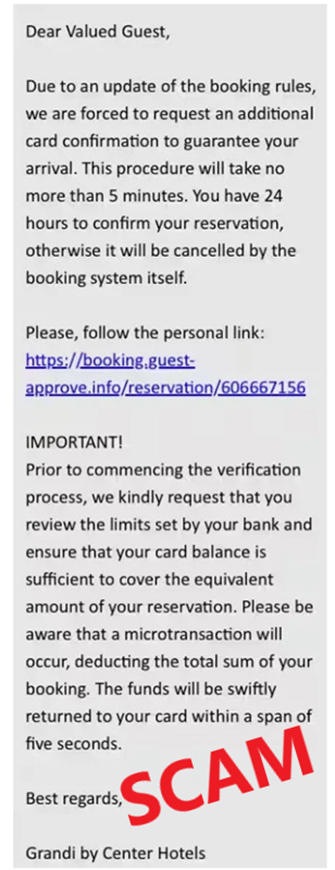
Hackers can take over accommodation accounts on booking platforms to send phishing messages to guests. Image: WA ScamNet
Another scam appearing on popular booking platforms involves criminals hijacking the accounts of hotels and other accommodation providers.
These compromised profiles reportedly then send guests messages or links to impersonation websites designed to steal sensitive information.
The con often begins with accommodation operators accidentally downloading malware or handing over login details for the platforms where they list their property.
Booking.com has been a popular target of this scam. Last year, Microsoft warned of a flurry of emails impersonating the platform being sent to accommodation businesses who use it to list properties.
These messages were believed to be carrying malware designed to steal an accommodation provider’s login credentials.
Once they’ve gained access to a business profile on a site like Booking.com, hackers send messages to the hotel’s guests, urging them to update or verify their card details in order to re-confirm or secure their booking.
Victims in Australia have reportedly lost money and sensitive personal information after clicking on the links included in these messages.
Booking.com has previously told CHOICE it’s working to limit the impacts of phishing attacks on its accommodation partners, advising hotels on how to ensure emails appearing to come from Booking.com are actually being sent by the company.
How to spot a hacked account
Beware of suspicious messages: Watch out for unusual messages appearing to come from accommodation you’ve booked. Requests to provide card details or other sensitive information via direct message or risk losing your booking are major red flags.
Don’t click on unexpected links: Beware of unsolicited links included in messages appearing to come from your accommodation. Check URLs carefully for indicators of deception, such as misspelt or additional, unnecessary words e.g. info.businessname.gateway.payment.com.
Follow up outside the platform: If you receive a suspicious message or link, contact your accommodation provider via details you’ve found yourself (not those listed on its booking site profile) to check if the messages are legitimate.
Delayed or cancelled flights are perennial causes of holiday frustration and complaining on social media can feel like the easiest option when travel plans are derailed.
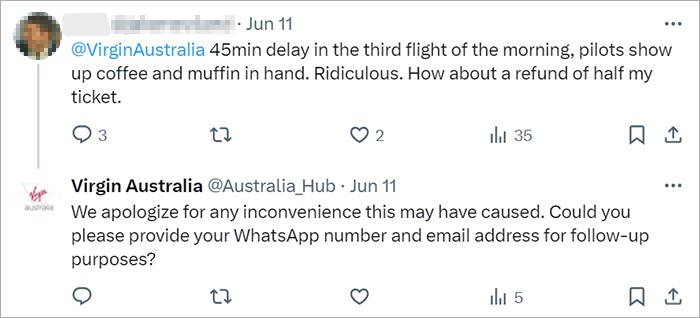
But doing so can make you a juicy target for scammers, some of whom use bot technology to prowl popular platforms for complaints mentioning major carriers.
Once they’ve acquired a target, these scammers will reply to your gripe using an account that looks like it belongs to your airline.
Victims have been directed to private messaging services and then to phishing sites designed to steal sensitive information.
Anyone signed up to an airline’s loyalty scheme should also beware of emails urging them to log in via a link to address purported “fraudulent activity” on their accounts.
Cyber security company Mailguard recently warned of a trend of these scams targeting Qantas Frequent Flyers.
Accounts impersonating major arlines are targeting customers on social media. Image: X
How to spot fake airline communications
Make sure a carrier’s social media account is legitimate: Look at how many followers it has and when it was created – scam profiles will have very few followers and are often only around for months at most.
See where emails are coming from and where they lead to: Recent fake airline emails have come from Gmail addresses (e.g. [email protected]) rather than official email addresses using the business domain name (e.g. [email protected]). Hover your mouse over any links and the URL of the page it leads to should appear. Make sure this matches the airline’s official website URL.
Easter road trips often take us into cities we’re not familiar with, meaning new road systems and potentially toll operators who’ll be hitting us up for payment.
These companies are a regular target for impersonation by text and email scammers pushing links to fake websites.
Linkt, a major toll service in Sydney, Melbourne and Brisbane, is a favourite among criminal impersonators and was the target of a recent email scam designed to steal drivers’ bank card details.
How to spot fake road toll messages
Don’t trust surface level names: Scammers can make it look like they’re sending texts from an official company account when they’re not. Check where an email is from – scam messages often come from generic accounts that don’t use the name of the company they claim to represent.
Don’t click on links: Toll operators like Linkt shouldn’t ask you to provide payment details via links in text messages or emails. Address outstanding payments by logging into your toll account via an official app or website. For more info, see Linkt’s guide to avoiding scams.
Due to the ubiquity of major booking sites and social media platforms, you could just as easily find yourself the target of the above-mentioned scams while travelling overseas as in Australia.
But certain scams will only emerge in the course of venturing beyond our shores.
6. Fake travel documents
DFAT’s Smartraveller website provides links to official visa application pages.
Cyber support service IDCARE expects visa scams to become more prevalent this year, after the number of people contacting it after being sold fake or non-existent visas jumped by 76% in 2025.
Criminals often set up fake websites promising to provide visas and other vital travel documents for different countries and can pay for these pages to appear at the top of search engine results.
Once they’ve got your bank card details, these operators may not provide any visa in return or may supply a fake document – something that will cause you serious issues if you try to use it to enter a country.
In a similar vein, scammers have also been known to run schemes claiming to sell international driving permits (IDP). Some of these sites do provide these materials (at an inflated rate), but others will send you fake documents.
How to avoid fake travel documents
Be wary of sponsored results: Legitimate companies and scammers alike can pay for their websites to appear at the top of search engine results. Scroll down past sponsored results before clicking on any links.
Stick to official sources: DFAT’s Smartraveller website tells you which countries require a visa or other permit (assuming you’re travelling on an Australian passport) and directs you to the legitimate sources for obtaining these materials. If you’re looking for an IDP, apply via the Australian Automobile Association.
7. Scams to watch out for once you arrive overseas
Depending on your destination, there are various scams you might only encounter once you’re on the ground in other countries.
For info on all the most common cons, including ticket, taxi, vehicle hire and card-skimming scams, and what to do if you run into trouble overseas, see DFAT’s travel scam guide.
Liam Kennedy is a Journalist with the Editorial and investigations team. He answers consumers' most burning questions, from which scams to be aware of and how to save money, to whether new services and products are worth using and how the latest developments in consumer news could affect them.
Prior to CHOICE, Liam worked in production in daily news radio and podcasting.
Liam has a Bachelor of Communication (Journalism) and a Bachelor of Arts in International Studies from the University of Technology Sydney. LinkedIn
Liam Kennedy is a Journalist with the Editorial and investigations team. He answers consumers' most burning questions, from which scams to be aware of and how to save money, to whether new services and products are worth using and how the latest developments in consumer news could affect them.
Prior to CHOICE, Liam worked in production in daily news radio and podcasting.
Liam has a Bachelor of Communication (Journalism) and a Bachelor of Arts in International Studies from the University of Technology Sydney. LinkedIn
For more than 60 years, CHOICE has been fighting the good fight for Australian consumers.
In the past year alone we've uncovered systemic issues with sunscreens, investigated shonky supermarket pricing, fought for stronger scam protections and helped make complex energy pricing fairer and clearer.
CHOICE is here to provide unbiased advice and independent testing in our world-class labs. We buy the products we test, just like you do, and our expert reviews are influence free. We’re here to help you choose smarter. Hopefully you’ll also save some money along the way.
Thanks to CHOICE, you’ll never be alone when a business treats you unfairly. You can support our work by joining or donating to our cause.