Energy retailer GloBird is blocking people who use bill comparison service Bill Hero from signing up to its gas and electricity plans
GloBird say these consumers might switch away to other retailers too quickly, undermining its business model
This way of selecting customers is legal, but consumers are unhappy about being denied access to cheaper GloBird plans
Ask any government energy agency, regulator or consumer advocacy body (CHOICE included) how to save on gas or electricity and they will tell you to shop around.
For those who do, Melbourne-based retailer GloBird might present an enticing option.
With rates that market watchers say can be lower than average and a promise to let you “enjoy low cost energy for as long or as little as you like,” this small provider has drawn the eye of consumers looking for a better deal.
Yet it’s this very cohort of savvy bill-watchers that GloBird is reluctant to take on as customers.
The retailer is denying service to people who use Bill Hero – a service that helps consumers compare energy providers by analysing their bills, showing them where they could be saving more and helping them switch.
GloBird says people who use services like Bill Hero might switch away too soon after joining and undermine its business model, making it difficult for the company to operate.
In taking this stance, GloBird is operating within the law, but leaving unhappy consumers in its wake.
“I thought it was anti-competitive,” says Andy King, who missed out on saving around $300 a year on gas after GloBird told him it didn’t offer plans to Bill Hero users.
“They’re obviously running a business and can pick and choose who they take on… [but] there’s just something not quite right here in terms of GloBird blanket-banning people who are actively trying to manage energy prices, especially these days,” he adds.
I thought it was anti-competitive… there’s something not quite right here in terms of GloBird blanket-banning people who are actively trying to manage energy prices
Andy King, Bill Hero user blocked from joining GloBird
Andy is one of several people we’ve heard from who were told directly by GloBird that they wouldn’t be served because they were Bill Hero users. Others were given different, more vague reasons, but believe their association with Bill Hero was the deciding factor.
Most Bill Hero users were identified through their use of an email server associated with the service.
But others say GloBird rejected them due solely to their street address, suggesting the retailer kept a record of these details as another way to identify Bill Hero users.
GloBird is an energy company that sells electricity and gas plans to households in New South Wales, Victoria, Queensland, South Australia, Tasmania and the ACT.
It’s considered a smaller “Tier 2” retailer by the Australian Energy Regulator and like many retailers its size, doesn’t generate its own electricity or gas.
Rather, it enters into deals with generating companies to secure these resources for its customers.
Having operated under this arrangement for several years, it’s been recognised by some consumers and energy market watchers for offering comparatively low prices.
Bill Hero
Bill Hero, meanwhile, is a paid energy bill comparison and switching service.
Subscribers can upload their electricity and/or gas bill and Bill Hero will compare it to all other available plans to see if they could be paying less for their current use.
A unique part of the service is it provides subscribers with a dedicated email address made up of their name and the @billhero domain.
By registering this as their primary email with their energy retailer and getting all subsequent bills sent to it, users can get an ongoing analysis from Bill Hero of each bill and an indication of whether they could save by switching to a different provider or plan.
For an extra fee, subscribers can then get Bill Hero to take care of the process of switching them to a cheaper retailer.
Note: CHOICE has a partnership with Bill Hero and may make money if you sign up to it via our website. All funds go straight back into our nonprofit mission. However, we don’t specifically endorse or recommend this energy comparison service.
Bill Hero calls blocking a “badge of honour”
“Smaller retailers [like GloBird] generally are the most price-competitive,” says Bill Hero CEO Richard Foxworthy.
“They’ll put genuinely competitive prices into the market [and] through platforms like our own, those plans will rise to the top of the comparisons fairly frequently.”
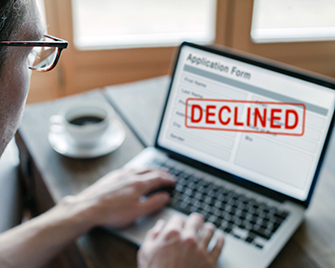
GloBird is blocking Bill Hero subscribers from signing-up to its energy plans.
Foxworthy says this has consistently drawn Bill Hero users to GloBird’s offers, but many are blocked when they try to sign up to the retailer.
CHOICE has heard from Bill Hero users in New South Wales, Victoria and Queensland who have been denied access to the company’s plans.
Most were pulled up by the retailer when they provided their Bill Hero email address during the sign-up process.
Some users who tried to do this over the phone recall being told directly that GloBird did not offer plans to Bill Hero users.
“We see this problem as a bit of a badge of honour,” notes Foxworthy, who says GloBird has been attempting these blocks for the past few years.
“We think that we must be doing things well, if at least one of the retailers is seeking to prevent it.”
GloBird gives multiple reasons for why it’s refused to serve customers who use Bill Hero.
The most commonly-cited relates to the company’s model as an entity that doesn’t own its own generation assets and has to buy energy from other parties.
GloBird executive manager John McCluskey tells CHOICE via email that most customers prefer price stability and paying a set rate for their energy for a period of time, rather than prices that go up and down with the cost of electricity or gas in the wholesale market.
In order to provide this, he says, GloBird has to purchase “hedging products” such as swaps, contracts, options and futures in wholesale energy markets, which allow it to “lock in” the cost of supplying energy to customers in advance.
McCluskey argues that if lots of GloBird’s customers used a comparison service and switched away en masse, the retailer would have less income with which to manage these supply costs – something he says would pose a “risk” to the business.
GloBird says customers who switch in and out frequently cause issues for its operating model, but [also] says customers can stay “for as long or little as they like”
The company explains this on its website, saying customers who switch in and out frequently cause issues for its operating model, but on the very same page says customers can stay “for as long or little as they like”.
McCluskey says retailers like GloBird who hedge would have to raise their prices if too many of their customers were encouraged to switch away.
GloBird says its model of buying energy in advance is undermined when customers switch in and out frequently.
GloBird also says services such as Bill Hero prevent it from being able to “obtain Explicit Informed Consent (EIC)” from its customers and ensure that they are “verifiable’’.
Bill Hero says its arrangements don’t undermine these requirements and says it takes steps to get customers to provide information to meet EIC requirements where needed.
It says GloBird is the only energy retailer denying service to its users or claiming its systems undermine a relationship with customers.
GloBird denies having a strict policy of denying all Bill Hero users and says it takes the same approach with all comparison services.
It says it’s “prioritising” new customers with whom it can “establish a stable, ongoing relationship”.
Savvy shoppers switch more than most
Some of the Bill Hero subscribers CHOICE spoke to said they switched gas or electricity retailers on average once a year while using the service.
This is more than average – only approximately 20% of consumers switch electricity retailers this often, according to a 2025 ACCC report examining the retail market in Australia’s most populous states.
Bill Hero CEO Richard Foxworthy acknowledges customers who closely watch and act on prices can be a headache for some retailers.
“I do have some sympathy for energy retailers. It is a competitive market. They’re under very significant regulatory restraints. It’s not an easy business to be in, but it’s the business they’ve chosen to be in,” he says.
“Any retailer who is genuinely committed to sustain competitive pricing should welcome the kind of scrutiny that Bill Hero brings.”
GloBird is allowed to pick and choose who it takes as customers. But CHOICE senior campaigns and policy advisor Jordan Cornelius notes that the company is restricting Australians who are acting on advice from government and energy regulators.
“Consumers shouldn’t be penalised for following the prevailing advice that tells them that in order to avoid paying too much for energy, they should shop around and switch plans regularly,” she says.
Most energy retailers are allowed to pick and choose customers.
In parts of the country where consumers have a choice of energy retailer, only a select few larger providers are actually obliged to take you on when you’re shopping around.
These ‘designated’ retailers tend to be larger companies: GloBird is not a designated retailer in any of the jurisdictions where we’ve heard of it knocking back potential customers.
Note: In most areas, once you’re with a retailer and receiving energy from them, they become your ‘designated’ retailer and are required to continue servicing your premises. Designated retailers may also be referred to as ‘Local Area Retailers’ or ‘Retailers of Last Resort’.
Experts weigh in
Retail energy experts acknowledge GloBird’s actions as part of a need for businesses to balance customer numbers against money spent securing access to energy.
“It is not very nice, that’s just an opinion. But I also understand the logic of it… it’s difficult to be a small retailer these days,” says Guillaume Roger, an economics professor studying the electricity market at Monash University.
“It is not very nice… But I also understand the logic of it
Professor Guillaume Roger, retail electricity expert
Professor Bruce Mountain, energy economist and director of the Victorian Energy Policy Centre at Victoria University, says smaller retailers like GloBird are often having to manage the risk of exposure to the wholesale energy market.
“[They] continually look at the profile of their customers’ demand and build or buy a series of contracts which allow them to supply those customers at the lowest cost that they think they can,” he explains.
“If their load profile changes quickly because customers leave, then they are out of balance… when they take a customer on, they’ll expect them to be with them for a certain period.”
Mountain says retailers like GloBird offer cut-rate energy plans that look good in the beginning, but are designed to turn a profit in the long run.
“They offer loss leading deals to attract customers. And their business proposition is we’ll lose on selling to you for the first period. But once you’ve linked your bank accounts to us and it’s sticky, then we’re going to make money off you,” he says.
But consumers have also voiced concerns about the information GloBird appears to have collected in order to identify them as Bill Hero users.
While most were spotted for using a Bill Hero-branded email address, others say they were denied after only providing credentials with no clear link to the comparison service.
Andy King says GloBird may have identified him as a Bill Hero user based on his residential address alone.
“I didn’t use a Bill Hero [email] address [but they] discovered I was a Bill Hero customer through my residential address,” he recalls.
Andy says he was identified by a GloBird representative he spoke to over the phone, who asked for his street address as part of the sign-up process.
After checking this, the staff member said Andy wouldn’t be able to join one of the company’s plans because he appeared to be a Bill Hero customer.
“[They] discovered I was a Bill Hero customer through my residential address
Andy King, Bill Hero user blocked from joining GloBird
Former Bill Hero subscriber James (last name withheld upon request) became suspicious when he was also blocked after only providing his street address.
It had been his second attempt to join the company – he was first rejected after reaching a stage where he had provided his Bill Hero address as an email contact.
Unhappy with GloBird dismissing the rejections as an “error” and advising he try another retailer, he requested any personal data the company was holding on him, specifically any criteria being used to reject his application.
After putting this in writing, GloBird backtracked and let him join, blaming IT issues for the initial denial.
Both James and Andy had previously been GloBird customers at the same time as being Bill Hero subscribers.
We asked GloBird if they retain the information of customers who are Bill Hero users, such as non-Bill Hero email addresses and street addresses, in order to identify them in the future.
The company said it wouldn’t provide any information on the “specific configuration” of its systems due to them being “commercially sensitive and constantly evolving”.
Bill Hero users still getting through
James isn’t the only Bill Hero user who was able to get onto GloBird’s books after questioning why his application was being rejected.
We spoke to one current GloBird customer who was allowed to sign-up with the company over the phone while remaining a Bill Hero subscriber after he disputed the company’s reasons for denying him service.
A customer service representative said they would “make an exception” for him if he gave a non-Bill Hero address as his email contact.
The customer, who we have decided not to name, says he’s forwarding the bills GloBird sends to this address onto Bill Hero in order to keep receiving the service’s comparisons and analysis.
Some Bill Hero users have been able to join GloBird by questioning the retailer’s reasons for rejecting them.
Things to consider when shopping around for energy
If you live in a region where you’ve got a choice of energy retailer, shopping around and switching to a cheaper plan is still considered a good way to save on bills.
However, as highlighted above, complexities in the energy market can make this easier said than done. Here are a few tips and things to consider when shopping the energy market:
Retailers have limited obligations to new customers
If you live somewhere where you can choose between many different energy retailers, it’s worth knowing most won’t be obliged to take you on as a new customer and are allowed to deny requests for service.
‘Designated’ retailers do have to let you join, but there aren’t many of these and they may not offer the best plans. You can see a list here.
Pay attention to “better off” messages
Energy retailers in most parts of the country have to include a “better off” notice on your bill that tells you if you could save money on another of your provider’s plans.
Following our investigation, companies in several states and territories now have to alert customers receiving same-name better-off messages that there may in fact be a cheaper version of the plan they’re on (with the same name) that they can switch to.
Look out for this messaging to cut through the confusion and save.
Liam Kennedy is a Journalist with the Editorial and investigations team. He answers consumers' most burning questions, from which scams to be aware of and how to save money, to whether new services and products are worth using and how the latest developments in consumer news could affect them.
Prior to CHOICE, Liam worked in production in daily news radio and podcasting.
Liam has a Bachelor of Communication (Journalism) and a Bachelor of Arts in International Studies from the University of Technology Sydney. LinkedIn
Liam Kennedy is a Journalist with the Editorial and investigations team. He answers consumers' most burning questions, from which scams to be aware of and how to save money, to whether new services and products are worth using and how the latest developments in consumer news could affect them.
Prior to CHOICE, Liam worked in production in daily news radio and podcasting.
Liam has a Bachelor of Communication (Journalism) and a Bachelor of Arts in International Studies from the University of Technology Sydney. LinkedIn
For more than 60 years, CHOICE has been fighting the good fight for Australian consumers.
In the past year alone we've uncovered systemic issues with sunscreens, investigated shonky supermarket pricing, fought for stronger scam protections and helped make complex energy pricing fairer and clearer.
CHOICE is here to provide unbiased advice and independent testing in our world-class labs. We buy the products we test, just like you do, and our expert reviews are influence free. We’re here to help you choose smarter. Hopefully you’ll also save some money along the way.
Thanks to CHOICE, you’ll never be alone when a business treats you unfairly. You can support our work by joining or donating to our cause.