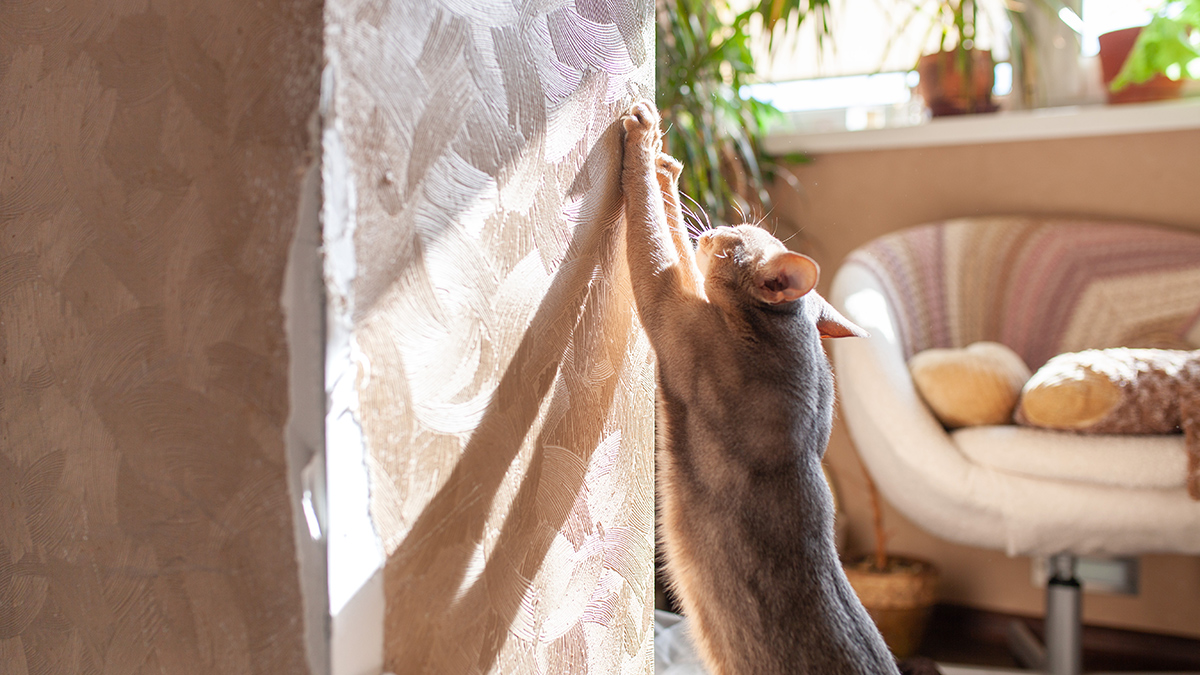
Does your home insurance cover you for possums wrecking your roof insulation, cockies eating your deck, your dog destroying your rug, or rats chewing through your electricity wires?
Some home and contents policies we review exclude all cover for animal damage. While this may seem strict, at least you know where you stand. We take a closer look at the fine print of the 86 home policies that provide at least some cover for animal damage to figure out what they will and won’t cover.
Most home insurance policies typically cover sudden and accidental damage caused by animals. But not if the damage is caused by your own pets or common pests. So they generally won’t cover items ruined by Spot or Mittens, but what they actually will cover varies from policy to policy and is often full of exclusions.
What animal damage does home insurance cover?
Sudden damage
For damage to be covered by home insurance, it needs to be sudden and immediate – they won’t cover damage that happens gradually over time. For example, if a possum crashes through your roof overnight or a kangaroo breaks a fence, the repairs are typically covered because the event is unexpected and immediate.
However, insurers exclude gradual or preventable damage, such as long-term infestations of termites, or repeated damage from animals that occurs over weeks or months. The key distinction is whether the damage was a one-off incident caused by an “event” versus something that developed slowly and could have been prevented with maintenance.
Trapped animals
Almost one-fifth of policies with animal damage cover in our comparison specify that they will cover damage caused by an animal that has become accidentally trapped inside the house, including birds. QBE though, will only pay for damage to living areas, and will not cover damage to an enclosed crawl space, the outside of buildings, your roof cavity or contents in the open air.
Insurers that offer cover for accidentally trapped animals including birds:
Insurers usually make a distinction between animals you own, or allow to be there, and those you don’t. Some insurers refer to animals “kept at the premises” or animals you permit to be there, but they essentially mean the same thing – pets owned by you or your guests. And generally, if the animal is allowed there, damage they cause isn’t covered.
So that means that damage that your own pet causes is not covered. But also, if your friend brings their dog over during your coffee catch up, any damage it causes won’t be covered either.
A few policies will cover some damage caused by pets under the Accidental Damage optional extra. But this comes at an extra cost, and with its own set of exclusions.
Insects and vermin are specifically mentioned in some kind of exclusion in 95% of the policies we compare that offer some level of animal damage cover.
Two thirds of these policies exclude all damage caused by insects and vermin. Other policies exclude all damage they cause except for fire and liquid escape, while others exclude all insect-related damage but still cover fire damage caused by vermin.
It pays to read the fine print of your policy carefully; there are a few policies that state they will cover damage caused by these creatures, but not if it’s caused by chewing, clawing or eating. So actually they won’t cover the most likely damage.
Two thirds of these policies exclude all damage caused by insects and vermin
The definitions of insects and vermin vary too. In some cases it means just insects and rats and mice, while other definitions include native wildlife such as possums, as well as bats, termites, lice, and other species. We’ve seen cases where possums are explicitly classified as vermin under some policies, while in others they’re explicitly excluded from the definition of vermin.
You’ll usually be able to find out exactly what is meant by these terms in the glossary or definitions section of your PDS – if you’re reading it online, use Ctrl+F to search the document. Don’t rely on AI, because it often gets the answer wrong (we’ve tried).
You also can’t count on your policy to cover structural damage from termite infestations. The “action of termites” is specifically excluded by over half of the policies we analyse, and the remaining policies exclude insect damage or damage from insects eating, or only cover such damage if it results in a fire.
There is a lot of variation in the cover offered for damage caused by birds. Some policies refer specifically to birds, but if yours doesn’t, you can assume they are included as “animals”.
Overall, 24 policies we review that provide cover for animal damage exclude any damage caused by a bird. A further 41 list specific exclusions for actions like chewing, scratching, or soiling; which rules out most of the ways in which a bird might cause damage. So even if you’re covered for animal damage, most policies are unlikely to cover any bird damage.
Some policies will cover damage by birds if they’re accidentally trapped inside and some cover bird damage to door and window glass or birds colliding with the property only. RAA only covers damage from birds if it results in a fire.
Jane Bardell is a Content producer in the Insurance and utilities team. She writes about home, car, pet and health insurance.
Previously at CHOICE, she checked facts, figures and statistics as a Verifier with the Editorial and investigations team.
Jane has a Bachelor of Science from the University of New South Wales. LinkedIn
Jane Bardell is a Content producer in the Insurance and utilities team. She writes about home, car, pet and health insurance.
Previously at CHOICE, she checked facts, figures and statistics as a Verifier with the Editorial and investigations team.
Jane has a Bachelor of Science from the University of New South Wales. LinkedIn
For more than 60 years, CHOICE has been fighting the good fight for Australian consumers.
In the past year alone we've uncovered systemic issues with sunscreens, investigated shonky supermarket pricing, fought for stronger scam protections and helped make complex energy pricing fairer and clearer.
CHOICE is here to provide unbiased advice and independent testing in our world-class labs. We buy the products we test, just like you do, and our expert reviews are influence free. We’re here to help you choose smarter. Hopefully you’ll also save some money along the way.
Thanks to CHOICE, you’ll never be alone when a business treats you unfairly. You can support our work by joining or donating to our cause.