It seems a matter of common sense that scam victims would need to know who controls the accounts they sent their stolen money to.
But currently banks have no obligation to assist people who aren’t customers. It leaves people with nowhere to turn, and it’s just one of the many ways victims are hung out to dry.
It wasn’t until March last year that the Australian Financial Complaints Authority (AFCA) even gained the power to investigate the role that banks play in allowing scammers to set up mule accounts to receive the ill-gotten gains.
Receiving banks have been central in the execution of scams from the beginning, yet even now a scammer can set up an account in another person’s name using only a stolen driver’s licence.
Currently banks have no obligation to assist people who aren’t customers, and it leaves people with nowhere to turn
In 2024, we reported on the case of a family that had sent a total of $2.5 million to scammer accounts at Westpac, ANZ, Commonwealth Bank, and Bendigo Bank. None of these banks would assist the victims, and none faced any accountability for inadvertently allowing criminals to hijack their services.
The woman in this case lodged a complaint with AFCA, but the dispute resolution service couldn’t intervene because Great Southern Bank was legally prohibited from sharing bank account information with non-customers, even if the account had been set up by a scammer.
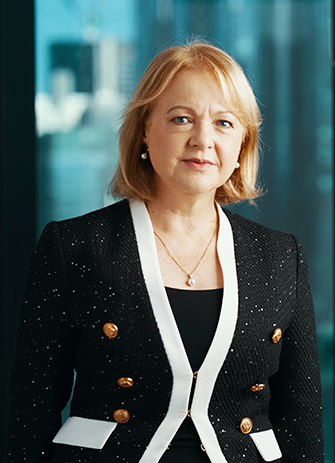
AFCA acting chief executive officer and chief ombudsman, Dr June Smith.
But times are changing. Starting on 31 March 2027, AFCA will be the sole body responsible for dealing with scam complaints, and it will have the jurisdiction to consider the role that banks, telcos and digital platforms play in failing to prevent them.
AFCA will theoretically be able to order banks to compensate victims if they played any role in the execution of a scam and were negligent in their duty to stop it.
The designation is part of the federal government’s still-evolving Scams Prevention Framework (SPF).
“We have significant experience handling complex complaints at scale, and we’ll be using that experience to build an effective and accessible service,” says AFCA acting chief executive officer and chief ombudsman Dr June Smith.
“They are increasingly sophisticated and they leave people facing devastating financial and emotional consequences,” she says.
AFCA will theoretically be able to order banks to compensate victims if they played any role in the execution of a scam and were negligent in their duty to stop it
AFCA’s Chief Scams Officer, David Lacey, says scams “are one of the most significant issues affecting consumers today”.
Under the Scams Prevention Framework, most banks, telcos and digital platforms operating in Australia will be required to become AFCA members and be bound to its rulings from 1 September this year.
“We recognise the complex nature of modern scams and the need for fair outcomes for victims and the organisations involved,” Lacey says.
Last year, scammers stole a collective $2.18 billion from Australians, and much of the thievery occurred by way of phone calls and text messages – but these won’t be covered under the SPF since they don’t meet the definition of digital platforms in the legislation.
The same goes for email service providers, dating apps, online marketplaces, app stores and gaming platforms, all of which are increasingly becoming fertile ground for scammers. CHOICE pointed out these shortcomings to the federal government in a submission leading up to the finalisation of the SPF.
Much of the thievery occurred by way of phone calls and text messages – but these won’t be covered under the Scams Prevention Framework
The potential damage is considerable. Australians lost $139 million to romance scams in 2025, for instance, many of which would have been perpetrated by online contacts not covered by the framework.
An AFCA spokesperson tells CHOICE that the service is currently in the process of determining how it will deal with scam complaints under its SPF duties.
“Our priority now is building and designing the Scams Prevention Framework EDR [External Dispute Resolution], which will provide victims of scams an independent external dispute mechanism to consider each case and whether banks, telecommunications providers and digital platforms have met their obligations under the SPF codes,” the spokesperson says.
AFCA remains supportive of reform, recognising that the current legislative frameworks available to scam victims are insufficient
The extent to which the designated sectors will be held accountable, however, is a work in progress.
“These codes are currently subject to public consultation and remain unsettled. Nevertheless, AFCA remains supportive of reform, recognising that the current legislative frameworks available to scam victims are insufficient.”
Andy Kollmorgen is the Investigations Editor at CHOICE. He reports on a wide range of issues in the consumer marketplace, with a focus on financial harm to vulnerable people at the hands of corporations and businesses. Prior to CHOICE, Andy worked at the Australian Securities and Investments Commission (ASIC) and at the Australian Financial Review along with a number of other news organisations. Andy is a former member of the NSW Fair Trading Advisory Council. He has a Bachelor of Arts in English from New York University. LinkedIn
Andy Kollmorgen is the Investigations Editor at CHOICE. He reports on a wide range of issues in the consumer marketplace, with a focus on financial harm to vulnerable people at the hands of corporations and businesses. Prior to CHOICE, Andy worked at the Australian Securities and Investments Commission (ASIC) and at the Australian Financial Review along with a number of other news organisations. Andy is a former member of the NSW Fair Trading Advisory Council. He has a Bachelor of Arts in English from New York University. LinkedIn
For more than 60 years, CHOICE has been fighting the good fight for Australian consumers.
In the past year alone we've uncovered systemic issues with sunscreens, investigated shonky supermarket pricing, fought for stronger scam protections and helped make complex energy pricing fairer and clearer.
CHOICE is here to provide unbiased advice and independent testing in our world-class labs. We buy the products we test, just like you do, and our expert reviews are influence free. We’re here to help you choose smarter. Hopefully you’ll also save some money along the way.
Thanks to CHOICE, you’ll never be alone when a business treats you unfairly. You can support our work by joining or donating to our cause.