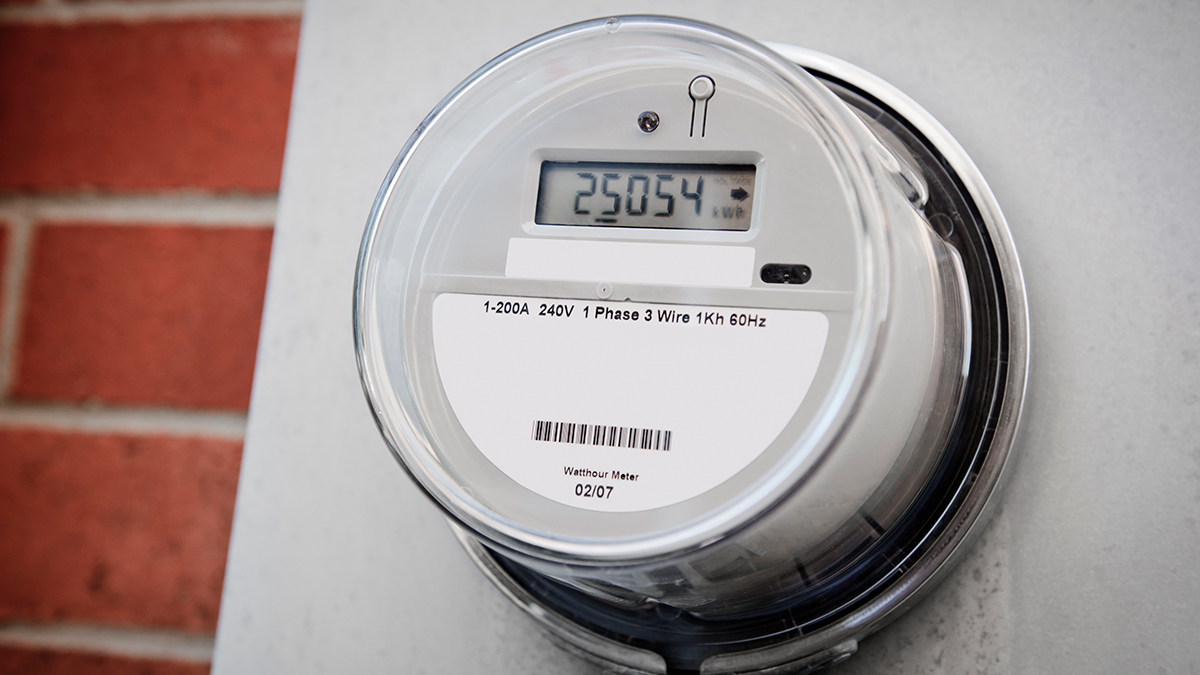
Dynamic pricing incentivises you to avoid peak usage charges by offering cheaper rates during off-peak hours
Recent research shows it’s impractical for many customers to avoid peak-hour use
The NSW Independent Pricing and Regulatory Tribunal found that some dynamic plans are the most expensive in the state
As an electricity or gas customer you have two options: you can pay the same rate at all times, or you can pay different peak and off-peak rates based on the time of day.
The latter is known as dynamic pricing. The idea behind choosing this type of energy plan – which is based on time-of-use or demand pricing – is that you can save money by avoiding peak usage times and benefit from cheaper rates during off-peak hours.
Dynamic pricing is simple in theory, but the plans themselves are highly complex and many customers can struggle to juggle the many variables in a cost-effective way.
But flat rate plans can also have confusing information about fees and charges – and about crucial features such as hardship support or changes in benefits – and comparing one to another is far from easy.
Across the National Energy Market (Queensland, NSW, the ACT, Victoria, South Australia and Tasmania) there were a staggering 145,500 different energy plans available in 2025. If you wanted to switch to a new plan similar to the one you were on – whether it was a dynamic or flat rate plan – you could have been offered up to 233 options.
One reason for the colossal number of plans is that energy retailers are constantly trotting out new ones with cheaper rates to lure in new customers, while leaving existing customers on older plans where prices continually go up. It’s been well established that customer loyalty is repaid with increasingly worse deals.
Dynamic pricing is an approach to energy consumption that requires careful control of your energy usage.
With time-of-use tariffs, your rates are cheaper at off-peak times. With demand tariffs, rates are based on the highest amount of electricity used for one 30-minute block over the monthly billing cycle. This level of usage then determines how much customers pay in the demand period set by the retailer for the entire billing cycle. The different ins and outs from plan to plan can defy comprehension.
It’s heating and cooling appliances that really eat up the kilowatts
In both cases, you would need to stop using appliances that draw a lot of energy when everyone else is using them, which is generally in the late afternoon or evening.
That may not be such a big deal when it comes to dishwashers and washing machines, but these household mainstays generally only account for around 10% of household energy use, according to the advocacy group Energy Consumers Australia (ECA). It’s heating and cooling appliances that really eat up the kilowatts.
Variable pricing leading to bigger bills
Recent research from ECA reveals that it’s not realistic for many customers to avoid heating or cooling when it’s needed most during peak hours.
The households that manage to do this as a budgeting strategy are generally struggling to make ends meet. Among other things, they don’t have the solar devices that wealthier households have, which can potentially justify going with a dynamic pricing plan as long as you can understand it.
A report released by the NSW Independent Pricing and Regulatory Tribunal (IPART) late last year found that demand tariff plans were the most expensive types of plan in the state in 2024–25 for customers without solar, costing them $100 to $300 more a year than flat rate or time-of-use plans.
Most energy customers don’t actually understand how their energy costs are calculated.
For households with solar, demand tariff bills were still $150 to $200 higher than the other options. Demand tariff plans are so complicated that even the federal government’s Energy Made Easy comparison site can’t figure the total annual costs.
A report by the Australian Competition and Consumer Commission (ACCC), also released late last year, found that 420,000 energy customers were on complex energy plans in 2025, a 40% increase over the previous year. The report aptly describes their complexity.
“Complex plans use a combination of multiple cost reflective pricing elements, including time of use, seasonal pricing, multiple usage blocks and demand charges. For example, a complex plan could involve time of use pricing with a demand charge. These plans include a complex set of pricing signals for customers to respond to if they wish to reduce their electricity bill.”
Six out of 10 don’t understand their bills
In a recent submission to the Australian Energy Regulator’s (AER) review of energy retailer guidelines, ECA called for standardising information across all energy plans so it’s clear what you’re paying for and so there’s a way to compare one energy offer to another that makes sense to the average customer.
ECA says 60% of the 4000 homeowners it recently surveyed aren’t sure how their energy costs are calculated, and 82% said they hadn’t switched energy providers over the previous 12 months.
Loyalty penalties are alive and well in the retail electricity market
ACCC Commissioner Anna Brakey
Switching rates have been low for a long time. The ACCC recently renewed its ongoing call to energy customers to take charge of their energy costs and regularly switch plans or providers. It reported in December that customers who’ve been on the same electricity plan for three years are paying around $221 a year more than customers who are on newer plans.
Another ACCC statistic suggests a market in disarray. Nearly 2.5 million customers are paying prices at or above the default offer – the regulated safety net price for people who don’t engage with the market – and more than 400,000 of these customers are paying more than 10% over the default offer.
It means that many market offers – which are meant to be cheaper – are more expensive than default offers.
In line with this topsy turvy state of the market, 73% of energy customers were not on the best offer available from their retailer in 2024–25.
“Loyalty penalties are alive and well in the retail electricity market,” says ACCC Commissioner Anna Brakey. “So the very best thing people can do to save money is to switch plans – either moving to a cheaper plan offered by their existing retailer or changing retailers.”
Keep it simple please
The ECA survey reveals a truth that may not come as a surprise: most of us (58%) just want a fair price and good customer service from our energy retailer, not a daily barrage of different plans that may or may not save us money.
The 42% who are willing to engage in this complicated market and deal with complex energy plans could be described as people who are riding the wave of the transition from fossil fuels to renewables. They’re likely to have the latest solar technology and monitoring tools.
But in both cases, as ECA points out, customers don’t want to be confronted with energy plans they don’t understand.
People enter these plans without really understanding them
ECA manager of consumer advocacy Claire Ohk
ECA manager of consumer advocacy Claire Ohk tells CHOICE that complex energy plans are a big problem for consumers.
“Complex pricing means prices can change depending on the time of the day, the time of the week, the day of the week, the season and how you use energy across these different timeframes. People enter these plans without really understanding them,” says Ohk.
Different plans with the same name are a case in point (and were the subject of a designated complaint from CHOICE to the ACCC last year).
“For many households the name of the plan is the most recognizable form of their contract,” Ohk says. “If retailers reuse that plan name but they change the prices or terms, that results in a lot of confusion and disengagement. It really undermines trust for consumers.”
Ohk says a central argument Energy Consumers Australia is making to the regulator is that guidelines for how retailers communicate with customers should have an outcomes-based objective, and the outcome should be making it a lot easier for customers to understand their plan, compare plans and find cheaper ones.
The system still relies way too heavily on consumers to monitor and switch constantly, and that’s just not appropriate for an essential service
ECA manager of consumer advocacy Claire Ohk
“It’s not just the standard information that they need to put into the bill or the letters that they send to consumers. It’s about putting that outcomes obligation on retailers to make sure that they’re thinking proactively about whether this complex plan that they’ve offered would actually work for this particular consumer or not.”
In short, energy customers shouldn’t have to work so hard to understand the plan they’re on or constantly switch plans in order to get a better deal. And guidelines only go so far.
“Guideline improvements are important, but I don’t think they’re a substitute for structural reform. The system still relies way too heavily on consumers to monitor and switch constantly, and that’s just not appropriate for an essential service,” Ohk says.
“In a healthy market, consumers should be able to expect to get fair outcomes by default. It really shows that a consumer duty is needed to make sure energy retailers are thinking proactively about providing the best outcome for consumers.”
Andy Kollmorgen is the Investigations Editor at CHOICE. He reports on a wide range of issues in the consumer marketplace, with a focus on financial harm to vulnerable people at the hands of corporations and businesses. Prior to CHOICE, Andy worked at the Australian Securities and Investments Commission (ASIC) and at the Australian Financial Review along with a number of other news organisations. Andy is a former member of the NSW Fair Trading Advisory Council. He has a Bachelor of Arts in English from New York University. LinkedIn
Andy Kollmorgen is the Investigations Editor at CHOICE. He reports on a wide range of issues in the consumer marketplace, with a focus on financial harm to vulnerable people at the hands of corporations and businesses. Prior to CHOICE, Andy worked at the Australian Securities and Investments Commission (ASIC) and at the Australian Financial Review along with a number of other news organisations. Andy is a former member of the NSW Fair Trading Advisory Council. He has a Bachelor of Arts in English from New York University. LinkedIn
For more than 60 years, we've been making a difference for Australian consumers. In that time, we've never taken ads or sponsorship.
Instead we're funded by members who value expert reviews and independent product testing.
With no self-interest behind our advice, you don't just buy smarter, you get the answers that you need.
You know without hesitation what's safe for you and your family. And our recent sunscreens test showed just how important it is to keep business claims in check.
So you'll never be alone when something goes wrong or a business treats you unfairly.