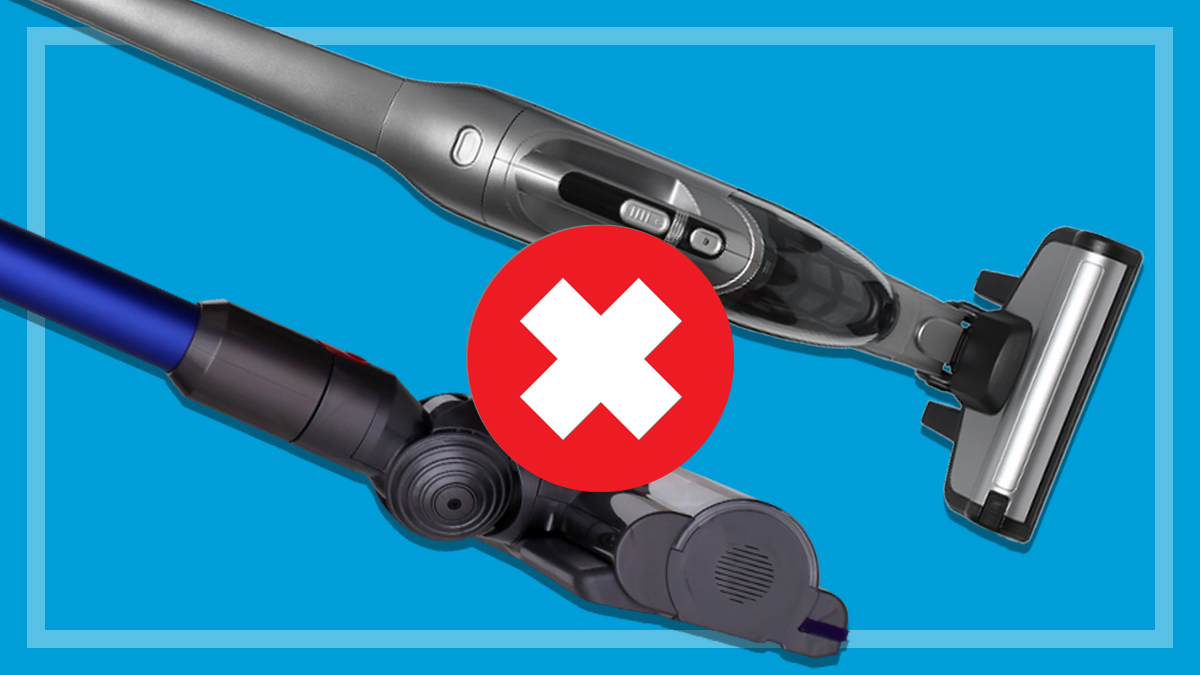
As if vacuuming didn’t suck enough already, there’s always the annoying job of cleaning the cleaner after.
There’s no escaping the flying fluff and dust when you empty the canister of your bagless vac, and even your bagged vacuum to an extent, though it does significantly reduce the dustbath.
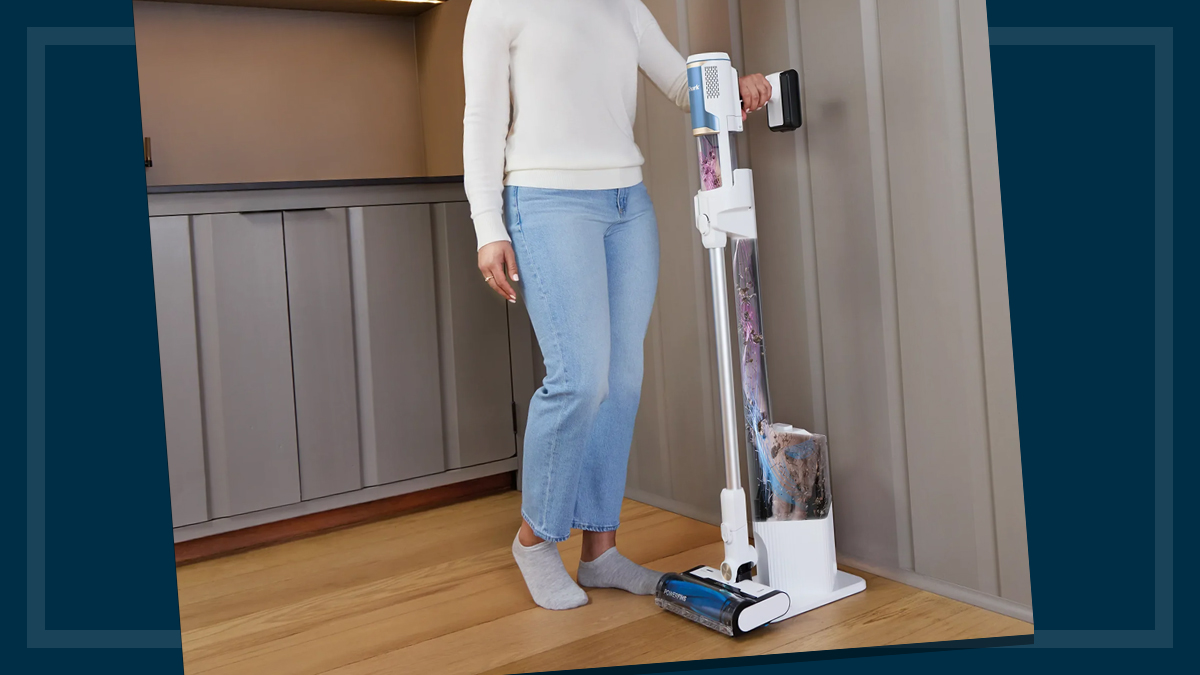
So some stick vacuum manufacturers have levelled up the convenience factor by producing ‘self-emptying’ models, reducing how often you need to take out the trash.
Unfortunately they don’t take the canister out to the wheelie bin for you, but they do empty the stick vacuum dust bin into a larger dust bin on the charging dock.
Of course, you’ll pay more for the convenience, and at the moment it’s mostly the higher-end stick vacuums that have this feature.
So are self-emptying stick vacs worth the extra cash, or are they just another gimmick that’ll empty your bank account while they empty the dust canister? Here’s what our experts say.
Which stick vacuum brands have self-emptying docks?
Samsung and LG have been making self-emptying stick vacuums for a while, but other brands are now following suit.
Shark has a few models on the market, and Dyson plans to release a self-emptying dock compatible with some of its vacuums later in 2026.
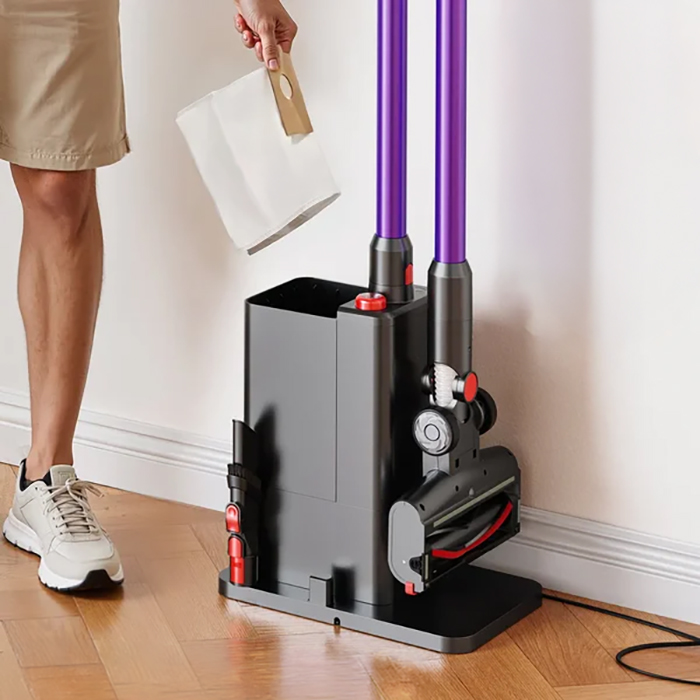
Expect more models to have self-emptying docks in the future. Image: Krapof.
Mid-range brands are starting to join the party too, so self-emptying vacs could be more affordable in the near future.
Our experts anticipate that many stick vacuum manufacturers will jump on the trend and it’ll become a common feature.
How much do self-emptying stick vacuums cost?
“Stick vacuums can already be very expensive so the addition of a self-emptying dock may be out of some buyers’ budgets,” says CHOICE vacuum expert Adrian Lini.
“But depending on your needs, you might be happy to pay extra for this feature.”
Our experts have tested nine stick vacuums with self-emptying docks. They range in price from the $600 Shark Clean & Empty through to the $1399 LG A9X-AUTO2. Other brands include Dreame, Roborock, Midea and Tineco.
Read more:
Self emptying stick vacs: Pros and cons
The benefits of a stick vacuum that empties itself are pretty obvious – but what does it mean for your cleaning regime? And what are the downsides?
Pros:
Less dust
Emptying your regular stick vacuum’s canister manually into the kitchen bin can create a cloud of dust that settles back all over your just-cleaned surfaces.
Either that or you’ll need to head outside to the big bin to empty it. (Not an appealing prospect in the middle of winter or a downpour.)
With a self-emptying stick vac, you’ll still need to trek out to the garbage bin, but it’ll be far less frequent and the dust won’t escape back out into the house.
Less time
Not having to empty your stick vac every time you use it means doing the vacuuming is a much less time-consuming job, so you can get on with other household tasks (or more interesting things) faster.
And the self-emptying bins take a surprisingly long time to fill up.
“We only need to empty it about once every six weeks,” says CHOICE staff member Ivone.
Less effort
We’ve found with some standard stick vacs emptying the dust canister from the vacuum itself is very awkward, but the bin in the self-emptying dock is generally straightforward to remove and empty.
“It takes absolutely ages for the big bin to fill up and when it does, it’s just a matter of tipping it in the bin,” says CHOICE editor Grace, who owns a self-emptying Shark stick vac.
It’ll save you mental energy as well as physical, too: “It’s great not having to even think about emptying the thing until it alerts me it’s time to replace the bag,” says Ivone.
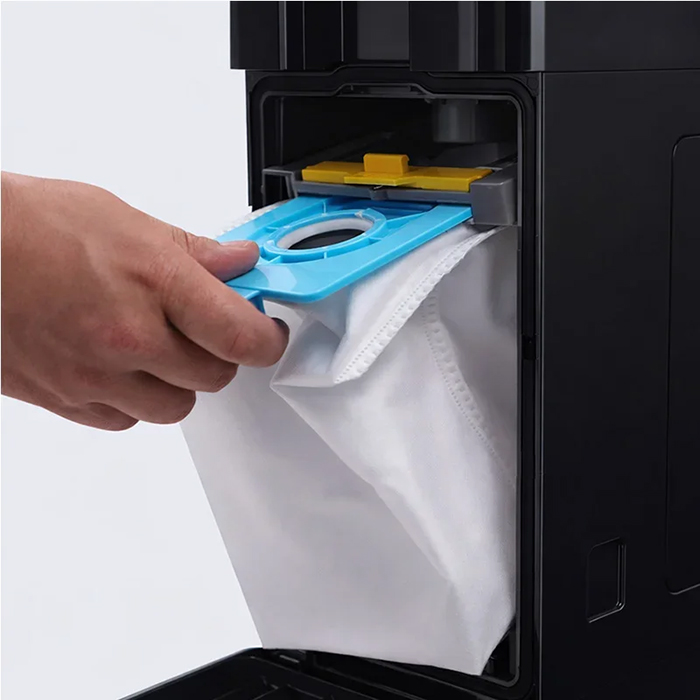
Docks with bags contain the dust, which can reduce your contact with allergens. Image: Krapov.
Less sneezing
If you have allergies to things like dust mites and pet dander, not having to empty your stick vacuum as often will reduce your exposure to allergens.
And if your self-emptying vacuum dock has a bag, it’ll reduce your exposure even more.
(This also applies to traditional vacuums, so it’s worth considering a bagged vacuum if you’re trying to minimise exposure to allergens in your home.)
(Potentially) more power
If you’re the kind of vacuumer who pushes the dust canister’s capacity to its limits before emptying it (I’m guilty of this!), then your stick vac’s performance will likely decline as the canister gets more and more full.
Once you empty it, it’ll be able to work to its full abilities once more (at least until the filters need changing).
With a self-emptying stick vac, you’ll be starting with an empty vacuum each time, so you’ll get better sucking power from the get-go. (Which will save you even more time and effort.)
More storage
Yes, self-emptying vacuum docks are bulky (see below), but there is an upside to that.
“Because they’re bigger, self-emptying docks can hold more – or even all – of the added accessories that come with them,” says Adrian.
“That’s a nice change from the usual charging stations that only have a couple of slots for accessories and then you need to find somewhere to store the rest.”
Some self-emptying docks can be quite noisy when they’re doing their thing. When we measured the noise levels of some self-emptying vacuums, one was 76 decibels – which is particularly loud.
By comparison, a normal conversation is around 60 dB, while city traffic is about 80dB.
“A major downside of the self emptying feature is that any time we get a blackout (which is shockingly frequent overnight where I live), when the power turns back on the vacuum automatically re-empties the receptacle into the bin,” says Grace.
“The noise doesn’t bother me during the day but it gives me the shock of a lifetime in the middle of the night! It feels like the loudest sound on earth.”
Less space
What you’ll gain in time with self-emptying vacs you’ll lose in space: they’re quite bulky, so if you don’t have much room at home, they might not be suitable.
One of the biggest benefits of stick vacuums is that they take up less space than traditional vacuums and can be neatly tucked away in a cupboard or corner. But models with self-emptying docks have a larger footprint, so you’ll probably need a dedicated spot in the house to store them.
Bagless dust canisters: just another thing to clean?
More canisters to clean:
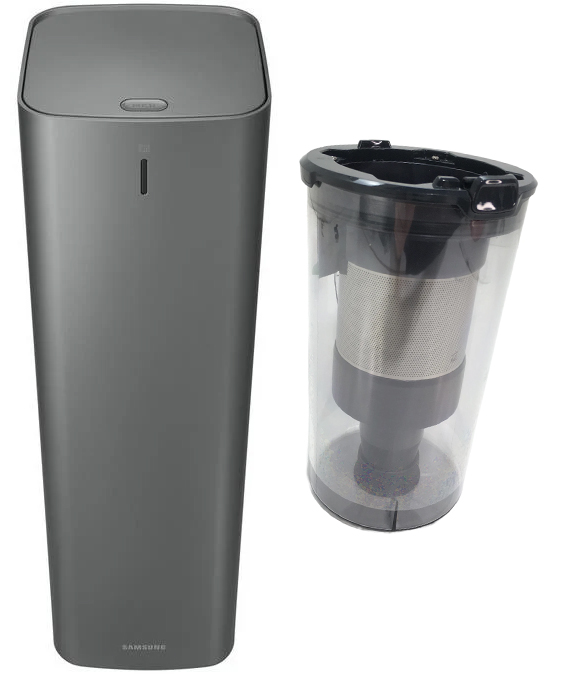
Even though having a self-emptying stick vacuum means you won’t need to empty your stick vac as often, you’ll still need to clean the dust canister from time to time – and a bagless self-emptying system means you’ll have two to clean.
While it’ll probably be an infrequent task, it will still be a messy one, and if you have allergies you’ll be getting up close and personal with allergens.
Even a self-emptying dock with a bag will need a going-over every once in a while, so you won’t completely escape this grubby task.
As with traditional vacuums, you have two options with self-emptying stick vacuum stations: a bagless dust bin, or one that deposits the dust in a bag.
Of the self-emptying stick vacs we’ve tested, the Shark and Tineco models have bagless dust bins, while LG, Dreame, Roborock and Midea models use bags.
There are pros and cons to both:
You have to buy replacement dust bags, but once they’re full you can close them up and the dust won’t escape. Some bags are made from plastic rather than more sustainable materials such as cardboard.
Bagless models don’t have any ongoing costs for bags, but some of them are tricky to use so you could find yourself covered in a layer of dust after you’ve emptied it. Plus, you’ll need to clean the bin itself more often than you would with a bagged unit.
“The bags cost anywhere from $4 to $20 each, so it definitely is an extra cost,” says Adrian.
“But depending on how much you vacuum, the bag could last you one to two months since you don’t need to empty it very often. Just be mindful that if you’re vacuuming up food it could start to smell if you leave it for a long time.
“The bagless models are very similar to bagless barrel vacuums in terms of how you use them and how they work.”
Alice Richard is a Content creator and marketer. Alice writes on a range of topics, from health insurance to heaters and BBQs to bargain-hunting, always with the aim to help consumers find the best products to buy, and which to avoid.
Alice can take vast amounts of data from CHOICE product tests and turn it into content that is easily digestible and fun for readers.
Alice has a Bachelor of Arts from the University of Queensland.
Alice Richard is a Content creator and marketer. Alice writes on a range of topics, from health insurance to heaters and BBQs to bargain-hunting, always with the aim to help consumers find the best products to buy, and which to avoid.
Alice can take vast amounts of data from CHOICE product tests and turn it into content that is easily digestible and fun for readers.
Alice has a Bachelor of Arts from the University of Queensland.
For more than 60 years, CHOICE has been fighting the good fight for Australian consumers.
In the past year alone we've uncovered systemic issues with sunscreens, investigated shonky supermarket pricing, fought for stronger scam protections and helped make complex energy pricing fairer and clearer.
CHOICE is here to provide unbiased advice and independent testing in our world-class labs. We buy the products we test, just like you do, and our expert reviews are influence free. We’re here to help you choose smarter. Hopefully you’ll also save some money along the way.
Thanks to CHOICE, you’ll never be alone when a business treats you unfairly. You can support our work by joining or donating to our cause.