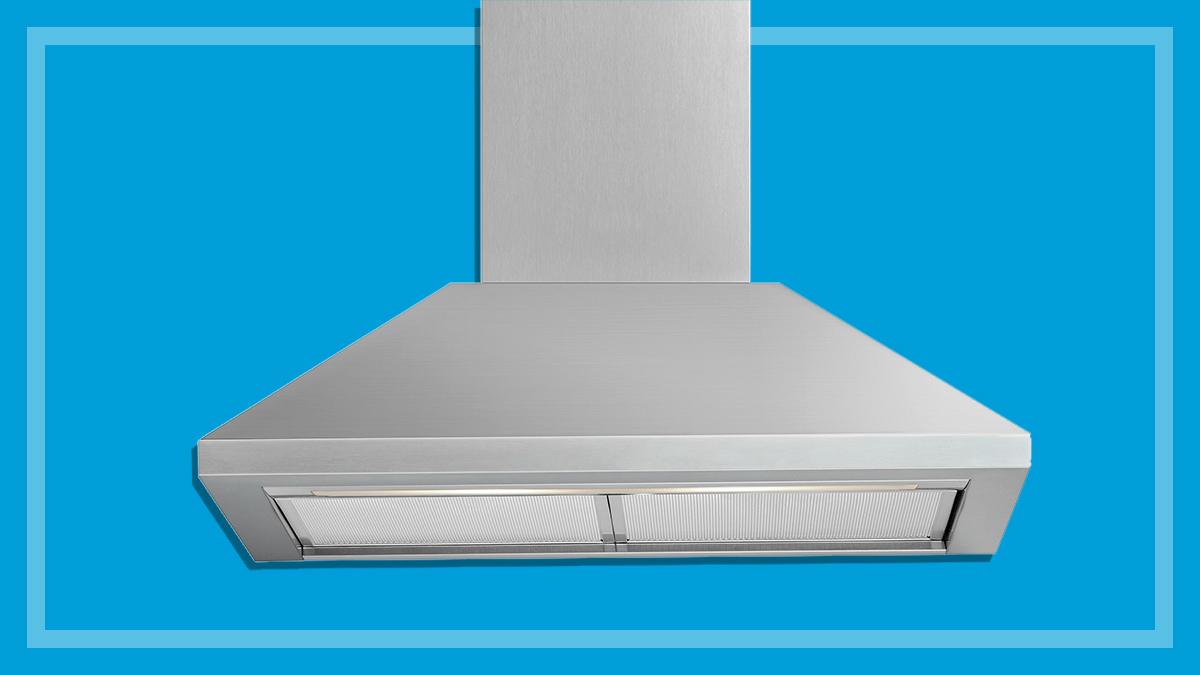
A rangehood is an important addition to your kitchen, essential for removing airborne grease produced during cooking.
If you’re looking to replace your existing rangehood, the most important decision is whether to install a ducted or recirculating system. They differ in terms of installation, cost and the way they function. These differences can be significant.
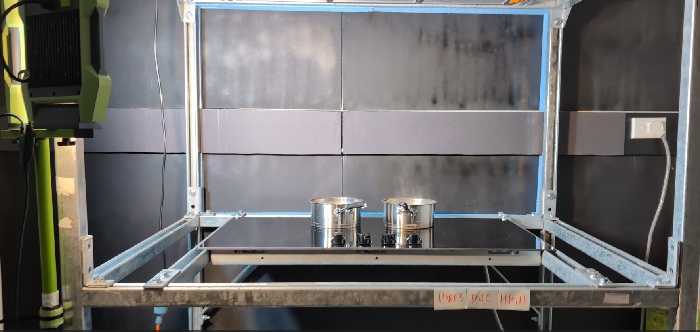
In order to effectively test rangehoods, CHOICE experts use a custom-built replica of a home kitchen set-up in our labs, designed to assess how well the rangehoods remove steam.
A good rangehood will extract the steam, smoke and smells from your kitchen during cooking either by ducting the air outside, or recirculating it back into the kitchen after being filtered. Bonus points for a rangehood that can do this without creating too much noise in your kitchen.
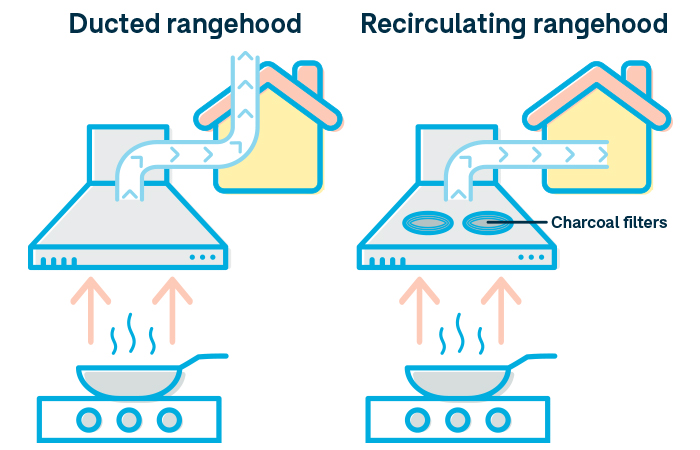
First, it’s worth making clear that the base rangehood is the same product. In the CHOICE labs, each rangehood is tested twice: once in ducted mode and then in recirculating mode. Both modes work to remove airborne grease produced by cooking but do so in very different ways. So what’s the difference?
Ducted rangehoods
In a ducted rangehood, as the name suggests, ducting is installed to vent and remove cooking fumes outside the home.
It’s the most effective way to use your rangehood, as it removes smoke, steam, grease, odours and other contaminants produced from cooking and vents it out of the kitchen.
However, depending on your kitchen setup, ducting isn’t always an option when installing a rangehood. For example, it may be a costly exercise if your cooktop isn’t on an external wall, or your ceiling type can’t readily duct outside.
Many older apartments, too, are unsuitable for ducting. In those cases, you may need to opt for a recirculating kit.
Recirculating rangehoods
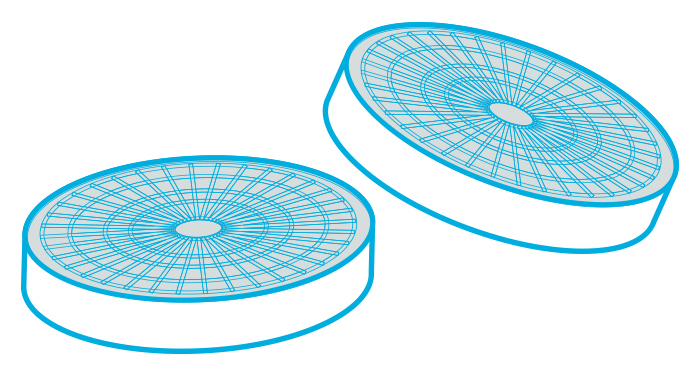
Recirculating rangehoods don’t vent air outside, but instead filter and recirculate the air. The process requires additional carbon filters (also known as charcoal filters) to be installed within the rangehood, which sucks the cooking fumes through the filters before putting the “cleaned” air back into the kitchen. (These aren’t to be confused with the metal grease filters that are installed on all rangehoods.)
Why it’s better to opt for a ducted rangehood
If you’re renovating your kitchen, and external ducting is possible, you should definitely aim to install a ducted rangehood.
“It’s especially important if you’re always cooking up a storm or using a gas cooktop. A ducted rangehood will provide better air quality and performance and it won’t cost you as much to run in the long term.”
The benefits include:
Air quality
A ducted rangehood will provide superior indoor air quality. When you cook, all sorts of cooking fumes and irritants are released, including grease particles, smoke, volatile organic compounds (VOCs), ultrafine particles and combustion gases, if you’re using a gas cooktop.
A ducted rangehood will remove all of this from your kitchen. This is particularly important for people with respiratory conditions such as asthma or households with young children.
A ducted rangehood will do a better job at removing cooking odours outside and is generally superior at removing steam, grease and moisture, minimising condensation on windows, walls and cabinets.
Our purpose-built rangehood testing rig allows us to see how much steam is extracted.
To assess performance of the rangehoods in the CHOICE labs, Adrian conducts a steam removal test to assess how well each rangehood (in both ducted and recirculating mode) can collect steam on both the low and high fan settings. The more steam that escapes, the lower the performance score.
Adrian says “ducted rangehoods almost always do a better job of steam removal”.
Lower ongoing costs
A ducted rangehood doesn’t require the ongoing expense of charcoal filters (which can set you back up to over $400 a year), so there’s less ongoing cost.
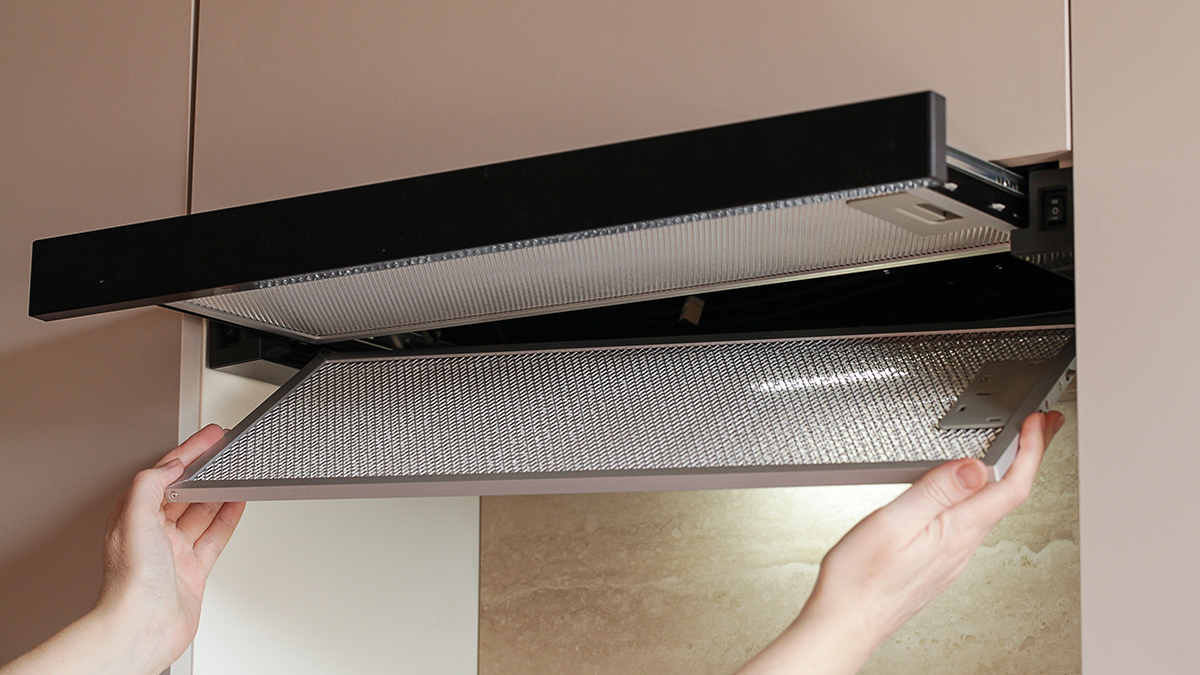
However, grease filters will require regular cleaning. A mild detergent and hot soapy water will usually do the job to get them clean, but be sure to check the manufacturer’s instructions.
“The less grease and grime that’s in the filter, the better the air flow and efficiency of the rangehood,” advises Adrian.
“Recirculating rangehoods still have their place where ducting isn’t an option, but there are definitely some limitations to consider,” says Adrian.
While they are generally easier to install, that’s where the praise ends.
A recirculating kit with carbon filters.
Moisture, odour and smoke removal
While our testing shows some models start off performing well for steam removal, charcoal filters lose effectiveness over time. The filters will gradually become saturated with all sorts of grease and grime, although the period of time this takes will depend on how often and the types of foods you cook,
This is especially the case if you regularly fry, sear or grill, as the rangehood could struggle to keep up with the volume of smoke and grease produced.
“If you don’t replace the charcoal filters, performance will be directly affected,” says Adrian.
You can also be up for extra cleaning with a recirculating rangehood. “Any grease and oils that are not picked up by the carbon filter are then spread thinly across your kitchen cabinets making your kitchen dirtier and increasing how much cleaning is necessary.”
Lower air quality
Recirculating rangehoods can’t clean or get rid of all the smoke or fine particles produced during cooking, leaving some circulating inside. Carbon filters can become less effective over time, affecting indoor air quality.
An air purifier might be an option to help clean the air, if you have no choice but to install your rangehood as recirculating.
Charcoal filters need replacing periodically, depending on the amount and type of cooking you do. Manufacturers generally recommend replacing them every three to six months.
Adrian says: “If you notice a buildup of steam and fumes when cooking, that’s a good indication that it’s time to replace the filters.”
In our reviews, we calculate how much it’ll cost in a year to replace the carbon filters, according to the manufacturer’s instructions.
Based on this, running a recirculating rangehood efficiently can cost anywhere from $39 to $476 a year (it also depends on how often you’re cooking, and what type of food, so these numbers are just a general guide).
Replacement filters: a hassle and ongoing cost
One of the main disadvantages to recirculating rangehoods is the ongoing hassle and cost associated with replacing the carbon filters.
Unlike washable grease filters, charcoal filters have a limited lifespan and usually can’t be washed or reused. Keeping your rangehood functioning optimally can become an expensive exercise when charcoal filters are involved.
CHOICE research has found that they can also be hard to source in the first place. Not only do they tend to be brand-specific, but if your rangehood is older or becomes discontinued, the replacement filters may no longer be available.
Recirculating models also require the user to be aware that replacement is necessary and then actually remember to replace the filters.
Adrian says: “Many people continue using old filters without realising they need to be replaced and are no longer performing as intended.”
If you rent or have recently moved into a house, you may even be wondering whether your rangehood is ducted or recirculating.
“Cheap generic carbon filters can be purchased from places like Temu, but you run the risk of them not fitting in your rangehood,” says Adrian.
At CHOICE, we have a dedicated buying team that buys all the products we test in the labs. Our experts find purchasing rangehoods and the associated kit or filters particularly troublesome.
CHOICE Buyer Sonja Scodeller says: “There hasn’t been a rangehoods test where we haven’t run into issues locating recirculating kits and carbon filters.”
“The main issue is matching the right filter to the rangehood.”
Our experts find purchasing rangehoods and the associated kit or filters particularly troublesome
“There’s a lack of clarity when buying rangehoods, particularly if you’re buying online. Product pages don’t always provide the carbon filter model number and often product manuals don’t state the model number even when describing how to install the carbon filters. It’s overall a confusing purchase journey and prices can vary wildly.”
“Buying in-store might be a better idea when it comes to rangehoods as the sales person can help you to get the right recirculating kit.”
“And once you’ve found the right filters, it’s a good idea to note the model number on the pack for next time or buy extras.”
CHOICE rangehood reviews conveniently lists the part number of the carbon filters we used for testing to help you buy the right one.
Installation requirements
When installing a rangehood, you must follow the manufacturer’s instructions as well as adhere to certain Australian Standards.
There are strict clearance requirements that apply between rangehoods and cooktops in Australia. While manufacturer instructions may require larger clearances, for a gas cooktop, there must be a minimum of 650mm between the highest part of the gas burner and the underside of the cooktop. For ceramic and induction cooktops, the minimum requirement is generally 600mm.
It’s standard practice to duct a rangehood outside where possible. The National Construction Code doesn’t currently mandate that rangehood must be installed in standard residential new builds. However, if one is installed it must be ducted.
Adrian says, “A ducted rangehood can be trickier to install and generally requires a licensed tradesperson but the benefits are worth the extra installation effort.”
Some important things to note when ducting a rangehood:
Make sure the ducting goes outside your home, either through the ceiling or wall. The ducting shouldn’t end in your roof cavity. You don’t want cooking fumes to accumulate inside the roof space.
To ensure the rangehood works efficiently, don’t have too many bends in the ductwork and aim for the shortest possible run to the outdoors.
Opt for a rigid steel duct over a flexible aluminium one. Doing this ensures the rangehood is installed to last.
Where the ducting ends outside needs to be sealed with a cap to prevent anything going into the duct.
Know the products to avoid before you shop. Get our free guide and buy smarter.
Rebecca Ciaramidaro is a Content producer in the Household team at CHOICE. Rebecca writes about a wide range of children's and household products, ranging from cots and strollers to ovens, BBQs, espresso machines and electric blankets. And also grocery items such as nappies, sanitary pads and laundry detergents.
Previously at CHOICE, Rebecca worked as a Test officer in the kitchen lab.
Rebecca has a Bachelor of Science (Nutrition and Food) from the University of Western Sydney. LinkedIn
Rebecca Ciaramidaro is a Content producer in the Household team at CHOICE. Rebecca writes about a wide range of children's and household products, ranging from cots and strollers to ovens, BBQs, espresso machines and electric blankets. And also grocery items such as nappies, sanitary pads and laundry detergents.
Previously at CHOICE, Rebecca worked as a Test officer in the kitchen lab.
Rebecca has a Bachelor of Science (Nutrition and Food) from the University of Western Sydney. LinkedIn
For more than 60 years, CHOICE has been fighting the good fight for Australian consumers.
In the past year alone we've uncovered systemic issues with sunscreens, investigated shonky supermarket pricing, fought for stronger scam protections and helped make complex energy pricing fairer and clearer.
CHOICE is here to provide unbiased advice and independent testing in our world-class labs. We buy the products we test, just like you do, and our expert reviews are influence free. We’re here to help you choose smarter. Hopefully you’ll also save some money along the way.
Thanks to CHOICE, you’ll never be alone when a business treats you unfairly. You can support our work by joining or donating to our cause.