Dishwashers use hot water and detergent daily, so you might assume they’re pretty clean inside. That is, until you open the door one day and get a sour whiff that suggests otherwise.
“Dishwashers cop a never-ending run of dirty plates and food residue, so it’s no surprise that a nasty mix of grease, grime and debris can accumulate if you don’t regularly maintain it,” says CHOICE expert Chris Barnes.
In addition to an internet full of DIY cleaners and hacks (more on that later), there’s plenty of dishwasher cleaner products on the market promising to clean your machine.
CHOICE expert Chris Barnes takes dishwashers very seriously, as you can see.
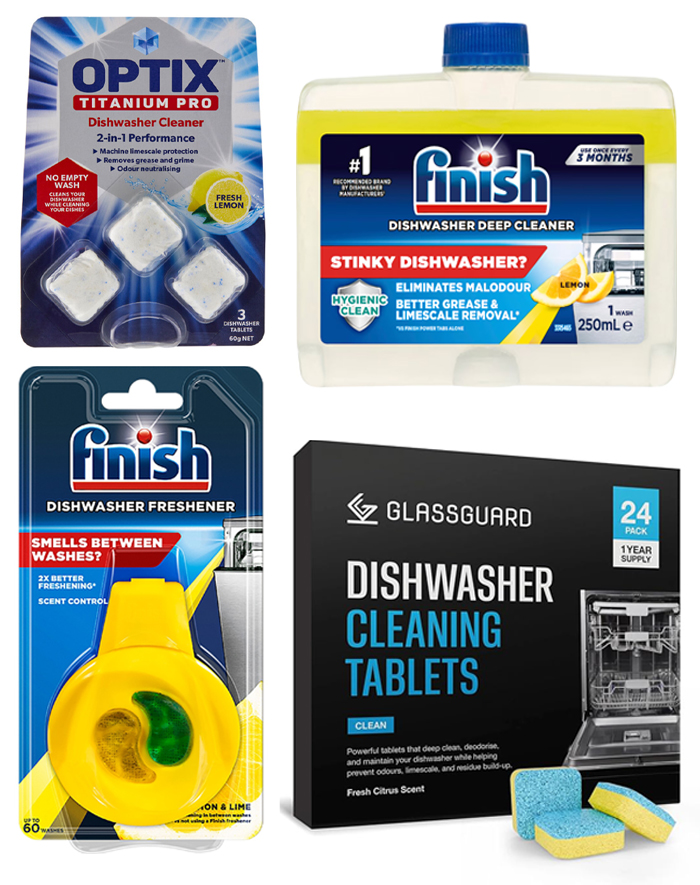
Common brands include Finish, Koh, Fairy, Aldi’s Power Force, Shine, Optix, Glassguard, Dr Beckmann and more, plus you can buy commercial kitchen or overseas products (like Affresh and Glisten) through Amazon and similar online retailers.
They come in many forms including liquid, powder, tabs, pods, satchels, sheets and fresheners, and usually cost between $2.50 to $15 a pop.
Not to be confused with separate rinse aid products, which minimise post-wash water spots and streaks, dishwasher cleaners claim to deep-clean and deodorise, unblock hidden grime and even prolong the life of your machine.
But are they worth buying, or are they just marketing spin and money down the drain?
We dive deep into dishwasher science to look how these cleaners work and explore DIY alternatives too.
Different products use different ingredients but in general, most use a combination of three things: cleaning surfactants, descalers and binding agents.
Surfactants loosen and remove grease and gunk (similar to dishwashing detergent but more concentrated), while descalers are mild acids that break up limescale, a chalky mineral coating that can accumulate over time from water.
Once debris is loosened, binding agents act to keep them dissolved in water so they can then be flushed away.
Just some of the cleaners available on the market.
How to use dishwasher cleaners
It does depend on the specific type (e.g. liquid, tablets) but here’s the gist:
Empty all dishes and the cutlery basket. While you’re there, be brave and remove the filter. Clean it thoroughly under the tap.
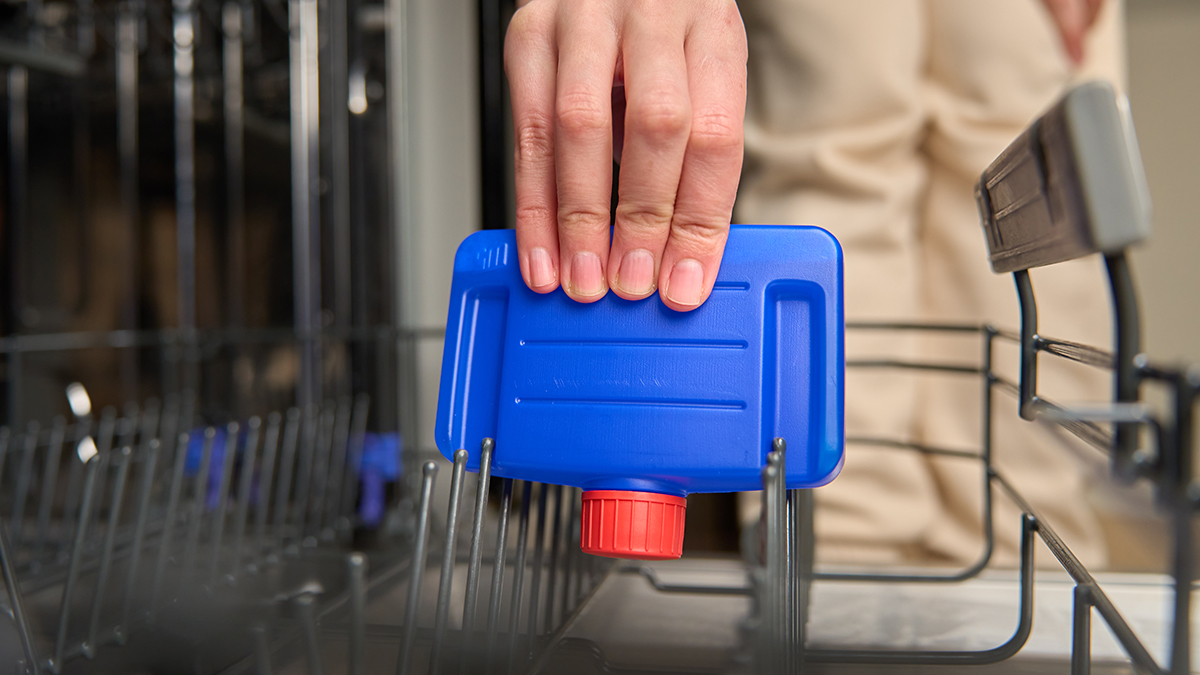
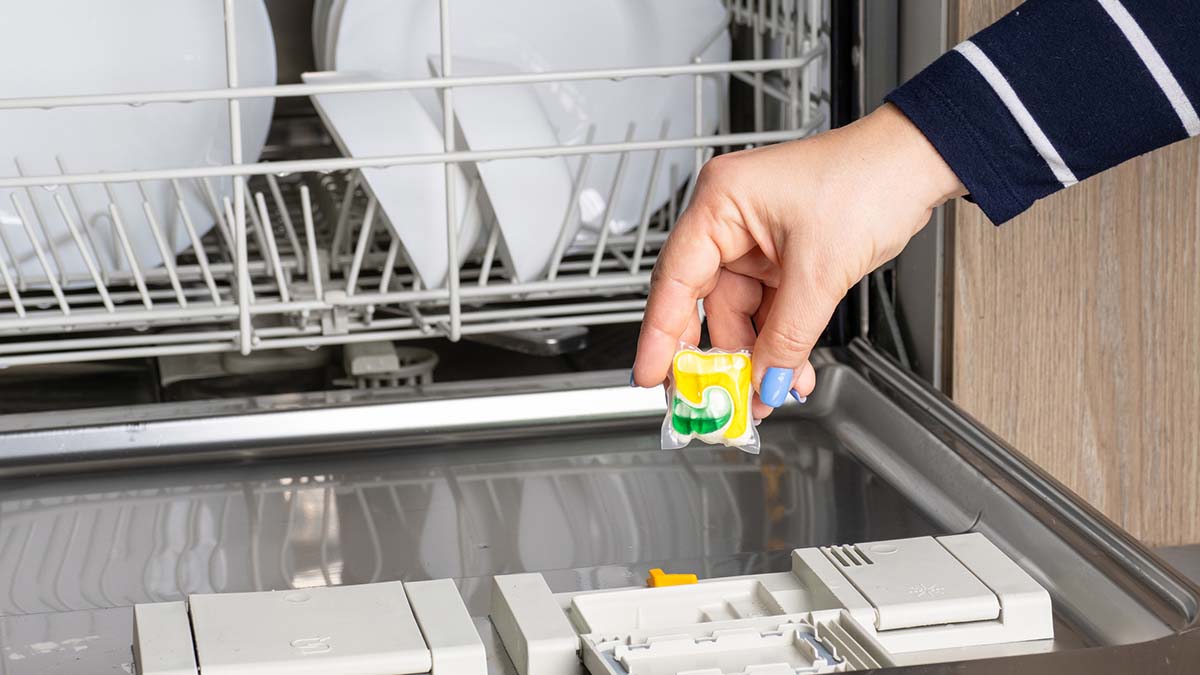
Add the dishwasher cleaner. If it’s a tablet, pod or sheet, pop it in the detergent dispenser. If it’s a liquid, remove the cap but not the wax plug and invert it in the rack. The wax will melt later in the hot wash and dispense liquid.
Run the ‘machine clean’ cycle (or similar) and let the cleaner do its thing.
Most products advise to do this monthly for an optimal clean, but do read the specific instructions as they may vary.
“The answer actually depends on where you live in Australia and the ‘hardness’ of your water supply,” explains Chris.
Hard water is water that contains a high concentration of dissolved minerals like calcium and magnesium, which naturally accumulate as water passes through soil and rock into the water supply.
Mineral deposits can compromise a dishwasher’s performance as they build up over time
It’s safe to drink, but these mineral deposits can compromise a dishwasher’s performance as they build up over time.
Water hardness is determined by an area’s local geology, source (surface water like dam reservoirs is softer than groundwater from bores) and catchment areas.
Hard water is safe to consume but can be harsh on appliances like dishwashers.
Generally speaking, water in Australia is relatively soft, but some cities are definitely harder than others. Here’s a quick summary:
“In cities with softer water, retail dishwasher cleaners aren’t essential, although they can give your unit a good glow-up and help with gunk and funky smells. A simple DIY solution like cheap vinegar can also do the trick,” says Chris.
“However, if you’re in a harder water area, dishwasher cleaners can help minimise limescale, which can build up and start to really interfere with your machine’s washing performance.”
“Either approach should be paired with regular maintenance like cleaning the filter, checking the spray arms for obstruction and wiping down seals.”
Cleaning the filter is a gross but essential part of dishwasher maintenance.
Why is hard water so bad for dishwashers?
When hard water heats up in a dishwasher, minerals like magnesium and calcium drop out and stick to surfaces, and they especially like hot ones like internal pipes and heating elements (it’s a chemical thing).
This leaves behind white, chalky coatings called limescale that dishwashers don’t like.
Over time, limescale can hamper cleaning performance and even damage your unit in various ways including:
making dishwasher detergents less effective
coating the heating element – water then takes longer to heat which uses more power and can eventually cause part failure
clogging water flow in pipes, pumps and spray arms
creating odours – limescale’s rough, porous surface can trap debris, bacteria and mould, which produce bad smells.
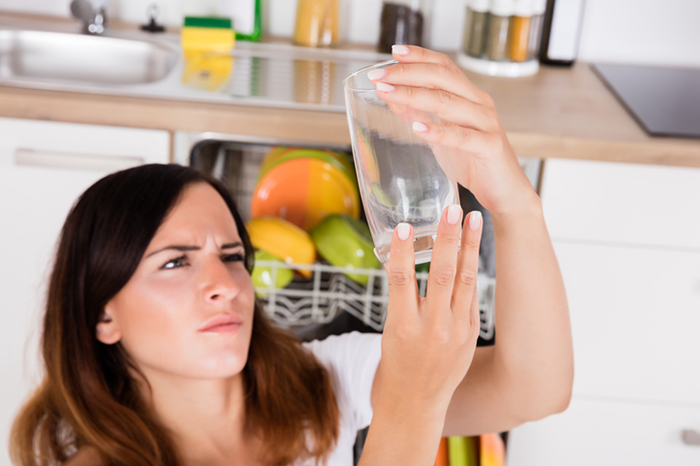
“If it’s affecting your dishwasher, it can also start affecting your dishes, resulting in cloudy glassware or white film or grit on plates, which no one wants,” says Chris.
Limescale build-up can result in cloudy or grit-covered glasses.
DIY dishwasher cleaners: Do they work?
Look online and you’ll find an endless array of dishwasher cleaning tips and hacks, with common approaches using vinegar, baking soda or citric acid.
“Of course, if you’re keen to try these, do your research about using these substances in your particular dishwasher,” says Chris.
“Also check if they’re compatible with items you’re washing, though anything that can survive a cycle in a dishwasher with dishwasher detergent is probably going to be fine with a bit of vinegar.”
Do your research about using these substances in your particular dishwasher
CHOICE dishwasher expert Chris Barnes
Running a hot, empty dishwasher cycle with cheap white vinegar in a bowl is a popular tactic (don’t just pour it in on the bottom as it’ll be lost in the pre-wash).
If pongy smells persist, try following it up with a separate hot wash with baking soda sprinkled over the bottom of the tub.
Check out our dishwasher cleaning guide for a more thorough explainer on DIY options including how to get rid of mould.
If your water’s particularly hard, there are things you can do to soften it during the wash, rather than dealing with build-ups later.
“The simplest solution, aside from regular maintenance, is to ensure your chosen detergent contains water softeners and salts,” says Chris.
“These are often found in ‘all-in-one’ type products that include built-in salts or rinse aid agents that will combat mineral buildup.”
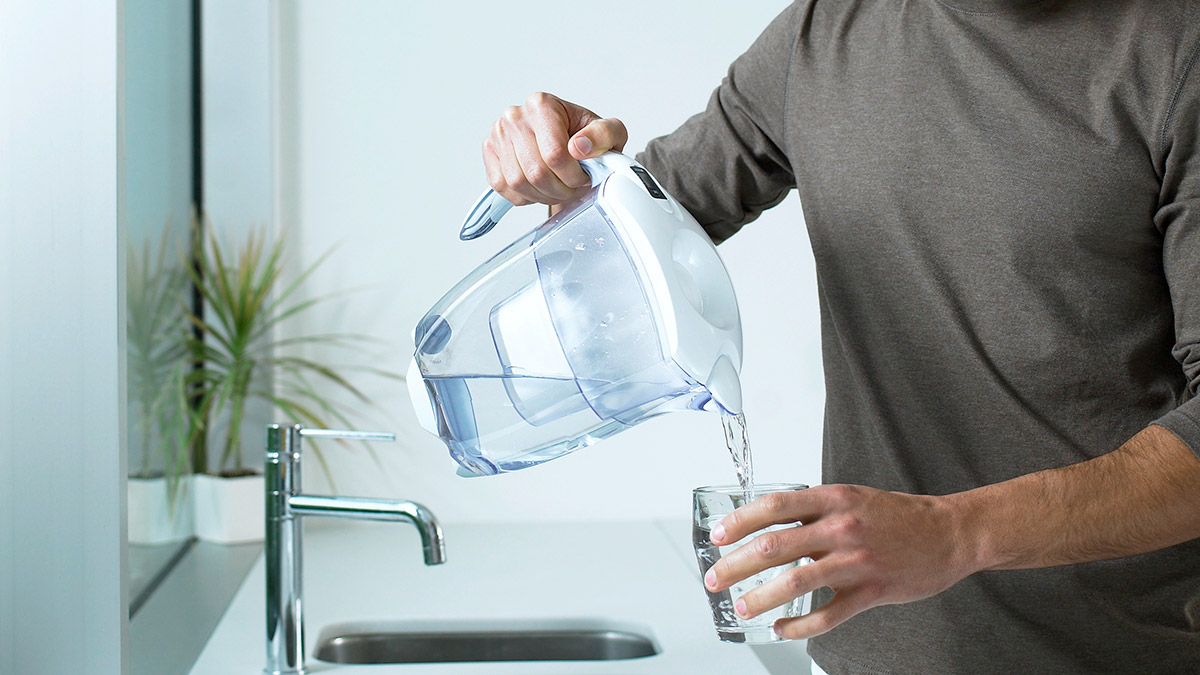
The right detergent can help combat water hardness.
Depending on your dishwasher model, you can also try using separate dishwasher salt. This goes into a special salt dispenser compartment at the bottom of the tub and is usually more effective than all-in-one tablets.
Just note that only some dishwasher brands (usually those from Europe) have salt dispensers.
If hard water’s wreaking real havoc, a more permanent (and expensive) solution is to install a water softener system for your whole home. These can demineralise and soften hard water, which is good for your washing machine, sinks, showers and sprinklers as well as your dishwasher, not to mention your hair and skin!
Jason is a Content Editor and journalist at CHOICE. He writes about a diverse range of subjects, from solar to robot vacuums to why Easter eggs are a rip-off. He's previously written for Sydney Morning Herald, Rolling Stone and many other publications.
Jason is a Content Editor and journalist at CHOICE. He writes about a diverse range of subjects, from solar to robot vacuums to why Easter eggs are a rip-off. He's previously written for Sydney Morning Herald, Rolling Stone and many other publications.
For more than 60 years, CHOICE has been fighting the good fight for Australian consumers.
In the past year alone we've uncovered systemic issues with sunscreens, investigated shonky supermarket pricing, fought for stronger scam protections and helped make complex energy pricing fairer and clearer.
CHOICE is here to provide unbiased advice and independent testing in our world-class labs. We buy the products we test, just like you do, and our expert reviews are influence free. We’re here to help you choose smarter. Hopefully you’ll also save some money along the way.
Thanks to CHOICE, you’ll never be alone when a business treats you unfairly. You can support our work by joining or donating to our cause.