If you’re sick of having a stand-off with your partner or flatmate about the washing up, a dishwasher might be the answer to your domestic woes.
Or perhaps you’re kitting out a motorhome or caravan and can’t bear the thought of having to wash up every night when you’re supposed to be enjoying your retirement.
If you’re renting, your landlord might not be too happy about the idea of you cutting up the kitchen cabinetry. And it can be hard to make space for a full-size dishwasher in your RV.
Does that mean a dishwasher is out of the question? Perhaps not! Instead of resigning yourself to hand washing your dishes every night, consider a benchtop dishwasher.
Not to be confused with a drawer or compact dishwasher, a benchtop dishwasher is literally that: a small dishwasher that you can put on your benchtop.
Benchtop dishwashers have a fairly small capacity.
They fit fewer dishes than a full-size dishwasher – a benchtop dishwasher fit up to around six place settings (although a two or three place setting is more realistic), whereas a traditional dishwasher fits up to 16.
Make sure you check the size of your plates before you start shopping for a benchtop dishwasher; you don’t want to find out the hard way that your plates are too big to fit!
Like a regular dishwasher, a benchtop dishwasher needs to be connected to a water inlet via a hose.
A second hose comes out of the dishwasher to drain the dirty water into the sink. The dishwasher heats up the water itself to wash the dishes.
Benchtop dishwashers are by their very nature a compromise; but maybe it’s a compromise some are willing to make
Denis Gallagher, CHOICE dishwasher expert
And just like a full-size dishwasher, a benchtop dishwasher also dries your dishes. Basically, the crockery heats up from the hot water in the machine, then it holds onto that heat, which helps it to dry.
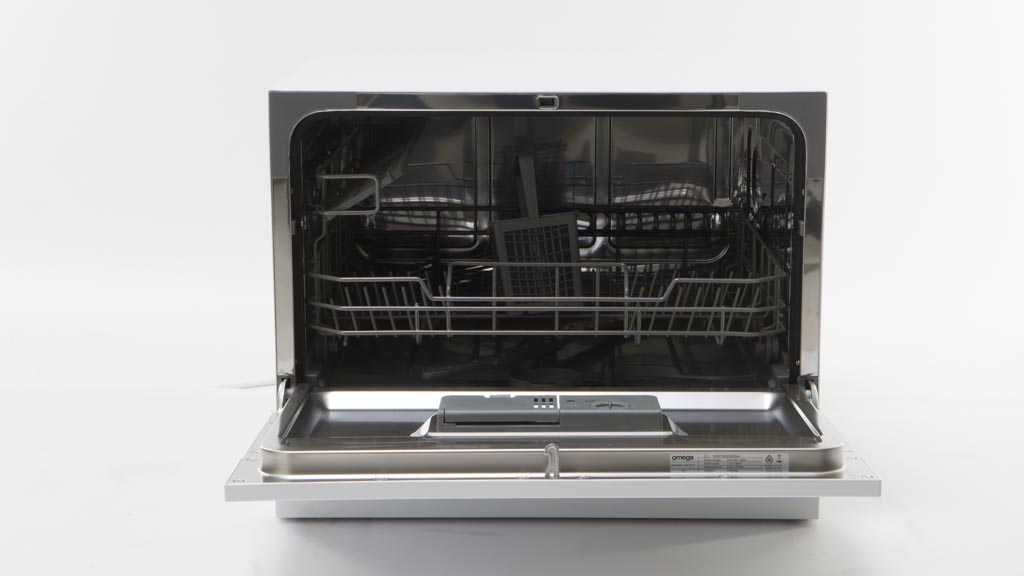
Although it’s worth noting that some benchtop dishwashers aren’t great at drying – particularly the Omega ODW101W from our most recent dishwasher review.
A benchtop dishwasher is quite a niche product that won’t be suitable for every household. But for some people it’ll be a great addition to their kitchen.
Here are some reasons why a benchtop dishwasher might be right for you:
You have a small household of one to two people.
Your kitchen is small and doesn’t have enough room for a full-size under-bench dishwasher.
You’re looking for a dishwasher for a motorhome, RV or studio.
This Omega benchtop dishwasher scored just 35% for drying.
If you’re shopping for something space-efficient, should you expect to forfeit some performance?
Not necessarily – but you should do your research to make sure you’re getting a good product.
Some benchtop models we’ve tested in the past have performed well, with one even being recommended by our experts. (Unfortunately it’s since been discontinued.)
Others were far less impressive, with most scoring below 70% for washing and drying performance.
“If you don’t have a lot of washing to do you may be surprised at how happy you’ll be with your benchtop dishwasher,” says Denis.
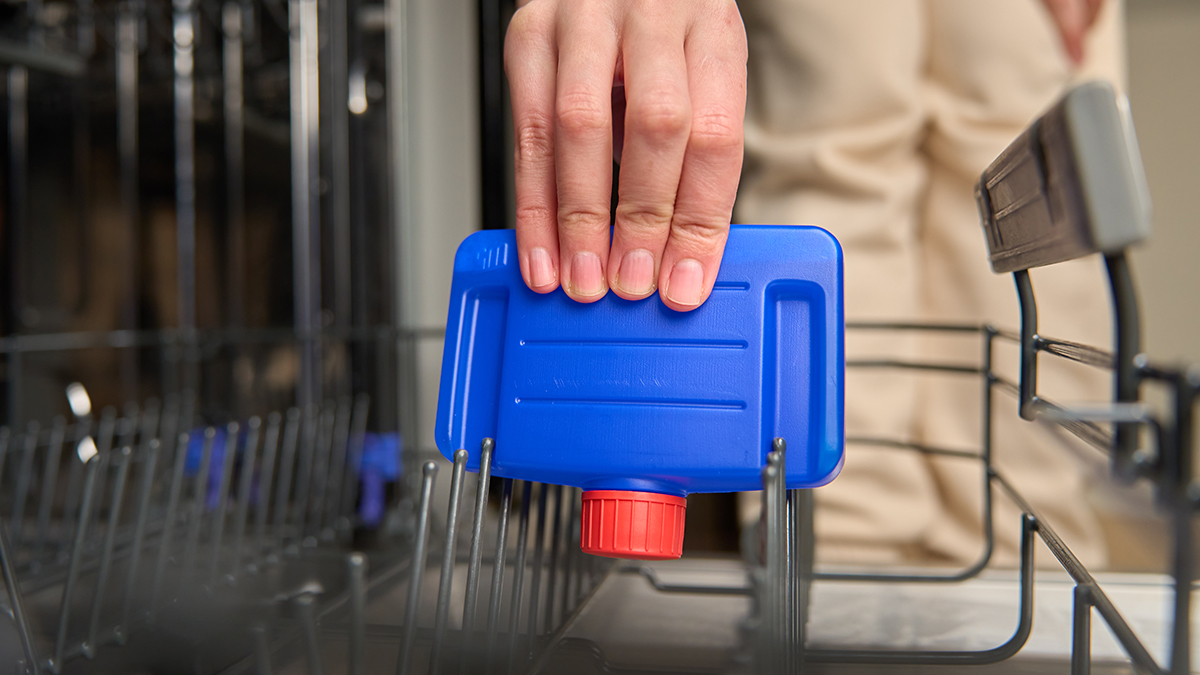
“The technology is the same as a full-sized conventional dishwasher. However, remember that everything is reduced, including the powder needed for a wash, so you might want to consider ditching the pods for powder so you can control the dose.”
Text-only accessible version
Benchtop dishwashers: Pros & cons Pros: Relatively cheap to buy and run Don’t use much water Good for small kitchens and small households Easy to install You can take it with you when you move Cons: Take up a lot of bench space Small capacity Don’t always perform as well as traditional dishwashers Fewer features
Benchtop dishwashers: Pros
Relatively cheap to buy and run
Small dishwashers can mean smaller costs. In terms of upfront costs, you’re looking at $500 to $800 for a benchtop dishwasher, compared with $400 to $3000+ for a full-sized one.
Running costs are also lower because they use less electricity than a standard dishwasher.
“The Omega ODW101W benchtop dishwasher we’ve tested costs $467 to run over 10 years, compared with up to $1607 over 10 years for a conventional dishwasher,” says Denis.
Less water per wash
Benchtop dishwashers are very water-efficient.
The models we’ve tested over the years use between seven and nine litres of water per wash.
“Benchtop dishwashers are very water-efficient, using around 7L of water for four place settings, while full-sized models use up to 13L for a 12-place setting,” says Denis.
“Washing in a sink can use up to 100L of water to wash the same amount, so using any size dishwasher will save water.”
Good for small spaces
If you’re working with a small area such as a studio or a motor home, cupboard space is at a premium. And installing a conventional dishwasher generally means sacrificing a cupboard or two.
A benchtop dishwasher will take up bench space, but it won’t be at the expense of highly prized cupboard space.
Less washing by hand
This is the most obvious pro. A benchtop dishwasher will free you from having to hand-wash the plates and arguing about whose turn it is.
But sadly they won’t completely free you of washing by hand: a benchtop dishwasher isn’t big enough to fit pots, pans and larger plates.
Easy installation
Installing a benchtop dishwasher is as simple as connecting it to a water supply, plugging it into the power socket and placing the drainage outlet into the sink – no kitchen modifications necessary!
Perfect for small households
Benchtop dishwashers can typically fit around six place settings, which is plenty for a couple, single or small share house – particularly if you’re a minimalist who has only four of everything.
You can take it with you
Things not going well with your housemate? If it’s time to move on, you can take your benchtop dishwasher with you.
Having a BYO benchtop dishwasher will also make you a more appealing prospective new housemate – bonus!
It keeps things tidy
Instead of a towering pile of crockery and cutlery on your draining rack, it’ll be hidden out of sight, either in your benchtop dishwasher or the cupboard.
You won’t lose any cupboard space by opting for a benchtop dishwasher, but you will have to give up some bench space.
For the dishwashers we’ve tested, you’re looking at about 50cm x 55cm of space, and you’ll need to put it near the sink to hook it up to water and drainage – prime real estate in a kitchen!
Small capacity
Although they’re perfect for singles and couples, you’ll only be able to fit about six place settings into a benchtop dishwasher, which just won’t be enough for a larger household.
They also can’t fit larger plates or crockery, which will leave you still having to hand wash the dishes – not exactly what you’d hoped for when you buy a dishwasher.
They don’t always deliver
Some benchtop dishwashers don’t perform as well as traditional dishwashers – particularly for drying, as they don’t have the thermal mass of a full-sized one.
Benchtop dishwashers often don’t have the same features as conventional dishwashers.
This means you could miss out on multiple programs, adjustable baskets, delayed start, half-load options, foldable plate racks, anti-burst hoses and the like.
Do you need a plumber to install a benchtop dishwasher?
To install a new full-size dishwasher, you’ll generally need tradies for the cabinetry, power and plumbing.
A benchtop dishwasher is generally more straightforward to install than a regular dishwasher because you’ll be able to use your existing power point, kitchen sink and tap, and you won’t need to modify your kitchen cupboards – no tradies needed.
Put it on the kitchen bench, plug it into a power point, connect it to the kitchen tap, and run the drain hose into the sink, and you’re done!
“The ability to simply add a benchtop dishwasher to an existing kitchen set-up is ideal for small apartments and shared accommodation,” says Denis.
“In some rental situations a benchtop dishwasher may not just be the easiest option, it could be the only option.”
In some rental situations a benchtop dishwasher may not just be the easiest option, it could be the only option
Denis Gallagher, CHOICE dishwasher expert
You can generally connect a benchtop dishwasher to your existing kitchen tap yourself, but it’s wise to check that your kitchen tap is a standard size and has a threaded connection before you buy. (You can buy a screw-on adaptor to add a threaded tap connection.)
If you’d rather not have hoses running across your kitchen bench, you could connect the drain hose to the drain under the sink, and perhaps even have a separate tap installed to connect the water, but that’s not really an option if you’re renting.
Do you need an electrician to install a benchtop dishwasher?
In most cases, no. However, it’s important to check whether the dishwasher is correctly earthed – this can help avoid electric shock if the dishwasher malfunctions or breaks down.
As long as the power point you’re plugging the dishwasher into was installed correctly by a licensed electrician, this should be fine.
If the wiring in your house is old or you’re not confident that it’s been installed properly, have a licensed electrician check it for you.
A range of manufacturers produce benchtop dishwashers, from lesser-known brands like Devanti through to bargain online retailers like Kogan and even premium brands like Ilve.
There’s only one model we’ve tested that is still currently available – the Omega ODW101W benchtop dishwasher – as benchtop dishwashers are such a niche product. The Omega is one of the most popular brands in the category.
Here are some of the brands currently on the market:
Artusi
Casa
Devanti
Domain
Esatto
Kogan
Linarie
Midea
Omega
Teco
Know the products to avoid before you shop. Get our free guide and buy smarter.
Alice Richard is a Content creator and marketer. Alice writes on a range of topics, from health insurance to heaters and BBQs to bargain-hunting, always with the aim to help consumers find the best products to buy, and which to avoid.
Alice can take vast amounts of data from CHOICE product tests and turn it into content that is easily digestible and fun for readers.
Alice has a Bachelor of Arts from the University of Queensland.
Alice Richard is a Content creator and marketer. Alice writes on a range of topics, from health insurance to heaters and BBQs to bargain-hunting, always with the aim to help consumers find the best products to buy, and which to avoid.
Alice can take vast amounts of data from CHOICE product tests and turn it into content that is easily digestible and fun for readers.
Alice has a Bachelor of Arts from the University of Queensland.
For more than 60 years, CHOICE has been fighting the good fight for Australian consumers.
In the past year alone we've uncovered systemic issues with sunscreens, investigated shonky supermarket pricing, fought for stronger scam protections and helped make complex energy pricing fairer and clearer.
CHOICE is here to provide unbiased advice and independent testing in our world-class labs. We buy the products we test, just like you do, and our expert reviews are influence free. We’re here to help you choose smarter. Hopefully you’ll also save some money along the way.
Thanks to CHOICE, you’ll never be alone when a business treats you unfairly. You can support our work by joining or donating to our cause.